portalId 145238543 hublet eu1 environment prod defaultChatFlow ----

Embedded Insurance in Europe: Complete Strategic Guide

Embedded Insurance in Europe: Complete Strategic Guide

European professionals discuss embedded insurance integration

Consumers now expect insurance to appear automatically during checkout, not as a separate task. This shift is part of a larger trend in Europe, where embedded insurance is reshaping how protection is delivered and experienced. Companies are weaving coverage into everyday transactions, making it accessible right when people need it. Discover how these changes are redefining the insurance model and what they reveal about the future of digital services.

Table of Contents

Key Takeaways

Point Details
Embedded Insurance Integration Embedded insurance seamlessly combines insurance solutions with non-insurance products, enhancing the purchasing experience for consumers.
Technological Infrastructure A robust technological framework, utilizing APIs and microservices, is essential for effective deployment of embedded insurance models.
Regulatory Compliance Challenges Insurers must navigate complex regulatory landscapes while ensuring data protection and consumer trust in embedded insurance offerings.
Core System Modernization Upgrading legacy systems is crucial for insurers to remain competitive and agile in delivering innovative embedded insurance products.

Defining Embedded Insurance and Core Principles

Embedded insurance represents a strategic approach to integrating insurance solutions directly into non-insurance products and services, transforming traditional distribution models. Integrated insurance solutions now enable seamless coverage provision at the precise moment consumers need protection.

At its core, embedded insurance involves strategically inserting insurance products within existing transaction ecosystems. Consumers can now acquire insurance coverage simultaneously with purchasing primary products or services, creating a frictionless experience. This model fundamentally shifts how insurance is perceived and purchased, moving from a standalone transaction to an integrated, contextual offering.

The key principles of embedded insurance include:

  • Contextual Relevance: Insurance offerings precisely matched to the specific moment and context of consumer need

  • Seamless Integration: Minimal friction in insurance acquisition process

  • Real-time Provisioning: Immediate coverage activation during product purchase

  • Personalization: Tailored insurance solutions aligned with individual consumer risk profiles

Regulatory frameworks are critical in this emerging model. Within the European Union, embedded insurance products must navigate complex digital microinsurance strategies while maintaining stringent consumer protection standards. Successful implementation requires sophisticated technological infrastructure that supports rapid, automated insurance distribution across diverse digital platforms.

Industry Variations: Retail, Mobility, Fintech, Telco

Embedded insurance is rapidly transforming multiple industry sectors across Europe, with each vertical presenting unique implementation strategies and opportunities. Microinsurance technologies are enabling innovative approaches that go far beyond traditional insurance distribution models.

In the retail sector, embedded insurance is creating seamless protection experiences during consumer purchases. Companies are integrating coverage directly into e-commerce platforms, allowing customers to add insurance protection with minimal friction. The telecommunications industry is particularly innovative, with providers using digital-native insurance solutions to offer device protection, travel coverage, and personalized risk management directly through mobile platforms.

Mobility and fintech sectors represent significant growth areas for embedded insurance. European startups are developing sophisticated models that integrate insurance into transportation and financial services. Some key innovations include:

  • Mobility Sector:

    • Instant insurance for ride-sharing trips

    • Per-kilometer vehicle coverage

    • Integrated protection for electric scooter rentals

  • Fintech Applications:

    • Micro-duration insurance during financial transactions

    • Automated risk assessment for digital lending platforms

    • Real-time coverage activation during investment activities

The European embedded insurance landscape demonstrates remarkable complexity and potential. Strategic partnerships between insurers and technology platforms are driving insurtech innovation, creating more personalized, contextual, and accessible insurance experiences across multiple industry verticals.

Technical Requirements: APIs, Microservices, Automation

Embedded insurance demands a sophisticated technological infrastructure that enables rapid, flexible, and scalable insurance product deployment. APIs in the insurance industry have become the critical backbone for creating interconnected, responsive insurance ecosystems that can adapt quickly to market demands.

Engineers collaborating on insurance automation technology

Microservices architecture represents a fundamental shift in how insurers build and manage their technological platforms. Unlike monolithic systems, microservices enable insurers to develop, deploy, and scale individual components independently. This approach supports the complex requirements of embedded insurance by allowing real-time data integration, dynamic pricing, and rapid product configuration across multiple partner platforms.

Automation is the cornerstone of effective embedded insurance deployment. Digital underwriting workflows enable insurers to process applications, assess risks, and generate policies with unprecedented speed and accuracy. Key automation capabilities include:

  • Instant Risk Assessment:

    • Real-time data analysis

    • Automated underwriting decisions

    • Dynamic risk scoring

  • Operational Efficiency:

    • Reduced manual intervention

    • Accelerated claims processing

    • Consistent decision-making

Successful implementation requires a strategic approach to insurance automation technologies, focusing on creating flexible, compliant, and scalable technological infrastructures that can support the complex ecosystem of modern embedded insurance solutions.

Core System Upgrades for Embedded Insurance Success

Modernizing core insurance systems is no longer optional but a critical strategic imperative for insurers seeking to compete in the embedded insurance marketplace. Core system replacements represent the foundational transformation necessary to enable dynamic, flexible insurance product delivery across multiple digital platforms.

Successful digital transformation requires insurers to rethink their technological architecture fundamentally. Modernizing insurance infrastructure demands building scalable, adaptable platforms that can support real-time data integration, flexible product configurations, and seamless partner ecosystem interactions. The goal is creating a technological foundation that can rapidly respond to changing market dynamics and consumer expectations.

Key considerations for core system upgrades include:

  • Architectural Flexibility:

    • Cloud-native infrastructure

    • Modular system design

    • API-first approach

  • Operational Capabilities:

    • Rapid product configuration

    • Real-time pricing engines

    • Automated underwriting processes

The financial implications of legacy system maintenance are significant. Insurance core replacement strategies reveal that continuing to patch outdated systems often costs more than implementing a comprehensive digital transformation. Insurers must view technological modernization as a strategic investment in future competitiveness, enabling them to quickly launch innovative embedded insurance products and respond dynamically to emerging market opportunities.

Strategic Risks, Compliance, and Ecosystem Impacts

Embedded insurance introduces complex regulatory challenges that demand sophisticated strategic planning and risk management approaches. Insurance risk management has become increasingly nuanced as digital platforms blur traditional boundaries between insurance providers, technology companies, and distribution partners.
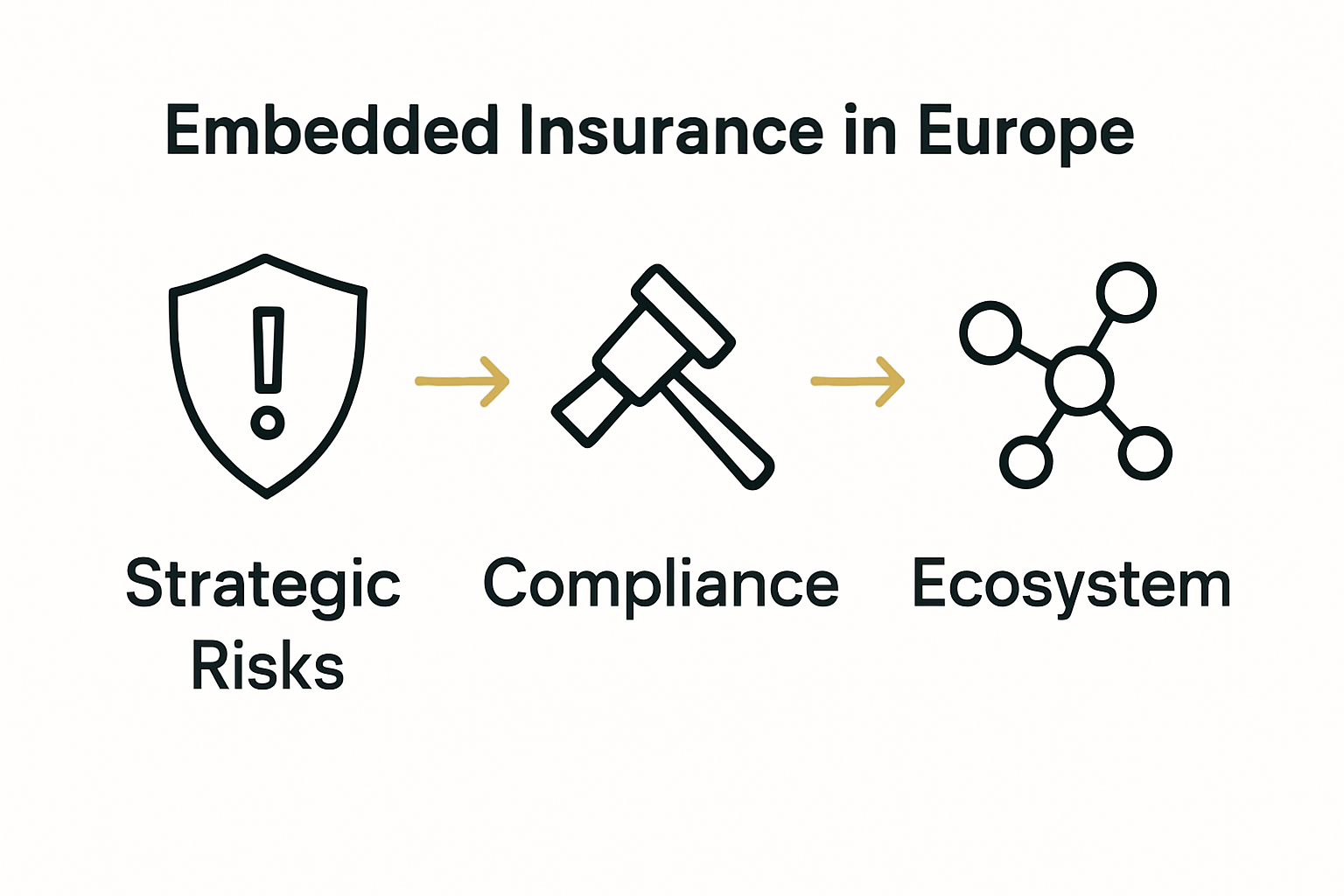
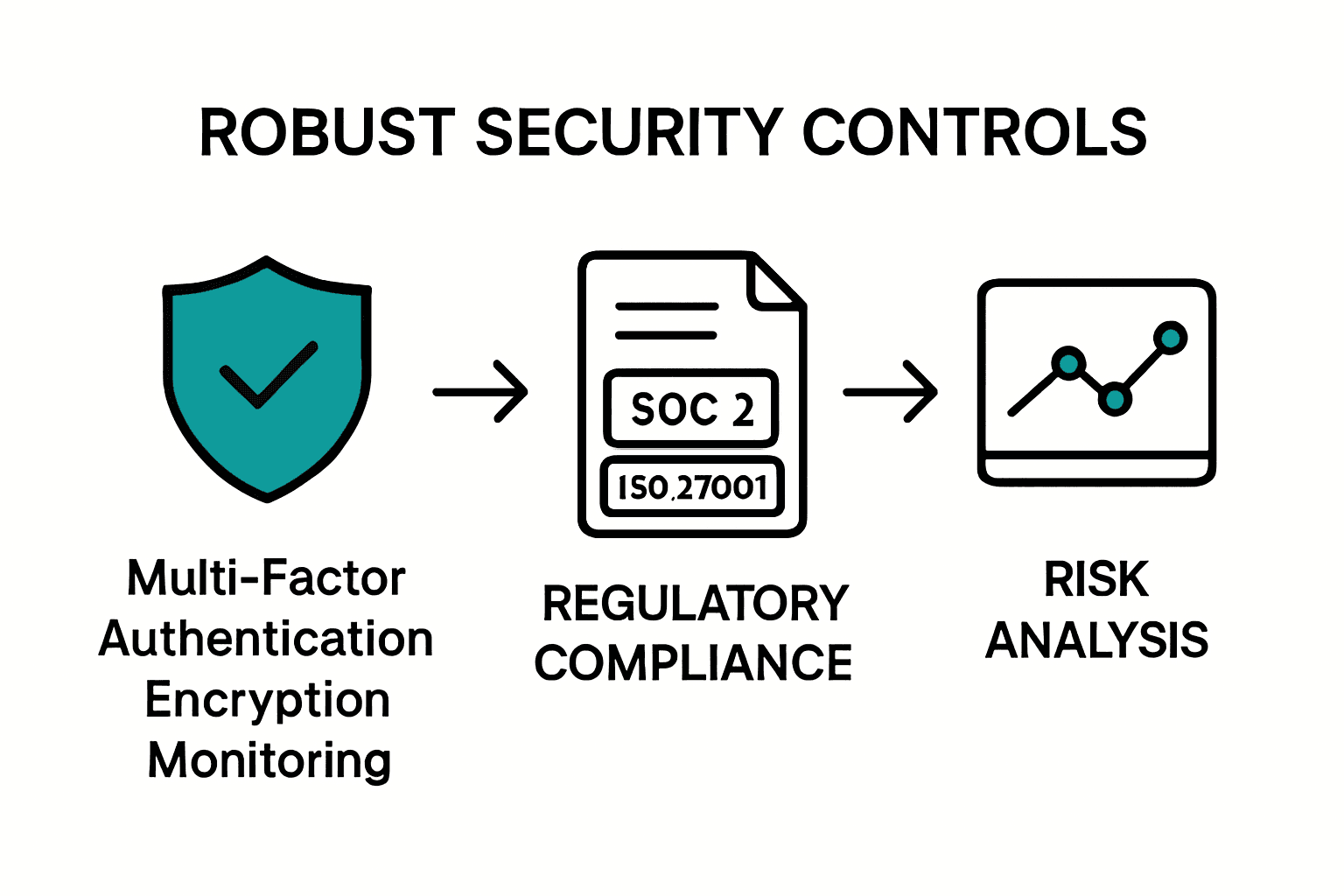
Infographic illustrating risks, compliance, ecosystem

The European regulatory landscape presents significant compliance hurdles for embedded insurance ecosystems. Compliance automation strategies are essential for navigating the intricate web of consumer protection regulations, data privacy requirements, and cross-border distribution rules. Insurers must develop robust technological frameworks that can dynamically adapt to evolving regulatory standards while maintaining transparency and consumer trust.

Key strategic risk considerations include:

  • Regulatory Compliance:

    • Data protection standards

    • Consumer disclosure requirements

    • Cross-border distribution regulations

  • Technological Risks:

    • Cybersecurity vulnerabilities

    • Integration ecosystem complexity

    • Third-party vendor risk management

Successful embedded insurance strategies require a holistic approach that balances technological innovation with comprehensive compliance frameworks. Insurers must proactively design systems that not only meet current regulatory requirements but can also anticipate and rapidly adapt to emerging legal and technological challenges in the dynamic digital insurance landscape.

Unlock the Power of Embedded Insurance with Modern Core Systems

The article highlights the challenges insurers face in adopting embedded insurance models such as seamless integration, real-time provisioning, and navigating complex regulatory environments. These pain points demand a cloud-native, API-first platform designed for rapid product innovation and operational flexibility. If you want to overcome legacy system constraints, reduce IT complexity, and deliver personalized, contextually relevant insurance products across industries like retail, mobility, and fintech, a modern core system upgrade is essential.

Experience how IBSuite empowers P&C insurers to accelerate digital transformation with features like automated underwriting, scalable microservices, and continuous compliance support. Discover how you can streamline every stage from sales to claims while enabling instant risk assessment and real-time pricing. Ready to lead the embedded insurance revolution and respond quickly to evolving market demands Take the next step and book a demo today. Learn more about core system replacements and how to embrace insurance automation technologies that keep you ahead.

Frequently Asked Questions

What is embedded insurance?

Embedded insurance is a method of integrating insurance solutions directly into non-insurance products and services, allowing consumers to purchase insurance coverage at the same time they acquire primary products or services.

What are the key principles of embedded insurance?

The key principles include contextual relevance, seamless integration, real-time provisioning, and personalization, ensuring that insurance products meet consumer needs in a frictionless manner.

How does technology impact embedded insurance?

Technology plays a crucial role by enabling rapid and flexible deployment of insurance products through APIs, microservices, and automation, facilitating real-time data integration and dynamic risk assessment.

What are the regulatory challenges associated with embedded insurance?

Regulatory challenges include compliance with consumer protection standards, data privacy regulations, and ensuring transparency in insurance offerings within digital platforms.


Insurance Platform Scalability Explained: Key Success Factors

Many insurance providers now cite scalability as their top technology challenge. With growing data volumes and complex customer needs, insurers cannot afford slow platforms or poor experiences. Understanding how scalable architecture supports business growth can help organizations stay competitive and responsive, no matter how large or demanding their operations become.

Table of Contents

Key Takeaways

Point Details
Insurance platform scalability Scalability is crucial for insurance platforms, allowing them to grow and handle increased workloads without sacrificing performance.
Microservices architecture This framework enhances scalability through modularity and independent deployability, enabling rapid adaptation to changing market demands.
Types of scalability Insurance platforms can implement vertical, horizontal, diagonal, and functional scalability to meet various operational and technological needs.
Risk management Effective scalability requires proactive mitigation strategies for technological, operational, compliance, and financial risks to ensure ongoing performance and regulatory adherence.

Defining Insurance Platform Scalability

Insurance platform scalability represents the technological capability of an insurance system to dynamically expand computational resources, manage increasing workloads, and accommodate business growth without compromising performance or user experience. According to research from ijsrm, scalability becomes particularly critical when managing complex customer data across multinational insurance operations.

At its core, platform scalability involves three fundamental dimensions: vertical scaling, horizontal scaling, and architectural flexibility. Vertical scaling allows systems to increase capacity by adding more computational power to existing infrastructure, while horizontal scaling enables distributed processing across multiple servers or cloud environments. Journals research specifically highlights how microservices architectures have become instrumental in achieving enhanced scalability, enabling insurance platforms to adapt rapidly to changing operational demands.

Successful insurance platform scalability isn’t just about technical infrastructure—it requires strategic alignment between technological capabilities and business objectives. Key considerations include:

  • Ability to handle sudden traffic spikes without performance degradation
  • Support for geographically distributed operations
  • Seamless integration with emerging technologies
  • Cost-effective resource allocation
  • Maintaining robust security protocols during expansion

Modern insurance platforms must design scalability as a core architectural principle, not an afterthought. This approach ensures technological resilience, operational efficiency, and the agility to respond quickly to market transformations.

Core Scalability Features and Architecture

Microservices architecture has emerged as the foundational framework for modern insurance platform scalability, enabling unprecedented flexibility and technological resilience. According to research from eajournals, this architectural approach represents a transformative strategy for digital insurance platforms, fundamentally reshaping how computational resources are designed, deployed, and managed.

Arxiv research highlights that microservices architecture achieves scalability through key features like modularity and independent deployability. This means each service component can be developed, scaled, and updated autonomously without disrupting the entire system. The core scalability features include:

  • Containerization for lightweight, portable service deployment
  • Event-driven communication protocols
  • Stateless service design
  • Dynamic resource allocation
  • Automated scaling mechanisms
  • Decentralized data management

The architectural approach goes beyond mere technological implementation. It represents a strategic framework that allows insurance platforms to adapt rapidly to market changes, integrate emerging technologies, and maintain optimal performance under varying computational demands. By breaking down monolithic systems into smaller, interconnected services, insurers can achieve unprecedented operational agility and technological resilience.

insurance microservices architecture

Types of Scalability in Insurance Platforms

Scalability in insurance platforms manifests through multiple strategic dimensions, each addressing different technological and operational requirements. Arxiv research reveals that transitioning from monolithic to microservices architectures enables insurers to achieve more sophisticated and nuanced scalability models that go beyond traditional computational expansion.

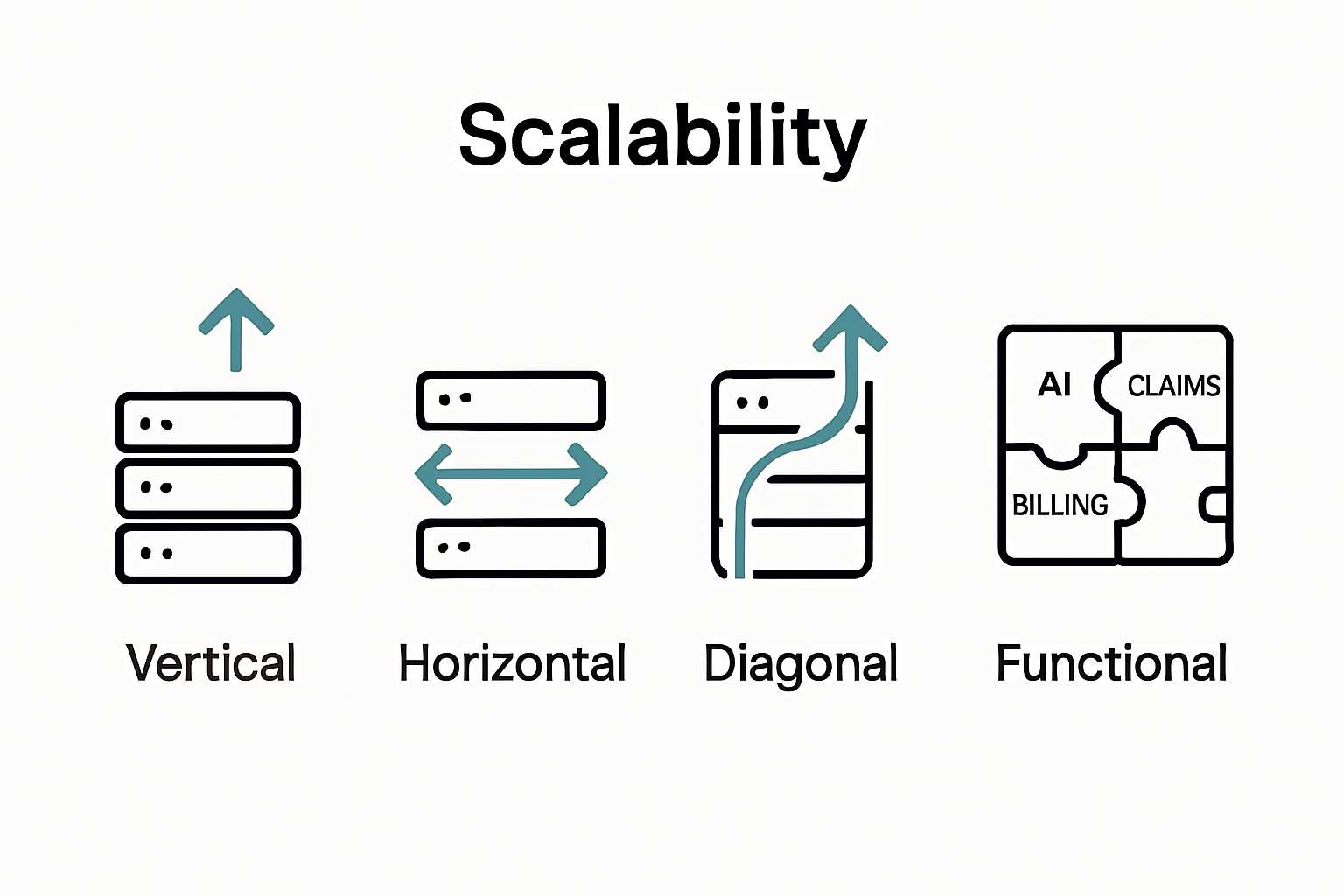
Primarily, insurance platforms can implement four distinct scalability types: vertical, horizontal, diagonal, and functional. According to Arxiv research analyzing big data platform architectures, these scalability approaches provide comprehensive strategies for managing technological complexity and operational demands:

  • Vertical Scalability: Adding computational resources to existing infrastructure
  • Horizontal Scalability: Distributing workloads across multiple servers or cloud environments
  • Diagonal Scalability: Combining vertical and horizontal scaling techniques
  • Functional Scalability: Adapting system architecture to support new business processes and technological integrations

Each scalability type addresses unique challenges in insurance technology ecosystems. Functional scalability, for instance, allows platforms to rapidly integrate emerging technologies like artificial intelligence and machine learning without completely redesigning core system architecture. By understanding and strategically implementing these scalability models, insurance organizations can build resilient, adaptive technological infrastructures that respond dynamically to changing market conditions and operational requirements.

Infographic compares four types of insurance platform scalability: vertical, horizontal, diagonal, and functional.

Integration, Cloud, and Regulatory Considerations

Cloud migration and technological integration represent critical strategic imperatives for modern insurance platforms. MDPI research highlights the transformative potential of digital platform economies, emphasizing that successful integration goes far beyond mere technological implementation and requires comprehensive strategic alignment.

According to BCG research, insurers must navigate three fundamental considerations when approaching integration and cloud adoption:

  • Technological Compatibility: Ensuring seamless connections between legacy systems and modern cloud infrastructure
  • Regulatory Compliance: Maintaining stringent data protection and privacy standards
  • Operational Resilience: Developing robust architectural frameworks that support continuous innovation

The intricate landscape of integration demands a nuanced approach that balances technological innovation with regulatory requirements. Successful insurance platforms must design architectures that not only enable rapid technological adaptation but also maintain rigorous compliance protocols. This means creating flexible, secure ecosystems that can rapidly respond to changing market dynamics while protecting sensitive customer data and meeting increasingly complex regulatory mandates. By prioritizing strategic integration and cloud-native design, insurance organizations can transform potential technological challenges into competitive advantages.

Risks, Challenges, and Best Practices

Insurance platform scalability introduces complex risk management challenges that require strategic foresight and proactive mitigation strategies. Cambridge research highlights the critical importance of understanding the nuanced risks inherent in technological platform expansion, emphasizing that scalability is not merely a technical endeavor but a comprehensive risk management approach.

According to Arxiv research, insurance platforms must address several key risk categories:

  • Technological Risks: Potential system failures, security vulnerabilities, and integration challenges
  • Operational Risks: Performance degradation, unexpected downtime, and resource allocation inefficiencies
  • Compliance Risks: Regulatory violations, data protection breaches, and privacy concerns
  • Financial Risks: Cost overruns, inefficient resource utilization, and potential revenue loss

Best practices for mitigating these risks involve developing a comprehensive, multi-layered approach that prioritizes continuous monitoring, adaptive infrastructure, and robust risk assessment frameworks. Successful insurance platforms must create flexible architectural models that can rapidly identify, isolate, and resolve potential vulnerabilities while maintaining optimal performance and regulatory compliance. This requires a dynamic risk management strategy that views technological scalability not as a one-time implementation, but as an ongoing, iterative process of technological optimization and strategic refinement.

Unlock Seamless Insurance Platform Scalability with IBA

Scaling an insurance platform effectively is a complex challenge that requires more than just adding resources. The article highlights critical pain points such as managing sudden traffic spikes, integrating emerging technologies, and maintaining regulatory compliance—all while ensuring performance and security remain uncompromised. Concepts like microservices architecture, cloud migration, and functional scalability are essential to building a resilient system that can grow with your business needs.

At Insurance Business Applications (IBA), we understand these challenges and deliver solutions that address them directly. With our cloud-native IBSuite platform, you gain access to a secure, API-first system designed for efficient vertical and horizontal scaling, seamless integration, and continuous regulatory compliance. IBSuite empowers P&C insurers to accelerate digital transformation by streamlining operations from sales through claims to billing, while enabling rapid product innovation and enhancing customer engagement.

Ready to transform your scalability challenges into strategic advantages? Explore how IBSuite’s flexible architecture and automated scaling can future-proof your insurance business. Book a personalized demo today at Book a Demo and discover how IBA supports your full insurance value chain with trusted cloud technology. Don’t wait—take the first step toward effortless growth and operational agility now.

Frequently Asked Questions

What is insurance platform scalability?

Insurance platform scalability refers to the ability of an insurance system to dynamically expand its computational resources and manage increasing workloads, ensuring performance and user experience are maintained as the business grows.

What are the key types of scalability in insurance platforms?

The four distinct types of scalability in insurance platforms are vertical, horizontal, diagonal, and functional scalability. Each type addresses unique challenges related to resource allocation and system architecture adaptability.

How does microservices architecture improve insurance platform scalability?

Microservices architecture enhances scalability by enabling modular and independent deployability, allowing each service component to be developed and updated without disrupting the entire system, thus providing greater operational agility and technological resilience.

What are the primary considerations for integrating cloud technology into insurance platforms?

The main considerations for integrating cloud technology into insurance platforms include ensuring technological compatibility with legacy systems, maintaining regulatory compliance regarding data protection, and developing operational resilience to support continuous innovation.

Digital Transformation Roadmap for P&C Insurance Success

Nearly half of all insurers face challenges with outdated systems that slow their response to the market. For american companies, these roadblocks can erode both profit and customer trust. With the insurance industry under pressure to modernize, knowing where legacy technology stalls your operations is the first step to staying ahead. This guide cuts through the confusion, equipping you with clear steps to rethink your technology and drive lasting change.

Table of Contents

Quick Summary

Key Message Explanation
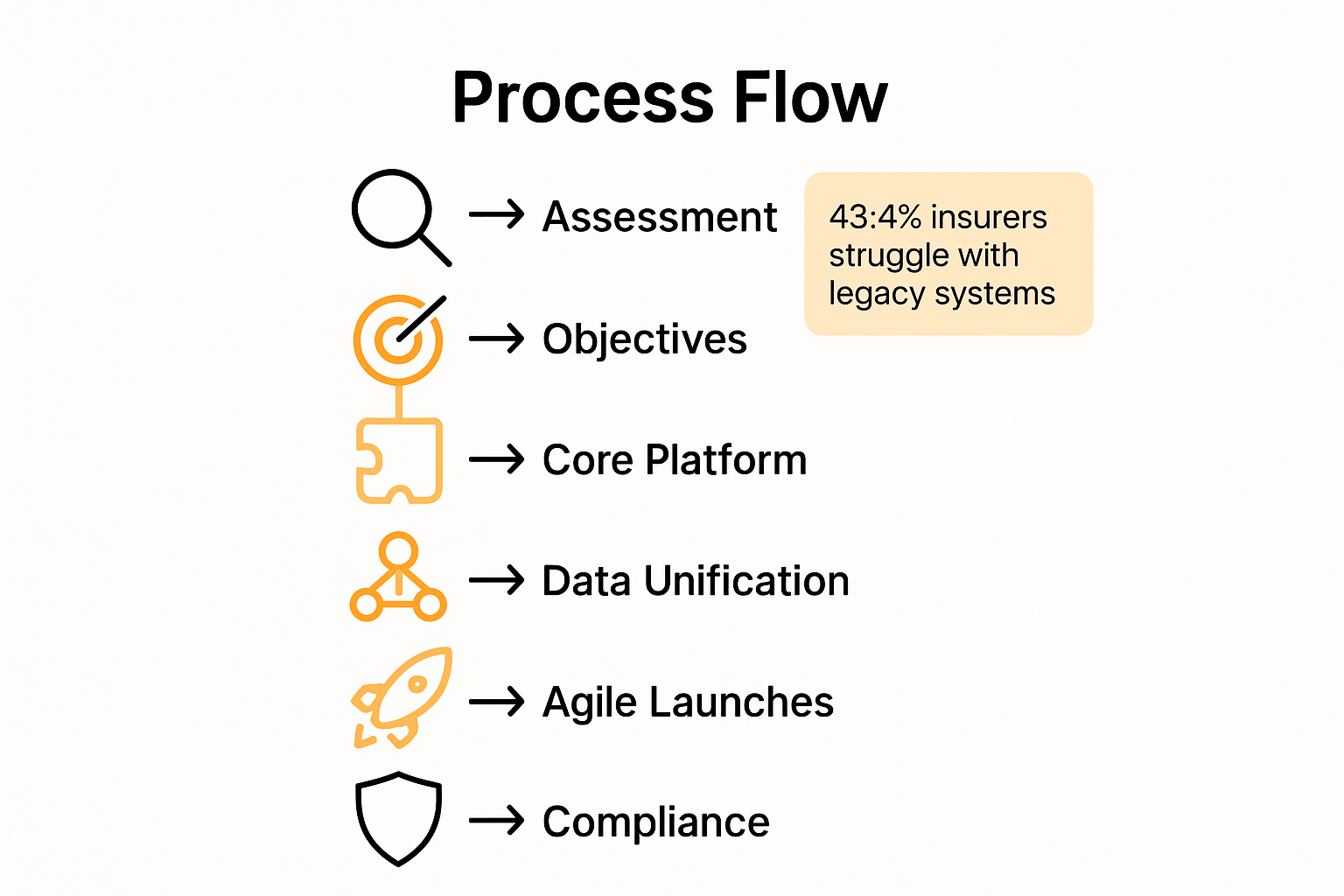
1. Assess Legacy Systems Thoroughly Conduct a detailed technology audit to identify bottlenecks caused by legacy systems that hinder agility.
2. Define Clear Strategic Objectives Establish measurable goals aligning technology investments with business outcomes for a focused transformation.
3. Choose Flexible Core Platforms Select modern insurance platforms that support integration and scalability for future innovations.
4. Unify Customer Data Effectively Break down data silos to create comprehensive customer profiles, enhancing personalization and efficiency.
5. Create an Agile Innovation Framework Implement modular architectures to facilitate rapid product development and timely market launches.

Step 1: Assess Current Systems and Identify Legacy Bottlenecks

Unlocking digital transformation starts with a comprehensive assessment of your current insurance technology infrastructure. Your goal is to pinpoint exactly where legacy systems are creating operational bottlenecks and hindering competitive performance.

Start with a systematic evaluation process. Map out your current technology ecosystem and document how each system performs against critical metrics like processing speed, customer experience, product launch timelines, and data integration capabilities. Pay special attention to areas where manual workarounds currently exist these are prime indicators of systemic limitations.

insurance system audit Post Online reports that 74% of insurance companies still rely on legacy systems that are expensive to maintain and erode competitive advantages.

Pro Tip: Create a detailed scorecard that ranks each system component against modern digital requirements. This will help transform abstract technology challenges into concrete modernization priorities.

By methodically identifying these legacy bottlenecks, you set the foundation for a strategic digital transformation roadmap that can dramatically improve operational agility and market responsiveness.

Step 2: Define Strategic Objectives and Success Metrics

Charting a successful digital transformation requires more than good intentions. You need a clear roadmap with well-defined strategic objectives that align technology investments with your broader business goals.

McKinsey research highlights that top performing insurers create bold long term visions based on customer priorities. This means developing objectives that go beyond technical upgrades and focus on tangible business outcomes like improved customer satisfaction, operational efficiency, and market competitiveness.

Start by convening leadership to establish a comprehensive set of measurable metrics. These should span multiple dimensions including customer experience, operational performance, financial impact, and technological capabilities. ArXiv suggests that robust business architecture practices can significantly improve strategic alignment and service delivery.

Pro Tip: Develop a balanced scorecard that tracks both leading indicators (like technology adoption rates) and lagging indicators (such as customer retention and revenue growth).

Your strategic objectives should create a north star that guides every technology decision transforming your digital modernization from a technical project into a true business transformation initiative.

Step 3: Select and Integrate Modern Core Insurance Platforms

Selecting the right core insurance platform is a critical decision that will shape your entire digital transformation strategy. Your goal is to find a solution that not only addresses current operational needs but also provides flexibility for future technological innovations.

BCG research indicates insurers have multiple approaches to modernizing core IT systems including replacing legacy platforms, refactoring existing systems, or adopting new technologies to enhance functionality. When evaluating potential platforms, focus on solutions that offer robust integration capabilities, scalability, and the ability to support advanced digital technologies.

McKinsey suggests a strategic approach of refactoring systems to upgrade technology while retaining tailored features. This means looking beyond surface level capabilities and understanding how a potential platform can be customized to your specific business requirements. Conduct thorough evaluations that include technical assessments, vendor demonstrations, and comprehensive integration testing.

Pro Tip: Create a detailed scorecard that evaluates potential platforms across key dimensions like technical compatibility, vendor support, implementation complexity, and long term scalability.

By carefully selecting and integrating a modern core insurance platform, you transform your technology infrastructure from a constraint into a strategic enabler of business growth and innovation.

Step 4: Unify Customer Data for Real-Time Insights

Creating a comprehensive view of customer data is the cornerstone of modern insurance digital transformation. Your objective is to break down data silos and create a unified customer profile that enables more personalized and responsive service.

Finantrix highlights a critical challenge many insurers face legacy systems that operate in isolated data environments, complicating compliance and preventing meaningful insights. To overcome this, you need a strategic approach to data integration that consolidates information from multiple touchpoints including policy management, claims processing, customer service interactions, and digital engagement channels.

McKinsey research emphasizes that leading insurers center their strategy around digitally enabled customer journeys. This means implementing robust data management platforms that can aggregate and analyze customer information in real time, transforming raw data into actionable intelligence that drives personalization and operational efficiency.

Pro Tip: Implement a master data management strategy that establishes a single source of truth for customer information, ensuring data quality, consistency, and accessibility across all business units.

By successfully unifying customer data, you create a powerful foundation for delivering more tailored insurance experiences that meet evolving customer expectations and drive competitive advantage.

Step 5: Enable Agile Product Launches and Innovation

Accelerating product innovation requires breaking free from traditional insurance development constraints. Your mission is to create a flexible ecosystem that supports rapid product creation, testing, and market deployment.

Post Online highlights a critical challenge legacy systems make launching new products incredibly time-consuming, with even minor changes potentially requiring extensive program rebuilding. To overcome this, you need to implement modular technology architectures that allow for quick configuration and iterative development.

Property Casualty 360 underscores how legacy technology infrastructure blocks digital innovation. Successful insurers are moving toward composable platforms that enable rapid prototyping, allowing product teams to quickly design, test, and launch new insurance offerings without getting bogged down in complex technical implementations.

Pro Tip: Develop a cross functional innovation team that includes technology, product, and business experts who can collaboratively design and rapidly iterate new insurance products.

By creating an agile product launch framework, you transform innovation from a cumbersome process into a strategic competitive advantage that allows your organization to respond swiftly to market changes.

Step 6: Validate Compliance and Optimize Digital Operations

Ensuring regulatory compliance while maintaining operational efficiency is a critical challenge for modern insurance organizations. Your goal is to develop a robust validation framework that protects against risks while enabling seamless digital transformation.

ArXiv researchers have introduced an innovative low-code no-code technique that automates policy administration system validation against calculation specifications. This approach dramatically reduces manual validation efforts, allowing your team to focus on strategic compliance initiatives rather than getting bogged down in repetitive verification processes.

ArXiv further emphasizes the importance of comprehensive security validation, particularly for legacy systems that are often maintained with minimal cybersecurity oversight. Implementing a rigorous penetration testing strategy becomes essential to identify and mitigate potential vulnerabilities in your digital infrastructure.

Pro Tip: Develop a cross functional compliance team that includes technology, legal, and risk management experts to create a holistic approach to digital operational validation.

By systematically validating compliance and optimizing digital operations, you transform regulatory requirements from a potential roadblock into a strategic opportunity for building trust and operational excellence.

Transform Your P&C Insurance Digital Journey Today

The article highlights the critical challenge of legacy systems creating bottlenecks that slow down innovation, increase operational costs, and complicate regulatory compliance. If your insurance platform struggles with inflexible core systems, siloed customer data, and slow product launches you are not alone. The goals of modern insurers focus on achieving real-time insights, rapid product innovation, and scalable digital operations to remain competitive in a fast-changing market.

Insurance Business Applications (IBA) offers a proven solution designed specifically to address these pain points.

Six step digital transformation infographic with icons and key statistics. Our cloud-native IBSuite platform provides an end-to-end API-first core insurance system that accelerates digital transformation by simplifying integrations and reducing IT complexity. With IBSuite you can unify customer data across all touchpoints, launch new products faster, and maintain continuous regulatory compliance with Evergreen updates built on AWS. Join global P&C insurers who have transformed their operations by choosing IBSuite to modernize core systems and unlock true agility.


Ready to overcome legacy limitations and lead your insurance business into the future Take the next step now and book a demo to see how IBSuite can deliver flexible, scalable, and compliant core insurance technology. Discover how to unify your digital roadmap while achieving fast time to market and improved customer engagement by connecting with our experts today.

Frequently Asked Questions

What are the first steps in creating a digital transformation roadmap for P&C insurance?

To begin your digital transformation roadmap, assess your current technology infrastructure to identify legacy systems causing bottlenecks. Conduct a detailed technology audit and document performance metrics to create a clearer picture of your operational challenges.

How can I set measurable success metrics for my digital transformation efforts?

Establish measurable success metrics by convening leadership and defining objectives that span customer experience, operational performance, and financial impact. Aim to create a balanced scorecard that can track both short-term technology adoption and long-term customer retention over the next year.

What should I look for when selecting a modern core insurance platform?

When selecting a modern core insurance platform, focus on integration capabilities, scalability, and the ability to support advanced technologies. Develop a scorecard to evaluate potential platforms based on technical compatibility, vendor support, and complexity of implementation.

How do I unify customer data for better insights during digital transformation?

Unifying customer data requires breaking down data silos to create a comprehensive profile of customer interactions. Implement a master data management strategy that ensures quality and accessibility of data across all departments, enabling better decision-making within a few months.

How can I accelerate product launches in a modern digital environment?

To accelerate product launches, develop a flexible technology architecture that supports rapid configuration and iterative development. Form a cross-functional innovation team to collaboratively design new products, aiming for faster time-to-market, such as within 30 days of ideation.

What steps can I take to ensure compliance during digital operations optimization?

You can ensure compliance by creating a robust validation framework that automates the compliance process and reduces manual efforts. Form a cross-functional compliance team to regularly assess and validate operations, aiming for a streamlined process that cuts down validation time by approximately 50%.

Customer Experience Improvement Guide for P&C Insurers

Understanding what drives satisfaction, and fixing common pain points, can be the difference between loyalty and lost business. This step by step guide breaks down proven strategies to help american insurers assess, improve, and measure every part of the customer journey for better results.

Table of Contents

Quick Summary

Key Insight Explanation
1. Assess Current Customer Processes Map the customer journey to identify pain points and understand customer expectations for better service alignment.
2. Identify Key Pain Points Analyze interaction data to pinpoint challenges and enhance customer satisfaction while prioritizing critical areas for improvement.
3. Design Engagement Strategies Create a holistic engagement framework using digital tools that support personalized customer interactions across all touchpoints.
4. Implement Digital Tools Integrate automation and advanced technologies to streamline operations and provide more efficient, personalized customer experiences.
5. Measure and Optimize Continuously Establish KPIs for monitoring customer experience effectiveness, allowing for real-time improvements based on data-driven insights.

Step 1: Assess Current Customer Experience Processes

Understanding your current customer experience landscape is the critical first step toward meaningful transformation for property and casualty insurers. McKinsey emphasizes the importance of thoroughly evaluating existing customer interaction processes to identify pain points and align with evolving customer expectations.

To conduct a comprehensive assessment, start by mapping out your entire customer journey from initial contact through policy purchase, claims processing, and ongoing service interactions. This means gathering data from multiple touchpoints like call centers, digital platforms, agent interactions, and claims departments. Look for friction points where customers experience delays, confusion, or frustration. Pay special attention to critical moments such as policy application, claims filing, and communication responsiveness. McKinsey suggests that a thorough evaluation can reveal significant opportunities for digital technology integration to enhance both customer satisfaction and operational efficiency.

Pro tip: Consider utilizing customer feedback surveys, analyzing support ticket data, and conducting user experience testing to gather comprehensive insights. The goal is not just to identify problems but to understand the emotional journey and expectations of your customers across different interaction channels.

Step 2: Identify Key Pain Points and Opportunities

McKinsey emphasizes that identifying customer pain points is crucial for property and casualty insurers seeking meaningful transformation. This step involves a systematic approach to uncovering challenges that impact customer satisfaction and operational efficiency.

Begin by conducting a deep dive into your customer interaction data across all channels. This includes analyzing support tickets, customer feedback, claims processing records, and direct survey responses. McKinsey recommends focusing on critical touchpoints such as claims processing, policy application, and customer communication. Look for recurring themes like communication delays, complex documentation, unclear policy terms, or inefficient claims resolution processes. Pay attention to both quantitative metrics (processing times, resolution rates) and qualitative feedback that reveals emotional pain points customers experience.

Pro tip: Create a comprehensive pain point matrix that categorizes issues by severity, frequency, and potential impact on customer retention. This will help you prioritize improvements and develop targeted strategies for addressing the most critical customer experience challenges.

insurance pain point analysis Opportunities and Challenges for P&C Insurers: Embracing Insurtech can provide additional insights into innovative approaches for resolving these pain points and transforming customer interactions.

Step 3: Design Enhanced Customer Engagement Strategies

McKinsey highlights the critical importance of developing customer engagement strategies that go beyond traditional transactional approaches. For property and casualty insurers, this means creating a holistic approach that transforms how customers interact with your organization throughout their entire insurance journey.

Start by developing a comprehensive customer engagement framework that integrates digital technologies and human touchpoints. McKinsey recommends leveraging digital technologies to create seamless omnichannel experiences. This involves mapping out every customer touchpoint and designing personalized interactions that provide value at each stage. Consider implementing adaptive communication strategies that allow customers to choose their preferred communication channels, whether its mobile apps, web portals, phone support, or in person interactions. Integrate advanced analytics to provide proactive recommendations, personalized policy suggestions, and timely risk management advice.

Pro tip: Involve your frontline employees and agents as co-creators in your engagement strategy. Enhancing Customer Experience with Digital Transformation can provide additional insights into how successful insurers are reimagining customer interactions. Their direct customer interactions offer invaluable insights into pain points and opportunities for creating more meaningful, supportive insurance experiences.

Step 4: Implement Digital Tools and Automation

McKinsey emphasizes that implementing digital tools and automation represents a transformative opportunity for property and casualty insurers. This critical step involves strategically integrating technological solutions that streamline operations, enhance customer experiences, and drive operational efficiency.

Begin by conducting a comprehensive assessment of your existing workflows and identifying specific areas ripe for digital transformation. McKinsey recommends focusing on key processes such as claims management, underwriting, customer communication, and policy administration. Prioritize implementing intelligent automation technologies like artificial intelligence, machine learning algorithms, robotic process automation, and advanced analytics platforms. These tools can help you reduce manual processing times, minimize human error, and create more personalized customer interactions. Consider solutions that enable real time data processing, predictive risk modeling, and automated decision making frameworks.

Pro tip: When implementing digital tools, ensure a phased approach that allows for continuous learning and adaptation. Digital Underwriting Workflow Guide for Seamless Automation provides deeper insights into creating smooth technological transitions. Start with pilot programs in specific departments, measure performance meticulously, and scale successful implementations across your organization while maintaining robust change management practices.

Step 5: Measure Results and Optimize Continuously

McKinsey emphasizes the critical importance of establishing a robust measurement framework for tracking customer experience and operational performance in property and casualty insurance. This step involves creating a systematic approach to evaluating the effectiveness of your customer experience transformation initiatives.

Develop a comprehensive set of key performance indicators that capture both quantitative and qualitative aspects of your customer experience. McKinsey recommends tracking metrics such as customer satisfaction scores, net promoter scores, claims processing times, first contact resolution rates, and digital engagement levels. Implement advanced analytics tools that can provide real time insights and predictive recommendations. Create a continuous feedback loop that allows you to quickly identify and address emerging customer pain points. Use data visualization techniques to make performance metrics easily understandable for stakeholders across your organization.

Pro tip: Establish a cross functional optimization team that meets regularly to review performance data and implement iterative improvements.

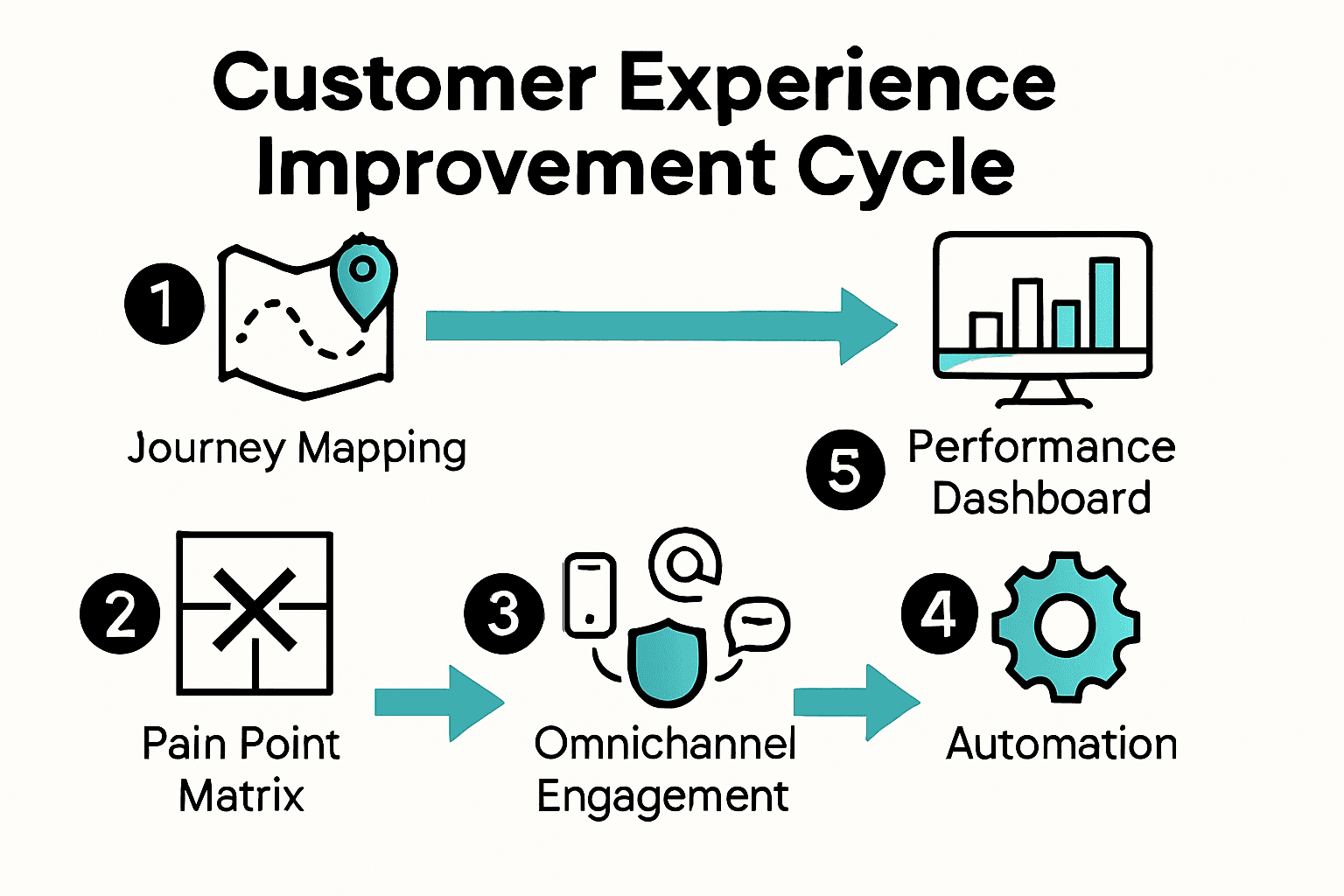
Infographic showing 5 steps to improve customer experience for P&C insurers Insurance Customer Experience: Complete Guide for 2025 can provide additional strategies for creating a culture of continuous improvement. Remember that optimization is an ongoing process that requires commitment, flexibility, and a data driven mindset.

Transform Your P&C Customer Experience with Proven Digital Solutions

Improving customer experience in property and casualty insurance requires tackling complex challenges such as inefficient claims processing, fragmented communication, and outdated workflows. This guide highlights crucial pain points like delayed responses, complicated documentation, and lack of personalization that cause frustration and lost trust. To truly elevate your customer engagement, embracing a seamless omnichannel journey and intelligent automation is essential.

Insurance Business Applications (IBA) offers IBSuite—a cloud-native, API-first platform designed to modernize your core insurance systems while enabling rapid product innovation and enhanced customer interactions. IBSuite supports the entire insurance value chain with scalable, secure technology designed to reduce manual overhead and empower your teams. Start with a comprehensive digital transformation that targets the key areas outlined in the guide such as claims management and policy administration.

Ready to overcome critical customer experience barriers and deliver outstanding service in a digital-first world Browse how leading insurers use IBSuite in Enhancing Customer Experience with Digital Transformation. Discover actionable strategies in Digital Underwriting Workflow Guide for Seamless Automation and see how you can get started now.

Take the next step toward measurable improvements and continuous optimization by booking a demo with IBA today. Empower your organization with tools designed to elevate every customer touchpoint and adapt quickly to market demands.

Frequently Asked Questions

How can I assess my current customer experience processes in property and casualty insurance?

To assess your current customer experience, map out the entire customer journey from initial contact to ongoing service interactions. Gather data from various channels like call centers and digital platforms to identify pain points where customers face delays or confusion.

What are some common pain points in the customer experience for insurers?

Common pain points include delays in communication, complex documentation, and inefficient claims resolution processes. Analyze customer feedback and support tickets to create a pain point matrix, prioritizing issues based on their impact on customer satisfaction.

How do I design enhanced customer engagement strategies for my insurance business?

To design effective customer engagement strategies, create a framework that combines digital technologies with personal interactions. Map each customer touchpoint and personalize communications to suit customer preferences, providing value at every stage of their insurance journey.

What digital tools and automation can I implement to improve customer experiences?

Consider implementing intelligent automation technologies like artificial intelligence and robotic process automation to streamline claims management and policy administration. Assess your existing workflows to identify areas ripe for transformation, aiming for a phased implementation to minimize disruptions.

How do I measure the success of my customer experience improvements?

Establish a set of key performance indicators that capture both quantitative and qualitative aspects of your customer experience initiatives. Track metrics like customer satisfaction scores and claims processing times, and create a feedback loop to continuously identify and address emerging pain points.

What steps should I take to optimize my customer experience strategy over time?

Regularly review performance metrics and gather feedback to identify areas for improvement. Form a cross-functional optimization team that meets frequently to discuss data insights and implement iterative enhancements, ensuring a culture of continuous improvement.

7 Essential Insurance Operations Optimization Tips

7 Essential Insurance Operations Optimization Tips

insurance digital optimization

Insurance leaders now recognize that digital transformation is the key to staying competitive. Nearly 80 percent of insurers say end-to-end digital workflows improve efficiency and customer satisfaction. In an industry where even small delays can frustrate clients or inflate costs, modern technology plays a critical role. This guide offers practical insights and proven strategies for american insurers ready to embrace advanced digital workflows, cloud native platforms, automation, real-time data, and more.

Table of Contents

Quick Summary

Takeaway Explanation
1. Embrace digital workflows. Automate and integrate processes to enhance efficiency and customer experiences.
2. Leverage cloud-native platforms. Build agile systems that adapt to changing market dynamics, reducing maintenance costs.
3. Automate claims processing. Implement intelligent automation to speed up operations and improve customer satisfaction.
4. Utilize real-time data. Convert raw data into actionable insights for faster, informed decision-making.
5. Streamline compliance processes. Develop automated systems to adapt quickly to regulatory changes while enhancing trust and efficiency.

1. Embrace End-to-End Digital Workflows

Digital workflows represent the next frontier for insurance operations. By transforming traditional manual processes into seamless technological ecosystems, insurers can dramatically improve efficiency and customer experience.

Research from Arxiv highlights a compelling case where an AI model automated claim part identification, significantly enhancing operational capacity. This demonstrates how end-to-end digital workflows can streamline complex insurance processes.

Implementing digital workflows means connecting every stage of insurance operations through integrated technology platforms. Key transformation areas include:

  • Automated claims processing
  • Real-time data integration
  • Seamless customer communication channels
  • Intelligent document management
  • Predictive analytics for risk assessment

A study on Polish consumers Arxiv underscores the importance of user-friendly digital experiences. By creating interconnected workflows, insurers can meet diverse customer needs while reducing operational complexity.

To begin your digital workflow journey, start by mapping current processes and identifying manual bottlenecks. Look for opportunities to introduce automation and integrated technologies that can reduce human intervention and accelerate service delivery. The goal is not just digitization but creating a holistic technological ecosystem that enhances every touchpoint of insurance operations.

Investing in end-to-end digital workflows is no longer optional. It is a strategic imperative for insurers wanting to remain competitive in an increasingly digital marketplace.

2. Leverage Cloud-Native Insurance Platforms

Cloud native insurance platforms represent a transformative approach to technological infrastructure that goes far beyond simple cloud migration. These platforms enable insurers to build agile, scalable, and resilient digital ecosystems that can rapidly adapt to changing market conditions.

Research from Huawei Cloud demonstrates how cloud native architectures provide comprehensive support for business operations, enhancing service delivery and operational flexibility. By designing services that can be directly deployed on cloud environments, insurers gain unprecedented technological responsiveness.

Key advantages of cloud native platforms include:

  • Instant scalability of computing resources
  • Reduced infrastructure maintenance costs
  • Enhanced data security and compliance
  • Faster product development and deployment
  • Seamless integration with emerging technologies

The PaaSage Project highlights the importance of creating development platforms that can operate across multiple cloud environments. This approach promotes technological flexibility and allows insurance organizations to avoid vendor lock in.

To leverage cloud native platforms effectively, start by assessing your current technological infrastructure. Identify legacy systems that can be modernized and prioritize applications that would benefit most from cloud native architectures. Work with technology partners who understand both insurance domain specifics and cloud migration strategies.

Adopting cloud native platforms is not just a technological upgrade. It is a strategic transformation that positions your insurance operation to be more responsive, efficient, and competitive in an increasingly digital marketplace.

3. Automate Claims and Policy Processing

Automation represents the critical frontier for transforming insurance operations from slow manual processes to lightning-fast digital experiences. By implementing intelligent automation across claims and policy processing, insurers can dramatically reduce operational costs while improving customer satisfaction.

Research from Arxiv reveals a compelling example where an AI model successfully automated claim part identification, addressing significant scalability bottlenecks and enhancing overall process efficiency. This demonstrates the profound impact of strategic automation in insurance workflows.

Key automation opportunities include:

  • Intelligent document processing
  • Automatic claims triage and routing
  • Predictive damage assessment
  • Real time policy verification
  • Automated underwriting decisions

Conf42 highlights how AI is revolutionizing insurance by enabling faster claims processing and improving fraud detection accuracy. These technological advancements are transforming not just operational processes but the entire customer experience.

To implement effective automation, start by mapping your current claims and policy processing workflows. Identify repetitive tasks that consume significant human resources and evaluate technological solutions that can streamline these processes. Look for platforms offering machine learning capabilities that can continuously improve accuracy and speed.

Successful automation is not about replacing human expertise but augmenting it. By leveraging intelligent technologies, your insurance operations can become more responsive, accurate, and customer centric.

4. Enhance Integration with Open APIs

Open APIs represent the critical infrastructure that enables seamless communication between different software systems in modern insurance operations. By implementing robust API strategies, insurers can create more flexible, interconnected technological ecosystems that adapt quickly to changing business requirements.

Research from the Centre for Study of Insurance Operations highlights the importance of developing data standards that promote technological integration and operational efficiency. These standards serve as the foundation for creating interoperable insurance platforms.

Key benefits of open API integration include:

  • Accelerated product development cycles
  • Simplified data exchange between systems
  • Enhanced partner and vendor collaboration
  • Improved customer experience through seamless interactions
  • Reduced technological complexity

Effective API integration is not just about connecting systems. It is about creating a dynamic technological environment where data flows smoothly and securely across different platforms and applications.

To implement open APIs successfully, start by conducting a comprehensive audit of your current technological infrastructure. Identify potential integration points and prioritize systems that would benefit most from standardized communication protocols. Work with technology partners who understand both insurance domain specifics and modern API development practices.

Remember that open APIs are more than a technical solution. They are a strategic approach to building more agile, responsive, and customer centric insurance operations.

5. Utilize Real-Time Data for Decision-Making

Real time data has become the lifeblood of modern insurance operations. By transforming raw information into actionable insights, insurers can make faster, more precise decisions that drive competitive advantage and operational excellence.

Research from Gaia-X highlights the critical importance of creating trustworthy data exchange ecosystems that enable transparent and rapid information processing. These frameworks support digital sovereignty while providing the infrastructure for sophisticated decision making.

Key strategies for leveraging real time data include:

  • Implementing predictive analytics platforms
  • Creating dynamic risk assessment models
  • Integrating IoT sensor data for proactive monitoring
  • Developing machine learning algorithms for faster processing
  • Establishing centralized data visualization dashboards

Artificial Cyber Lab Research demonstrates how digital twin technologies can simulate complex systems and enable real time risk control. This approach allows insurers to anticipate potential challenges and make informed strategic decisions before problems emerge.

To effectively utilize real time data, start by auditing your current data collection and analysis processes. Identify gaps in your technological infrastructure and invest in platforms that can aggregate and interpret information from multiple sources simultaneously.

Successful real time data utilization is not just about collecting information. It is about transforming raw data into strategic intelligence that drives smarter, faster insurance operations.

6. Simplify Compliance and Regulatory Updates

Compliance is no longer a static checklist but a dynamic, continuous process that requires sophisticated technological infrastructure. Insurance organizations must develop agile systems that can rapidly adapt to evolving regulatory landscapes while maintaining operational efficiency.

Research from Gaia-X demonstrates how establishing clear compliance frameworks can increase trust, security, and organizational sovereignty in digital ecosystems. These standards provide a structured approach to managing complex regulatory requirements.

Strategies for streamlining compliance include:

  • Implementing automated compliance monitoring systems
  • Creating centralized regulatory update repositories
  • Developing real time alert mechanisms for regulatory changes
  • Establishing cross functional compliance review teams
  • Integrating regulatory tracking into core operational platforms

Artificial Cyber Lab Research highlights the importance of controlled testing environments for assessing cybersecurity compliance and implementing necessary regulatory updates. This approach enables proactive management of complex compliance challenges.

To simplify regulatory updates, invest in technological platforms that offer built in compliance tracking and automated notification systems. Look for solutions that can integrate regulatory requirements directly into your operational workflows, reducing manual intervention and minimizing compliance risks.

Successful compliance management is about transforming regulatory requirements from administrative burdens into strategic opportunities for organizational improvement.

7. Enable Agile Product Launches and Innovation

Product innovation in insurance is no longer about incremental improvements but rapid transformative capabilities that can respond to market dynamics within weeks instead of months. Successful insurers are building technological infrastructures that support lightning fast product development and deployment.

Research from Conf42 reveals how artificial intelligence is revolutionizing insurance by enabling data driven insights that transform underwriting, claims processing, and overall customer experience. These technological capabilities are critical for accelerating product innovation.

Key strategies for enabling agile product launches include:

  • Implementing modular technology architectures
  • Creating cross functional innovation teams
  • Developing rapid prototyping capabilities
  • Establishing continuous feedback loops
  • Utilizing advanced analytics for market validation

PaaSage Research demonstrates the importance of flexible development platforms that support efficient application migration and deployment across multiple cloud environments. This approach allows insurers to experiment and iterate products more quickly.

To drive innovation, focus on building a technological ecosystem that supports rapid experimentation. This means investing in platforms that allow for quick configuration, testing, and deployment of new insurance products without extensive coding or complex infrastructure changes.

Successful product innovation is about creating a culture of continuous learning and adaptation. By embracing technological flexibility and data driven insights, insurers can transform their product development from a slow bureaucratic process into a dynamic competitive advantage.

Below is a comprehensive table summarizing key strategies for digital transformation in insurance operations as discussed in the article.

Strategy Implementation Expected Results
End-to-End Digital Workflows Map current processes, identify manual bottlenecks, introduce automation Increased efficiency and improved customer experience
Cloud Native Platforms Assess technological infrastructure, modernize legacy systems Enhanced scalability, reduced costs, and improved flexibility
Automation in Claims & Policy Map workflows, identify repetitive tasks, leverage AI solutions Reduced costs and improved processing speed
Open API Integration Conduct audit of technological infrastructure, develop integration points Improved collaboration and customer experience
Utilization of Real-Time Data Audit data processes, invest in predictive analytics platforms Faster decision-making and operational excellence
Simplified Compliance Implement automated monitoring and alert systems Enhanced regulatory adaptation and reduced risks
Agile Product Launches Develop rapid prototyping capabilities, establish feedback loops Quick product development and market adaptability

Unlock Insurance Operations Excellence with Cloud-Native Solutions

The article highlights the urgent need for insurers to overcome challenges like manual bottlenecks, complex legacy systems, and slow product innovation. Key pain points include the demand for end-to-end digital workflows, automation of claims and policy processing, and agile product launches. These challenges impact efficiency, customer satisfaction, and the ability to adapt quickly to market changes.

Insurance Business Applications (IBA) understands these critical needs. Our cloud-native platform, IBSuite, empowers property and casualty insurers to streamline operations across the entire insurance value chain. With a secure, API-first design, IBSuite supports rapid product innovation, simplifies compliance, and provides evergreen updates to keep your system future-ready. Experience faster launches, reduced IT complexity, and a seamless integration environment built on AWS.

Ready to transform your insurance operations and stay ahead in an evolving industry? Discover how IBSuite can help by booking a demo today. Learn how our end-to-end insurance platform accelerates digital transformation and fosters agility. Don’t wait to modernize your core systems and embrace the future of insurance technology with IBA’s cloud-native solutions now.

Frequently Asked Questions

How can I start implementing end-to-end digital workflows in my insurance operations?

To implement end-to-end digital workflows, begin by mapping your current processes to identify manual bottlenecks. Look for areas where you can introduce automation and integrated technologies to streamline these operations and enhance the customer experience.

What are the key benefits of adopting cloud-native insurance platforms?

Cloud-native insurance platforms provide instant scalability, reduced infrastructure maintenance costs, and faster product development. Assess your current technological infrastructure, modernize legacy systems, and prioritize applications that would benefit from cloud-native capabilities.

How can I automate my claims and policy processing effectively?

To automate claims and policy processing, identify repetitive tasks that consume significant human resources and evaluate technological solutions tailored for those processes. Implement intelligent automation for tasks like document processing and claims routing, aiming to reduce operational costs while enhancing customer satisfaction.

What steps do I take to enhance integration with open APIs?

Start by conducting a comprehensive audit of your current technological infrastructure to identify potential integration points. Prioritize where standardized communication protocols can improve flexibility and interconnectivity among different software systems in your operations.

How can real-time data improve decision-making in insurance operations?

Utilizing real-time data allows insurers to make faster and more precise decisions that can enhance operational efficiency. Begin by auditing your data collection processes and invest in platforms that can aggregate and interpret data from various sources simultaneously.

What strategies can I implement to simplify compliance and regulatory updates?

To simplify compliance and regulatory updates, implement automated monitoring systems that can track regulatory changes in real time. Create centralized repositories for regulatory updates and integrate compliance tracking directly into core operational platforms to reduce manual intervention.

Complete Guide to Integrated Insurance Platforms

More than 60 percent of insurers are struggling to keep pace with rapid digital transformation, leaving many at risk of falling behind competitors. Integrated insurance platforms have become the backbone of modern insurance operations, providing a unified digital system that connects every part of the business. By understanding how these platforms work, insurers and stakeholders gain powerful tools to simplify processes, adapt faster, and deliver smarter, customer-focused experiences.

Table of Contents

Key Takeaways

Point Details
Integrated Platforms Revolutionize Insurance Integrated insurance platforms unify multiple operations and technologies, driving digital transformation within the industry.
Types Catered to Specific Needs P&C insurance platforms comprise various specialized types, including core administration, digital engagement, and analytics platforms, tailored to distinct operational challenges.
Emphasis on Regulatory Compliance Seamless integration and robust compliance features are essential for navigating complex regulatory landscapes while fostering adaptive, compliant ecosystems.
Strategic Implementation is Key Success in implementing integrated platforms demands a phased approach, addressing cultural resistance and ensuring staff training to maximize technology adoption.

Integrated Insurance Platforms: Core Definition and Concepts

An integrated insurance platform represents a comprehensive digital ecosystem that unifies multiple insurance operations, technologies, and data streams into a single, interconnected system. According to PwC, these platforms are transforming the insurance landscape by introducing cloud-based solutions that offer unprecedented scalability and operational flexibility.

At its core, an integrated insurance platform serves as a centralized technological infrastructure that supports the entire insurance value chain – from sales and underwriting to policy administration, claims processing, billing, and customer relationship management. CEP Web highlights that such platforms are critical in managing diverse insurance products across different segments like Property & Casualty (P&C) and Life & Health (L&H) insurance.

The key characteristics of integrated insurance platforms include:

  • Seamless data integration across multiple departments
  • Real-time analytics and reporting capabilities
  • API-first architecture enabling flexible third-party connections
  • Cloud-native infrastructure supporting rapid scalability
  • Advanced security protocols protecting sensitive insurance data

By consolidating disparate systems and enabling cross-functional collaboration, these platforms empower insurers to accelerate digital transformation, reduce operational complexity, and create more responsive, customer-centric insurance experiences.

Types of Integrated Insurance Platforms for P&C Insurers

Property and Casualty (P&C) insurance platforms represent specialized technological solutions designed to address the unique operational challenges of non-life insurance sectors. Best Finance Sites highlights that these platforms are not one-size-fits-all, but instead offer targeted functionalities tailored to different insurance segments and organizational needs.

According to Gartner, P&C integrated insurance platforms can be categorized into several distinct types:

  1. Core Insurance Administration Platforms
  • Manage policy lifecycle
  • Handle underwriting processes
  • Support claims management
  • Provide billing and payment integrations
  1. Digital Engagement Platforms
  • Enable customer self-service portals
  • Support mobile and web interactions
  • Facilitate online quote generation
  • Provide real-time policy modifications
  1. Analytics and Decision Support Platforms
  • Leverage predictive modeling
  • Offer risk assessment tools
  • Enable data-driven underwriting
  • Support fraud detection mechanisms

These platforms are designed to streamline complex insurance operations, reduce manual interventions, and create more responsive, data-driven insurance experiences for P&C insurers. By integrating advanced technologies like AI, machine learning, and cloud infrastructure, modern platforms transform traditional insurance workflows into agile, customer-centric ecosystems.

insurance operations center

Key Features and Architecture Explained

Integrated insurance platforms represent sophisticated technological ecosystems that go far beyond traditional software solutions. ISG One highlights that modern platforms are characterized by their API-enabled architecture, cloud-hosted environments, and unprecedented configurability that allows insurers to adapt quickly to changing market demands.

The core architectural components of these platforms typically include:

  • Microservices Architecture: Enables independent scaling and development of individual platform components
  • Cloud-Native Infrastructure: Supports flexible, scalable deployment across multiple environments
  • API-First Design: Facilitates seamless integrations with external systems and third-party services
  • Modular Configuration: Allows rapid customization without extensive coding

Key technical features that distinguish advanced integrated insurance platforms include robust data management capabilities, real-time analytics engines, and comprehensive security protocols. These platforms are designed to transform complex insurance workflows by providing:

  • Automated underwriting processes
  • Dynamic risk assessment tools
  • Intelligent claims processing
  • Seamless customer engagement mechanisms

By embracing a flexible, technology-driven approach, integrated insurance platforms empower insurers to move beyond traditional operational constraints, creating more responsive, data-driven, and customer-centric insurance ecosystems that can rapidly adapt to evolving market challenges.

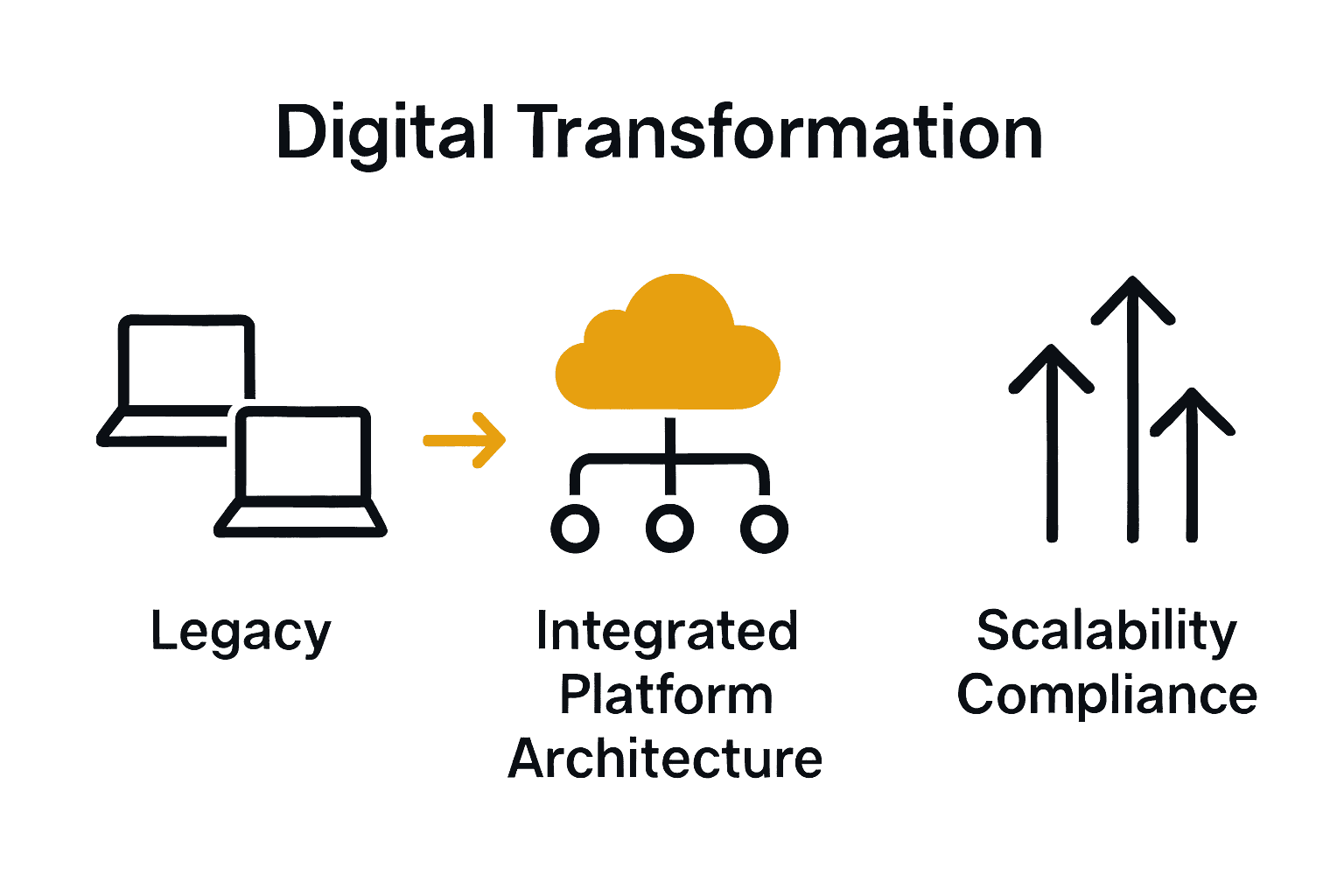
Infographic comparing legacy insurance systems with integrated platform benefits.

Seamless Integrations and Regulatory Compliance

Regulatory compliance represents one of the most complex challenges for modern insurance platforms. Cambridge Research reveals that InsurTech platforms must navigate intricate legal landscapes while maintaining robust risk management frameworks that protect both insurers and customers.

Seamless integration capabilities are critical for modern insurance platforms, enabling them to:

  • Connect with multiple external data sources
  • Ensure real-time regulatory reporting
  • Automate compliance verification processes
  • Maintain comprehensive audit trails
  • Support cross-border regulatory requirements

InsurTech Insights highlights the emerging trend of embedded insurance, which demands even more sophisticated integration capabilities. This approach requires platforms to:

  • Dynamically adjust to different regulatory environments
  • Provide transparent risk assessment mechanisms
  • Enable rapid product configuration
  • Support complex partnership ecosystems

Successful integrated insurance platforms transform regulatory compliance from a potential bottleneck into a strategic advantage. By leveraging advanced technologies like AI, machine learning, and blockchain, these platforms can create more adaptive, responsive, and compliant insurance ecosystems that reduce operational risks while accelerating innovation.

Implementation Strategies and Common Challenges

Digital transformation in insurance platforms is far from straightforward. PwC highlights that successful implementation requires a strategic approach that goes beyond mere technological adoption, demanding comprehensive organizational readiness and change management.

Key implementation strategies include:

  • Phased Rollout: Gradual platform integration to minimize operational disruptions
  • Parallel Running: Maintaining legacy systems during transition periods
  • Comprehensive Training: Upskilling staff to leverage new technological capabilities
  • Vendor Collaboration: Developing strong partnerships with technology providers

Springer Research identifies several common challenges insurers face during platform implementation:

  • Data migration complexity
  • Cultural resistance to technological change
  • Integration with existing legacy systems
  • Cybersecurity and data privacy concerns
  • Skill gap in technological expertise

Successful implementation requires a holistic approach that balances technological innovation with organizational adaptability. Insurers must create flexible strategies that allow for continuous learning, iterative improvements, and a culture of technological openness. By viewing digital transformation as an ongoing journey rather than a one-time project, organizations can develop more resilient and adaptive insurance ecosystems.

Transform Your Insurance Operations with a True Integrated Platform

The journey to a fully integrated insurance platform can feel overwhelming. Challenges like managing disparate systems, ensuring seamless data integration, and navigating complex regulatory demands stand in the way of faster underwriting and more agile product launches. This article highlights the crucial need for a cloud-native, API-first ecosystem that delivers real-time analytics, automated workflows, and comprehensive compliance — goals that every P&C insurer strives to achieve today.

At Insurance Business Applications, we understand these pain points. Our secure, end-to-end solution, IBSuite, is built precisely to streamline the entire insurance value chain. From underwriting to claims management to customer engagement, IBSuite reduces IT complexity and accelerates digital transformation so you can adapt quickly and confidently.

Ready to break free from legacy constraints and elevate your business with a platform designed for modern insurers? Experience firsthand how IBSuite drives efficiency and innovation. Don’t wait to gain that competitive edge. Book a demo today to see how our core insurance platform can transform your operations. Learn more about how we support streamlined workflows and seamless regulatory compliance by visiting Insurance Business Applications and take the first step toward smarter insurance technology.

Frequently Asked Questions

What is an integrated insurance platform?

An integrated insurance platform is a comprehensive digital ecosystem that unifies various insurance operations, technologies, and data streams into one interconnected system, supporting the entire insurance value chain from sales to claims processing.

What are the key characteristics of integrated insurance platforms?

Key characteristics include seamless data integration, real-time analytics, API-first architecture for flexible connections, cloud-native infrastructure for scalability, and advanced security protocols to protect sensitive data.

What types of platforms are available for Property and Casualty (P&C) insurers?

Types of platforms for P&C insurers include Core Insurance Administration Platforms, Digital Engagement Platforms, and Analytics and Decision Support Platforms, each designed to address different operational challenges specific to non-life insurance.

What are the common challenges faced during the implementation of integrated insurance platforms?

Common challenges include data migration complexities, cultural resistance to change, integration with existing legacy systems, cybersecurity concerns, and skill gaps in technological expertise.

Complete Guide to Insurance Platform Security Fundamentals

Cyberattacks cost the insurance industry over $6 billion each year, putting sensitive data and business continuity at risk. With digital platforms now central to insurance operations, even a single security lapse can have dramatic consequences for clients and companies alike. Understanding the core principles of insurance platform security helps organizations defend vital assets, earn customer trust, and navigate an environment where threats evolve faster than ever.

Table of Contents

Key Takeaways

Point Details
Robust Security Framework Integrate multi-factor authentication, real-time logging, and granular access controls to protect insurance platforms from unauthorized access.
Dynamic Risk Management Develop adaptable security strategies and continuous monitoring protocols to address evolving cybersecurity threats effectively.
Compliance Integration Implement compliance frameworks like SOC 2 and ISO 27001 to align security practices with regulatory requirements and enhance data protection.
Holistic Security Culture Foster a proactive security culture through ongoing training and awareness to transform security into an organizational capability rather than a reactive measure.

Defining Insurance Platform Security Fundamentals

Insurance platform security fundamentals represent the critical infrastructure protecting sensitive digital assets within complex insurance technology ecosystems. At their core, these fundamentals encompass a comprehensive strategy designed to safeguard critical systems, customer data, and operational integrity across digital insurance platforms.

According to Zov Solutions, robust security for insurance platforms requires integrating multiple critical components within a secure framework. These essential security elements include:

  • Multi-factor authentication to restrict unauthorized system access
  • Real-time logging for tracking and monitoring system interactions
  • Granular access controls defining precise user permissions
  • Comprehensive data encryption protecting information in transit and at rest

Preventing potential security breaches demands a multifaceted approach. Mold Stud recommends implementing stringent protocols that go beyond basic protective measures. These protocols include conducting regular third-party security audits, establishing strict internal threat mitigation strategies, and developing comprehensive encryption strategies that protect sensitive customer and operational data.

Effective insurance platform security is not a static concept but a dynamic, continuously evolving discipline. Insurance technology leaders must remain proactive, anticipating emerging threats and adapting their security infrastructures accordingly. This means investing in ongoing training, staying current with technological advancements, and maintaining a culture of security awareness across all organizational levels.

Core Security Controls and Frameworks

Core security controls and frameworks form the critical backbone of insurance platform security, providing structured approaches to protecting sensitive digital infrastructure and managing technological risks. These comprehensive systems establish standardized methodologies for identifying, preventing, and mitigating potential security vulnerabilities across insurance technology ecosystems.

Vanta highlights how compliance frameworks like SOC 2 and ISO 27001 play a pivotal role in enhancing organizational security posture. These frameworks mandate critical security practices such as:

  • Incident response planning to address potential security breaches
  • Continuous monitoring of system activities
  • Strict access management protocols
  • Risk assessment and mitigation strategies

According to Scrut, modern compliance management requires a unified approach that eliminates redundant work while providing flexible control frameworks. This means developing adaptive security strategies that can:

  1. Align predefined controls with multiple industry standards
  2. Support custom frameworks tailored to specific organizational risks
  3. Enable automated compliance tracking
  4. Facilitate continuous security monitoring

Successful implementation of core security controls demands more than just technological solutions. Insurance organizations must cultivate a holistic security culture that emphasizes ongoing education, proactive risk management, and continuous adaptation to emerging technological challenges. This approach transforms security from a reactive measure to a strategic organizational capability.

insurance compliance audit

Cloud-Native Security for Insurance Platforms

Cloud-native security represents a transformative approach to protecting insurance platforms, moving beyond traditional security models to create more dynamic, scalable, and resilient digital environments. This approach integrates security directly into the cloud infrastructure, enabling insurance organizations to leverage advanced technological capabilities while maintaining robust protective measures.

Policy Cortex highlights the critical role of policy as code and AI-powered policy evaluation in modern cloud governance. These innovative approaches enable insurance platforms to:

  • Automate complex compliance controls
  • Implement continuous monitoring strategies
  • Evaluate security policies dynamically
  • Adapt quickly to emerging technological challenges

According to LinkedIn, cloud security solutions like AWS Security Hub and Microsoft Azure Security Center are instrumental in enforcing comprehensive cybersecurity policies. These platforms provide insurance organizations with advanced tools to:

  1. Manage third-party risk effectively
  2. Implement holistic security ecosystems
  3. Monitor and respond to potential security threats in real-time
  4. Ensure consistent protection across distributed cloud environments

Successful cloud-native security goes beyond technological implementation. It requires a strategic approach that combines advanced tools, comprehensive policies, and a proactive organizational culture focused on continuous learning and adaptation. Insurance platforms must view security not as a static barrier, but as a dynamic, intelligent system that evolves alongside emerging technological landscapes.

Regulatory Compliance and Data Protection Laws

Regulatory compliance and data protection laws form a critical framework that defines how insurance platforms manage, protect, and utilize sensitive customer information. These complex legal requirements establish comprehensive guidelines that ensure the ethical handling of personal data while maintaining robust security standards across digital insurance ecosystems.

Vanta highlights the significance of compliance frameworks like SOC 2 and ISO 27001 in establishing rigorous security standards. These frameworks require organizations to implement critical protective measures, including:

  • Comprehensive incident response plans
  • Continuous system monitoring
  • Strict access management protocols
  • Detailed risk assessment strategies

Scrut emphasizes the importance of a unified approach to managing compliance frameworks. Modern insurance platforms must develop adaptive strategies that can:

  1. Align controls across multiple regulatory standards
  2. Create custom frameworks addressing unique organizational risks
  3. Automate compliance tracking processes
  4. Enable real-time continuous monitoring

Navigating the intricate landscape of regulatory compliance demands more than mere technical implementation. Insurance organizations must cultivate a holistic approach that integrates legal requirements, technological capabilities, and organizational culture. This means developing a proactive compliance strategy that views regulatory adherence not as a burden, but as a fundamental component of building trust and protecting customer interests.

Common Threats and Risk Management Strategies

Insurance platforms face a complex landscape of evolving cybersecurity threats that demand sophisticated, proactive risk management approaches. The digital transformation of insurance systems has simultaneously expanded operational capabilities and introduced intricate vulnerabilities that require comprehensive protective strategies.

arXiv highlights the critical importance of data-driven risk assessment in cyber insurance underwriting. Understanding the nuanced data types that contribute to premium calculations and claims decisions becomes paramount in developing effective risk mitigation strategies. Key considerations include:

  • Comprehensive data gathering techniques
  • Advanced predictive risk modeling
  • Dynamic premium calculation frameworks
  • Granular claims decision processes

arXiv introduces an innovative approach to managing systemic cyber risks through artificial cyber lab simulations. These advanced modeling techniques reveal critical insights into cybersecurity interventions, emphasizing that insurance platforms must:

  1. Implement topology-based security measures
  2. Develop adaptive resilience strategies
  3. Understand interconnected risk landscapes
  4. Create proactive regulatory compliance mechanisms

Successful risk management transcends technological solutions. Insurance organizations must cultivate a holistic ecosystem that combines advanced technological tools, continuous learning, and a culture of adaptive security awareness. This approach transforms risk management from a reactive discipline to a strategic organizational capability that anticipates and neutralizes potential threats before they materialize.

Infographic comparing security controls, compliance requirements, and risk strategies.

Best Practices for Secure Integrations and APIs

Secure integrations and APIs represent the critical connectivity infrastructure that enables modern insurance platforms to communicate, share data, and deliver seamless digital experiences. As technological ecosystems become increasingly interconnected, implementing robust security measures becomes paramount to protecting sensitive information and maintaining operational integrity.

Loro Journals highlights the importance of implementing zero-trust security models for insurance platform integrations. This approach requires continuous validation and strict authentication at every interaction point. Key strategies include:

  • Implementing comprehensive API governance frameworks
  • Developing granular access control mechanisms
  • Establishing robust encryption protocols
  • Creating continuous validation checkpoints

Mold Stud emphasizes the critical importance of protecting data through comprehensive security practices. Insurance platforms must prioritize:

  1. Encrypting data during transit and at rest
  2. Conducting regular third-party security audits
  3. Implementing strict access control measures
  4. Developing proactive threat mitigation strategies

Successful API and integration security transcends technological implementations. Insurance organizations must cultivate a holistic approach that combines advanced technical controls, continuous monitoring, and a culture of security awareness. This means treating integrations not just as technical connections, but as strategic risk management opportunities that require ongoing attention, refinement, and adaptive thinking.

Strengthen Your Insurance Platform Security with IBA’s Cloud-Native Solutions

Protecting sensitive data and ensuring seamless regulatory compliance are critical challenges outlined in the Complete Guide to Insurance Platform Security Fundamentals. The article highlights complex pain points such as managing multi-factor authentication, real-time monitoring, granular access controls, and automated compliance frameworks. If you are striving to build a resilient, adaptive insurance platform that safeguards customer trust and supports rapid innovation, these demands can feel overwhelming.

IBA understands these urgent needs. Our IBSuite cloud-native core insurance platform is designed to address the exact security fundamentals you need to conquer. With secure, API-first architecture built on AWS, IBSuite empowers insurers to automate compliance, enforce strict security controls, and maintain continuous monitoring—all while enabling rapid product launches and reducing operational complexity. Take control of your digital transformation journey with a solution trusted by global leaders.

Discover how to transform your security challenges into strategic advantages. Book a demo today at IBA Insurance Platform and see firsthand how IBSuite supports end-to-end insurance workflows with robust security built in. Don’t wait for threats to evolve—act now to safeguard your business and accelerate growth.

Frequently Asked Questions

What are the fundamental components of insurance platform security?

The fundamental components include multi-factor authentication, real-time logging, granular access controls, and comprehensive data encryption.

How can insurance organizations prevent potential security breaches?

Organizations can prevent breaches by conducting regular third-party security audits, establishing strict internal threat mitigation strategies, and implementing comprehensive encryption protocols.

Why is a compliance framework important for insurance platforms?

Compliance frameworks like SOC 2 and ISO 27001 are crucial as they mandate critical security practices including incident response planning, continuous monitoring, and risk assessment strategies.

What role does cloud-native security play in insurance platforms?

Cloud-native security integrates security directly into cloud infrastructure, enabling dynamic, scalable protection while leveraging advanced technology capabilities for continuous monitoring and compliance.

Why Insurers Need Automation: Complete Guide

Manual insurance processes can drain resources and slow down operations, but automation has been shown to reduce processing times from days to minutes. In a world where efficiency means staying competitive, insurers are turning to digital solutions that speed up claims, improve accuracy, and deliver a better customer experience. This article explains what insurance automation is, reveals its expanding reach across the industry, and highlights how it is transforming the future for both companies and policyholders.

Table of Contents

Key Takeaways

Point Details
Insurance Automation Enhances Efficiency Automation streamlines operational processes, significantly reducing processing times and improving accuracy across claims, underwriting, and customer service.
Transformative Benefits for Stakeholders Advanced automation leads to cost reductions and enhances customer experience through faster, more transparent interactions.
Regulatory Compliance Through Automation Automation aids in navigating complex regulatory landscapes, ensuring transparent decision-making and maintaining data privacy.
Implementation Challenges Exist Insurers face challenges such as integration with legacy systems, initial investment costs, and workforce adaptation that must be addressed for successful automation.

Defining Insurance Automation And Its Scope

Insurance automation represents a strategic digital transformation approach that leverages technology to streamline complex operational processes within the insurance ecosystem. At its core, automation transforms manual, time-consuming tasks into efficient, technology-driven workflows that reduce human intervention and minimize potential errors.

According to research from arxiv.org, insurance automation can dramatically improve operational scalability. The study highlighted a compelling case where a large language model (LLM) was deployed to automate claim part identification – a task previously performed manually and recognized as a significant bottleneck for organizational growth. This exemplifies how intelligent automation can revolutionize traditionally labor-intensive insurance processes.

insurance AI workflow

The scope of insurance automation extends across multiple critical domains:

  • Claims Processing: Automated claim assessment and settlement
  • Underwriting: Risk evaluation using advanced algorithmic techniques
  • Customer Service: AI-powered chatbots and intelligent response systems
  • Compliance Management: Automated regulatory monitoring and reporting
  • Data Analytics: Real-time insights generation and predictive modeling

Interestingly, arxiv.org research also indicates growing interest in explainable artificial intelligence (XAI) techniques within the insurance sector. This suggests that modern automation isn’t just about efficiency, but also about creating transparent, trustworthy technological solutions that stakeholders can understand and validate.

By embracing automation, insurers can transform their operational paradigms – reducing processing times, enhancing accuracy, improving customer experiences, and ultimately driving competitive advantage in an increasingly digital marketplace.

Types Of Automation In P&C Insurance

Property and Casualty (P&C) insurers are increasingly adopting automation technologies across multiple operational domains, transforming traditional insurance workflows with intelligent digital solutions. These technological interventions range from simple rule-based systems to advanced artificial intelligence applications that can dramatically reshape insurance processes.

According to research from OECD, insurers are implementing different automation tools particularly for high-volume, low-value retail lines of business. This strategic approach enables organizations to optimize resource allocation and improve operational efficiency.

The primary types of automation in P&C insurance include:

  • Underwriting Automation: Leveraging algorithms to assess risk, determine pricing, and make rapid policy decisions
  • Claims Processing Automation: Streamlining claim intake, assessment, and settlement processes
  • Customer Service Automation: Implementing chatbots and intelligent response systems
  • Regulatory Compliance Automation: Monitoring and reporting regulatory requirements automatically
  • Data Analytics Automation: Generating predictive insights and real-time risk assessments

Research from Finantrix highlights that intelligent automation can automatically process and classify claims immediately upon reporting, significantly reducing processing time and enhancing overall operational efficiency. Automation and Artificial Intelligence in P&C Insurance provides deeper insights into how these technological interventions are reshaping the insurance landscape.

By strategically implementing these automation types, P&C insurers can achieve substantial improvements in speed, accuracy, customer satisfaction, and competitive positioning.

The future of insurance lies not just in adopting technology, but in intelligently integrating it to create more responsive, efficient, and customer-centric operational models.

Core Benefits For Insurers And Customers

Automation in insurance delivers transformative benefits that fundamentally reshape how insurers operate and interact with customers. By leveraging advanced technologies, insurance organizations can create a more streamlined, efficient, and responsive ecosystem that serves both business objectives and customer expectations.

Research from IAEME demonstrates that automation of underwriting enables insurers to process applications significantly faster while maintaining rigorous standards of risk assessment. This efficiency translates into tangible advantages for both insurers and policyholders.

Key benefits of insurance automation include:

  • Accelerated Processing Times: Reducing application and claims processing from days to minutes
  • Enhanced Accuracy: Minimizing human error through algorithmic evaluations
  • Cost Reduction: Lowering operational expenses by automating repetitive tasks
  • Improved Customer Experience: Providing faster, more transparent service interactions
  • Advanced Risk Management: Utilizing sophisticated predictive analytics for better decision-making

According to The London Economic, automated software helps insurance agents save hours of work, allowing them to focus on more value-added activities. This shift enables professionals to concentrate on complex problem-solving, customer relationship management, and strategic planning.

Insurance automation benefits: speed, compliance, customer experience Understanding Digital Insurance Platform Benefits offers deeper insights into how technological transformation can revolutionize insurance operations.

Ultimately, automation represents more than a technological upgrade—it’s a strategic approach to creating a more responsive, intelligent, and customer-centric insurance ecosystem that can adapt quickly to evolving market demands and customer expectations.

Regulatory And Compliance Requirements

In the complex landscape of insurance, regulatory compliance represents a critical challenge that demands sophisticated technological solutions. Automation emerges as a powerful mechanism for insurers to navigate increasingly intricate regulatory environments while maintaining transparency, accuracy, and risk management.

Research from arXiv investigating AI algorithms in the insurance industry highlights the growing importance of explainable artificial intelligence (XAI) techniques. These approaches enable insurers to create automated systems that not only meet regulatory requirements but also provide clear, understandable rationales for their decision-making processes.

Key regulatory and compliance considerations in automated insurance systems include:

  • Transparent Decision Making: Ensuring algorithmic processes can be audited and explained
  • Data Privacy Protection: Maintaining strict controls over sensitive customer information
  • Consistent Risk Assessment: Implementing standardized evaluation methodologies
  • Adaptive Compliance Monitoring: Real-time tracking of regulatory changes
  • Comprehensive Reporting: Generating detailed, verifiable documentation

Additionally, research from arXiv emphasizes the critical need for model interpretability, particularly in property and casualty insurance ratemaking. This underscores the importance of developing automated systems that can provide clear, defensible explanations for their computational decisions. Understanding Insurance Compliance Automation offers further insights into navigating these complex regulatory landscapes.

By embracing advanced automation technologies, insurers can transform regulatory compliance from a complex challenge into a strategic advantage—creating systems that are not just technologically sophisticated, but also fundamentally transparent, accountable, and aligned with evolving regulatory expectations.

Risks, Costs, And Implementation Challenges

Insurance automation represents a complex technological transformation that demands careful strategic planning and risk management. While the potential benefits are substantial, insurers must navigate a nuanced landscape of technological, financial, and organizational challenges that can significantly impact successful implementation.

Research from arXiv highlights that while large language models can significantly enhance operational capacity, they simultaneously introduce new process dynamics requiring ongoing refinement. This observation underscores the critical need for a measured, iterative approach to technological adoption.

Key implementation challenges include:

  • Technology Integration: Seamlessly connecting new automated systems with legacy infrastructure
  • Initial Investment Costs: Substantial upfront expenses for software, hardware, and training
  • Workforce Adaptation: Managing employee reskilling and potential resistance to change
  • Data Quality and Consistency: Ensuring reliable, standardized data inputs
  • Cybersecurity Risks: Protecting sensitive customer information in increasingly complex technological ecosystems

Additionally, research from arXiv emphasizes the unique challenges faced by organizations, particularly small and medium enterprises, when implementing advanced technological solutions. Overcoming Integration Challenges provides further insights into navigating these complex technological transitions.

Successful automation requires a holistic approach that balances technological innovation with strategic risk management, recognizing that digital transformation is not a one-time event but an ongoing journey of continuous improvement and adaptation.

Unlock Efficiency and Agility with Insurance Automation

The journey to effective insurance automation is filled with challenges like integrating new technology with legacy systems, managing regulatory compliance, and meeting growing customer expectations. This guide highlights key pain points such as accelerating claims processing, ensuring transparent decision making with explainable AI, and reducing operational costs. If these goals resonate with you, it is clear that outdated manual processes and fragmented systems hold your business back from the agility and precision today’s market demands.

Insurance Business Applications (IBA) offers the IBSuite platform that directly addresses these obstacles by delivering a cloud-native, secure, and API-first core system designed specifically for property and casualty insurers. Its seamless coverage of the entire insurance value chain streamlines underwriting, claims processing, and compliance management while supporting rapid product innovation and flawless integrations. This means you can dramatically cut processing times, improve accuracy, and provide your customers with the responsive service they expect.

Are you ready to transform your operations and embrace the future of insurance automation? Discover how IBSuite can help you overcome implementation challenges and unlock new levels of efficiency by booking a personalized demo today. Take control of your digital transformation now and see what smarter automation can do for your business with Insurance Business Applications. Learn more about our innovative platform in our book a demo section and start your journey toward a more streamlined, customer-centric insurance operation.

Frequently Asked Questions

What is insurance automation?

Insurance automation is a strategic digital transformation approach that uses technology to streamline complex operational processes within the insurance ecosystem. It converts manual tasks into efficient, technology-driven workflows, reducing human intervention and errors.

How does automation improve claims processing in insurance?

Automation enhances claims processing by enabling rapid claim assessment and settlement, significantly reducing processing times from days to minutes. Intelligent automation streamlines the claim intake and evaluation processes, enhancing overall efficiency.

What are the core benefits of automation for insurers and customers?

The core benefits include accelerated processing times, enhanced accuracy, cost reduction, improved customer experience, and advanced risk management through predictive analytics, resulting in a more efficient and responsive insurance ecosystem.

What challenges do insurers face when implementing automation?

Insurers face challenges such as technology integration with legacy systems, initial investment costs, workforce adaptation and reskilling, maintaining data quality, and managing cybersecurity risks during the implementation of automation technologies.

Insurance Risk Management Explained: Best Practices

Over half of insurers report that rapid changes in technology have increased risk complexity like never before. With shifting regulations, evolving threats, and new market pressures, every organization faces tough decisions that can determine long-term survival or success. This article clarifies the core principles and vital processes of insurance risk management, showing how the right strategies protect businesses and create real value in an unpredictable world.

Table of Contents

Key Takeaways

Point Details
Proactive Risk Management Insurance risk management emphasizes comprehensive assessment and continuous monitoring to mitigate financial threats effectively.
Integration of Technology and Sustainability Modern insurers are adopting IoT and sustainability principles to enhance risk management frameworks, creating competitive advantages.
Regulatory Compliance as a Strategic Advantage Adapting to regulatory requirements not only ensures compliance but can transform into a strategic capability that supports organizational resilience.
Mitigating Systemic Risks Diverse and adaptive risk management strategies are essential to avoid vulnerabilities stemming from homogeneous risk assessment models.

Defining Insurance Risk Management Principles

Insurance risk management represents a strategic approach to identifying, assessing, and mitigating potential threats and uncertainties that could negatively impact an organization’s financial performance. According to PearsonEdu, this discipline fundamentally blends basic risk concepts with advanced enterprise risk management techniques, enabling professionals to develop comprehensive protection strategies.

At its core, insurance risk management involves several critical principles designed to help organizations proactively address potential challenges. These principles include:

  • Comprehensive Risk Assessment: Systematically evaluating potential risks across multiple dimensions
  • Quantitative Analysis: Measuring potential financial impacts of identified risks
  • Mitigation Strategy Development: Creating targeted plans to reduce or transfer potential negative outcomes
  • Continuous Monitoring: Regularly reviewing and updating risk management approaches

The emerging trend in risk management extends beyond traditional defensive strategies. As research from Ideas.repec.org suggests, modern insurers are increasingly integrating sustainability principles into their risk management frameworks. This approach not only protects against potential losses but also creates opportunities for value generation by aligning risk management with broader organizational goals and stakeholder expectations.

Effective insurance risk management requires a holistic perspective that balances analytical rigor with strategic thinking. Professionals must develop adaptive frameworks that can quickly respond to evolving market conditions, technological disruptions, and emerging risk landscapes. By embracing a dynamic and forward-looking approach, organizations can transform risk management from a purely defensive mechanism into a strategic driver of organizational resilience and competitive advantage.

Types of Risks in P&C Insurance

Property and Casualty (P&C) insurance encompasses a complex landscape of risks that require sophisticated understanding and strategic management. These risks are multifaceted, spanning physical asset protection, liability concerns, and emerging technological challenges that continually reshape the insurance ecosystem.

Traditional P&C insurance risks can be categorized into several key domains:

  • Property Risks: Damage to physical assets from natural disasters, accidents, or intentional destruction
  • Liability Risks: Legal responsibilities arising from property damage or personal injury claims
  • Business Interruption Risks: Financial losses resulting from operational disruptions
  • Technological Risks: Emerging challenges related to digital infrastructure and data management

According to research from ArXiv, the integration of Internet of Things (IoT) technologies is dramatically transforming risk landscapes in P&C insurance. This technological revolution introduces complex new risk dimensions, including data security vulnerabilities, privacy concerns, and unprecedented challenges in managing massive volumes of connected device information.

Moreover, ArXiv highlights a critical systemic challenge: the potential for risk model homogeneity. When insurance providers rely on similar risk assessment frameworks, they create collective vulnerabilities that can amplify industry-wide exposure. This insight underscores the importance of developing diverse, adaptive risk management strategies that can respond dynamically to emerging threats and technological disruptions. By maintaining flexible, innovative approaches to risk identification and mitigation, P&C insurers can effectively navigate an increasingly complex and interconnected risk environment.

insurance iot technology

Core Risk Management Processes and Tools

Risk management in insurance represents a sophisticated approach to identifying, analyzing, and mitigating potential threats that could impact an organization’s financial stability. Modern risk management processes blend advanced analytical techniques with strategic decision-making frameworks to create comprehensive protection strategies.

Key processes and tools in risk management encompass several critical domains:

  • Risk Identification: Systematic detection of potential threats across organizational landscapes
  • Quantitative Risk Assessment: Mathematical modeling to evaluate potential financial impacts
  • Risk Mitigation Strategies: Developing targeted approaches to minimize potential negative outcomes
  • Continuous Monitoring: Regular evaluation and adaptation of risk management frameworks

According to research from ArXiv, innovative convex risk measures are transforming how insurance organizations aggregate information from multiple sources. These advanced analytical tools provide sophisticated mechanisms for capital risk allocation and premium calculation, enabling more precise and dynamic risk management approaches.

Further insights from ArXiv underscore the complexity of risk management, particularly in understanding how systemic risk impacts portfolio diversification. By developing probabilistic approaches that consider broader economic factors, insurers can create more resilient risk management strategies that adapt to evolving market conditions. The most effective tools integrate advanced computational techniques with deep understanding of complex risk interactions, transforming risk management from a defensive posture to a strategic competitive advantage.

Regulatory Requirements for Risk Management

Regulatory compliance forms the critical backbone of effective risk management in the insurance industry, establishing comprehensive frameworks that ensure financial stability, consumer protection, and systematic risk mitigation. These requirements go far beyond simple checkbox exercises, representing intricate guidelines that demand sophisticated organizational approaches to risk governance.

Key regulatory requirements typically encompass several fundamental domains:

  • Governance Structures: Establishing clear accountability and oversight mechanisms
  • Capital Adequacy: Maintaining sufficient financial reserves to withstand potential losses
  • Reporting Transparency: Providing comprehensive and accurate financial disclosures
  • Risk Assessment Protocols: Implementing robust systems for identifying and managing potential threats

According to research from SpringerLink, Solvency II represents a pivotal regulatory framework in the insurance landscape. This comprehensive approach critically emphasizes enterprise risk management (ERM) principles, focusing on corporate governance, internal control systems, and strategic risk management practices that ensure insurers maintain sound and prudent operational standards.

Further insights from Czasopisma highlight how modern regulatory requirements are increasingly integrating holistic risk management concepts. Insurers must now develop adaptive compliance strategies that not only meet legal standards but also create competitive advantages by transforming regulatory compliance from a defensive mechanism into a strategic organizational capability. This evolution demands continuous learning, technological adaptation, and a proactive approach to understanding and implementing complex regulatory mandates.

Critical Risks, Costs, and Common Pitfalls

Insurance risk management demands a nuanced understanding of potential vulnerabilities that can significantly impact organizational financial stability and operational effectiveness. Identifying and proactively addressing these critical risks represents a complex challenge that requires sophisticated analytical approaches and strategic foresight.

Key critical risks in insurance risk management typically manifest across several strategic domains:

  • Systemic Model Risks: Vulnerabilities arising from standardized risk assessment frameworks
  • Technological Integration Risks: Challenges associated with digital transformation and data management
  • Operational Complexity Risks: Potential disruptions from inefficient internal processes
  • Compliance and Regulatory Risks: Potential financial and legal consequences of regulatory non-adherence

Research from ArXiv highlights a profound systemic vulnerability in the insurance industry: the critical risk of risk model homogeneity. When insurers rely on nearly identical risk assessment models, they create collective vulnerabilities that can exponentially amplify potential financial losses and reduce overall industry resilience.

Additionally, insights from ArXiv underscore the emerging technological risks, particularly with IoT integration. Modern insurers face complex challenges including data security breaches, privacy vulnerabilities, and the intricate management of massive data volumes. These technological risks can translate into substantial operational costs if not strategically managed, emphasizing the need for adaptive, sophisticated risk management frameworks that can dynamically respond to evolving technological landscapes. The most successful organizations will be those that can transform these potential pitfalls into strategic opportunities for innovation and competitive differentiation.

Strengthen Your Insurance Risk Management with Proven Digital Solutions

The complex challenges outlined in the article highlight critical risks like systemic model vulnerabilities, technological integration issues, and the need for continuous, adaptive risk management approaches. These pain points show why modern insurers must embrace comprehensive enterprise risk management frameworks that improve accuracy in risk assessment and enable rapid response to evolving threats.

Insurance Business Applications (IBA) offers a powerful cloud-native platform called IBSuite that helps P&C insurers streamline operations while maintaining regulatory compliance and managing risks effectively. With features covering the full insurance value chain from underwriting to claims, IBSuite reduces IT complexity and accelerates innovation to meet market demands quickly. Discover how your organization can transform risk management by integrating advanced core systems built for a digital-first world.

Are you ready to overcome your risk management challenges and boost your operational resilience? Explore how IBSuite empowers insurers to stay ahead with secure, scalable technology by booking a personalized demo today. Take the first step toward smarter risk mitigation and faster product launches by visiting Book a Demo. Harness the power of digital transformation with Insurance Business Applications and elevate your risk management capabilities now.

Frequently Asked Questions

What are the key principles of insurance risk management?

The key principles include comprehensive risk assessment, quantitative analysis, mitigation strategy development, and continuous monitoring to proactively address potential challenges.

How do modern technologies impact risk management in insurance?

Emerging technologies, particularly Internet of Things (IoT), introduce new risks related to data security and privacy while transforming traditional risk assessments and management strategies.

What are some common critical risks in insurance risk management?

Common critical risks include systemic model risks, technological integration risks, operational complexity risks, and compliance and regulatory risks affecting organizational stability.

How does regulatory compliance influence risk management practices in the insurance industry?

Regulatory compliance establishes frameworks for governance, capital adequacy, reporting transparency, and risk assessment protocols, guiding insurers to maintain financial stability and sound operational standards.

Insurance Platform Architecture Explained: Complete Guide

Nearly 90 percent of leading insurers are investing in digital platforms to keep up with changing customer demands. As the insurance industry transforms, understanding platform architecture becomes a crucial advantage. The right technology foundation can mean the difference between seamless service and costly setbacks, so it pays to know how these frameworks actually work—and what makes them future-proof. This guide sheds light on the building blocks and strategies behind modern insurance platforms.

Table of Contents

Key Takeaways

Point Details
Insurance Platform Architecture A robust architecture integrates various components and processes, enabling insurers to enhance operational flexibility and innovate rapidly.
Types of Architectures Key architectural models include Monolithic, Microservices, and Cloud-Native, each offering distinct advantages and challenges regarding scalability and flexibility.
Cloud-Native Benefits Embracing cloud-native architecture provides rapid scalability, cost optimization, and enhanced security, fostering superior customer experiences.
Implementation Challenges Successful transformation requires addressing legacy system integration, organizational resistance, and technical complexity through strategic planning and stakeholder engagement.

Defining Insurance Platform Architecture Fundamentals

Insurance platform architecture represents a comprehensive technological framework that enables insurers to design, implement, and manage digital insurance ecosystems. Enterprise architecture frameworks provide the critical principles and practices for creating systematic, scalable technology infrastructures that support complex insurance operations.

According to Wikipedia, an enterprise architecture framework “provides principles and practices for creating and using the architecture description of a system, structuring architects’ thinking by dividing the architecture description into domains, layers, or views, and offering models for documenting each view.” In the context of insurance platforms, this means developing a holistic approach that integrates multiple technological components and business processes.

Key fundamentals of insurance platform architecture typically include:

  • Modular Design: Ability to add, modify, or replace individual components without disrupting entire system
  • API-First Approach: Seamless integration capabilities with external systems and third-party services
  • Scalable Infrastructure: Supports rapid growth and adaptation to changing market demands
  • Regulatory Compliance: Built-in mechanisms to ensure adherence to industry standards and legal requirements

Understanding Insurance Business Architecture for Insurers provides deeper insights into how modern insurers are transforming their technological foundations. The goal of a robust platform architecture is not just technological efficiency, but creating a flexible ecosystem that enables rapid innovation and superior customer experiences.

Types of Insurance Platform Architectures Compared

Insurance platform architectures have evolved dramatically, transitioning from traditional monolithic systems to more dynamic, flexible technological frameworks that can adapt to rapidly changing market demands. Architectural approaches in insurance technology now represent a spectrum of design strategies, each with unique capabilities and organizational implications.

According to Insurance CIO Outlook, modern platforms differ significantly from traditional systems, “where all functions are tightly integrated within a single codebase” to “cloud-native platforms that adopt a modular, microservices-based architecture, highlighting the benefits of scalability, flexibility, and faster innovation cycles.”

Key architectural types in insurance platforms include:

  1. Monolithic Architecture
  • Single, unified codebase
  • Limited scalability
  • Slower update and modification processes
  1. Microservices Architecture
  • Independently deployable services
  • Enhanced flexibility
  • Easier system updates and modifications
  1. Cloud-Native Architecture
  • Distributed system design
  • High scalability
  • Advanced integration capabilities

6 Types of Insurance Platforms You Should Know provides additional insights into the evolving landscape of insurance technology platforms. Understanding these architectural approaches helps insurers select the most appropriate framework for their specific operational needs and strategic goals.

insurance microservices deployment

Here’s a comparison of the main types of insurance platform architectures:

Architecture Type Key Characteristics Pros Cons
Monolithic Single codebase
Tightly integrated
Simpler initial setup
Consistent workflows
Limited scalability
Slower updates
Microservices Modular services
Independent updates
Flexible scaling
Easy modifications
Increased complexity
Requires robust integration
Cloud-Native Distributed
Cloud-based infrastructure
High scalability
Faster innovation
Depends on cloud vendor
Skills gap for legacy teams

Core Components and Functional Layers Explained

Insurance platform architectures are complex technological ecosystems composed of interconnected components that work together to deliver comprehensive insurance solutions. These platforms represent sophisticated technological frameworks designed to streamline operations across multiple business functions and enable seamless digital interactions.

According to Insurance CIO Outlook, modern insurance platforms comprise core components including “policy administration, claims management, billing, and reporting,” organized into functional layers that enhance scalability and operational flexibility.

Key Functional Components

Core Platform Components:

  • Policy Administration Layer
    • Policy creation and management
    • Underwriting support
    • Customer information tracking
  • Claims Management Layer
    • Claim registration
    • Claim processing
    • Automated adjudication
  • Billing and Payments Layer
    • Premium calculations
    • Invoice generation
    • Payment tracking
  • Reporting and Analytics Layer
    • Performance monitoring
    • Regulatory compliance reporting
    • Business intelligence generation

Core Insurance Systems: What They Are and Why They Matter provides deeper insights into how these interconnected components create a robust technological infrastructure that supports complex insurance operations. The strategic integration of these layers enables insurers to respond quickly to market changes and customer needs.

Cloud-Native Architecture: Benefits for Insurers

Cloud-native architecture represents a transformative approach for insurance technology, enabling organizations to build, deploy, and scale applications with unprecedented agility and efficiency. This innovative architectural model moves beyond traditional infrastructure limitations, providing insurers with powerful tools to reimagine their technological capabilities.

According to Insurance CIO Outlook, cloud-native architectures deliver “enhanced scalability, resilience, and flexibility, enabling faster deployment of new features and improved customer experiences.” These architectural benefits translate into tangible competitive advantages for modern insurers.

Key Benefits of Cloud-Native Architecture:

  • Rapid Scalability
    • Instantly adjust computing resources
    • Handle peak demand periods efficiently
    • Support rapid business growth
  • Cost Optimization
    • Reduced infrastructure investments
    • Pay-as-you-go resource consumption
    • Lower maintenance overhead
  • Enhanced Security
    • Centralized security protocols
    • Continuous monitoring and updates
    • Advanced encryption capabilities
  • Operational Flexibility
    • Quick feature deployment
    • Seamless system integrations
    • Reduced time-to-market for new products

The Cloud: Accessing Value for Insurers provides deeper insights into how cloud technologies are reshaping insurance operational strategies. By embracing cloud-native architectures, insurers can create more responsive, innovative, and customer-centric technological ecosystems.

Integration, Security, and Compliance Challenges

Insurance platform architectures face increasingly complex challenges in maintaining robust integration, security, and regulatory compliance in a rapidly evolving digital landscape. These interconnected domains represent critical battlegrounds where technological capabilities must meet stringent operational requirements and protect sensitive customer information.

According to IJIRSET, insurance platforms must focus on “seamless data consolidation and analysis” while simultaneously implementing “security measures and compliance requirements essential for protecting sensitive customer information.” This delicate balance requires sophisticated technological strategies and comprehensive risk management approaches.

Key Challenges in Platform Architecture:

  1. Integration Complexity
  • Connecting legacy systems with modern platforms
  • Ensuring data interoperability
  • Managing diverse technological ecosystems
  1. Security Vulnerabilities
  • Protecting against cyber threats
  • Implementing multi-layered authentication
  • Securing data transmission channels
  1. Regulatory Compliance
  • Meeting industry-specific regulations
  • Maintaining audit trails
  • Ensuring data privacy standards

Overcoming Integration Challenges provides additional insights into navigating these intricate technological landscapes. Successful insurers recognize that integration, security, and compliance are not mere technical requirements, but strategic differentiators in a competitive market.

Common Implementation Pitfalls and How to Avoid

Insurance platform transformations represent complex technological journeys fraught with potential challenges that can derail even the most carefully planned digital initiatives. Successful implementations require strategic foresight, comprehensive planning, and a nuanced understanding of potential technological and organizational obstacles.

According to Insurance CIO Outlook, organizations face significant challenges when “transitioning from monolithic to cloud-native architectures, including potential disruptions and integration complexities.” Understanding these risks is the first step toward mitigating them effectively.

Common Implementation Challenges and Mitigation Strategies:

  1. Legacy System Integration
  • Conduct comprehensive system compatibility assessments
  • Develop phased migration strategies
  • Implement robust data migration protocols
  • Maintain parallel systems during transition
  1. Organizational Resistance
  • Create clear communication strategies
  • Provide comprehensive training programs
  • Demonstrate tangible benefits
  • Involve stakeholders in transformation process
  1. Technical Complexity
  • Engage specialized implementation partners
  • Develop detailed architectural roadmaps
  • Implement incremental transformation approaches
  • Establish continuous learning frameworks

Modern Insurance Platforms: What to Look For offers additional insights into navigating these intricate technological transitions. Successful insurers approach platform implementations not as technological upgrades, but as strategic organizational transformations.

Transform Your Insurance Platform Architecture with IBSuite

The challenges of evolving from monolithic systems to flexible, cloud-native architectures can feel overwhelming. Complex integration issues, regulatory demands, and the need for rapid innovation make it difficult to stay competitive. This article highlights the importance of scalable, API-first platforms that support the entire insurance value chain while ensuring security and compliance. If you are looking to overcome these obstacles and create a future-ready insurance ecosystem, embracing a modern core insurance platform is key.

IBA’s IBSuite offers a proven solution built on cloud-native principles designed specifically for property and casualty insurers. It streamlines operations from underwriting to claims and billing with seamless integrations and evergreen updates. By choosing IBSuite, you gain the agility to launch new products faster, reduce IT complexity, and meet regulatory requirements confidently. Learn more about how to simplify your modern insurance platform transformation and tackle integration challenges head-on in our dedicated Overcoming Integration Challenges resource.

Ready to accelerate your digital transformation with a secure and scalable platform built for growth? Book a personalized demo with IBA today and discover how IBSuite can empower your business to adapt quickly and thrive in a digital-first world.

Frequently Asked Questions

What is insurance platform architecture?

Insurance platform architecture is a technological framework that enables insurers to design, implement, and manage digital insurance ecosystems, integrating multiple technology components and business processes.

What are the key features of modern insurance platform architectures?

Modern insurance platform architectures typically include modular design, an API-first approach, scalable infrastructure, and built-in regulatory compliance mechanisms to enhance operational efficiency.

What are the different types of insurance platform architectures?

The main types include Monolithic Architecture, which has a single codebase; Microservices Architecture, which consists of independently deployable services; and Cloud-Native Architecture, characterized by its distributed, cloud-based infrastructure.

What are the benefits of cloud-native architecture for insurers?

Cloud-native architecture provides enhanced scalability, cost optimization, improved security, and operational flexibility, allowing insurers to deploy new features quickly and respond to market changes effectively.