portalId 145238543 hublet eu1 environment prod defaultChatFlow ----

How to Optimise Underwriting Workflows for Efficiency

How to Optimise Underwriting Workflows for Efficiency

Underwriter at desk reviewing workflows

Manual bottlenecks and fragmented data flows are still common frustrations for property and casualty insurers across Central Europe. As regulatory demands grow and competition increases, knowing exactly where your underwriting workflow stalls has never been more important. This step-by-step guide offers practical strategies to map your current process, identify pain points, and use digital tools to drive measurable improvements in efficiency and compliance—all tailored to the complex needs of the Central European insurance market.

Table of Contents

Quick Summary

Key Point Explanation
1. Document Current Workflows Understand your current underwriting processes by mapping every step and identifying delays and inefficiencies.
2. Automate Repetitive Tasks Implement digital tools for automating manual tasks such as data entry and compliance checks to improve accuracy and speed.
3. Tailor for Local Compliance Customise workflows for each jurisdiction, ensuring adherence to local regulatory requirements and documentation standards.
4. Measure Performance Metrics Establish baseline metrics before changes and track improvements to verify efficiency gains and quality of decisions.
5. Involve Your Team in Reviews Regularly review metrics with your underwriting team to identify patterns and further areas for improvement.

Step 1: Assess current underwriting processes

Before optimising anything, you need a clear picture of what you’re actually doing today. Start by documenting your underwriting workflow exactly as it operates now, not how you think it should work.

Your first task is to map the entire journey from application submission to final decision. This means tracking every step, every person involved, and every system they use. Don’t skip the tedious parts—those manual handoffs and paper-based approvals are often where most delays hide.

Gather your underwriting team and ask them what consumes their time:

  • Manual data entry from application forms into multiple systems
  • Back-and-forth emails requesting additional information from applicants
  • Document reviews across different software platforms
  • Approval queues waiting for specific underwriter sign-off
  • Regulatory compliance checks that happen at various points
  • Exception handling when cases fall outside standard guidelines

Document how long each stage takes. You need real numbers here, not estimates. Track a sample of actual cases over two weeks and measure cycle times for each workflow step.

Sound underwriting practices form the foundation of financial stability, and understanding your current processes is the first step to improving them.

Look at your current data flows carefully. Many Central European insurers still rely on credit and insurance underwriting approaches that mix manual assessment with automated systems, creating inconsistencies. Identify where data enters your system and where it gets stuck.

Consider identifying whether you’re experiencing process variations across different underwriter groups or office locations. Your team in Prague might handle applications differently from your Budapest office, which creates inefficiency at scale.

Once you’ve mapped everything, note the pain points explicitly. Where do applications spend the most time waiting? Where do errors occur most frequently? Which approval steps generate the most back-and-forth questions?

Team reviewing underwriting pain points

Review relevant industry practices by examining underwriting process best practices for P&C firms to benchmark against what leading firms are achieving.

Pro tip: Record a few underwriters walking through a case from start to finish. Watch what they actually do—not what the process documentation says they should do. You’ll discover workarounds, shortcuts, and bottlenecks that no flowchart captures.

Here is a summary of common underwriting process bottlenecks and their underlying causes:

Bottleneck Location Main Cause Typical Impact
Manual data entry Legacy systems, lack of integration Increased errors, slow processing
Approval queue delays Sequential sign-offs Longer cycle times
Document review Multiple platforms Higher error risk, lost documents
Compliance checks Disparate regulations Inconsistency between teams
Exception handling Non-standard cases Frequent back-and-forth queries

Step 2: Implement advanced digital tools for automation

Now that you understand your current workflows, it’s time to introduce technology that removes manual work and accelerates decisions. The right digital tools can cut underwriting cycle times significantly while improving accuracy.

Start by identifying which workflow steps are most suitable for automation. Look for processes that are repetitive, rule-based, and don’t require subjective judgment. These are your quick wins.

Focus on these automation candidates first:

  • Automated data extraction from application documents and emails
  • Pre-screening applications against basic eligibility criteria
  • Automatic flagging of missing information before underwriter review
  • Real-time cross-referencing with external data sources
  • Routine compliance and regulatory checks
  • Automated workflow routing to the correct underwriter or approval queue

Consider that artificial intelligence and machine learning applications are now enhancing underwriting workflows by improving accuracy and reducing processing times across European insurers.

Intelligent automation doesn’t replace underwriters—it frees them from tedious tasks so they can focus on complex risk assessment where their expertise matters most.

When selecting your technology platform, prioritise solutions that integrate with your existing systems rather than requiring complete replacements. Your underwriters shouldn’t have to switch between five different applications to complete one case.

Look for platforms offering digital underwriting workflow capabilities that streamline the entire process from application to decision.

Build a phased implementation plan. Don’t try to automate everything at once. Start with one workflow—perhaps initial document processing or basic eligibility checks—and prove the concept before expanding.

Measure the impact of each automation carefully. Track how many hours underwriters save per week, how many errors decrease, and what your new cycle time becomes. These metrics justify expansion to other areas.
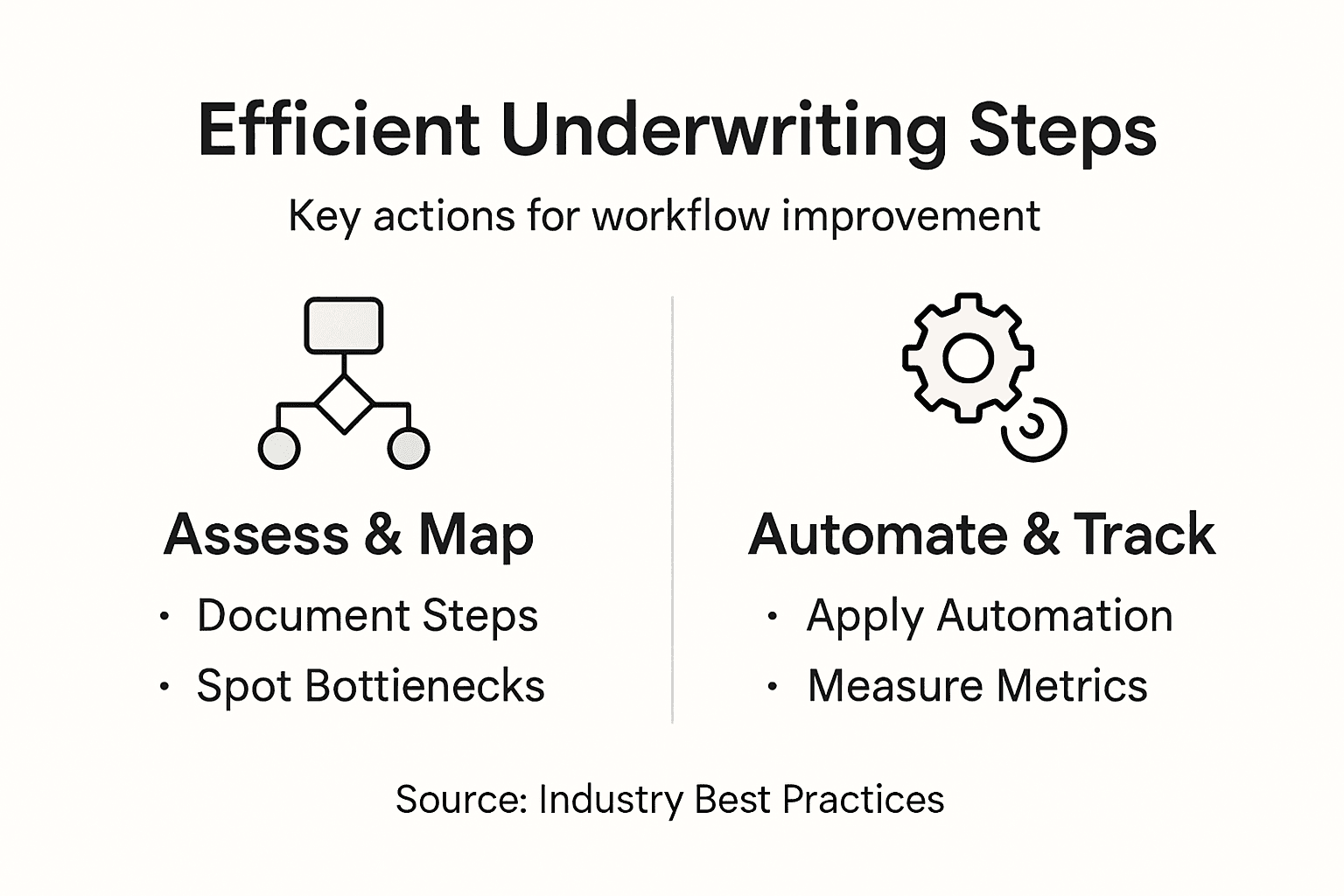
Infographic showing underwriting optimisation steps

Remember that automation works best when combined with proper change management. Your team needs training on new tools and clear explanation of why changes matter for their daily work.

Pro tip: Begin with the most time-consuming manual task in your workflow. Automating something your underwriters spend four hours weekly on will deliver visible results quickly and build momentum for broader digital transformation.

Below is a comparison of pre- and post-automation underwriting workflows:

Workflow Feature Manual Process (Before) Automated Process (After)
Data extraction Typed by underwriters Software parses instantly
Application screening Individual review needed Rules pre-filter automatically
Compliance checks Performed manually in steps Real-time and continuous
Workflow routing By manager assignment System assigns dynamically
Error rate Higher due to manual entry Lower with validation rules

Step 3: Customise workflows for local compliance needs

Your underwriting process must adapt to the legal requirements of each market where you operate. What works in Poland won’t automatically work in Austria or Hungary without adjustment. Compliance isn’t optional, and neither is flexibility.

Begin by mapping regulatory requirements for each jurisdiction you serve. Document the specific rules, documentation standards, and approval procedures mandated by local authorities.

Key compliance areas to review include:

  • Data protection and privacy regulations specific to each country
  • Local insurance licensing and approval requirements
  • Documentation standards for policy evidence and risk assessment
  • Consumer protection rules governing underwriting decisions
  • Anti-fraud and money laundering compliance procedures
  • Specific information disclosure requirements for applicants
  • Approval timelines set by local regulators

Understanding how local regulatory frameworks influence underwriting workflows is critical for maintaining compliance across multiple jurisdictions whilst avoiding operational delays.

Each market has unique compliance demands. Your workflow must bend to fit local rules, not the other way around.

Now configure your digital platform to enforce these requirements automatically. Your automation tools should apply different rule sets based on where the application originates. An application from your Prague office triggers different compliance checks than one from your Vienna office.

Build conditional workflows that route cases appropriately. Some applications may need additional review steps in certain jurisdictions. Others might require specific documentation that’s mandatory in one country but unnecessary in another. Your system should handle this complexity without human intervention.

Training matters here. Your underwriting teams need to understand not just the rules themselves, but why they exist. Someone reviewing applications in Budapest needs to know what makes their compliance requirements different from their colleagues in Bucharest.

Review comparative underwriting practices across European countries to identify variations driven by local regulations and market expectations.

Test your customised workflows thoroughly before going live in each new market. Run sample applications through your system and verify they follow the correct approval paths and documentation standards for that jurisdiction.

Pro tip: Create a compliance checklist for each country you serve and attach it directly to your workflow system. This ensures no underwriter accidentally bypasses a local requirement, even under time pressure.

Step 4: Verify improvements with performance metrics

Optimisation without measurement is guesswork. You need concrete data showing whether your workflow changes actually deliver the efficiency gains you expected. This step separates real improvement from wishful thinking.

Start by establishing your baseline metrics before implementing any changes. Go back to the data you collected in Step 1 and document your current performance across these dimensions.

Track these core metrics consistently:

  • Average underwriting cycle time from application submission to final decision
  • Percentage of applications requiring additional information requests
  • Number of underwriting errors or policy cancellations due to incorrect risk assessment
  • Underwriter productivity measured in applications reviewed per week
  • Compliance violations or regulatory findings related to underwriting
  • Cost per underwritten application including all resource expenditure
  • Time spent on manual data entry versus value-added review activities

Measure these same metrics again four to six weeks after implementing your changes. Compare the results directly to your baseline. Did cycle time drop by 15%? Did error rates fall? Did underwriters process more applications?

Understanding key performance indicators for assessing underwriting quality helps you verify efficiency gains and identify where further improvements are needed.

Numbers don’t lie. If your metrics haven’t improved, your optimisation hasn’t worked, and you need to adjust your approach.

Beyond the basic metrics, look at quality indicators. Are your underwriters making better decisions? Check your non-performing loan ratio or policy lapse rates if applicable. Optimisation that speeds up decisions but increases risk is counterproductive.

Involve your underwriting team in reviewing these metrics. They often spot patterns you’ll miss. One underwriter might notice that applications from certain regions process faster, suggesting regional workflow differences worth investigating.

Don’t chase perfection. Look for meaningful improvement—typically 20 to 30 percent gains in cycle time represent substantial achievement. Small gains in accuracy or error reduction compound significantly over thousands of applications annually.

Schedule regular reviews of these metrics. Monthly reporting keeps momentum alive and allows you to spot problems early if improvements plateau or regress.

Pro tip: Create a simple dashboard your entire team can see. When underwriters visualise how their cycle times are improving or how error rates are dropping, it reinforces the value of your optimisation work and builds buy-in for further changes.

Transform Your Underwriting Workflow with Intelligent Automation

The challenge of optimising underwriting workflows centres on reducing manual bottlenecks, enhancing accuracy, and navigating complex compliance across multiple jurisdictions. Your team faces persistent pain points such as time-consuming data entry, disjointed approval queues, and the need for local regulatory adaptability. These obstacles can slow cycle times and increase errors, placing pressure on underwriters and risking customer satisfaction.

Insurance Business Applications (IBA) understands these critical struggles and offers a solution designed to empower your underwriting teams with cloud-native automation and seamless system integration. Our IBSuite platform delivers advanced digital underwriting workflow capabilities that eliminate repetitive manual tasks, enforce compliance rules automatically, and provide real-time visibility into process metrics. Supported by secure API-first architecture and ongoing updates, IBSuite enables you to accelerate decisions, reduce errors, and adapt workflows to varied European legal frameworks effortlessly.

Ready to move beyond guesswork and start seeing measurable efficiency gains? Discover how IBSuite can revolutionise your underwriting process by booking a personalised demo today at IBA Book a Demo. Learn more about our digital underwriting workflow guide to see technology in action and explore our commitment to empowering insurers across diverse markets.

Frequently Asked Questions

How can I assess my current underwriting workflows effectively?

Begin by mapping your entire underwriting process from application submission to final decision. Document each step, including time spent and systems used, to identify bottlenecks and inefficiencies within 14 days.

What steps can I take to automate my underwriting processes?

Focus on repetitive, rule-based tasks suitable for automation, such as data extraction and compliance checks. Start by implementing automated data entry, which can reduce manual processing time by approximately 30%.

How do I ensure my underwriting workflows comply with local regulations?

Map out the specific regulatory requirements for each jurisdiction you operate in. Customise your workflows to incorporate compliance checks that are triggered automatically based on application location.

What performance metrics should I track after optimising underwriting workflows?

Track core metrics such as average underwriting cycle time, error rates, and compliance violations. Measure these metrics regularly, ideally within four to six weeks after changes, to assess improvements and identify further optimisation opportunities.

How can I involve my underwriting team in the optimisation process?

Engage your underwriting team by involving them in the mapping and documentation of current workflows. Regularly review performance metrics together to spot patterns and gather feedback, fostering a collaborative environment for effective changes.

Underwriting Defined: Boosting Agility in P&C Insurance

Underwriting Defined: Boosting Agility in P&C Insurance

Underwriter reviewing documents in corner office

Facing growing complexity in regulatory standards and risk profiles, Central European insurers must refine their approach to risk assessment if they want to stay competitive. The demand for efficient underwriting processes and robust compliance continues to escalate, especially as cloud-native platforms become the backbone of digital operations. This article explores how precise risk quantification, premium adequacy, and regulatory alignment shape profitable underwriting and support strategic innovation in property and casualty insurance.

Table of Contents

Key Takeaways

Point Details
Fundamental Importance of Underwriting Underwriting serves as the foundation of sustainable P&C insurance, ensuring accurate risk assessment, adequate pricing, and regulatory compliance.
Need for Climate Risk Integration Underwriters must incorporate climate risk into their assessments and pricing strategies to reflect changing environmental conditions.
Technology and Automation Benefits Modern technology enhances underwriting efficiency through automation, data integration, and advanced analytics, leading to faster and more accurate decision-making.
Regulatory Compliance as Competitive Advantage Adhering to regulatory requirements not only ensures compliance but also contributes to operational efficiency and enhanced decision-making capabilities.

Underwriting in Insurance: Core Principles

Underwriting is the foundation of profitable, sustainable P&C insurance. It determines which risks an insurer accepts, at what price, and under what conditions. Without solid underwriting principles, insurers face losses, regulatory challenges, and inability to compete effectively in today’s market.

At its core, underwriting balances three competing demands. First, it must assess risk accurately. Second, it must price premiums fairly. Third, it must ensure the insurer remains solvent and compliant. These three elements form the backbone of sound underwriting practice.

The Three Pillars of Core Underwriting

Each pillar addresses a different aspect of the underwriting decision:

  • Risk assessment: Evaluating the likelihood and severity of claims using historical data, industry benchmarks, and applicant-specific information
  • Premium adequacy: Ensuring the premium charged covers expected losses, expenses, and required profit margins
  • Regulatory compliance: Meeting European solvency requirements and maintaining sound risk management practices aligned with supervisory expectations

Effective underwriting is not about rejecting risk—it’s about accepting the right risk at the right price.

Why Risk Quantification Matters

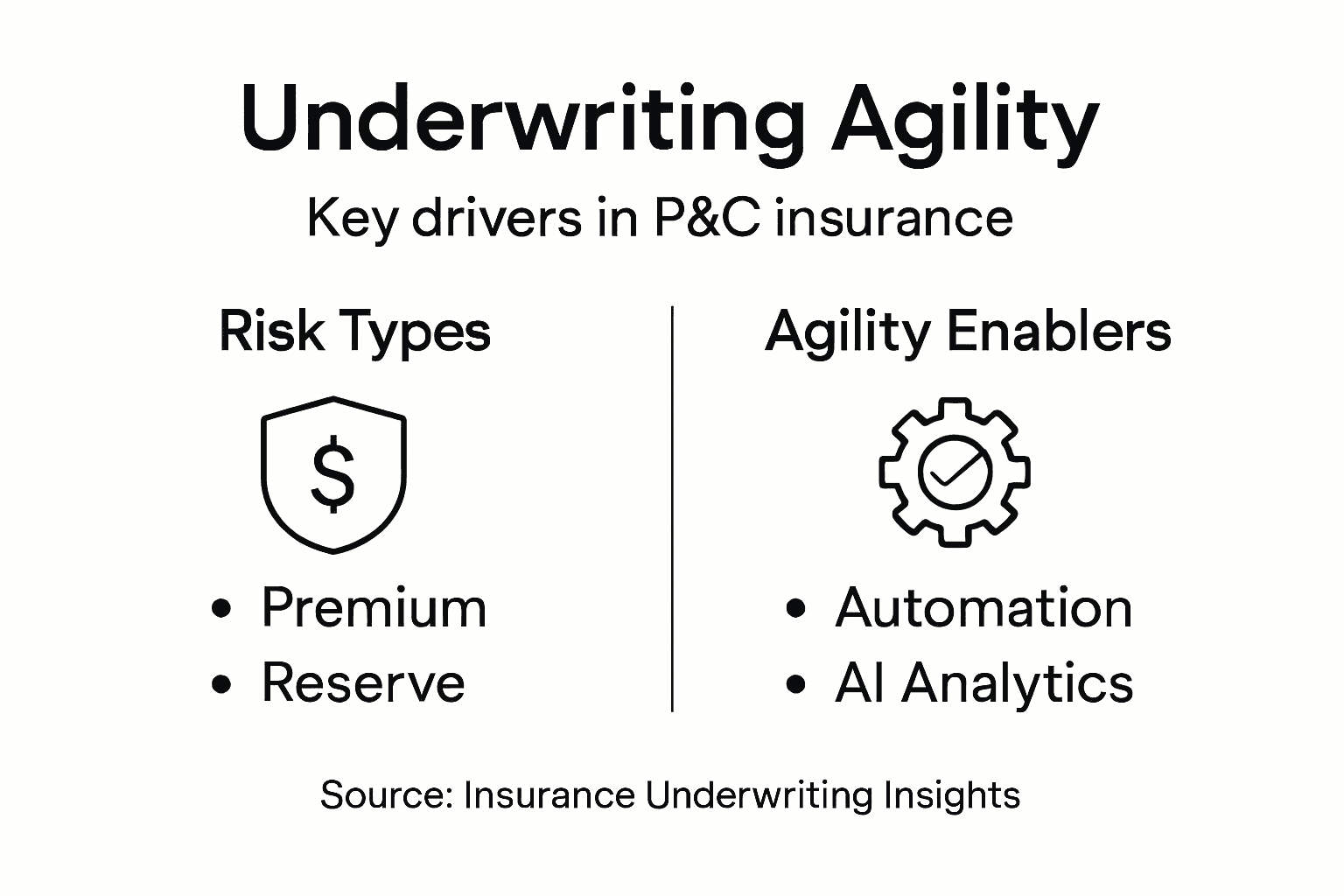
Premium, reserve, and catastrophe risks form the technical foundation of underwriting decisions. Each type of risk requires different analytical approaches and monitoring strategies.

Premium risk reflects uncertainty in claims experience relative to the premium charged. Reserve risk addresses the possibility that claims reserves prove insufficient. Catastrophe risk covers the tail events—floods, storms, industrial accidents—that can devastate profitability in a single event.

Central European insurers must evaluate all three when calculating solvency capital requirements. This ensures the business maintains adequate financial buffers to pay claims during adverse periods.

Climate Risk and Modern Underwriting

Traditional underwriting models assumed historical loss patterns would repeat. Climate change disrupts that assumption. Integrating climate risk into underwriting practices is no longer optional—it’s essential for accurate risk assessment.

Underwriters must now evaluate shifting environmental hazards when pricing and accepting risk. A property in a historically low-flood zone may face elevated risk in 2030. Agricultural insurance must account for changing precipitation patterns. Commercial underwriting demands forward-looking analysis rather than rear-view-mirror assessments.

Risk-based pricing reflects these evolving hazards. It ensures premiums remain adequate whilst keeping insurance affordable and available for insureds who manage their exposures responsibly.

Pro tip: Document your underwriting rationale for each major decision—especially climate risk adjustments—so you can defend your pricing and risk selection during regulatory reviews and claims disputes.

Major Types of Underwriting in P&C

P&C underwriting divides into distinct categories based on the customer type, risk complexity, and coverage scope. Understanding these categories helps underwriters apply appropriate risk assessment techniques and pricing strategies to each segment.

The main distinction separates personal lines from commercial lines, each requiring different expertise and analytical depth. Beyond that divide, specialty underwriting handles unique or high-risk exposures that demand specialist knowledge.

Personal Lines Underwriting

Personal lines cover individual homeowners, renters, and vehicle owners. These policies involve standardised risks with predictable loss patterns and relatively smaller exposure values per policy.

Personal underwriting relies heavily on automated decisioning systems and rating algorithms. Underwriters set guidelines, but most personal policies are underwritten through rules-based systems rather than individual manual review.

Common personal lines include:

  • Homeowners insurance: Dwelling, personal property, and liability coverage for residential properties
  • Motor insurance: Private vehicle coverage including third-party liability and comprehensive protection
  • Renters insurance: Coverage for tenants’ personal belongings and liability exposure

Commercial Lines Underwriting

Commercial underwriting addresses business risks—small shops, mid-sized manufacturers, large corporations. These policies involve complex exposures, significant loss potential, and substantial premium volumes.

Underwriters discussing commercial policy at table

Commercial underwriters exercise greater judgment and discretion than personal underwriters. They negotiate terms, adjust coverage limits, and apply subjective assessments based on business operations, management quality, and loss history.

Common commercial lines include:

  • General liability: Third-party bodily injury and property damage exposure from business operations
  • Property insurance: Building and contents protection against fire, theft, and natural hazards
  • Commercial auto: Vehicles used for business purposes with higher frequency and severity potential

Specialty Underwriting

Specialty underwriting handles unusual, high-value, or technically complex exposures. Professional indemnity, cyber liability, and environmental liability exemplify specialty lines requiring deep technical knowledge.

Premium risk, reserve risk, and catastrophe risk vary significantly across underwriting types. Specialty lines often carry elevated catastrophe exposure or reserve uncertainty compared to standardised personal products.

Each underwriting type demands different expertise—from statistical modelling in personal lines to relationship management and negotiation in commercial underwriting.

Climate Adaptation Across Underwriting Types

Climate change affects all underwriting types differently. Traditional underwriting approaches now require climate adaptation measures across personal, commercial, and specialty segments.

Infographic on underwriting agility key drivers

Personal underwriters must reassess flood and wind exposure in light of changing precipitation and storm patterns. Commercial underwriters need updated assumptions about business interruption from weather events. Specialty underwriters must evaluate emerging climate-related liabilities.

Risk mitigation through product design and pricing adjustments applies across all types. Underwriters increasingly offer premium reductions for climate-resilient properties, updated coverage terms for emerging exposures, and exclusions for uninsurable risks.

Here’s a summary of how climate risk impacts each underwriting type:

Underwriting Type Typical Climate Risk Impact Key Adaptation Strategy Business Challenge
Personal Lines Increased flood/wind exposure Update pricing and guidelines Keeping cover affordable
Commercial Lines Business interruption losses Revise loss models Complex risk assessment
Specialty Lines Emerging liability risks Technical risk evaluation Lack of historical data

Pro tip: Build underwriting guidelines specific to each line of business rather than applying one-size-fits-all criteria, as personal and commercial risks respond differently to the same pricing factors.

The Underwriting Process and Key Steps

The underwriting process transforms a customer’s application into a binding decision. It moves through distinct phases, each requiring specific inputs, analysis, and approvals before the insurer commits to the risk.

Understanding this workflow helps you spot inefficiencies, reduce cycle times, and improve decision quality. Most European P&C insurers follow a similar sequence, though specific steps vary by line of business and risk complexity.

Step 1: Submission Intake

Underwriting begins when a broker or customer submits an application. This stage involves collecting preliminary information about the risk, the applicant, and coverage requirements.

Efficient submission intake requires clear documentation standards. Missing or ambiguous information at this stage delays the entire process and creates rework downstream.

Key elements gathered include:

  • Applicant details and history
  • Risk location and exposure description
  • Requested coverage limits and deductibles
  • Loss history for past 5 years
  • Any special requirements or exclusions

Step 2: Risk Assessment and Data Collection

Risk assessment involves gathering and evaluating detailed information to understand the exposure accurately. You’re looking beyond the initial application to validate claims and identify hidden exposures.

Underwriters request additional documents—site inspections, financial statements, safety certifications, or industry-specific reports. The depth of investigation depends on premium size and risk complexity.

This phase answers critical questions: Does the applicant’s description match reality? Are there undisclosed exposures? Does the business have adequate loss controls?

Step 3: Risk Classification and Pricing

Once you understand the risk, you assign it to a rating category and apply pricing factors. Classification determines which underwriting rules apply and which premium rates are appropriate.

You evaluate loss probability, potential severity, and controllability. A small retail shop presents different exposures than a manufacturing facility, even if both request general liability coverage.

Pricing reflects the risk profile whilst remaining competitive in the market.

Step 4: Compliance and Final Approval

Compliance checks ensure regulatory requirements and policy guidelines are met before approval. You verify the decision aligns with underwriting authority limits, solvency requirements, and any exclusions.

Final approval comes from the appropriate authority level—junior underwriters approve small, straightforward risks; senior underwriters or committees approve complex exposures.

Efficiency in underwriting comes from clear processes, not from rushing decisions.

Automation’s Role in Workflow Optimisation

Automation accelerates underwriting by integrating data sources and reducing manual processing. Modern underwriting platforms handle routine decisions instantly whilst flagging complex cases for human review.

Automated workflows improve accuracy, consistency, and cycle time. They free your team to focus on high-value judgment decisions rather than data entry and document retrieval.

Pro tip: Map your current underwriting workflow step-by-step, identifying where decisions happen slowly or require rework, then prioritise automating those bottlenecks first for maximum efficiency gains.

Technology’s Role in Modern Underwriting

Technology transforms how underwriters assess risk, price policies, and make decisions. Manual processes that once took days now happen in minutes. Accuracy improves. Consistency strengthens. Costs fall.

Central European insurers face intense pressure to compete on speed and precision. Legacy systems cannot match the agility required in today’s market. Digital-first platforms enable underwriters to process more applications, reduce errors, and respond faster to changing conditions.

Automation in Routine Underwriting Decisions

Automation handles high-volume, low-complexity decisions instantly. Personal lines underwriting benefits most from this capability—thousands of homeowners and motor policies follow predictable patterns.

Rules-based engines apply underwriting guidelines automatically. If an applicant meets all criteria, the system approves and issues the policy without manual intervention. If something deviates, the system flags the case for human review.

Automation delivers immediate benefits:

  • Faster turnaround: Decisions in minutes instead of days
  • Higher consistency: Same rules applied identically to every applicant
  • Reduced costs: Fewer manual review hours required
  • Better customer experience: Instant approval notifications

Artificial Intelligence and Predictive Analytics

AI adoption in insurance introduces advanced analytical capabilities that go beyond simple automation. Machine learning models identify patterns in historical claims data that human underwriters might miss.

These models predict loss probability with remarkable precision. They adjust pricing dynamically based on emerging risk factors. They flag applicants with hidden exposure characteristics that require deeper investigation.

AI improves accuracy, especially in commercial underwriting where risk assessment involves dozens of variables. The technology learns continuously as new claims data emerges.

Below is a comparison of automation and AI in underwriting:

Technology Main Function Typical Use Case Business Benefit
Automation Rules-based decisioning Personal lines approvals Speed and cost reduction
AI & Analytics Predictive modelling Commercial risk analysis Improved accuracy and insights

Data Integration and Real-Time Risk Evaluation

Modern platforms consolidate data from multiple sources—applications, claims systems, external databases, inspection reports, financial records. Underwriters access complete risk profiles instantly rather than requesting documents piecemeal.

Integration reduces delays and improves decision quality. You see the full picture before committing to the risk. You identify inconsistencies or missing information immediately.

Technology alone doesn’t create agility; clear underwriting strategy combined with effective technology delivery does.

Regulatory Compliance and Transparency

Digital platforms maintain detailed audit trails of every underwriting decision. This transparency supports regulatory compliance and demonstrates sound risk management to supervisors.

Documentation happens automatically as underwriters work through cases. You meet solvency requirements and risk management standards without creating separate compliance processes.

AI systems require explainability—regulators expect you to justify algorithmic decisions. Modern platforms track which factors influenced each decision, enabling you to explain results to customers and regulators alike.

Pro tip: Start by automating your highest-volume, most straightforward underwriting decisions first, then expand to more complex cases once your team gains confidence in the technology and you’ve validated decision quality.

Efficiency, Compliance, and Risk Management Insights

Efficient underwriting and regulatory compliance are not competing objectives—they reinforce each other. When you build clear processes, apply consistent rules, and maintain quality data, you satisfy regulators whilst accelerating decisions.

Central European insurers operating under Solvency II must demonstrate sound risk management. This requirement aligns perfectly with the discipline that drives operational efficiency. You cannot cut corners on compliance and expect to improve speed sustainably.

Building Robust Risk Assessment Foundations

Robust risk management and regulatory compliance require accurate assessment of underwriting risks. You must identify exposure characteristics that drive loss probability and severity.

Data quality underpins everything. Poor input data produces poor risk assessments, leading to mispriced policies and unexpected claims. Clean, standardised data enables both accurate pricing and efficient processing.

Key elements of sound risk assessment include:

  • Premium risk evaluation: Pricing adequacy relative to expected claims
  • Reserve risk management: Ensuring claim reserves remain sufficient
  • Catastrophe risk quantification: Modelling tail events and exposure concentration
  • Data standardisation: Consistent information collection across all submissions

Regulatory Alignment Drives Operational Efficiency

Solvency II requirements force discipline into underwriting processes. You must document decision rationale, track risk exposures, and demonstrate compliance continuously.

This rigour, whilst demanding, creates efficiency. Clear audit trails reduce rework. Documented standards eliminate ambiguity. Consistent processes scale more effectively than ad-hoc approaches.

Underwriters spend less time debating “how should we handle this?” when underwriting guidelines are explicit and compliant.

Performance and Risk Appraisal Frameworks

Value and risk appraisal frameworks help underwriters balance performance opportunities against risk exposure. These frameworks assess counterparty risk, operational risk, and performance risk simultaneously.

Underwriters cannot optimise for profitability alone. They must consider whether accepting a profitable risk creates unacceptable concentration or operational challenges. Risk mitigation practices protect the insurer whilst enabling sustainable growth.

Compliance is not a cost centre—it’s a competitive advantage that enables faster, more confident decisions.

Operational Risk and Governance

Operational risk in underwriting includes process failures, data errors, and system failures. Robust governance structures, clear authority limits, and oversight mechanisms mitigate these risks.

Strong governance improves consistency and reduces errors. Underwriters know their decision authority. Cases requiring escalation are flagged automatically. Supervisory review happens at predetermined checkpoints rather than randomly.

This structure prevents both rogue decisions and unnecessary bottlenecks.

Data Quality as Foundation

Data quality determines underwriting accuracy and compliance capability. Standardised data collection eliminates ambiguity. Validated data prevents downstream errors.

Invest in data governance upfront. The payoff appears in faster underwriting cycles, fewer compliance issues, and more accurate risk pricing.

Pro tip: Audit your underwriting data quality monthly by comparing what you collect versus what you actually use in pricing decisions, then eliminate non-essential fields and strengthen validation for critical ones.

Unlock Agility and Precision in Underwriting with IBSuite

The article highlights the pressing challenges in P&C insurance underwriting today such as balancing accurate risk assessment, pricing adequacy, and regulatory compliance amid evolving climate risks and complex workflows. If you are seeking ways to overcome inefficiencies, manage data quality, and modernise your underwriting processes for faster decision making and better risk management, you are not alone.

IBA’s IBSuite platform is designed specifically to empower insurers like you to address these challenges confidently. With its cloud-native, API-first architecture, IBSuite streamlines underwriting operations, integrates real-time data for thorough risk evaluation, and ensures compliance with evolving regulatory demands. You can automate routine underwriting decisions while applying advanced analytics for complex commercial risks — all within one secure system. Experience how IBSuite helps you reduce IT complexity, accelerate product launches, and adapt rapidly to market changes.

Discover how to transform your underwriting agility now. Book a personalised demonstration with IBA and explore how IBSuite’s end-to-end insurance capability can give you a competitive edge. Take control of your underwriting workflow and safeguard profitability today by scheduling your demo here.

Frequently Asked Questions

What is underwriting in insurance?

Underwriting is the process by which insurers assess the risks associated with providing insurance coverage. It involves determining which risks to accept, at what price, and under what conditions.

Why is risk assessment important in underwriting?

Risk assessment is crucial in underwriting because it helps insurers evaluate the likelihood and potential severity of claims. Accurate risk evaluation ensures that premiums are set appropriately and that the insurer remains solvent.

How does climate change impact underwriting practices?

Climate change significantly affects underwriting by altering historical loss patterns. Underwriters must incorporate climate risk into their evaluations to ensure pricing reflects the evolving environmental hazards, thereby maintaining adequate coverage.

What role does technology play in the underwriting process?

Technology enhances the underwriting process by automating routine decisions, improving data integration, and enabling predictive analytics. This leads to faster processing times, greater accuracy, and better overall risk assessment.

7 Key Benefits of Cloud Insurance for P&C Firms

7 Key Benefits of Cloud Insurance for P&C Firms

Insurance team collaborating in bright office with laptops

Adopting new technology can feel overwhelming for European property and casualty insurers with long-standing legacy systems and complex regulations to consider. You may have concerns about costs, operational risk, or falling behind faster-moving competitors. The reality is that cloud insurance platforms now offer clear, measurable improvements that are changing the game for insurers across Europe.

With the right cloud solutions, you can achieve documented reductions in IT costs by 30 to 40 percent and slash processing times by up to 88 percent, according to recent research. This means smoother operations, faster product launches, and improved customer experiences are all within your reach. The following list reveals the most tangible benefits of cloud insurance platforms, giving you the insights needed to make confident, future-ready decisions.

Table of Contents

Quick Summary

Key Message Explanation
1. Accelerate Product Development Cloud platforms reduce development time from months to weeks, enhancing responsiveness to market changes.
2. Simplify IT Management Migrating to cloud environments decreases operational costs and simplifies IT infrastructure management dramatically.
3. Enhance Security Measures Cloud platforms offer advanced security features and compliance tools, improving protection against cyber threats.
4. Improve Customer Engagement Insurance firms can utilise real-time communication and personalised services to enhance customer experience and loyalty.
5. Facilitate Scalable Operations Cloud technology allows for rapid capacity expansion and deployment of new product lines without substantial investments.

1. Faster Product Launches and Market Adaptation

Cloud insurance platforms have transformed how P&C insurers develop and deploy new products in the rapidly evolving European insurance market. By leveraging cloud technologies insurers can dramatically accelerate their product development cycles and respond more quickly to changing market demands.

Traditional insurance product launches often required months of complex infrastructure preparation and significant capital investment. Cloud platforms eliminate these barriers by providing flexible and scalable technology environments that enable rapid prototyping and deployment.

Key advantages of cloud-based product launches include:

  • Reducing development timelines from months to weeks
  • Enabling real-time product configuration and personalisation
  • Minimising upfront technology infrastructure costs
  • Supporting seamless integration with emerging digital distribution channels

The cloud allows insurers to rapidly innovate insurance products with unprecedented speed and agility. European insurers can now experiment with new coverage models pricing strategies and customer engagement approaches without massive technological investments.

Cloud platforms transform product development from a complex technical challenge into a flexible strategic opportunity.

By decoupling product development from traditional IT constraints cloud insurance platforms create an environment where innovation becomes faster more cost effective and less risky. Insurers can test market concepts prototype new offerings and iterate rapidly based on customer feedback.

Pro tip: Implement a cloud-first strategy that prioritises modular product design and rapid experimentation to stay competitive in the modern insurance marketplace.

2. Simplified IT Management and Lower Costs

Cloud insurance platforms fundamentally transform the technological landscape for property and casualty insurers by dramatically simplifying IT infrastructure management and reducing operational expenses. By migrating core systems to cloud environments insurers can achieve unprecedented levels of operational efficiency.

Traditional IT management for insurance firms involved complex hardware maintenance expensive infrastructure upgrades and significant personnel investments. Cloud platforms eliminate these challenges by providing scalable and flexible technology solutions that minimise internal technical overhead.

Key cost reduction and management advantages include:

  • Eliminating large upfront capital expenditure on server infrastructure
  • Reducing ongoing maintenance and hardware replacement costs
  • Minimising internal IT support team requirements
  • Enabling automatic system updates and security patches
  • Providing predictable monthly technology expenditure

By adopting low-code digital transformation strategies, insurers can streamline their technological ecosystems and redirect resources towards strategic business initiatives rather than routine infrastructure management.

Cloud platforms transform IT from a cost centre into a strategic enabler of business agility.

Modern cloud architectures allow European insurers to implement robust technological solutions without maintaining extensive in-house technical capabilities. This approach enables smaller and mid-sized organisations to access enterprise-grade technology infrastructure previously available only to large corporations.

Pro tip: Conduct a comprehensive audit of existing IT infrastructure to identify potential cloud migration opportunities and develop a phased transition strategy.

3. Enhanced Security and Regulatory Compliance

Cloud insurance platforms represent a quantum leap in addressing the complex security and regulatory challenges facing modern property and casualty insurers. These advanced technological environments provide robust protection mechanisms that significantly surpass traditional on-premises infrastructure security models.

In an era of increasingly sophisticated cyber threats and stringent data protection regulations insurers must implement comprehensive security architecture that safeguards sensitive customer information whilst maintaining regulatory compliance across multiple jurisdictions.

Key security and compliance advantages include:

  • Automated continuous security monitoring
  • Advanced encryption for data at rest and in transit
  • Real-time threat detection and prevention
  • Built-in compliance management tools
  • Rapid security patch implementation
  • Granular access control mechanisms

By leveraging cloud security best practices for insurers, organisations can create multi-layered defence strategies that protect against emerging digital risks while ensuring adherence to evolving regulatory frameworks.

Cloud platforms transform security from a reactive cost centre into a proactive strategic advantage.

Modern cloud infrastructures enable insurers to implement sophisticated disaster recovery protocols that minimise operational disruption. These systems provide automated failover mechanisms cross-region data replication and rapid system restoration capabilities that traditional IT infrastructures cannot match.

Pro tip: Conduct regular comprehensive security audits and maintain a dynamic compliance strategy that anticipates regulatory changes rather than merely reacting to them.

4. Seamless Integration Across Value Chain

Cloud insurance platforms revolutionise how property and casualty insurers connect and orchestrate complex business processes across their entire operational ecosystem. These advanced technological solutions eliminate traditional technological silos by providing unified digital infrastructure that enables seamless communication between different departments and external stakeholders.

Traditional insurance systems often suffered from fragmented technological landscapes where sales underwriting claims and billing operated as disconnected entities. Cloud platforms transform this model by creating an integrated environment where information flows effortlessly and transparently.

Key integration benefits include:

  • Unified data repositories
  • Real-time information synchronisation
  • Automated cross-departmental workflows
  • Enhanced collaborative capabilities
  • Simplified third-party vendor interactions
  • Streamlined regulatory reporting processes

By overcoming traditional integration challenges, insurers can create more responsive and intelligent organisational structures that adapt quickly to market dynamics and customer expectations.

Digital integration transforms complex operational processes into fluid strategic opportunities.

Cloud platforms enable insurers to build modular and interconnected technological ecosystems that support rapid innovation and continuous improvement. This approach allows organisations to replace rigid legacy systems with flexible adaptable technological frameworks.

Pro tip: Develop a comprehensive integration strategy that prioritises interoperability and considers both current technological infrastructure and future scalability requirements.

5. Evergreen Updates and Ongoing Innovation

Cloud insurance platforms represent a transformative approach to technological evolution enabling P&C insurers to maintain cutting-edge capabilities without disruptive system replacements. Evergreen technology ensures continuous innovation through automatic seamless updates that keep insurers technologically current without extensive manual interventions.

Traditional insurance systems required expensive periodic upgrades that consumed significant time and resources. Modern cloud platforms fundamentally reshape this model by providing automatic background enhancements that introduce new features functionality and security improvements without operational interruptions.

Key innovation advantages include:

  • Automatic background system updates
  • Zero downtime feature enhancements
  • Continuous regulatory compliance integration
  • Instant access to latest technological capabilities
  • Reduced long-term technological debt
  • Minimal internal IT management requirements

By exploring evergreen technology approaches, insurers can create adaptable technological ecosystems that remain responsive to emerging market demands and technological shifts.

Evergreen platforms transform technological maintenance from a cost centre into a strategic innovation engine.

Cloud-native insurance platforms enable organisations to experiment prototype and implement new features with unprecedented speed and flexibility. This approach allows insurers to test innovative concepts rapidly without extensive infrastructure investments.

Pro tip: Develop a comprehensive innovation strategy that treats technological platforms as dynamic living ecosystems rather than static infrastructure investments.

6. Improved Customer Engagement and Experience

Cloud insurance platforms fundamentally transform how property and casualty insurers interact with customers by creating seamless digital engagement ecosystems. These advanced technological environments enable personalised responsive and transparent customer experiences that meet increasingly sophisticated consumer expectations.

Traditional insurance interactions often felt impersonal fragmented and bureaucratic. Cloud platforms revolutionise this paradigm by providing real-time communication channels personalised service delivery and intuitive digital touchpoints that enhance customer satisfaction and loyalty.

Key customer engagement advantages include:

  • Personalised product recommendations
  • Instant claims processing
  • Multichannel communication options
  • Transparent and accessible policy management
  • 24/7 self-service capabilities
  • Proactive risk management insights

By improving customer experience strategies, insurers can create more meaningful and responsive relationships that transcend traditional transactional interactions.

Digital customer experiences transform insurance from a necessary purchase into a valued service partnership.

Cloud platforms enable insurers to leverage advanced analytics artificial intelligence and machine learning to understand individual customer needs predict potential risks and deliver highly contextualised insurance solutions.

Pro tip: Develop a customer-centric digital strategy that prioritises personalisation transparency and seamless omnichannel interactions.

7. Scalable Operations to Support Growth

Cloud insurance platforms revolutionise how property and casualty insurers approach operational scalability by providing flexible technological infrastructure that adapts seamlessly to changing business requirements. These advanced platforms enable insurers to expand their capabilities rapidly without substantial capital investments or complex technological redesigns.

Traditional insurance systems often created significant barriers to growth requiring extensive manual reconfiguration and costly infrastructure upgrades. Cloud platforms eliminate these constraints by offering modular adaptable architectures that support organisational expansion with unprecedented efficiency.

Key scalability advantages include:

  • Instant capacity expansion
  • Minimal upfront infrastructure investments
  • Rapid deployment of new product lines
  • Flexible resource allocation
  • Automated performance scaling
  • Global operational capabilities

By exploring cloud scalability strategies, insurers can transform operational limitations into strategic growth opportunities.

Scalable cloud platforms convert technological constraints into competitive advantages.

Modern cloud architectures provide European insurers with the agility to experiment prototype and launch new products swiftly while maintaining robust performance and security standards. This approach enables organisations to respond dynamically to market shifts and customer demands.

Pro tip: Develop a comprehensive cloud migration roadmap that prioritises incremental scalability and aligns technological capabilities with strategic business objectives.

This table summarises the key benefits and features of implementing cloud insurance platforms within the property and casualty insurance industry as outlined in the article.
Feature/Benefit Description Impact
Faster Product Launches Cloud platforms expedite product development cycles by providing flexible and scalable environments. Insurers can rapidly respond to market demands and innovate efficiently.
Simplified IT Management Cloud platforms reduce traditional IT complexities through scalable technology solutions. Operational efficiencies and predictable monthly expenses.
Enhanced Security Advanced encryption, compliance monitoring, and continuous updates. Improved customer data protection and regulatory adherence.
Seamless Integration Unified infrastructure enables smooth communication across departments. Increased organisational agility and reduced process fragmentation.
Evergreen Updates Automatic enhancements ensure the system remains current with minimal user intervention. Continuously innovative and competitive technology use.
Improved Customer Engagement Personalised services and responsive digital engagement. Increased customer satisfaction and loyalty.
Scalable Operations Flexible architecture supports immediate capacity expansion. Facilitates organisational growth and adapts to evolving demands.

Unlock the Full Potential of Cloud Insurance with IBA

The article highlights critical challenges faced by European property and casualty insurers such as lengthy product development cycles, complex IT management, and the urgent need for seamless integration and regulatory compliance. If you aim to accelerate product innovation, streamline operations, and secure your business against evolving market pressures the key lies in adopting a truly cloud-native platform that supports Evergreen updates and scales effortlessly.

Insurance Business Applications offers IBSuite a powerful, API-first solution that addresses these pain points directly. From rapid product launches to enhanced customer engagement and simplified IT management IBSuite helps you transform technological constraints into strategic advantages. Discover how you can simplify compliance, implement modular integrations, and continuously innovate without disrupting your operations. Explore our approach to rapid product innovation and low-code digital transformation to gain a competitive edge.

Ready to modernise your core systems and respond swiftly to market changes Book a personalised demo with IBA today at Insurance Business Applications. Take the next step to future-proof your P&C business and turn cloud insurance benefits into operational realities.

Frequently Asked Questions

What are the main benefits of using cloud insurance for Property and Casualty firms?

Cloud insurance offers several key benefits, including faster product launches, simplified IT management, enhanced security, seamless integration, evergreen updates, improved customer engagement, and scalable operations. These features collectively enable firms to respond more swiftly to market demands and reduce operational costs.

How can cloud insurance platforms speed up product development cycles?

Cloud insurance platforms can reduce product development timelines from months to weeks by providing flexible and scalable technology environments. To leverage this, P&C firms should implement a cloud-first strategy focused on modular product design and rapid experimentation.

In what ways do cloud platforms enhance operational efficiency for P&C insurers?

Cloud platforms enhance operational efficiency by eliminating large upfront capital expenditures and reducing ongoing maintenance costs. Firms can streamline their processes by conducting a comprehensive audit of existing IT infrastructure to identify potential areas for cloud migration.

How do cloud insurance solutions address data security and regulatory compliance?

Cloud insurance solutions provide advanced security features such as automated monitoring and real-time threat detection, significantly enhancing data protection. To ensure compliance, firms should regularly conduct security audits and maintain proactive compliance strategies that adapt to regulatory changes.

What steps should P&C firms take to integrate their operations using cloud technology?

P&C firms should develop a comprehensive integration strategy that prioritises interoperability across different departments and external stakeholders. This can be achieved by creating unified data repositories and automating cross-departmental workflows to streamline operations.

How does cloud technology support growth for Property and Casualty insurers?

Cloud technology supports growth by enabling instant capacity expansion and rapid deployment of new product lines without substantial capital investments. Insurers can act on this by planning a detailed cloud migration roadmap that aligns technological capabilities with strategic business objectives.

7 Best Underwriting Process Best Practices for P&C Firms

7 Best Underwriting Process Best Practices for P&C Firms

Underwriter analyzing policies in office setting

Improving risk management in property and casualty insurance is no simple task. Each day, you face new risks, shifting regulations, and mountains of data that can cloud your judgement if not handled correctly. The demand for greater accuracy, speed, and compliance leaves no room for outdated processes or miscommunication between departments.

What if you could unlock strategies that leading European and North American insurers rely on for consistent results and smarter decisions? By adopting proven approaches such as data standardisation, automated risk evaluation, and unified guidelines, you can drive better outcomes and minimise costly mistakes.

This list reveals actionable steps and insider techniques that will help you transform your underwriting process. Get ready to discover specific methods for enhancing precision, collaboration, and oversight that can give your team a real edge.

Table of Contents

Quick Summary

Takeaway Explanation
1. Standardise data collection for accuracy Standardised processes improve precision in risk assessments and enhance decision-making across teams.
2. Automate risk assessment with advanced tools Machine learning and AI enable faster, more accurate risk evaluation, reducing human error and enhancing fraud detection.
3. Apply consistent underwriting guidelines Uniform guidelines ensure consistent decision-making and improved regulatory compliance, leading to better financial outcomes.
4. Integrate regulatory compliance checks Automation in compliance monitoring mitigates risks, enhances transparency, and protects against financial penalties.
5. Enhance collaboration between teams Improved communication and shared workflows enhance risk evaluation and accelerate decision-making across the organisation.

1. Standardise Data Collection for Accuracy

Data is the lifeblood of modern property and casualty insurance underwriting. By standardising data collection processes, insurers can dramatically improve the precision and reliability of risk assessments.

Underwriters face significant challenges when dealing with disparate data sources and inconsistent collection methods. Leading carriers are investing in data standardisation to create a unified approach that enhances decision-making.

Key benefits of standardised data collection include:

  • Improved risk evaluation accuracy
  • Consistent data interpretation across teams
  • Reduced manual data entry errors
  • Enhanced predictive analytics capabilities
  • Faster underwriting decision processes

Standardised data collection transforms raw information into strategic insights.

To implement effective data standardisation, consider these practical steps:

  1. Develop a comprehensive data dictionary defining standard terms and formats
  2. Create cross-functional teams to manage data initiatives
  3. Implement automated data validation tools
  4. Establish regular data quality review processes
  5. Train staff on standardised data collection protocols

Pro tip: Invest in robust data governance frameworks that continuously monitor and improve your data collection standards.

2. Automate Risk Assessment with Advanced Tools

Advanced technological tools are revolutionising how property and casualty insurers evaluate and manage risk. Machine learning and artificial intelligence now enable more sophisticated and precise risk assessment strategies.

Modern underwriting demands intelligent systems that can process complex data rapidly and accurately. AI agents in P&C underwriting use sophisticated machine learning algorithms to analyse both structured and unstructured data in real-time.

Key advantages of automated risk assessment include:

  • Rapid data processing and analysis
  • Enhanced fraud detection capabilities
  • Dynamic and adaptive risk models
  • More precise risk evaluation
  • Reduced human error in assessment

Automation transforms underwriting from a manual process into an intelligent, predictive function.

To implement advanced risk assessment tools effectively, consider these strategic steps:

  1. Evaluate existing technological infrastructure
  2. Select AI-driven risk assessment platforms
  3. Integrate machine learning models
  4. Train staff on new technological systems
  5. Continuously monitor and refine algorithmic performance

Pro tip: Invest in scalable AI technologies that can adapt to evolving risk landscapes and integrate seamlessly with your existing underwriting workflows.

3. Apply Consistent Underwriting Guidelines

Consistent underwriting guidelines form the backbone of effective risk management for property and casualty insurance firms. These standardised frameworks ensure uniform decision-making across all underwriting teams and territories.

Comprehensive underwriting policies are crucial for maintaining balanced portfolio performance and regulatory compliance.

Key benefits of applying consistent underwriting guidelines include:

  • Standardised risk assessment approaches
  • Enhanced portfolio steering capabilities
  • Reduced variability in risk selection
  • Improved regulatory compliance
  • More predictable financial outcomes

Uniform guidelines transform underwriting from an inconsistent art to a precise science.

To implement robust underwriting guidelines effectively, follow these strategic steps:

  1. Develop a comprehensive written policy framework
  2. Define clear risk appetite parameters
  3. Create standardised evaluation criteria
  4. Train all underwriting staff consistently
  5. Establish regular review and update mechanisms

Pro tip: Design your underwriting guidelines with built-in flexibility to adapt to emerging market conditions while maintaining core consistency.

4. Integrate Regulatory Compliance Checks

Regulatory compliance is not just a legal requirement but a critical risk management strategy for property and casualty insurance firms. Robust compliance processes protect your organisation from potential financial penalties and reputational damage.

Insurance compliance automation has become essential in managing complex regulatory landscapes across different jurisdictions.

Key benefits of integrating comprehensive regulatory compliance checks include:

  • Proactive risk mitigation
  • Reduced regulatory breach potential
  • Enhanced organisational transparency
  • Improved governance frameworks
  • Better protection against financial penalties

Effective compliance is about creating a culture of continuous vigilance and strategic risk management.

To develop a robust regulatory compliance framework, consider these strategic steps:

  1. Conduct comprehensive regulatory landscape analysis
  2. Implement automated compliance monitoring systems
  3. Establish clear reporting and escalation protocols
  4. Train staff on current regulatory requirements
  5. Create periodic compliance audit mechanisms

Pro tip: Develop a flexible compliance framework that adapts quickly to evolving regulatory environments while maintaining rigorous standards.

5. Enhance Collaboration Between Teams

Successful underwriting relies on more than individual expertise. It demands seamless communication and strategic alignment across multiple organisational teams.

Digital platforms enable holistic data sharing and create interconnected workflows that transform traditional siloed approaches.

Key advantages of enhanced team collaboration include:

  • Unified risk assessment perspectives
  • Faster decision-making processes
  • Improved transparency across departments
  • More comprehensive risk evaluation
  • Reduced communication barriers

Effective collaboration transforms isolated teams into a unified strategic powerhouse.

To build robust cross-functional collaboration, implement these strategic approaches:

  1. Establish regular inter-departmental meetings
  2. Create shared digital communication platforms
  3. Develop integrated data-sharing protocols
  4. Design collaborative performance metrics
  5. Encourage cross-team training initiatives

Pro tip: Invest in collaborative technologies that break down departmental silos and create seamless information exchange mechanisms.

6. Leverage Real-Time Data Analytics

Data analytics have transformed underwriting from a reactive to a proactive discipline. Modern property and casualty insurers now harness sophisticated technologies to continuously reassess risk profiles and make intelligent decisions.

Advanced real-time analytics techniques enable insurers to stay ahead of emerging market trends and potential risks.

Key benefits of leveraging real-time data analytics include:

  • Dynamic risk profile adjustments
  • Improved pricing accuracy
  • Enhanced portfolio management
  • Faster decision-making capabilities
  • More precise risk segmentation

Real-time data analytics convert raw information into strategic competitive advantage.

To implement effective real-time data analytics, follow these strategic steps:

  1. Invest in robust analytics infrastructure
  2. Develop cross-functional data science teams
  3. Create integrated data collection systems
  4. Implement continuous learning mechanisms
  5. Establish clear performance measurement metrics

Pro tip: Build a culture of data-driven decision-making by ensuring analytics insights are accessible and actionable across all organisational levels.

7. Monitor and Optimise Underwriting Performance

Underwriting performance is not a static metric but a dynamic process requiring continuous refinement and strategic oversight. Successful property and casualty insurers invest in robust monitoring systems that transform raw performance data into actionable insights.

Advanced performance monitoring techniques focus on five critical pillars of underwriting excellence.

Key aspects of effective performance monitoring include:

  • Comprehensive portfolio analysis
  • Continuous risk appetite assessment
  • Pricing strategy refinement
  • Performance gap identification
  • Regulatory compliance tracking

Optimising underwriting performance transforms operational data into strategic competitive advantage.

To establish a robust performance monitoring framework, implement these strategic steps:

  1. Define clear performance metrics
  2. Develop automated monitoring dashboards
  3. Conduct regular performance audits
  4. Create feedback and improvement loops
  5. Invest in continuous team training

Pro tip: Develop a culture of data-driven performance improvement that encourages transparent, ongoing evaluation and proactive strategy adjustments.

Below is a comprehensive table summarizing the key strategies and practices discussed throughout the article regarding enhancing property and casualty insurance underwriting processes.

Aspect Description Benefits
Standardising Data Collection Develop consistent processes for data collection, including the creation of a data dictionary and training staff. Improved risk evaluation accuracy, reduced errors, and enhanced analytics potential.
Automating Risk Assessment Use AI and machine learning systems to process and analyse risk-related data. Rapid data processing, improved fraud detection, and reduced human error.
Applying Consistent Underwriting Guidelines Establish uniform policies and criteria for risk assessment across the organisation. Standardised approaches, regulatory compliance, and predictable financial outcomes.
Integrating Regulatory Compliance Checks Implement proactive compliance monitoring systems. Reduced risks, improved transparency, and robust governance frameworks.
Enhancing Collaboration Foster teamwork through digital platforms and shared protocols. Unified perspectives and faster decision-making processes.
Leveraging Real-Time Data Analytics Employ technologies to assess risks dynamically and adjust strategies. Accurate pricing, proactive risk management, and actionable insights.
Monitoring and Optimising Performance Regularly assess and refine underwriting processes and metrics. Continuous improvement and strategic competitive advantage.

Transform Your P&C Underwriting with Streamlined Digital Solutions

The article highlights critical pain points faced by Property and Casualty insurers including inconsistent data collection, complex risk assessments, regulatory compliance challenges and the need for seamless team collaboration. These issues slow down underwriting decisions and increase operational risks while demanding agile responses to evolving market demands. By adopting standardised data practices and automating risk evaluation as discussed, insurers can elevate accuracy, reduce errors and accelerate the underwriting cycle.

Insurance Business Applications (IBA) specialises in addressing these exact challenges through IBSuite, a robust cloud-native platform designed to unify the entire underwriting process. IBSuite’s API-first architecture ensures seamless integration of regulatory compliance checks and real-time analytics, empowering your teams with comprehensive data insights and collaborative tools to drive consistent underwriting guidelines efficiently. This creates a foundation for continuous improvement and agile performance optimisation that the article emphasises.

Unlock the full potential of your underwriting operations today by exploring how IBSuite can revolutionise your workflows. Experience firsthand the benefits of a secure, end-to-end insurance platform trusted by global leaders. Take the next step now with a personalised demonstration Book a Demo and see how advanced risk assessment and data standardisation can transform your P&C underwriting process. Learn more about Insurance Compliance Automation and enhance team collaboration through integrated digital platforms also featured in our solutions.

Frequently Asked Questions

What are the steps to standardise data collection for underwriting?

To standardise data collection, first develop a comprehensive data dictionary that defines standard terms and formats. Then, create cross-functional teams to manage data initiatives and implement automated data validation tools within 30 days.

How can automation improve the risk assessment process for P&C insurance?

Automation enhances the risk assessment process by enabling rapid data processing and real-time analysis. Start by integrating AI-driven risk assessment platforms to reduce human error and improve the accuracy of evaluations.

What should be included in consistent underwriting guidelines?

Consistent underwriting guidelines should include a comprehensive written policy framework that defines risk appetite parameters and standardised evaluation criteria. Ensure all underwriting staff are trained on these guidelines to maintain uniformity across the organisation.

How can we integrate regulatory compliance checks into our underwriting process?

Integrate regulatory compliance checks by conducting a thorough analysis of the regulatory landscape and implementing automated compliance monitoring systems. Establish clear reporting protocols and conduct periodic compliance audits to maintain adherence to regulations.

What practices can enhance collaboration between underwriting and other teams?

Enhance collaboration by establishing regular inter-departmental meetings and creating shared digital communication platforms. Implement integrated data-sharing protocols to reduce communication barriers and improve risk assessment perspectives.

How do I monitor and optimise underwriting performance effectively?

To monitor and optimise underwriting performance, define clear performance metrics and develop automated monitoring dashboards. Conduct regular performance audits and create feedback loops to continuously improve underwriting strategies.

Insurance Market Trends 2025 – Impact on P&C Insurers

Insurance Market Trends 2025 – Impact on P&C Insurers

Insurance analysts reviewing market trends in office

Facing mounting pressure from rapid technological innovation and evolving regulatory frameworks, Property and Casualty insurance leaders across Central Europe know that 2025 will demand more than traditional thinking. The shift to data-driven ecosystem platforms is transforming how insurers assess risk, personalise products, and strengthen customer relationships. This article explores the strategic market trends and digital transformation drivers reshaping policy development and customer engagement as the European insurance sector enters a new era of competition and complexity.

Table of Contents

Key Takeaways

Point Details
Technological Integration is Crucial Insurers must adopt advanced digital platforms to enhance risk assessment and customer engagement in the evolving market.
Regulatory Adaptation is Imperative Developing agile compliance strategies is essential as regulatory environments grow more complex and demanding.
Customer Expectations are Rising Insurers need to create personalised and seamless experiences to meet the heightened expectations of policyholders.
Strategic Partnerships are Key Embracing collaborative models with fintech and technology firms will enhance distribution strategies and customer access.

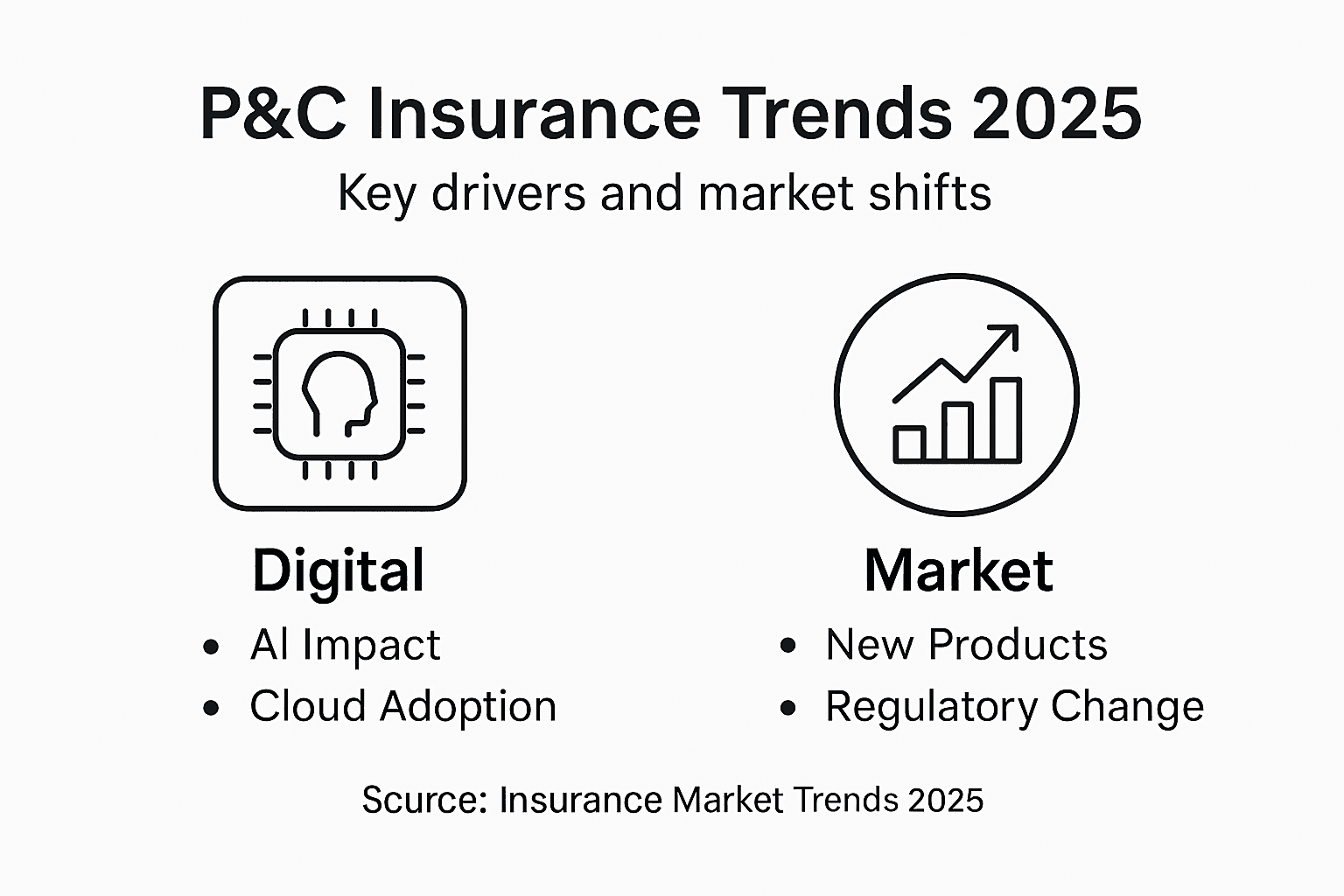
The European insurance market is undergoing significant transformation as we approach 2025, driven by complex technological, regulatory, and economic dynamics. Global insurance market trends indicate profound shifts that will reshape how P&C insurers operate and deliver value.

Key market trends emerging in 2025 encompass several critical dimensions:

  • Technological Integration: Advanced digital platforms enabling real-time risk assessment
  • Regulatory Adaptation: Evolving compliance frameworks across European jurisdictions
  • Customer Experience: Heightened expectations for personalised, seamless insurance interactions
  • Risk Management: Sophisticated data analytics driving more precise underwriting strategies

The technological landscape is particularly transformative. Insurers are rapidly transitioning from traditional models to data-driven ecosystem platforms that leverage artificial intelligence, machine learning, and comprehensive risk modelling techniques. This shift allows for more granular risk evaluation, dynamic pricing, and proactive customer engagement.

European insurers must embrace technological innovation to remain competitive in the rapidly evolving 2025 market landscape.

Regulatory environments are simultaneously becoming more complex, requiring insurers to develop agile compliance strategies. The OECD’s market analysis highlights increasing regulatory scrutiny around data protection, transparency, and customer rights.

Pro tip: Invest in flexible technology platforms that can rapidly adapt to emerging regulatory and market requirements.

Key Digital Transformation Drivers in P&C

Digital transformation has become a critical imperative for Property and Casualty (P&C) insurers navigating the complex landscape of technological innovation. Global insurance digital strategies are fundamentally reshaping how insurers approach risk management, customer engagement, and operational efficiency.

The primary digital transformation drivers in P&C insurance encompass several interconnected domains:

  • Data Analytics: Leveraging big data for sophisticated risk assessment
  • Artificial Intelligence: Enhancing underwriting precision and claims processing
  • Customer Experience Technologies: Creating personalised, seamless digital interactions
  • Automation Platforms: Streamlining operational workflows and reducing manual interventions

Technological advancements are driving unprecedented changes in insurance ecosystems. Generative AI technologies are particularly transformative, enabling insurers to develop more nuanced risk models, predict customer behaviours, and create dynamic pricing strategies that respond in real-time to complex market conditions.

Insurance digital team reviewing AI integration flow

The following table highlights the strategic benefits of key digital transformation drivers for P&C insurers:

Transformation Driver Main Benefit Example Business Impact
Data Analytics Enhanced risk assessment Lower claim ratios and targeted pricing
Artificial Intelligence Precision in underwriting Faster approvals, reduced error rates
Customer Experience Tech Seamless digital engagement Increased policyholder retention
Automation Platforms Streamlined processes Operational cost reduction

Digital transformation is no longer optional – it’s a fundamental survival strategy for P&C insurers in 2025.

Regulatory landscapes are simultaneously evolving, compelling insurers to adopt more sophisticated digital transformation approaches. These technological integrations not only improve operational efficiency but also enhance compliance mechanisms, data protection protocols, and customer trust.

Pro tip: Prioritise flexible technology platforms that can integrate multiple digital capabilities while maintaining robust security and regulatory compliance.

Shifting Distribution Models and Partnerships

The European insurance distribution landscape is experiencing radical transformation, driven by technological innovation and changing customer expectations. Insurance distribution trends reveal a complex ecosystem of emerging partnership models and digital channels.

Key characteristics of evolving distribution strategies include:

  • Hybrid Distribution Channels: Blending digital platforms with traditional agent networks
  • Ecosystem Partnerships: Collaborative models with fintech and technology firms
  • Direct Sales Capabilities: Expanding digital-first engagement methods
  • Third-Party Platform Integration: Leveraging external digital marketplaces

Increasingly, insurers are recognising the strategic importance of digital ecosystem collaboration. This approach enables more flexible, responsive distribution models that can rapidly adapt to changing market dynamics and customer preferences.

Here is a comparison of traditional versus emerging insurance distribution models in 2025:

Distribution Model Customer Access Strategic Advantage
Traditional Agent Network Face-to-face interaction Relationship-driven sales
Digital-Only Platforms 24/7 self-service Broader market reach
Hybrid Channels Multi-touch engagement Flexibility and scalability
Ecosystem Partnerships Integrated service access Cross-industry innovation

Traditional distribution channels are being systematically reimagined through strategic technological partnerships.

Regulatory environments are compelling insurers to develop more sophisticated distribution partnership strategies. These emerging models must balance innovation with compliance, creating robust mechanisms for customer protection and transparent engagement.

Pro tip: Develop agile partnership frameworks that prioritise technological compatibility, regulatory compliance, and seamless customer experience.

Regulatory Changes Shaping Central Europe

The Central European insurance landscape is experiencing profound regulatory transformations that will fundamentally reshape risk management and operational protocols. Global insurance regulatory developments are introducing sophisticated mechanisms to enhance market stability and consumer protection.

Key regulatory shifts encompass several critical dimensions:

  • Solvency II Reforms: Enhanced capital management requirements
  • Operational Resilience: Strengthened risk assessment frameworks
  • Digital Compliance: Expanded technological governance standards
  • Transparency Protocols: Increased reporting and disclosure obligations

The regulatory environment is becoming increasingly complex, demanding insurers develop more sophisticated compliance strategies. These emerging frameworks emphasise dynamic risk management, requiring organisations to implement more agile and technologically integrated governance mechanisms.

Regulatory adaptation is no longer an option but a fundamental strategic imperative for Central European insurers.

Technological innovations are driving significant changes in regulatory approaches, compelling insurers to invest in advanced compliance infrastructures that can seamlessly integrate evolving legal requirements with operational efficiency.

Pro tip: Develop flexible regulatory compliance systems that can rapidly adapt to emerging legal frameworks while maintaining robust risk management protocols.

Customer Expectations and Product Innovation

The landscape of insurance product development is undergoing radical transformation, driven by increasingly sophisticated customer demands and technological capabilities. Global customer insurance trends reveal a fundamental shift towards personalised, flexible, and digitally integrated insurance experiences.

Key customer-driven product innovation dimensions include:

  • Personalised Coverage: Tailored insurance packages matching individual risk profiles
  • Usage-Based Models: Dynamic pricing reflecting real-time behavioural data
  • Digital Integration: Seamless, technology-enabled insurance interactions
  • Predictive Risk Management: Proactive protection strategies

The insurance product ecosystem is evolving rapidly, with insurers developing increasingly sophisticated solutions that blend technological innovation with nuanced customer understanding. Emerging products now incorporate advanced data analytics, enabling more precise risk assessment and personalised pricing strategies.

Customer expectations are driving a fundamental reimagination of insurance product design and delivery.

Technological innovations are enabling insurers to develop innovative insurance solutions that respond dynamically to changing customer needs, creating more flexible and responsive insurance ecosystems.

Infographic summarizing PC insurance trends for 2025

Pro tip: Develop agile product development frameworks that can rapidly prototype and deploy customer-centric insurance solutions.

Risks, Compliance, and Competitive Strategies

The insurance landscape in 2025 demands unprecedented strategic agility, with insurers navigating complex risk environments that transcend traditional operational boundaries. Global insurance risk management strategies are increasingly centred on proactive, technology-enabled approaches.

Key competitive risk and compliance dimensions include:

  • Cyber Resilience: Advanced threat detection and mitigation capabilities
  • Climate Risk Management: Integrated environmental risk assessment frameworks
  • Regulatory Adaptability: Dynamic compliance infrastructure
  • Strategic Diversification: Multi-dimensional risk mitigation strategies

Technological innovations are fundamentally reshaping risk management paradigms. Advanced analytics and artificial intelligence are enabling insurers to develop more sophisticated predictive models, transforming risk from a reactive to a proactive discipline.

Competitive advantage in 2025 will be defined by an organisation’s ability to transform risk into strategic opportunity.

Emergent compliance approaches are compelling insurers to develop comprehensive risk management strategies that integrate technological innovation with regulatory intelligence, creating more resilient and adaptive organisational frameworks.

Pro tip: Develop integrated risk management platforms that seamlessly combine technological innovation, regulatory compliance, and strategic foresight.

Stay Ahead in the Evolving P&C Insurance Landscape with IBSuite

The Insurance Market Trends 2025 article highlights the urgent need for Property and Casualty insurers to embrace digital transformation, agile regulatory compliance, and innovative distribution models. Key challenges include integrating advanced data analytics, artificial intelligence, and seamless customer experiences while navigating complex regulatory frameworks across Central Europe and wider European markets. Insurers must overcome operational complexity and rapidly adapt product offerings to meet sophisticated customer expectations and shifting market dynamics.

At Insurance Business Applications, we understand these challenges deeply. Our cloud-native core insurance platform, IBSuite, is designed specifically to empower P&C insurers to accelerate their digital transformation journey. With IBSuite you benefit from an API-first, end-to-end solution that manages the full insurance value chain with flexible technology platforms, rapid product innovation, and robust regulatory compliance built in. Let us help you reduce IT complexity and swiftly respond to evolving distribution channels and customer demands.

Step into the future of insurance today by discovering how IBSuite can transform your operations and competitive strategy. Book a demo to explore a platform built for the trends and demands of 2025: Book a demo. Learn how to leverage comprehensive digital capabilities and regulatory agility with our digital transformation solutions tailored for P&C insurers taking on 2025 market challenges.

Frequently Asked Questions

Key trends include technological integration, regulatory adaptation, enhanced customer experience, and advanced risk management strategies driven by data analytics.

How is technology transforming the operations of P&C insurers?

Technology is enabling insurers to leverage advanced digital platforms and data-driven ecosystems, allowing for real-time risk assessment, dynamic pricing, and proactive customer engagement.

What changes in customer expectations should insurers anticipate by 2025?

Insurers should expect heightened demands for personalised, seamless digital interactions and tailored insurance products that reflect individual risk profiles and preferences.

How are regulatory changes impacting P&C insurers in 2025?

Regulatory changes are introducing more complex compliance requirements, particularly around data protection and transparency, which insurers must address with agile strategies and advanced technological solutions.

Insurance Customer Experience 2025: Shaping Engagement and Growth

Insurance Customer Experience 2025: Shaping Engagement and Growth

Advisor greets client in city office

Every insurer faces the evolving challenge of meeting rising customer expectations while balancing operational efficiency and regulatory demands. For Central European P&C companies, the pressure to create seamless, digitally enabled journeys has never been greater. Drawing from insights highlighted by Insurance Europe and Deloitte, this guide explores how innovative technology strategies and omnichannel integration can redefine insurance customer experience by 2025, offering practical approaches for sustainable progress.

Table of Contents

Key Takeaways

Point Details
Transformational Focus Insurers must prioritise personalised, proactive engagement strategies by 2025 to meet evolving customer expectations.
Technological Integration Leveraging AI, machine learning, and data analytics is vital for creating responsive and intelligent customer interactions.
Omni-Channel Strategy Developing seamless omni-channel integration is essential for enhancing customer experiences across all touchpoints.
Regulatory Compliance Navigating complex regulations requires insurers to embed compliance into their customer engagement strategies while ensuring transparency and protection.

Defining Insurance Customer Experience 2025

Customer experience in the insurance sector has undergone profound transformation, evolving from transactional interactions to comprehensive, personalised engagement strategies. By 2025, insurers across Europe will need to reimagine their approach, focusing on creating seamless, digitally-enabled journeys that anticipate and address customer needs proactively.

The landscape of insurance customer experience is characterised by several critical dimensions:

  • Digital accessibility across multiple channels
  • Personalised product recommendations
  • Transparent and rapid claims processing
  • Predictive risk management solutions
  • Integrated, omnichannel communication platforms

Insurance Europe highlights that the customer experience encompasses far more than traditional service interactions. It represents a holistic approach to supporting consumers through life’s financial complexities, adapting to emerging societal needs and demographic shifts.

Technological innovations will play a pivotal role in reshaping customer interactions. Insurers must leverage advanced data analytics, artificial intelligence, and machine learning to create more intelligent, responsive engagement models. This means moving beyond reactive service to predictive, personalised support that demonstrates genuine understanding of individual customer contexts.

Infographic on digital tech impact in insurance 2025

Here is a summary of how key technologies enhance insurance customer experience:

Technology Primary Function Business Impact
Artificial Intelligence Personalises recommendations, automates processes Boosts satisfaction, cuts costs
Machine Learning Predicts risks and customer behaviour Improves retention, reduces claims
Data Analytics Uncovers insights from customer data Enables targeted engagement

Pro tip: Invest in comprehensive customer journey mapping technologies that can track and analyse interaction points across digital and physical touchpoints to understand evolving customer expectations.

Transforming Digital Journeys and Touchpoints

Digital transformation in insurance represents a fundamental reimagining of customer interactions, moving beyond traditional service models to create intelligent, responsive engagement platforms. The future of insurance customer experience hinges on seamlessly integrating technological capabilities with genuine human understanding.

Team reviews digital customer journey plans

Digital transformation frameworks across European markets emphasise the critical balance between innovative technologies and consumer protection. This approach requires insurers to develop sophisticated digital ecosystems that can adapt rapidly to changing customer expectations.

Key elements of modern digital insurance touchpoints include:

  • Automated yet personalised communication channels
  • Real-time claims processing capabilities
  • Predictive risk assessment technologies
  • Integrated mobile and web experience platforms
  • Seamless omnichannel interactions

Deloitte’s research reveals significant digital maturity gaps in current insurance customer journeys, particularly in claims and assistance processes. Insurers must prioritise creating intuitive digital experiences that combine technological efficiency with empathetic customer support.

Technological innovations like artificial intelligence, machine learning, and advanced data analytics will be instrumental in transforming these digital touchpoints. The goal is not just technological sophistication, but creating genuine, contextually aware customer interactions that feel personalised and supportive.

Pro tip: Implement comprehensive customer journey mapping technologies that provide granular insights into digital interaction points, enabling continuous refinement of the customer experience.

Omni-Channel Integration Across the Value Chain

The insurance landscape is undergoing a profound transformation, with omni-channel integration emerging as a critical strategic imperative for delivering exceptional customer experiences. Modern insurers must create seamless, flexible interactions that transcend traditional channel boundaries, enabling customers to engage effortlessly across digital and physical touchpoints.

Digital technologies are reshaping the entire insurance value chain, demanding comprehensive integration of communication and service platforms. This holistic approach requires reimagining how insurers design, deliver, and support their products through interconnected ecosystems.

Key elements of effective omni-channel strategies include:

  • Unified customer data platforms
  • Consistent messaging across channels
  • Adaptive communication technologies
  • Personalised interaction tracking
  • Seamless cross-channel transitions
  • Real-time data synchronisation

The evolution of omni-channel approaches demands that insurers develop sophisticated technological capabilities that enable truly flexible customer interactions. This means creating intelligent systems that can recognise customer preferences, anticipate needs, and provide contextually relevant support regardless of the chosen communication channel.

Wavestone’s research underscores the importance of customer-centric models that blend digital convenience with human insight. Insurers must design experiences that feel intuitive, transparent, and responsive, supporting customers through complex decision-making processes with unprecedented levels of personalisation and support.

The table below contrasts traditional and future-focused omni-channel approaches in insurance:

Approach Traditional Model Future-Focused Model
Channel Integration Siloed, limited synchronisation Fully unified digital-physical
Data Consistency Inconsistent, fragmented records Real-time, seamless updates
Customer Support Style Reactive, generic assistance Proactive, highly personalised

Pro tip: Invest in comprehensive integration platforms that enable real-time data sharing and contextual awareness across all customer interaction channels.

Regulatory Impacts on Customer Engagement

The European insurance landscape is experiencing unprecedented regulatory transformation, with compliance becoming a critical driver of customer engagement strategies. Insurers must navigate an increasingly complex regulatory environment that demands transparency, technological adaptability, and robust consumer protection mechanisms.

Central and Eastern European insurers are confronting intensified regulatory reforms that fundamentally reshape how they interact with customers. These regulations compel insurers to reimagine their technological infrastructure and customer engagement approaches.

Key regulatory developments impacting customer engagement include:

  • Artificial Intelligence Act compliance
  • Digital Operational Resilience Act (DORA) requirements
  • Enhanced data protection protocols
  • Solvency II regulatory revisions
  • Mandatory ESG reporting frameworks
  • Transparent pricing and value assessments

The regulatory landscape demands that insurers develop sophisticated technological capabilities that simultaneously meet compliance requirements and deliver exceptional customer experiences. This means creating intelligent systems capable of adapting to evolving regulatory expectations while maintaining customer-centric service delivery.

European regulatory frameworks are increasingly focused on ensuring meaningful customer outcomes, compelling insurers to develop more transparent, responsive, and personalised engagement models. The convergence of regulatory compliance and customer experience represents a strategic imperative for forward-thinking insurance organisations.

Pro tip: Develop a dedicated regulatory compliance team with cross-functional expertise in technology, customer experience, and legal frameworks to proactively manage emerging regulatory challenges.

Common Pitfalls and Ways to Avoid Them

Transforming insurance customer experience requires strategic navigation of complex technological and organisational challenges. Insurers must anticipate and proactively address potential obstacles that can derail digital transformation initiatives and compromise customer engagement strategies.

Common pitfalls in insurance customer experience transformation include:

  • Fragmented technological ecosystems
  • Inadequate data integration capabilities
  • Insufficient staff digital upskilling
  • Lack of comprehensive customer journey mapping
  • Poor change management practices
  • Reactive instead of predictive technology adoption

Technological legacy system constraints often represent the most significant barrier to meaningful customer experience enhancement. Many insurers struggle with rigid, siloed infrastructure that prevents seamless data flow and inhibits the creation of truly personalised customer interactions.

Successful transformation demands a holistic approach that balances technological innovation with strategic organisational change. This requires developing adaptive technological architectures capable of supporting continuous innovation while maintaining robust operational stability.

Key strategies for mitigating transformation risks involve creating cross-functional teams, investing in modular technological platforms, and developing comprehensive change management frameworks that prioritise both technological capabilities and human adaptability.

Pro tip: Conduct regular diagnostic assessments of your technological ecosystem to identify potential integration challenges and strategic transformation opportunities before they become critical impediments.

Elevate Your Insurance Customer Experience for 2025 and Beyond

The future of insurance customer experience demands seamless omni-channel integration, predictive engagement, and robust regulatory compliance as highlighted in “Insurance Customer Experience 2025: Shaping Engagement and Growth.” If your organisation faces challenges like fragmented technology ecosystems, slow product innovation, or difficulty delivering personalised customer journeys, you are not alone. These pain points underscore the urgent need for a cloud-native, agile platform designed to empower insurers to modernise core systems while delivering digital-first, empathetic customer interactions.

Insurance Business Applications offers IBSuite, an end-to-end, API-first insurance platform built to streamline your entire value chain—from underwriting and policy administration to claims and CRM. With IBSuite you can accelerate product launches, ensure regulatory compliance, and create responsive digital journeys that resonate with today’s customer expectations. Discover how to transform fragmented processes into unified, real-time ecosystems that enable proactive, personalised service.

Ready to drive exceptional customer engagement and operational agility now Explore how IBSuite can support your digital transformation goals with a tailored demonstration. Book a demo today at Insurance Business Applications and take the vital step to future-proof your business. For a deeper understanding, explore our digital transformation frameworks and regulatory insights to align your strategy with evolving market demands.

Frequently Asked Questions

What is the future of customer experience in the insurance sector by 2025?

By 2025, the insurance sector will shift towards comprehensive, personalised engagement strategies, focusing on seamless, digitally-enabled journeys that proactively address customer needs.

How will technology impact customer interactions in insurance?

Technological innovations, such as artificial intelligence and machine learning, will reshape customer interactions by enabling predictive and personalised support that enhances the overall customer experience.

What are key elements of modern digital insurance touchpoints?

Modern digital insurance touchpoints include automated yet personalised communication channels, real-time claims processing, predictive risk assessment technologies, and integrated mobile and web experience platforms.

What should insurers focus on to avoid common pitfalls in customer experience transformation?

Insurers should focus on developing comprehensive customer journey mapping, enhancing data integration capabilities, and implementing effective change management practices to avoid pitfalls in their transformation efforts.

Insurance Fraud Analytics: Transforming P&C Detection

Insurance Fraud Analytics: Transforming P&C Detection

Analyst in office reviewing fraud data

Fraudulent claims threaten both financial stability and reputation across European Property & Casualty insurance firms. Facing increasingly complex schemes, professionals must rely on digital innovation and advanced data insights to protect their organisations. By adopting robust insurance fraud analytics, analysts gain the power to uncover hidden patterns, spot suspicious behaviour and reinforce proactive fraud defence. The pursuit of data-driven fraud detection is now central to sustainable risk management in European insurance contexts.

Table of Contents

Key Takeaways

Point Details
Insurance Fraud Analytics Utilises advanced data analysis techniques, including machine learning, to detect and prevent fraud in Property & Casualty insurance.
Types of Fraud Detected Platforms can identify various fraud types, such as application fraud, identity theft, and staged accidents, minimising financial damage.
Regulatory Challenges Insurers must navigate strict compliance requirements, such as GDPR, ensuring transparency while managing data privacy effectively.
Implementation Risks Successful implementation requires balancing technology and operational readiness, addressing potential false positives and investment costs.

Defining Insurance Fraud Analytics in P&C

Insurance fraud analytics represents a sophisticated approach to detecting and preventing fraudulent activities within Property & Casualty (P&C) insurance domains. By leveraging advanced data analysis techniques, insurers can systematically identify suspicious patterns and potential misrepresentations that might otherwise go unnoticed.

At its core, insurance fraud analytics involves using predictive modeling and machine learning algorithms to scrutinise insurance transactions and claims. Predictive modeling techniques enable insurers to develop robust detection mechanisms that can rapidly assess risk and flag potentially fraudulent cases before significant financial damage occurs.

Key components of effective insurance fraud analytics include:

  • Advanced data mining techniques
  • Machine learning algorithms like Random Forest models
  • Statistical pattern recognition
  • Comprehensive transaction history analysis
  • Cross-referencing multiple data sources

The primary objective of these analytics is not just detection, but prevention. By understanding fraudulent behaviour patterns, insurers can design more sophisticated risk management strategies. Fraud detection frameworks help organisations develop proactive policies that reduce financial losses and protect their operational integrity.

Infographic showing fraud analytics methods and outcomes

Pro tip: Implement continuous model training and update your fraud detection algorithms regularly to stay ahead of evolving fraudulent techniques.

Types of Fraud Detected by Analytics Platforms

Insurance fraud analytics platforms have become sophisticated tools for identifying a wide range of fraudulent activities across Property & Casualty (P&C) insurance domains. These advanced systems leverage complex algorithms and data analysis techniques to detect and prevent multiple types of fraudulent behaviour that could potentially cause significant financial damage to insurers.

The National Insurance Crime Bureau identifies several critical fraud types that advanced analytics platforms detect, including:

  • Application fraud
  • Rate evasion fraud
  • Identity theft
  • Money laundering
  • Premium fraud
  • Bodily injury fraud
  • Staged accidents
  • Vehicle-related fraud (such as arson or rental fraud)

Modern fraud detection technologies rely on intricate pattern recognition and anomaly detection mechanisms. Data analytics techniques enable insurers to cross-reference multiple data sources, identifying suspicious transactions, repeated claims, and unusual behavioural patterns that might indicate fraudulent intent.

Worker comparing graphs and fraud reports

These platforms go beyond simple rule-based systems, employing machine learning algorithms that can adapt and improve their detection capabilities over time. By continuously analysing vast amounts of transactional data, insurance fraud analytics platforms can quickly flag potential risks and help organisations take proactive measures to mitigate financial losses.

Pro tip: Implement a multi-layered fraud detection approach that combines statistical analysis, machine learning models, and domain expertise for comprehensive risk management.

How Advanced Analytics Identifies Fraud Patterns

Advanced analytics has revolutionised fraud detection by employing sophisticated techniques that go far beyond traditional rule-based systems. Anomaly detection methodologies enable insurers to systematically identify unusual patterns and behaviours that might indicate potential fraudulent activities across complex financial networks.

The core mechanisms of advanced fraud pattern identification involve multiple sophisticated approaches:

  • Supervised machine learning models
  • Unsupervised pattern recognition algorithms
  • Statistical deviation analysis
  • Behavioural network mapping
  • Complex interaction tracking
  • Real-time transaction monitoring

Modern fraud detection technologies leverage artificial intelligence to create intricate models that can detect subtle irregularities. AI-driven fraud detection techniques analyse vast datasets, identifying complex interactions and behavioural anomalies that human analysts might easily overlook. These systems continuously learn and adapt, becoming increasingly precise in distinguishing between legitimate variations and genuine fraudulent activities.

By combining multiple analytical approaches, insurers can develop robust fraud detection frameworks that provide comprehensive protection. The integration of machine learning, statistical analysis, and domain expertise creates a multi-layered defence mechanism capable of identifying increasingly sophisticated fraudulent schemes.

This table summarises how different machine learning techniques enhance fraud detection in P&C insurance analytics:

Technique Main Benefit Example Application
Random Forest Models High accuracy in classification Detecting complex fraud scenarios
Anomaly Detection Identifies rare data patterns Spotting unusual claim behaviour
Behavioural Network Mapping Uncovers hidden relationships Revealing fraud rings and collusion
Real-time Monitoring Immediate risk flagging Preventing rapid fraudulent payouts

Pro tip: Continuously update your fraud detection models by incorporating new data and emerging fraud patterns to maintain predictive accuracy.

The landscape of insurance fraud analytics in Central Europe is significantly shaped by complex legal and regulatory frameworks that demand sophisticated compliance strategies. AI and algorithmic decision challenges require insurers to navigate intricate data protection requirements while maintaining effective fraud detection capabilities.

Key regulatory challenges for insurers include:

  • General Data Protection Regulation (GDPR) compliance
  • Cross-border data exchange restrictions
  • Transparency and explainability of AI models
  • Protection of sensitive personal information
  • Interoperability between different regulatory systems
  • Ethical use of advanced analytics technologies

Central European regulatory environments impose stringent constraints on data handling and privacy. Regulatory data protection requirements create significant complexity for insurance fraud analytics platforms, requiring meticulous approach to data management, consent mechanisms, and algorithmic transparency.

Insurers must develop robust governance frameworks that balance advanced technological capabilities with strict legal compliance. This involves creating sophisticated data anonymisation techniques, implementing comprehensive consent management systems, and ensuring that fraud detection algorithms remain interpretable and accountable to regulatory authorities.

Here is a quick comparison of regulatory challenges faced by insurers in Central Europe versus other regions:

Challenge Central Europe Other Regions
Data Protection Laws Strict GDPR enforcement Moderate to varied
AI Model Transparency Mandatory explainability Less stringent
Cross-border Data Exchange Highly restricted More flexibility
Consent Management Rigorous requirements Lighter procedures

Pro tip: Develop a comprehensive data governance strategy that prioritises regulatory compliance, transparency, and ethical use of advanced analytics technologies.

Key Pitfalls, Costs and Implementation Risks

Implementing insurance fraud analytics platforms involves navigating a complex landscape of technological, operational, and regulatory challenges. Fraud detection implementation risks encompass multiple dimensions that insurers must carefully manage to ensure effective and sustainable fraud prevention strategies.

Critical challenges and potential pitfalls include:

  • High technology investment costs
  • Complex data integration requirements
  • Risk of generating false positive alerts
  • Potential regulatory compliance complications
  • Technological infrastructure limitations
  • Staff resistance to new analytical systems
  • Evolving fraud detection methodologies
  • Sophisticated cybersecurity vulnerabilities

The financial implications of fraud analytics implementation are substantial. Fraud risk management strategies require comprehensive investment across multiple organisational domains, including technological infrastructure, specialised personnel training, and continuous system adaptation to emerging fraud tactics.

Successful implementation demands a holistic approach that balances technological capabilities with organisational readiness. This involves developing robust governance frameworks, ensuring data quality, maintaining algorithmic transparency, and creating adaptive fraud detection mechanisms that can evolve alongside increasingly sophisticated fraudulent techniques.

Pro tip: Conduct thorough pre-implementation risk assessments and develop a phased rollout strategy that allows for continuous learning and system refinement.

Transform Your P&C Fraud Detection with Cutting-Edge Technology

Insurance fraud analytics reveals complex challenges such as identifying evolving fraudulent patterns, maintaining GDPR compliance, and avoiding costly false positives. Insurers face the critical need to deploy advanced machine learning algorithms and robust data governance frameworks to stay ahead. At Insurance Business Applications, we understand these pain points and empower Property & Casualty insurers to overcome them with our cloud-native platform, IBSuite. Designed for seamless integration and continuous adaptation, IBSuite supports efficient fraud detection alongside comprehensive policy administration and claims management.

Embrace a future of fraud prevention that combines regulatory compliance, real-time analytics, and rapid product innovation — all on a secure, API-first system trusted by global insurers. Don’t let the complexities of insurance fraud analytics slow your business down. Take control now and discover how IBSuite can transform your fraud detection capabilities. Contact us to Book a Demo and start your journey towards smarter, faster, and more reliable insurance operations.

Frequently Asked Questions

What is insurance fraud analytics in P&C insurance?

Insurance fraud analytics in Property & Casualty (P&C) insurance refers to the use of advanced data analysis techniques, such as predictive modelling and machine learning, to detect and prevent fraudulent activities by identifying suspicious patterns in insurance transactions and claims.

What types of fraud can be detected using analytics platforms?

Analytics platforms can detect various types of fraud, including application fraud, identity theft, premium fraud, staged accidents, bodily injury fraud, and vehicle-related fraud such as arson or rental fraud.

How do advanced analytics identify fraud patterns?

Advanced analytics identify fraud patterns through methods like supervised and unsupervised machine learning, anomaly detection, behavioural network mapping, and real-time transaction monitoring to spot unusual behaviours and relationships that may indicate fraudulent activities.

What are the main challenges of implementing insurance fraud analytics?

Challenges include high technology investment costs, complex data integration, risk of false positives, regulatory compliance issues, infrastructure limitations, and the need for staff training and adaptation to new systems.

Cloud Scalability in Insurance: Enabling Rapid Growth

Cloud Scalability in Insurance: Enabling Rapid Growth

Choosing the right approach to cloud scalability can feel overwhelming when complex data volumes and unpredictable peaks are the new normal for Central European insurance companies. The need to efficiently handle soaring claims, regulatory shifts, and evolving customer expectations places real pressure on technology leaders. This article explains cloud scalability as it truly applies to insurance, offering practical guidance to help you build adaptable systems that deliver performance while simplifying operational hurdles.

Table of Contents

Key Takeaways

Point Details
Cloud Scalability is Essential It allows insurance platforms to adapt rapidly to changing workloads and market demands, ensuring consistent performance.
Adaptable Scalability Models Insurers should consider vertical, horizontal, and diagonal scaling to address their specific operational needs effectively.
Regulatory Compliance is Crucial A dedicated compliance monitoring team helps insurers navigate evolving regional regulations while protecting data integrity.
Proactive Risk Management Regular audits and strategic oversight can prevent cost overruns and security vulnerabilities, enhancing overall cloud infrastructure resilience.

Defining cloud scalability in insurance

Cloud scalability represents a transformative capability for modern insurance platforms, enabling organisations to dynamically adapt computing resources in response to changing business demands. At its core, cloud scalability refers to the system’s ability to efficiently handle increasing workloads, user volumes, and data complexity without compromising performance or user experience.

In the insurance sector, scalability goes beyond simple infrastructure expansion. It encompasses the strategic capacity to support complex distributed systems that can rapidly adjust to market fluctuations, customer expectations, and technological innovations. This means insurance platforms must be designed with flexible architectures that can:

  • Automatically increase computational resources during peak claim periods
  • Dynamically allocate storage and processing power
  • Maintain consistent performance under variable workloads
  • Support seamless integration of new digital services

The significance of cloud scalability becomes particularly evident when examining how insurers manage increasingly complex data ecosystems. Modern insurance platforms require robust systems capable of processing massive datasets, supporting personalised product offerings, and delivering real-time digital experiences. Cloud computing revolutionises operational agility by providing the technological foundation for these advanced capabilities.

Insurance analysts inspecting data servers

Pro tip: Design your cloud infrastructure with modularity and flexibility as primary considerations, ensuring your insurance platform can effortlessly scale without architectural constraints.

Types of cloud scalability for insurers

Cloud scalability in insurance is not a one-size-fits-all approach, but a nuanced strategy involving multiple scaling techniques designed to meet complex operational requirements. Technical studies reveal distinct scalability models that insurance organisations can leverage to enhance their technological infrastructure.

The primary types of cloud scalability for insurers include:

  • Vertical Scaling: Increasing computational capacity within a single machine
    • Involves upgrading RAM, processor speed, or storage capabilities
    • Best for applications with predictable, steady workloads
  • Horizontal Scaling: Distributing workloads across multiple machines
    • Adds additional servers to manage increased demand
    • Ideal for handling variable insurance workloads like claims processing
  • Diagonal Scaling: Combining vertical and horizontal approaches
    • Offers maximum flexibility and performance optimization
    • Allows simultaneous machine upgrades and network expansion

Workload Considerations play a critical role in selecting the appropriate scalability approach. Insurance platforms must assess factors such as data processing requirements, customer interaction volumes, and seasonal fluctuations in service demand. Horizontal scaling proves particularly advantageous for insurers managing complex, distributed computing environments that require rapid resource allocation and high availability.

Here is a comparison of cloud scalability models and their suitability for insurance use cases:

Scalability Model Ideal Use Case Strengths
Vertical Scaling Core policy admin systems Simplicity, predictable loads
Horizontal Scaling Claims surge, customer portals High availability, flexibility
Diagonal Scaling Digital transformation projects Combines capacity and agility

Effective cloud scalability transforms infrastructure from a potential bottleneck into a strategic business enabler.

Pro tip: Conduct regular performance assessments to determine which scalability model best matches your specific insurance platform’s operational dynamics and growth trajectory.

Infographic of cloud scalability types and benefits

Essential features of scalable cloud platforms

Scalable cloud platforms for insurance represent a sophisticated technological ecosystem designed to address complex operational challenges. Key features enable rapid adaptation and resilience across increasingly dynamic insurance landscapes.

The fundamental features of scalable cloud platforms include:

  • Multi-Cloud Strategy
    • Prevents vendor lock-in
    • Enhances infrastructure resilience
    • Provides flexible deployment options
  • Advanced Integration Capabilities
    • Supports seamless API connections
    • Enables rapid product development
    • Facilitates ecosystem interoperability
  • Robust Security Frameworks
    • Implements zero-trust authentication
    • Provides end-to-end encryption
    • Manages granular access controls

Modern insurers require platforms that can dynamically manage elastic resources while maintaining high performance and security standards. Microservices architecture plays a critical role, allowing insurers to develop modular, independently scalable components that can be quickly updated or replaced without disrupting entire system operations.

The following table summarises key cloud platform features and how they accelerate insurer competitiveness:

Feature Business Advantage Strategic Outcome
Multi-Cloud Strategy Greater resilience and choice Faster adaptation to disruptions
Advanced Integration Rapid partner onboarding Faster launch of new products
Robust Security Frameworks Strong customer trust Compliance and risk reduction
Microservices Architecture Scalable, modular system updates Continuous innovation

Scalable cloud platforms transform technological infrastructure from a rigid constraint into a strategic business accelerator.

Pro tip: Prioritise platforms with comprehensive monitoring and automated scaling capabilities to ensure consistent performance and cost efficiency.

Compliance, security and regional regulations

Cloud technologies in the insurance sector demand meticulous attention to regulatory frameworks, particularly within the complex European landscape. Regulation of cloud services has evolved dramatically, transitioning from operational oversight to comprehensive systemic risk management across financial technologies.

Key compliance considerations for insurers include:

  • Data Protection Requirements
    • Full GDPR compliance
    • Robust personal data encryption
    • Transparent data processing policies
  • Operational Resilience Standards
    • Continuous security monitoring
    • Incident response preparedness
    • Regular risk assessment protocols
  • Regional Data Sovereignty Rules
    • Local data storage mandates
    • Cross-border data transfer restrictions
    • Jurisdiction-specific privacy regulations

European insurers must navigate complex compliance landscapes by implementing comprehensive security frameworks that address both technological and legal challenges. This involves developing sophisticated cloud infrastructure that can dynamically adapt to changing regulatory environments while maintaining uncompromised data protection and operational integrity.

Compliance is not a destination, but a continuous journey of technological and regulatory adaptation.

Pro tip: Develop a dedicated compliance monitoring team that stays current with evolving regional regulations and can proactively update your cloud infrastructure.

Risks, cost factors and common mistakes

Cloud scalability in insurance demands a nuanced understanding of potential risks and financial complexities that can significantly impact organisational performance. Cloud cost management requires strategic oversight to prevent unexpected expenditure and operational inefficiencies.

Key risks and common mistakes include:

  • Cost Management Challenges
    • Uncontrolled resource overprovisioning
    • Fragmented departmental spending
    • Limited cloud expenditure visibility
  • Security Vulnerabilities
    • Misconfigurated access controls
    • Inadequate API security protocols
    • Potential insider threat risks
  • Compliance and Operational Risks
    • Regulatory non-alignment
    • Insufficient incident response planning
    • Complex multi-jurisdiction challenges

Insurers must proactively manage cloud security risks by implementing comprehensive monitoring systems and robust risk mitigation strategies. Understanding these potential pitfalls allows organisations to develop more resilient, cost-effective cloud infrastructures that balance technological innovation with financial prudence.

Strategic risk management transforms potential cloud vulnerabilities into opportunities for organisational growth.

Pro tip: Implement quarterly comprehensive cloud infrastructure audits to identify and mitigate potential risks before they escalate into significant operational challenges.

Best practices for efficient scaling

Efficient cloud scalability demands a strategic approach that goes beyond simple technological implementation. Insurance platforms require comprehensive scaling strategies that address complex operational requirements and technological challenges.

Key best practices for achieving efficient scaling include:

  • Multi-Cloud Architecture
    • Distribute infrastructure across multiple providers
    • Reduce vendor dependency risks
    • Enhance overall system resilience
  • Advanced Integration Capabilities
    • Implement flexible API frameworks
    • Enable rapid product development
    • Support seamless ecosystem connections
  • Security and Automation
    • Deploy zero-trust security frameworks
    • Implement continuous monitoring systems
    • Automate routine operational tasks

Successful cloud scaling necessitates a holistic approach that balances technological flexibility with strategic resource management. Insurers must develop platforms that can dynamically adapt to changing market conditions while maintaining robust security protocols and operational efficiency.

Scalability is not about expanding infrastructure, but intelligently orchestrating technological resources.

Pro tip: Develop a cross-functional team that combines technical expertise with strategic business insights to drive continuous cloud infrastructure optimisation.

Unlock Seamless Cloud Scalability with IBSuite

The article highlights how insurers face critical challenges in adapting cloud scalability to manage complex workloads while maintaining performance and regulatory compliance. Issues such as fluctuating claims volumes, rising data complexity, and the need for robust security frameworks demand a flexible, scalable platform designed specifically for the insurance industry. Identifying vertical, horizontal, and diagonal scalability models as essential, it is clear insurers require a solution offering modular, automated scaling combined with advanced integration and compliance capabilities.

IBA’s IBSuite directly addresses these needs by providing a cloud-native, API-first platform built on AWS that supports rapid scaling across the entire insurance value chain. IBSuite enables you to handle peak workloads effortlessly, accelerate product innovation, and maintain regulatory standards with Evergreen updates and integrated security frameworks. Companies seeking to modernise core systems and reduce IT complexity will appreciate IBSuite’s ability to adapt quickly to market changes without compromising on compliance or performance.

Take control of your digital transformation journey today with Book a Demo and discover how IBSuite empowers you to scale your insurance operations efficiently. Learn more about how our platform’s advanced integration capabilities and modular design align perfectly with the scalability approaches discussed. Don’t let technology hold back your growth when you can explore IBSuite’s solutions tailored for dynamic insurance business environments.

Frequently Asked Questions

What is cloud scalability in insurance?

Cloud scalability in insurance refers to the capability of insurance platforms to dynamically adjust computing resources to handle increasing workloads, user volumes, and data complexity without affecting performance or user experience.

What are the main types of cloud scalability used by insurers?

The main types of cloud scalability include vertical scaling (upgrading capacity within a single machine), horizontal scaling (distributing workloads across multiple machines), and diagonal scaling (combining both vertical and horizontal approaches for maximum flexibility).

How can insurers benefit from a multi-cloud strategy?

A multi-cloud strategy prevents vendor lock-in, enhances infrastructure resilience, and provides flexible deployment options, allowing insurers to adapt more rapidly to market demands and organisational changes.

What are some common risks associated with cloud scalability in insurance?

Common risks include cost management challenges due to uncontrolled resource provisioning, security vulnerabilities from misconfigured access controls, and compliance risks related to regulatory non-alignment.

Integrating New Insurance Channels for Seamless Growth

Integrating New Insurance Channels for Seamless Growth

Insurance managers planning integration meeting

New digital channels promise fresh growth, yet legacy systems often hold insurers back from seizing these opportunities. As property and casualty leaders in Central Europe rethink operations, aligning technology with business objectives has never felt more urgent. With digitalisation increasingly impacting insurance operations, distribution, and pricing processes, this step-by-step guide highlights how to assess, prioritise, and realise effective integration across both core systems and emerging partner channels.

Table of Contents

Quick Summary

Key Point Explanation
1. Assess Current Systems First Evaluate your existing infrastructure to identify weaknesses that might hinder growth.
2. Define Target Channels Clearly Select distribution channels based on your market strategy and customer preferences.
3. Secure API Connections Essential Implement robust security measures for API connections to protect customer data effectively.
4. Test Data Flows Thoroughly Conduct extensive testing of data flows across channels to ensure smooth operations.
5. Monitor & Optimise Performance Continuously track key metrics post-launch to identify areas for improvement and optimisation.

Step 1: Assess existing systems and business needs

Before you integrate new insurance channels, you need a clear picture of what you’re working with. This assessment tells you whether your current systems can support growth or whether they’ll become bottlenecks. Start by documenting your existing infrastructure, from core policy administration platforms to claims management systems and customer relationship tools.

Gather your IT and business teams together to map out which systems are performing well and which ones are struggling. Ask straightforward questions: Where are manual handoffs creating delays? Which systems struggle to communicate with each other? Where does data live in silos instead of flowing freely across departments? These pain points reveal where integration efforts will deliver the most value.

Data capabilities matter enormously here. Digitalisation is increasingly impacting the insurance sector’s operations, distribution, and pricing processes, and insurers in Central Europe are gathering more data and applying smarter analytics to enable personalised products and acceptance policies. Your assessment should evaluate whether your current systems can collect, store, and analyse customer data effectively. Can you personalise offerings? Can you make faster underwriting decisions based on analytics? If not, that’s a gap worth addressing.

Next, clarify your business objectives for the next two to three years. Are you planning to launch direct online sales channels? Expand through broker partnerships? Enter new geographic markets? Each objective requires different capabilities. Understanding why modernising insurance systems is crucial for growth helps you prioritise which legacy system weaknesses to address first.

Document your findings in a simple matrix showing each system, its current performance, its age, the vendor support status, and any integration capabilities. This becomes your roadmap for determining which systems need replacement, enhancement, or integration work.

Pro tip: Involve your customer-facing teams early in this assessment. They see firsthand where systems fail customers, and their insights often reveal hidden friction points that purely technical assessments miss.

Step 2: Define target channels and integration scope

Now that you understand your current systems and business goals, it’s time to decide which distribution channels make sense for your business. This step determines what you’ll actually build and integrate, so choose deliberately based on your market position and customer base.

Start by identifying all possible channels you might use. Direct online sales, broker partnerships, agent networks, comparison platforms, workplace benefits platforms, and partnerships with banks or retailers all represent viable options. The question is which ones align with your strategy and your customers’ preferences. Some channels work brilliantly in one European market but struggle in another due to cultural preferences and regulatory differences.

Understand that insurance product manufacturers must carefully select distribution channels appropriate for the target market and product characteristics. Your chosen channels need to match both your products and the customers you’re trying to reach. A complex commercial liability product requires a different channel strategy than simple personal motor insurance.

Research your specific markets thoroughly. Distribution channels in Europe vary significantly by country and product type, with direct distribution via internet or telephone growing but still secondary in many markets. What works in Germany might not work in Poland. Understand whether your target customers prefer online self-service, personal advice from brokers, or a hybrid approach. This intelligence shapes your integration priorities.

For each channel you select, define the integration scope clearly. Does the channel need real-time policy data? Must it connect to your underwriting systems? Does it require claims reporting capabilities? The deeper the integration, the more complex and costly the work becomes. Prioritise channels that deliver the highest business impact first, then plan subsequent integrations accordingly.

Analyst mapping insurance integration workflow

Create a simple one-page summary for each channel showing why you selected it, which customer segments it serves, what products flow through it, and which systems it must connect to. This becomes your integration roadmap.

Here’s an overview of typical insurance distribution channels and their key advantages:

Channel Type Main Advantage Typical Products Customer Preference
Direct online sales Immediate access, low cost Simple personal insurance Digital-first consumers
Broker partnerships Expert advice, trust factor Complex commercial lines Businesses, professionals
Agent networks Local presence, relationships Life and property policies Traditional, relationship-driven
Comparison platforms Price transparency, choice Motor, travel, life Value-focused buyers
Bank/Retail partners Bundle with existing services Mortgage, life, accident Convenience-seeking customers

Pro tip: Start with one channel that offers quick wins rather than attempting to integrate everything simultaneously. Early success builds momentum and teaches your teams valuable lessons before tackling more complex integrations.

Step 3: Configure IBSuite for new channel integration

With your channels defined and integration scope mapped out, you’re ready to configure your core platform. IBSuite’s API-first architecture makes this stage significantly more manageable than attempting integrations with legacy systems. Your goal here is to prepare the platform to connect with your chosen channels whilst maintaining data consistency and business logic across all touchpoints.

Begin by mapping your channel requirements against IBSuite’s capabilities. Which data fields must flow from your channels into policy administration? What underwriting rules need to apply regardless of sales channel? How should claims reporting work when customers interact through different channels? Document these requirements clearly because they’ll drive your configuration decisions.

IBSuite’s modular design allows you to activate features aligned with your specific channels. If you’re launching broker partnerships, you’ll configure partner portals and commission management. For direct online sales, you’ll set up self-service policy purchase workflows and digital document handling. The platform supports multiple configurations simultaneously, meaning different channels can have tailored experiences whilst sharing underlying data integrity.

API connectivity is where modern integration becomes straightforward. Configure the integration points between IBSuite and your chosen channels by defining API endpoints, authentication protocols, and data mapping rules. The platform’s cloud-native architecture handles the heavy lifting of maintaining consistency across channels. When a customer purchases through one channel and later contacts support through another, their data remains unified and accessible.

Then establish your operational workflows. Configure notifications, approval chains, and handoffs between systems. Define how underwriting decisions flow back to channels, how claims progress updates reach customers, and how billing information syncs across platforms. IBSuite’s CRM integration demonstrates how seamlessly the platform connects customer interactions across touchpoints, enabling your teams to work more efficiently.

Test each configuration thoroughly before going live with channels. Run scenarios through your new workflows to ensure data flows correctly, calculations are accurate, and customer experiences feel seamless regardless of entry point.

Pro tip: Configure one channel end-to-end first, test it thoroughly in production, then use that successful configuration as your template for subsequent channels. This approach reduces errors and accelerates your overall integration timeline.

Step 4: Establish secure API connections with partners

Secure API connections form the backbone of your channel integrations. This step protects sensitive customer data, ensures regulatory compliance, and builds trust with your partners. Done properly, secure APIs enable seamless data exchange without compromising security or creating operational friction.

Start by implementing HTTPS encryption for all API traffic. This is your baseline. Every connection between IBSuite and your partner systems must use HTTPS to protect data in transit. Beyond encryption, you’ll need robust authentication mechanisms. OAuth2 is the industry standard for insurance integrations, allowing partners to access specific data sets without ever seeing your core credentials. This approach gives you granular control over what each partner can access.

Configure your API gateway to enforce these security standards consistently. The gateway acts as a gatekeeper, validating every request before it reaches your systems. Set rate limiting to prevent accidental or malicious overloads. Monitor all API traffic continuously to catch suspicious patterns early. Establishing secure API connections requires implementing HTTPS, authentication mechanisms like OAuth2, API gateway configuration, rate limiting, and continuous monitoring.

Understand your regulatory obligations. Open Insurance driven by API integrations creates new opportunities for insurers and partners, enabling seamless data exchange under regulatory frameworks emphasising data protection and consumer consent. You must obtain explicit customer consent before sharing personal data with partners. Document which partners can access which data elements and maintain audit trails showing exactly what was accessed and when.

Test your security architecture thoroughly before connecting live partner systems. Conduct penetration testing to identify vulnerabilities. Have partners test their side of the connection as well. Create clear documentation for partners about authentication requirements, data formats, and security protocols they must follow.

Once live, monitor API connections continuously. Set up alerts for unusual access patterns, failed authentication attempts, or data requests outside normal parameters. Regular security reviews should examine logs and access patterns quarterly.

Pro tip: Start with one trusted partner to validate your API security setup before expanding to others. This allows you to identify and resolve security issues in a controlled environment rather than discovering them under production pressure.

Step 5: Test data flows and channel effectiveness

Before your new channels go live to customers, you need confidence that data moves correctly through your systems and that channels actually deliver business results. This testing phase reveals problems in controlled conditions rather than during peak trading.

Infographic outlining insurance channel testing steps

Start by creating test scenarios that mirror real customer journeys through each channel. If you’re launching broker partnerships, simulate policy submissions from brokers, underwriting approvals, and commission calculations. For direct online sales, test complete purchase workflows from quote to policy issuance. Run these scenarios repeatedly, checking that data arrives intact in IBSuite, calculations are accurate, and downstream systems receive correct information.

Monitor data quality throughout your test runs. Do customer names come through correctly? Are premium calculations consistent across channels? Does claims data sync properly when customers file reports through different touchpoints? Testing data flows and distribution channel performance identifies opportunities and challenges in expanding digital insurance services, with pilot testing and continuous monitoring ensuring seamless operation of new channels.

Measure channel effectiveness using concrete metrics. Distribution channel effectiveness analysis involves segmenting sales by channel, measuring premium revenues, persistency rates, and conversion rates, and evaluating acquisition costs and ROI. Track how many customers complete purchases through each channel. Calculate your cost per acquisition. Examine which customer segments prefer which channels. This data shows you which channels deliver genuine business value and which may need refinement.

Load testing matters significantly. Push realistic volumes through your channels to ensure systems remain responsive under stress. If you expect 500 online quotes daily, test with 750 to see how performance holds. Identify bottlenecks before customers experience delays.

Involve your operational teams in testing. They’ll catch workflows that technically work but create unnecessary manual effort. Their feedback often reveals practical issues that technical testing alone misses.

Pro tip: Run a limited pilot with real customers using one channel before full rollout. This exposes issues in production conditions whilst limiting customer impact, and gives your teams valuable experience handling real transactions.

Step 6: Monitor performance and optimise integration

Your channels are now live, but the work doesn’t end there. Continuous monitoring reveals what’s working brilliantly and what needs adjustment. This step transforms your integration from a static launch into a dynamic system that improves over time.

Establish a monitoring dashboard that tracks the metrics that matter most to your business. Watch conversion rates by channel. Monitor average response times when customers interact with your systems. Track error rates and failed transactions. Measure customer satisfaction scores disaggregated by channel. These metrics tell you immediately whether your integration is delivering the experience you promised.

Pay close attention to data quality issues that emerge in production. Real customer behaviour often reveals edge cases your testing didn’t anticipate. Are some customer data fields consistently incomplete? Are calculations occasionally producing unexpected results? Flag these patterns and investigate root causes. European insurers prioritise digital maturity and operational resilience, investing in digital-first strategies and channel optimisation, with continuous monitoring of channel performance informing ongoing refinement of distribution strategies.

Analyse which channels drive the most valuable customers. Some channels attract high-volume but low-retention customers. Others bring fewer customers but with excellent long-term value. The European insurance distribution market increasingly leverages data analytics for performance monitoring and channel optimisation, using comprehensive metrics to guide strategic decisions on acquisitions, partnerships, and technological enhancements. Use this insight to allocate marketing budgets more effectively and refine your channel strategy.

Schedule regular optimisation cycles. Monthly reviews work well for most organisations. Examine what’s changed in customer behaviour, which integrations show bottlenecks, and where partner feedback suggests friction. Prioritise improvements that deliver the highest impact. Maybe broker partners need faster claims status updates. Perhaps online customers struggle with a specific policy type. Address these systematically.

Keep your partners informed about performance. Share relevant metrics with them and work collaboratively to resolve issues. Strong partner relationships depend on transparency and shared commitment to continuous improvement.

Below is a summary of key metrics for monitoring new insurance channel performance:

Metric Description Business Impact
Conversion rate Percentage of leads converting to sales Indicates channel effectiveness
Persistency rate Ongoing policy retention rate Reveals customer satisfaction
Average response time Speed of system interactions Affects client experience
Acquisition cost Cost per new policy sold Guides budget allocation
Customer satisfaction Scores by channel Highlights improvement areas

Pro tip: Create automated alerts for critical performance thresholds rather than waiting for monthly reviews. If conversion rates drop suddenly or error rates spike, detecting these patterns immediately allows you to investigate before customer impact grows.

Accelerate Your Insurance Channel Integration for Seamless Growth

Integrating new insurance channels can feel complex when legacy systems cause delays, data silos, and inconsistent customer experiences. This article highlights the challenges of assessing existing infrastructures, securely connecting diverse channels, and maintaining flawless data flows while meeting regulatory demands. If your goal is to expand through broker partnerships, direct online sales or comparison platforms but you struggle with technical bottlenecks or integration complexity, you are not alone. Addressing these pain points with an API-first, cloud-native solution can transform friction into opportunity.

Insurance Business Applications (IBA) specialises in helping insurers overcome these exact problems with IBSuite — a fully integrated platform designed for effortless channel integration, secure API connections, and real-time data consistency across all touchpoints. With IBSuite, you gain:

  • Streamlined onboarding of new distribution channels aligned to your business goals
  • Comprehensive API security controls to safeguard customer data
  • Modular features tailored for brokers, direct sales, and partner ecosystems
  • End-to-end workflows that ensure seamless customer journeys regardless of channel

Do not let outdated systems hold back your growth ambitions. Discover how you can modernise your insurance distribution with confidence. Explore the advantages of an API-first insurance platform and start your transformation journey today. Book a demo now and unlock faster product launches, operational resilience, and stronger customer engagement.

Frequently Asked Questions

What are the first steps to assess my current insurance systems before integrating new channels?

Begin by documenting your existing infrastructure, including core policy administration platforms and claims management systems. Involve both IT and business teams to identify areas where manual processes create delays or lead to data silos.

How do I define which distribution channels to integrate into my insurance business?

Identify potential channels like direct online sales, broker partnerships, and comparison platforms that align with your business goals. Research customer preferences and product characteristics in your target market to select channels that will effectively reach your audience.

What should I consider when configuring IBSuite for new channel integration?

Map your channel requirements to IBSuite’s capabilities, detailing necessary data flows and underwriting rules. Ensure that each channel’s configuration also aligns with the overall business logic and data consistency across all touchpoints.

How can I ensure secure API connections with my partners during integration?

Implement HTTPS encryption and robust authentication mechanisms, such as OAuth2, to protect data exchange. Regularly monitor API traffic and establish clear security protocols for partners to follow for a secure integration process.

What metrics should I monitor to evaluate the effectiveness of my new insurance channels?

Track concrete metrics such as conversion rates, acquisition costs, and customer satisfaction scores specific to each channel. Regularly analyse this data to identify patterns and areas for improvement to optimise overall channel performance.

How can I test data flows effectively before launching new insurance channels?

Create test scenarios that reflect real customer journeys through your new channels, ensuring data moves accurately within your systems. Repeat these tests to identify any inconsistencies or issues before full rollout to customers.

Cloud Migration in Insurance Guide for P&C Insurers

Cloud Migration in Insurance Guide for P&C Insurers

Insurance IT team reviewing cloud migration plan

Legacy systems in Central European insurance companies often create more challenges than solutions, holding back both agility and cost efficiency. For Chief Information Officers aiming to realise the promise of cloud migration, the path forward is marked by technical debt, strict regulatory requirements, and the need for genuine stakeholder alignment. This guide unpacks practical strategies for balancing operational improvement with regulatory compliance throughout every phase of your cloud journey.

Table of Contents

Quick Summary

Key Point Explanation
1. Document Legacy Systems Thoroughly Understand the functionality, dependencies, and performance metrics of current systems to identify cloud migration opportunities effectively.
2. Involve Compliance Teams Early Engage compliance and risk management teams from the outset to prevent regulatory issues and ensure alignment with oversight requirements throughout migration.
3. Use the 7R Framework for Migration Categorise applications based on their migration potential: rehost, replatform, refactor, repurchase, retire, retain, and relocate to optimise cloud transition.
4. Implement a Change Freeze Before Migration Initiate a change freeze shortly before migration to avoid complications from last-minute changes, ensuring a smoother cutover process.
5. Conduct Comprehensive Compliance Verifications Validate that all regulatory requirements are met post-migration, including data residency, encryption, and audit trails, to maintain compliance and operational integrity.

Step 1: Assess legacy systems and regulatory requirements

Before you move anything to the cloud, you need a clear picture of what you’re actually working with. This means examining your current systems in detail—what they do, how they perform, where the pain points live, and how they connect to everything else. It’s not glamorous work, but this assessment determines whether your cloud migration succeeds or stumbles.

Start by documenting your existing core systems, policy administration platforms, claims engines, billing software, and any custom-built applications that handle critical functions. For each system, record when it was built, what programming languages it uses, how many people depend on it daily, and what data it processes. You’ll also want to understand integration points: which systems talk to each other, how data flows between them, and whether those connections are robust or fragile. This inventory becomes your foundation for determining what can migrate relatively smoothly and what requires significant rework. Legacy systems often contain business logic that nobody fully understands anymore because the original developers have moved on, which makes this documentation step even more vital.

Regulatory compliance sits alongside technical assessment with equal importance. European property and casualty insurers face specific requirements around data residency, solvency capital requirements, GDPR obligations, and sector-specific insurance regulations that vary by country. You need to understand which regulations apply to your operations and which cloud environments meet those requirements. This isn’t just about location of data centres—it includes audit trails, encryption standards, access controls, and change management procedures. Modernising core systems requires careful attention to these regulatory constraints, which often push insurers toward incremental approaches rather than big-bang replacements.

Mapping these technical and regulatory requirements side by side reveals your actual constraints. Some legacy systems may seem essential but actually hold you back from meeting newer compliance standards. Others might be fully compliant but run so inefficiently that cloud migration offers immediate operational benefits. You might discover that certain data flows violate current regulations and need restructuring regardless of cloud plans. This assessment phase typically takes 4 to 8 weeks depending on system complexity, but rushing through it means making poor decisions later that cost significantly more to fix.

Here is a summary of the types of legacy systems and their cloud migration implications:

Legacy System Type Common Challenges Migration Considerations
Policy Administration Complex business logic Requires deep documentation before migration
Claims Engine High transaction volumes Needs robust integration and data validation
Billing Software Sensitive financial data Prioritise regulatory compliance and encryption
Custom-Built Applications Unknown dependencies Demands thorough assessment and refactoring need

Document performance metrics too: response times, uptime percentages, error rates, and support costs. Cloud platforms often provide better performance and reliability metrics, so understanding your baseline helps you quantify improvement potential. A slow legacy claims system handling 50,000 transactions weekly represents a genuine business problem that executives understand when you show them concrete numbers rather than vague complaints.

Infographic showing key cloud migration metrics

Pro tip: Involve your compliance and risk teams in this assessment from day one rather than bringing them in after technical decisions are made. They’ll identify regulatory blockers early, preventing expensive rework and ensuring your migration plan aligns with oversight requirements from the start.

Step 2: Develop a migration roadmap and stakeholder alignment

Once you understand what you’re working with, you need a clear plan for moving forward and buy-in from the people who’ll make it happen. A migration roadmap without stakeholder alignment sits gathering dust on a shelf. Equally, stakeholder enthusiasm without a concrete roadmap leads to confusion and wasted effort. This step brings those two elements together.

Start by bringing together your key stakeholders across IT, business operations, compliance, finance, and any lines of business affected by the migration. This isn’t a one-time meeting but the beginning of ongoing collaboration. Each group sees cloud migration through a different lens: IT focuses on technical feasibility and system performance, finance worries about costs and timelines, compliance thinks about regulatory exposure, and business leaders want faster innovation and better customer experiences. Your roadmap needs to address all these concerns, which is why developing effective cloud migration strategy requires close collaboration between IT and business stakeholders from the outset. Prioritise getting these voices in the room early rather than announcing decisions after technical teams have made them.

Structure your roadmap using the 7R approach: rehost, replatform, refactor, repurchase, retire, retain, and relocate. This framework helps you categorise each application or system according to what actually makes sense for it. Some legacy systems might work perfectly well on cloud infrastructure with minimal changes (rehost). Others need updating to run efficiently in cloud environments (replatform or refactor). Some are so outdated that replacing them with modern cloud native solutions makes financial sense (repurchase). A few might genuinely work better staying on premises for now (retain). Using this structured approach prevents the trap of trying to move everything the same way, which wastes money and creates unnecessary complexity.

The following table outlines the 7R approach and its business impact on cloud migration:

7R Migration Strategy Description Typical Business Impact
Rehost Lift-and-shift to cloud Quick wins, low risk, limited optimisation
Replatform Minor cloud adjustments Enhanced performance, moderate effort
Refactor Significant code changes for cloud Greater efficiency, higher complexity
Repurchase Replace with cloud-native solutions Modern features, potential process change
Retire Remove obsolete systems Cost reduction, process simplification
Retain Keep on-premises temporarily Risk mitigation, deferred transformation
Relocate Move systems with minimal modifications Containerisation opportunities, flexibility

Once you’ve categorised your systems, build out phased waves rather than attempting everything simultaneously. Most European insurers move incrementally, balancing cost and risk management. Wave one might include non-critical systems that generate quick wins and build confidence. Wave two could tackle more complex policy administration platforms. Wave three addresses the most business critical claims systems. This phased approach lets you learn from early implementations, adjust your processes, and build internal expertise before tackling the hardest migrations. Each wave should have clear success metrics: cost savings achieved, performance improvements measured, compliance validations completed, and team readiness for the next phase.

Alignment extends beyond the initial planning phase. Strategic approaches for aligning teams within insurance require clear communication channels, centralised project tracking, and real-time collaboration throughout the entire migration. Use consistent governance structures where decisions flow clearly, responsibilities are explicit, and status updates reach stakeholders regularly. When someone from claims operations understands why a policy administration decision was made and how it affects their timeline, they become an advocate rather than a blocker. Transparency builds momentum.

Document your roadmap clearly but resist making it too rigid. Market conditions change, regulatory requirements shift, technology evolves, and unforeseen technical challenges emerge during implementation. Build in review points every quarter where you assess progress, validate assumptions, and adjust the plan if necessary. A roadmap that adapts based on real learning outperforms a fixed plan that ignores new information.

Pro tip: Designate a single executive sponsor from the business side and ensure they have decision-making authority to resolve trade-offs between departments. This prevents endless debates about priorities and ensures your roadmap moves forward rather than stalling at conflict points.

Step 3: Prepare data and applications for secure transition

Moving systems to the cloud requires meticulous preparation. You cannot simply copy everything across and hope for the best. Data quality, application readiness, security posture, and compliance validation all need attention before the actual migration begins. This preparation phase prevents costly problems during and after the move.

Begin with a comprehensive data audit. Legacy insurance systems often carry years of accumulated technical debt: duplicate records, inconsistent formats, obsolete fields, and data quality issues nobody noticed because they worked around them. During migration, these problems surface immediately. Identify duplicate customer records across your policy administration and claims systems, standardise date formats and field mappings, remove obsolete data fields that serve no purpose, and validate critical data against your regulatory requirements. For claims systems, this means verifying that injury descriptions, liability assessments, and settlement amounts follow consistent patterns. For policy administration, ensure policyholder contact information, coverage details, and premium calculations are accurate and complete. This cleaning process typically consumes 15 to 25 percent of your total preparation timeline but prevents far more painful cleanup work later.

Application preparation runs parallel to data work. Review each application or system scheduled for migration and document its current dependencies, integrations, performance characteristics, and security configurations. Does your policy administration system connect to external rating engines? Does your claims system feed data to financial reporting tools? Identify every integration point because cloud environments may handle these connections differently. Test these integrations thoroughly in a staging environment before moving to production. Also assess your application security posture now: are you encrypting sensitive data in transit and at rest? Are access controls enforced properly? Is your audit logging comprehensive? Cloud platforms provide security capabilities, but they work only when properly configured. Ensure your applications meet modern security standards rather than assuming the cloud infrastructure will solve security gaps.

Project manager preparing insurance data migration

Data migration itself deserves careful planning. Zero downtime migration approaches protect business continuity during the transition, ensuring your claims handlers, underwriters, and customer service teams face minimal disruption. Develop a detailed migration plan that specifies exactly which data moves in which sequence, validation checks at each step, rollback procedures if something goes wrong, and communication protocols for notifying stakeholders of progress. Test your migration process end-to-end in a staging environment using production data volumes and realistic timelines. Nothing reveals problems faster than practising the actual migration before you do it for real. Document everything discovered during testing and update your procedures accordingly.

Security validation requires special attention. Verify that encrypted data remains encrypted throughout the migration process. Confirm that access controls apply correctly in the new cloud environment. Validate that your compliance requirements around data residency and audit trails are met. Run penetration testing or security assessments on your new cloud setup before moving live. Insurance systems handle sensitive information about customers and claims, making security breaches catastrophically expensive. The investment in thorough security validation before migration far exceeds the cost of discovering security gaps afterwards.

Communicate transparently with your operational teams throughout preparation. Claims handlers need to understand how their workflow changes. Underwriters need to know what policy administration looks like in the new system. Customer service teams need training on any interface changes. Involve these teams in user acceptance testing rather than surprising them with changes after migration completes. Their feedback identifies usability problems and helps refine your transition plan.

Pro tip: Create a detailed rollback plan before you migrate anything, documenting exactly how you would revert to the legacy system if critical problems emerge during the transition. Having this safety net documented gives your team confidence and ensures you can make that decision quickly if necessary rather than being locked into a failing migration.

Step 4: Execute migration and enable system integration

This is where preparation meets action. You have assessed your systems, developed your roadmap, and prepared your data. Now you coordinate the actual move to the cloud and ensure all your systems work together seamlessly in their new environment. Execution requires discipline, clear communication, and rapid problem-solving when unexpected issues emerge.

Begin by implementing a change freeze period before your migration cutover window. This means no new deployments, configuration changes, or system updates across any of the systems involved in the migration. A change freeze typically starts 48 to 72 hours before cutover and prevents last-minute modifications that could complicate migration or introduce new problems. Notify all stakeholders clearly about this freeze so nobody attempts changes during this critical period. Your IT operations team, business stakeholders, and any external integration partners all need to understand that the freeze is non-negotiable. During this window, run final validation checks: verify data synchronisation between old and new environments, confirm integration connections are ready, test failover procedures, and ensure monitoring and alert systems are configured. Structured execution guidance for cloud migrations emphasises the importance of stakeholder preparation, finalising environments, and conducting careful migration cutovers to minimise downtime and ensure seamless integration.

Your cutover window requires a coordinated approach. Start by migrating non-critical systems first, even if only for validation purposes. Once you confirm that a system operates correctly in the cloud environment and its integrations function properly, you gain confidence for tackling more critical systems. For a large property and casualty insurer, this might mean moving rating engines first, then policy administration, then claims systems. Each cutover involves a precise sequence: stop processing on the old system, validate that no new data is in flight, migrate the final data increment, start the new cloud system, validate data integrity, reconnect all integrations, and test end-to-end workflows. Document every step and who is responsible for each one. Ambiguity during cutover creates chaos.

Integration testing becomes your safety net. Before switching any system to production, verify that it communicates correctly with systems already running in the cloud and those still on legacy infrastructure during any hybrid period. If your policy administration system needs to send data to your rating engine and billing system, test those connections thoroughly. If your claims system retrieves customer data from policy administration and writes settlement information to financial systems, validate those workflows work as expected. Conduct this testing in an environment that mirrors production as closely as possible, using realistic data volumes and actual system configurations.

Monitoring requires heightened attention during and immediately after cutover. Set up comprehensive logging and alerting on all systems, especially those newly migrated. Watch for performance degradation, data synchronisation delays, integration failures, or security alerts. Assign a dedicated incident response team to address problems immediately rather than waiting for normal business hours. Response time matters immensely during cutover. If a critical issue emerges at 2am on a Sunday, having a team ready to respond prevents small problems becoming catastrophic failures. Partnering with experienced technology vendors and system integrators reduces risk considerably, particularly for complex insurance platforms where integration challenges emerge regularly.

Communicate progress relentlessly. Your executive sponsor needs updates every few hours during cutover, showing which systems have migrated successfully and which face challenges. Your operational teams need to know when their systems will be available and how long any downtime will last. Your customers ultimately depend on your systems working reliably, so consider communicating status updates to them if cutover spans hours when they would normally access your services. Transparency builds confidence even when issues occur.

Validate that business processes work end-to-end once all systems are running in the cloud. Can your underwriters rate policies correctly? Can your claims handlers process claims from initial report through settlement? Can your customer service team access all the information they need? Run your documented test scenarios and watch for anything that works differently than before. Some differences might be improvements, others might represent genuine problems requiring quick fixes.

Pro tip: Maintain your legacy systems in a stable state for at least two weeks after successful cloud cutover before decommissioning them, giving yourself a safety window to address any unexpected post-migration issues without the pressure of a full rollback.

Step 5: Verify cloud deployment and ensure compliance

Your systems are now running in the cloud, but the work is far from finished. You need to verify that everything operates correctly, meets your regulatory obligations, and performs as expected. This verification phase determines whether your migration succeeded or created new problems requiring urgent attention.

Begin by running comprehensive validation tests across all migrated systems. Test your policy administration platform by creating test policies, retrieving them, modifying coverage, and generating documents. Test your claims system by submitting test claims, assigning them, creating reserves, and processing payments. Test your rating engine by running quotes across various risk profiles and coverage combinations. Test your billing system by generating invoices, processing payments, and producing financial reports. These functional tests confirm that systems work as designed in their new environment. Performance testing matters equally. Compare response times, database query speeds, report generation times, and batch processing durations against your pre-migration baseline. Cloud environments often perform better than legacy systems, but sometimes unexpected performance issues emerge due to network configurations, database indexing, or application tuning. Identify these problems now rather than discovering them when underwriters complain about slow quote systems or claims handlers struggle with sluggish workflows.

Compliance verification requires systematic attention to regulatory requirements. Your data must reside in the correct geographical region according to regulations like GDPR and local data residency rules. Verify that your cloud provider’s data centre locations match your compliance obligations. Confirm that encryption is active on all sensitive data at rest and in transit. Validate that your access controls restrict who can view policyholder information, claims details, and financial data. Run an audit trail verification confirming that all system changes, data modifications, and user access are logged properly. Managing regulatory compliance in cloud migrations requires understanding data sovereignty, regulatory frameworks, and implementing region-specific controls to maintain compliance whilst enabling cloud scalability. Document every control you’ve implemented and maintain evidence showing compliance with each applicable regulation. Regulators expect this documentation during examinations.

Integration validation confirms that systems communicate correctly in their new cloud environment. Does your policy administration system send policy data to your billing system and receive premium payment confirmations? Does your rating engine receive risk information from your underwriting system and return accurate quotes? Does your claims system retrieve policyholder information from policy administration and forward settlement data to financial reporting? Test each integration end-to-end with realistic data volumes. Some integrations work fine with 100 test records but fail under production load. Discover these issues during validation rather than when your systems are live.

Security validation goes beyond basic encryption and access controls. Conduct vulnerability scanning on your cloud infrastructure to identify any exposed configurations or missing security patches. Run penetration testing or engage external security professionals to attempt unauthorised access. This adversarial testing reveals weaknesses before attackers find them. Verify that your backup systems function correctly and can restore data if needed. Test your disaster recovery procedures by simulating a major outage and confirming you can failover to backup systems. Insurance companies cannot afford extended downtime, so these recovery capabilities matter tremendously. Effective compliance during cloud migrations requires classifying data by sensitivity, selecting compliant cloud providers, implementing strong encryption and access controls, and establishing governance policies that sustain regulatory adherence post-migration.

Validate that your monitoring and alerting systems function correctly. Confirm that you receive notifications when systems experience performance degradation, security alerts trigger, or data synchronisation fails. Test your incident response procedures by simulating a critical alert and verifying your team responds appropriately. Operational monitoring becomes your early warning system for problems, so ensure it’s configured comprehensively.

Documentation captures everything validated. Create a compliance certificate listing each regulation applicable to your operations and evidence showing compliance. Document all security controls implemented and their testing results. Record performance metrics achieved and compare them against targets. This documentation becomes essential for internal governance, regulatory examinations, and future audits.

Pro tip: Schedule your compliance verification with your internal audit team and external regulators if possible, allowing them to observe your validation processes and confirm they meet regulatory expectations rather than discovering gaps later.

Unlock Seamless Cloud Migration with IBSuite for P&C Insurers

Navigating cloud migration challenges like legacy system complexity, regulatory compliance, and secure data transition can feel overwhelming. This guide highlights how European Property and Casualty insurers must carefully assess core systems, engage stakeholders, and verify compliance to ensure a successful move. If you are dealing with complex policy administration platforms, claims engines, or billing software, then modernising your core systems must also prioritise performance, integration, and regulatory adherence.

The good news is that Insurance Business Applications offers a proven solution tailored to these exact needs. Our cloud-native IBSuite platform streamlines your entire insurance value chain—from underwriting to claims and billing—while guaranteeing continuous compliance and seamless integration. Designed with an API-first approach and hosted on AWS, IBSuite empowers you to reduce IT complexity and accelerate digital transformation with confidence.

Don’t let migration risks hold your business back. Explore how our modernisation strategies align with practical cloud migration roadmaps and compliance best practices. Take control of your cloud journey today by booking a personalised demo at Insurance Business Applications and start transforming your P&C insurance operations with agility and security.

Frequently Asked Questions

What are the first steps in assessing my legacy systems for cloud migration?

Before migrating to the cloud, you should conduct a thorough assessment of your legacy systems. Document their functionalities, performance metrics, and integration points, as well as any regulatory requirements. Start this process within the next 4 to 8 weeks to ensure proper planning and avoid costly mistakes later.

How do I ensure that my data meets compliance regulations during cloud migration?

To ensure compliance, perform a comprehensive data audit before migration. Identify and rectify issues such as duplicate records and outdated formats, and verify that your data meets relevant regulatory standards. Dedicate around 15 to 25 per cent of your preparation timeline to data cleaning to minimise risks and ensure smooth transitions.

What is the 7R approach, and how can it help my migration strategy?

The 7R approach involves categorising applications based on their migration needs: rehost, replatform, refactor, repurchase, retire, retain, and relocate. By using this framework, you can tailor your migration strategy to each system’s requirements, increasing efficiency and reducing costs. Start applying this methodology early in your planning to gain clarity on your migration path.

How can I prepare my team for changes in workflow after the migration?

Communicate openly with your operational teams about potential changes during the migration process. Involve them in user acceptance testing to gather feedback and refine your transition plan. Engage your teams at every stage to ensure they understand new workflows and systems, which can enhance their readiness and confidence.

What should I focus on during the execution and cutover phase of migration?

During the cutover phase, maintain a change freeze to avoid complications from last-minute updates. Implement a precise sequence for migrating systems, beginning with non-critical ones for validation purposes. Ensure that all integrations are tested thoroughly before and after the cutover to maintain seamless operations.

How do I validate that my systems are compliant and functioning correctly post-migration?

Run comprehensive validation tests across all migrated systems to confirm their functionality and performance against pre-migration benchmarks. Verify compliance with regulatory requirements by documenting controls and evidence of adherence. Schedule audits with your compliance team to ensure that all necessary checks are in place and functioning effectively.