24.12.25
How to Streamline Claims Processing for Greater Efficiency

More than 60 percent of british and European property and casualty insurers report delays in claims resolution due to outdated workflows. In the competitive Central Europe market, claims processing managers face growing pressure to increase efficiency and align with strict regulatory standards. This guide highlights proven digital strategies to eliminate bottlenecks, from mapping current processes to deploying intelligent automation, empowering your team to deliver faster, more accurate outcomes.
Table of Contents
- Step 1: Assess Current Claims Workflows And Identify Bottlenecks
- Step 2: Digitise Data Capture And Automate Intake Procedures
- Step 3: Integrate Core Systems For Seamless Information Flow
- Step 4: Deploy Intelligent Decision-Making And Validation Tools
- Step 5: Monitor Outcomes And Optimise Processes Continuously
Quick Summary
| Key Insight | Explanation |
|---|---|
| 1. Assess claims workflows for inefficiencies | Document each stage of claims processing to pinpoint bottlenecks that impede timely resolution and resource use. |
| 2. Digitise data capture and automate intake | Implement digital portals and intelligent automation to streamline claims submission, improving accuracy and processing speed. |
| 3. Integrate core systems for data flow | Create seamless communication between departmental systems using APIs to ensure real-time data exchange and reduce errors. |
| 4. Deploy intelligent decision-making tools | Use AI and machine learning to automate validation processes and enhance decision accuracy while flagging complex cases for manual review. |
| 5. Monitor and optimise continuously | Establish a feedback mechanism and performance dashboards to track metrics, enabling ongoing improvements in claims management workflows. |
Step 1: Assess current claims workflows and identify bottlenecks
Streamlining claims processing starts with understanding your existing workflows and pinpointing inefficiencies that slow down resolution. Your goal is to create a comprehensive map of how claims currently move through your organisation, identifying precisely where time and resources get trapped.
Begin by documenting each stage of your claims management process. Systematic analysis of processing stages reveals critical bottlenecks that might not be immediately apparent. Track the journey from initial claim submission through assessment, validation, approval, and final settlement. Pay close attention to transition points between departments, where communication delays and manual handovers often create significant friction. Typical problem areas include paper document processing, multiple approval layers, redundant information requests, and disconnected communication systems.
Utilise data tracking tools to measure key performance metrics such as average processing time, number of touchpoints per claim, and rate of first time approvals. Map out where claims get stuck most frequently and quantify the time lost in each stage. Look for patterns like repeated back and forth communications, manual data entry points, or complex approval workflows that introduce unnecessary complexity.
Pro tip: Create a visual workflow diagram that highlights each stage and estimated time spent. This will help your team understand exactly where streamlining efforts should be concentrated and make efficiency improvements more tangible.
Here is a summary of common claims processing bottlenecks and their typical impacts:
| Bottleneck Area | Description | Business Impact |
|---|---|---|
| Paper-based documentation | Reliance on physical paperwork and forms | Delayed processing, lost data |
| Manual approval layers | Multiple human checks for each claim | Slower approvals, resource drain |
| Redundant information | Repeated requests for same documents or data | Increased customer frustration |
| Disconnected communication | Lack of system integrations across departments | Miscommunication, process stalls |
Step 2: Digitise data capture and automate intake procedures
Transforming your claims intake process requires a strategic shift towards digital data capture and intelligent automation. The goal is to eliminate manual processing bottlenecks and create a seamless digital workflow that accelerates claim resolution while reducing operational complexity.

Advanced claims processing automation leverages intelligent technologies to revolutionise data collection and management. Implement digital intake portals that enable policyholders to submit claims directly through web or mobile platforms. These systems should incorporate intelligent form design with automatic validation checks, ensuring data completeness and accuracy at the point of entry. Integrate optical character recognition (OCR) technologies to automatically extract and digitalise information from uploaded documents, reducing manual data entry and minimising human error.
Utilise artificial intelligence and machine learning algorithms to automatically categorise incoming claims, route them to appropriate departments, and flag potential complex cases requiring human intervention. Create rule-based workflows that standardise processing steps, automatically trigger notifications, and track claim progression in real-time. By digitising and automating intake procedures, you can significantly reduce processing times, improve data accuracy, and create a more responsive claims management ecosystem.
Pro tip: Select automation tools that offer seamless integration with your existing claims management systems to ensure smooth data transfer and minimal disruption to current workflows.
Step 3: Integrate core systems for seamless information flow
Streamlining claims processing requires breaking down technological barriers between different departmental systems. Your objective is to create a unified technological ecosystem where information flows smoothly and instantly across policy administration, claims management, customer relationship management, and financial platforms.
Integrating core insurance systems eliminates operational silos and facilitates real-time data exchange throughout your organisation. Start by conducting a comprehensive audit of your existing technology infrastructure to identify potential integration points and potential compatibility challenges. Implement application programming interfaces (APIs) that enable seamless communication between different software platforms. These APIs act as digital bridges, allowing instantaneous data transfer and synchronisation across multiple systems without manual intervention.
Focus on creating a centralised data repository that serves as a single source of truth for all claim related information. Standardise data formats and protocols to ensure consistency and reduce errors during information transfer. Develop robust middleware solutions that can translate and route data between different systems, enabling smooth communication even when using disparate software platforms. By establishing these interconnected technological pathways, you will significantly reduce processing times, minimise human error, and create a more responsive claims management infrastructure.
Pro tip: Select integration technologies that offer flexible configuration options and robust security protocols to protect sensitive claims information during system transitions.
The following table compares key technologies used in claims process automation:
| Technology | Core Functionality | Benefit for Insurers |
|---|---|---|
| Digital Portals | Online submission of claims | Faster intake, fewer errors |
| OCR | Automatic data extraction | Reduced manual entry effort |
| Machine Learning | Claims categorisation and routing | Improved processing accuracy |
| APIs | Connect disparate systems | Enables real-time data flow |
Step 4: Deploy intelligent decision-making and validation tools
Transforming your claims processing requires implementing sophisticated technological solutions that can analyse complex data rapidly and make informed decisions. Your objective is to integrate intelligent tools that automate decision-making processes while maintaining high standards of accuracy and compliance.
Advanced AI augmented decision-making systems can dramatically enhance claims workflow efficiency by introducing automated validation and intelligent assessment capabilities. Begin by implementing machine learning algorithms that can automatically classify claims complexity, detect potential fraud patterns, and route claims to appropriate processing channels. These intelligent systems should be configured to analyse historical claim data, identifying nuanced patterns and anomalies that human assessors might overlook. Develop rule-based engines that can rapidly validate claim documentation, cross reference information against multiple data sources, and generate preliminary risk assessments within seconds.
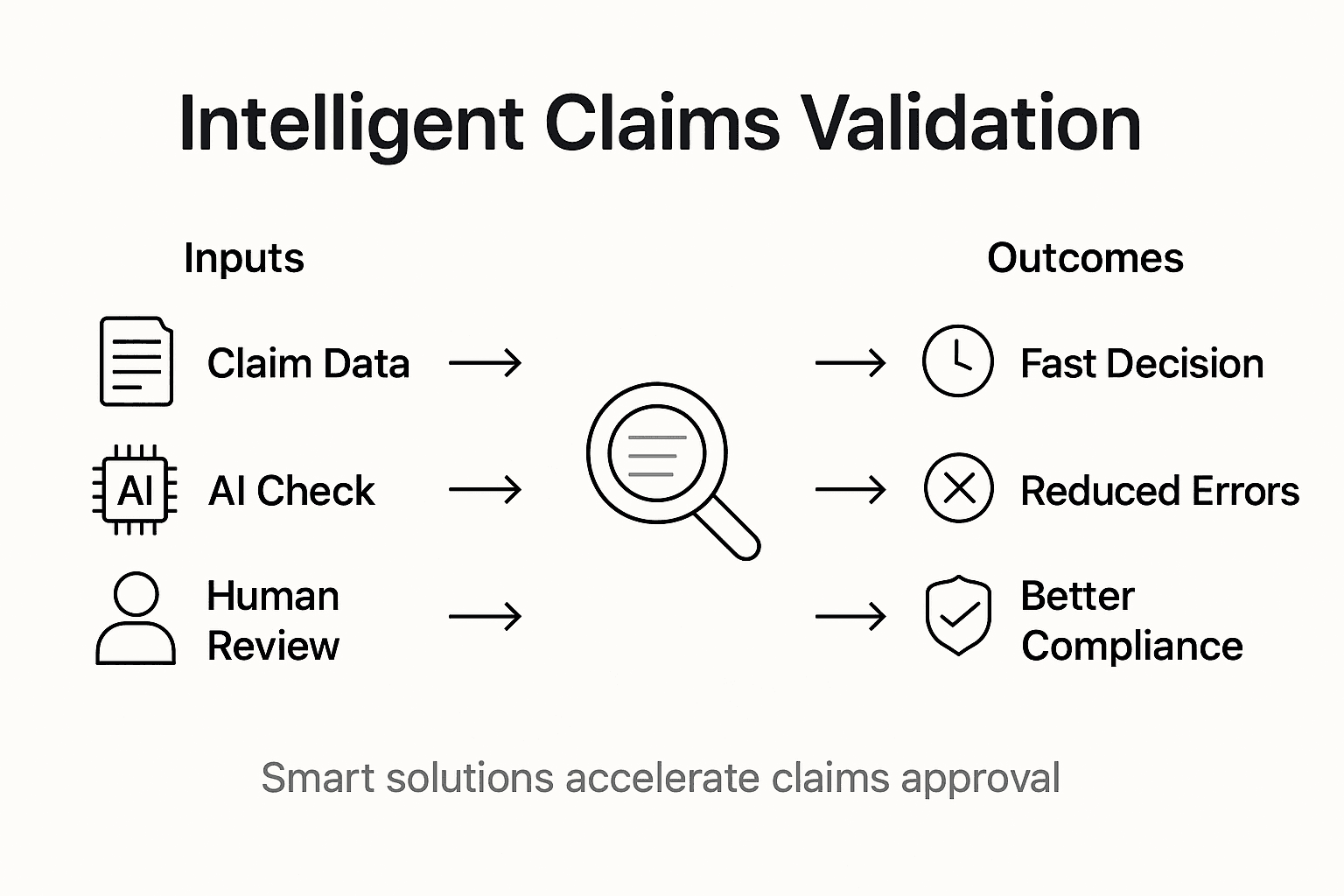
Create a multi-layered validation approach that combines artificial intelligence with human expertise. Programme your intelligent systems to flag high risk or unusual claims for manual review while allowing straightforward claims to be processed automatically. Implement contextual learning mechanisms that continuously improve decision accuracy by incorporating feedback from human reviewers. This approach ensures that your validation tools become progressively more sophisticated and reliable over time, reducing processing times while maintaining rigorous quality standards.
Pro tip: Regularly audit and recalibrate your intelligent decision-making tools to ensure they remain aligned with evolving regulatory requirements and organisational risk management strategies.
Step 5: Monitor outcomes and optimise processes continuously
Claims processing optimization is an ongoing journey that requires consistent evaluation and strategic refinement. Your objective is to establish a dynamic feedback mechanism that allows continuous improvement of your claims management workflow.
Implementing systematic monitoring can improve operational efficiency by identifying performance gaps and opportunities for enhancement in real time. Develop a comprehensive performance dashboard that tracks critical metrics including claim processing times, resolution rates, customer satisfaction scores, and operational costs. Utilise advanced analytics tools to generate granular insights into each stage of your claims workflow. Compare your current performance against industry benchmarks and internal historical data to understand where potential improvements can be made.
Create a structured feedback loop that involves multiple stakeholders including claims processors, customer service representatives, and technology teams. Conduct regular retrospective meetings to discuss performance metrics, review unusual cases, and brainstorm process improvements. Implement a culture of continuous learning where team members are encouraged to provide suggestions for workflow optimization. Regularly test and validate process changes through controlled pilots, measuring their impact before full scale implementation. This iterative approach ensures that your claims processing system remains adaptable, efficient, and responsive to changing operational demands.
Pro tip: Schedule quarterly comprehensive reviews of your claims processing performance metrics and allocate dedicated resources for ongoing process improvement initiatives.
Unlock Greater Efficiency with Intelligent Claims Management Solutions
The article highlights the challenges of claims processing such as manual approval delays, disconnected communication, and bottlenecks caused by paper-based workflows. Insurance professionals aiming to streamline operations must focus on digitising data capture, integrating core systems, and deploying intelligent decision-making tools to accelerate claim resolution and reduce errors. These pain points are real obstacles that can erode customer satisfaction and increase operational costs.
Insurance Business Applications offers IBSuite, a cloud-native, API-first platform built to directly address these issues by enabling seamless integration across sales, underwriting, claims, and more. With IBSuite you can eliminate manual bottlenecks by leveraging automation and real-time data flows that align perfectly with the step-by-step optimisation strategies discussed in the article. Discover how IBSuite supports rapid product innovation, secure data handling, and continuous process improvements to keep your claims teams agile and customers delighted.
Are you ready to transform your claims management and embrace true operational efficiency? Explore our solution and see how we make digital claims transformation a reality. Book a personalised demo today at IBA Demo to experience firsthand how IBSuite can accelerate your claims processing success. For a deeper understanding of claims automation, check out our insights on claims processing automation and the impact of system integration for insurers. Take the first step towards a streamlined claims future now.
Frequently Asked Questions
How can I assess my current claims workflows to identify bottlenecks?
Start by documenting each step of your claims management process to create a comprehensive map. Focus on transition points between departments and use data tracking tools to measure average processing times and identify points where claims get stuck.
What are effective ways to digitise data capture in claims processing?
Implement digital intake portals that allow policyholders to submit claims online. Utilise optical character recognition (OCR) to extract information from documents automatically, reducing the need for manual data entry and minimising errors.
How can integrating core systems improve claims processing efficiency?
Integrating core systems promotes seamless information flow across different platforms by using application programming interfaces (APIs). Ensure that all departmental systems can communicate effectively to minimise delays caused by data silos and improve response times.
What intelligent decision-making tools can I deploy for claims validation?
Consider using machine learning algorithms to classify claims and detect potential fraud patterns. These systems can automate the validation process, significantly reducing the time taken to assess claims while maintaining accuracy and compliance standards.
How can I create a continuous improvement process for claims management?
Establish a performance dashboard to monitor key metrics consistently, such as processing times and customer satisfaction. Implement a feedback loop involving stakeholders to regularly discuss performance and suggest improvements, ensuring that processes evolve to meet operational demands more effectively.
Recommended
- 7 Essential Steps for a Claims Management Process Checklist – Digital Insurance Platform | IBSuite Insurance Software | Modern Insurance System
- Claims Automation Step by Step: Enhance Processing Efficiency – Digital Insurance Platform | IBSuite Insurance Software | Modern Insurance System
- What is Claims Management? Understanding Its Importance – Digital Insurance Platform | IBSuite Insurance Software | Modern Insurance System
- Role of Automation in Claims: Transforming P&C Insurance