portalId 145238543 hublet eu1 environment prod defaultChatFlow ----

End-to-End Insurance Platforms: Unlocking P&C Success

End-to-End Insurance Platforms: Unlocking P&C Success

Managers review insurance platform solutions

Most british and European insurers are battling fractured IT systems while aiming to keep pace with rapidly evolving customer demands. For mid-sized property and casualty organisations in Central Europe, the struggle to modernise often comes with mounting complexity and hidden costs. Research from The Geneva Association reveals fragmented platforms can increase operational expenditures by up to 30 percent compared to unified systems. This article highlights how end-to-end insurance platforms offer practical solutions, helping leaders streamline operations, transform customer experience, and position their company for continuous digital success.

Table of Contents

Key Takeaways

Point Details
End-to-End Platforms Enhance Efficiency Comprehensive platforms streamline operations and reduce technological complexity, allowing insurers to operate more effectively.
Digital Solutions Drive Innovation Modern digital insurance solutions facilitate new business models and improve customer engagement through advanced technologies.
Integration is Key for Success Seamless integration and built-in compliance mechanisms are crucial for insurers to adapt to evolving regulatory requirements and market demands.
Legacy Systems Present Challenges Maintaining outdated infrastructures severely limits insurers’ ability to innovate, respond quickly, and provide seamless customer experiences.

Defining End-to-End Insurance Platforms

End-to-end insurance platforms represent sophisticated digital infrastructures designed to transform how insurers operate across the entire insurance value chain. These comprehensive systems integrate multiple functional processes into a single, streamlined technological ecosystem, enabling property and casualty (P&C) insurers to modernise their operations and enhance customer experiences.

At their core, these platforms encompass a holistic approach to insurance management, covering critical domains such as product design, underwriting, policy administration, claims processing, billing, and customer relationship management. Comprehensive digital solutions are reshaping the insurance landscape, facilitating seamless technological integration that supports rapid innovation and operational efficiency. By consolidating disparate systems into a unified platform, insurers can dramatically reduce technological complexity and accelerate their digital transformation strategies.

The Geneva Association’s research highlights that end-to-end insurance platforms are not merely technological tools but strategic enablers that connect insurers, customers, and partners through multifunctional digital channels. These platforms create unprecedented opportunities for developing new business models, improving customer engagement, and responding swiftly to evolving market dynamics. Key characteristics include API-first architectures, cloud-native infrastructures, and modular designs that allow insurers to adapt quickly and scale their operations effortlessly.

Pro tip: When evaluating end-to-end insurance platforms, prioritise solutions that offer seamless integrations, robust data analytics capabilities, and flexible architectures that can evolve with your organisation’s strategic objectives.

Types of Digital Insurance Solutions

Digital insurance solutions have evolved into a sophisticated ecosystem of technological platforms designed to address various strategic and operational challenges within the insurance industry. Emerging digital insurance archetypes now encompass multiple specialised roles, ranging from innovation enablers to comprehensive transformation mechanisms.

The European insurance landscape presents a nuanced categorisation of digital solutions, broadly classified into distinct technological approaches. These include pure digital distribution channels, embedded insurance products, AI-driven underwriting platforms, blockchain applications, and advanced digital claims management systems. Each solution targets specific inefficiencies within traditional insurance processes, leveraging cutting-edge technologies to enhance operational efficiency, customer engagement, and strategic agility.

Key categories of digital insurance solutions can be systematically understood through their primary functional objectives. Some platforms focus on digital distribution, enabling insurers to reach customers through multiple online channels, while others specialise in data analytics, using machine learning algorithms to refine risk assessment and pricing models. Integrated platforms offer comprehensive capabilities that span product design, policy administration, customer relationship management, and claims processing, representing the most sophisticated approach to digital transformation in the insurance sector.

Here is a summary of leading types of digital insurance solutions and their primary aims:

Solution Type Core Objective Example Technology
Digital distribution channels Expand online customer access Mobile apps, web portals
Embedded insurance products Integrate cover within purchases E-commerce integration
AI-driven underwriting Automate risk assessment Machine learning models
Blockchain applications Secure records, prevent fraud Smart contracts
Digital claims management Speed up claims handling Automated claims engines

Pro tip: When selecting digital insurance solutions, prioritise platforms with modular architectures that allow seamless integration and scalability across different operational domains.

How Platforms Enhance Insurance Operations

End-to-end insurance platforms fundamentally transform operational efficiency by integrating advanced technologies across the entire insurance value chain. Digital platforms revolutionise insurance operations through comprehensive technological ecosystems that streamline complex processes and enable unprecedented levels of operational agility.

These sophisticated platforms leverage cutting-edge technologies like artificial intelligence, Internet of Things (IoT), and blockchain to optimise critical insurance functions. By implementing intelligent automation, insurers can significantly reduce manual intervention in underwriting, claims processing, and risk assessment. This technological integration enables more accurate risk evaluation, faster decision-making, and enhanced customer experiences through real-time data processing and intelligent workflow management.

Insurance analyst reviews digital data dashboard

Key operational enhancements delivered by modern digital platforms include intelligent data analytics, seamless process integration, and dynamic risk management capabilities. Platforms enable insurers to move beyond traditional siloed operational models, creating interconnected systems that provide holistic insights, improve resource allocation, and support rapid product innovation. By consolidating multiple operational domains into a unified technological framework, insurers can achieve greater transparency, reduce operational redundancies, and respond more effectively to evolving market dynamics.

Pro tip: When evaluating digital insurance platforms, assess their ability to integrate multiple technological capabilities while maintaining flexibility for future technological adaptations.

Ensuring Integration and Evergreen Compliance

Ensuring seamless integration and continuous regulatory compliance represents a critical challenge for modern property and casualty insurers seeking digital transformation. Regulatory compliance frameworks now demand sophisticated technological approaches that enable automatic policy updates and procedural adaptations to meet evolving legal requirements in the European insurance landscape.

Modern digital platforms address compliance challenges through intelligent technological solutions that embed regulatory monitoring directly into operational systems. By utilising advanced regulatory technology (RegTech), insurers can implement automated compliance mechanisms that continuously scan and adapt to new legislative requirements. These sophisticated systems leverage artificial intelligence and machine learning algorithms to track regulatory changes, assess potential impacts, and automatically adjust internal processes, ensuring insurers remain consistently aligned with current legal standards.

The integration of compliance features within digital insurance platforms requires a multilayered approach that encompasses technological flexibility, comprehensive monitoring, and proactive risk management. European regulatory bodies emphasise the importance of building adaptive technological architectures that can seamlessly incorporate new compliance requirements without disrupting existing operational workflows. This approach enables insurers to maintain operational resilience, reduce compliance-related risks, and respond rapidly to complex regulatory environments.

Pro tip: Prioritise digital platforms with built-in regulatory adaptation capabilities and granular compliance tracking mechanisms to ensure continuous alignment with evolving legislative standards.

Financial Impacts and Strategic Advantages

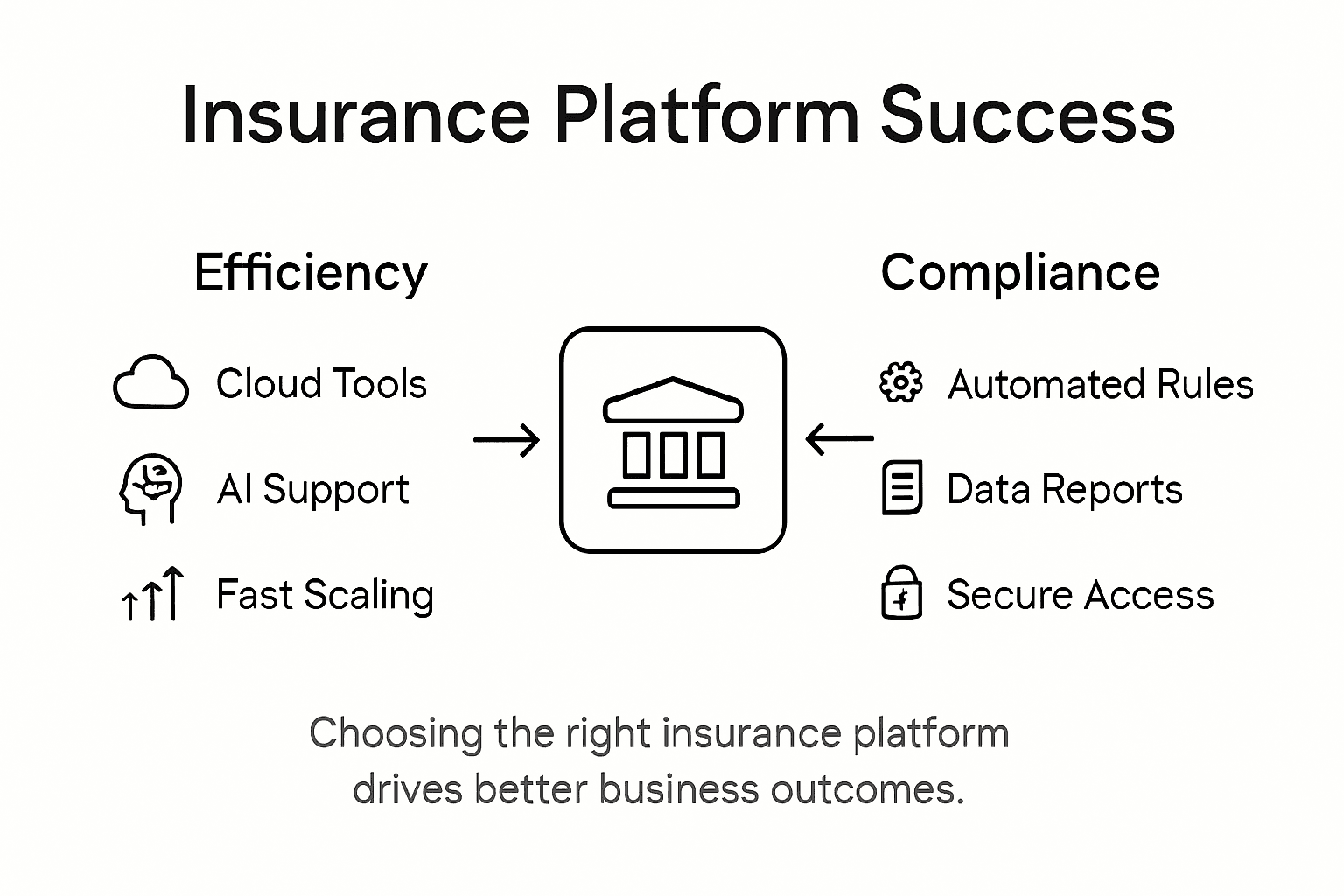
Digital insurance platforms are transforming the financial landscape for property and casualty insurers by delivering substantial strategic and economic benefits. Platforms provide critical advantages that enable business model innovation and facilitate strategic digital ecosystem partnerships, creating unprecedented opportunities for revenue generation and operational optimisation.

The financial impacts of implementing comprehensive digital platforms extend far beyond immediate cost savings. These sophisticated technological solutions drive substantial operational efficiencies by reducing manual processes, minimising administrative overhead, and streamlining complex insurance workflows. Advanced platforms leverage intelligent automation and data analytics to enhance risk assessment, improve pricing accuracy, and create more personalised insurance products that can potentially increase customer acquisition and retention rates.

Strategic advantages of digital insurance platforms include enhanced market responsiveness, improved competitive positioning, and greater organisational resilience. By adopting flexible, cloud-native technological architectures, insurers can quickly adapt to changing market conditions, develop innovative product offerings, and respond more effectively to emerging customer needs. These platforms enable insurers to break free from legacy system constraints, accelerate digital transformation initiatives, and create more agile, data-driven organisational models that can rapidly evolve in complex and dynamic insurance markets.

Pro tip: Conduct a comprehensive total cost of ownership analysis when evaluating digital platforms, considering both immediate implementation expenses and long-term strategic value potential.

Pitfalls of Disconnected and Legacy Systems

Legacy insurance systems represent significant technological barriers that impede insurers’ ability to innovate and compete effectively in modern digital markets. Disconnected technological infrastructures create substantial operational risks and inefficiencies across insurance value chains, undermining organisations’ strategic capabilities and customer engagement potential.

These fragmented systems generate multiple critical challenges for property and casualty insurers. Technological silos prevent seamless data integration, creating bottlenecks in critical processes such as underwriting, claims management, and customer service. Insurers relying on legacy infrastructures frequently experience reduced operational agility, increased compliance complexity, and significantly higher maintenance costs. The inability to rapidly adapt technological capabilities directly constrains an organisation’s capacity to respond to emerging market opportunities and evolving customer expectations.
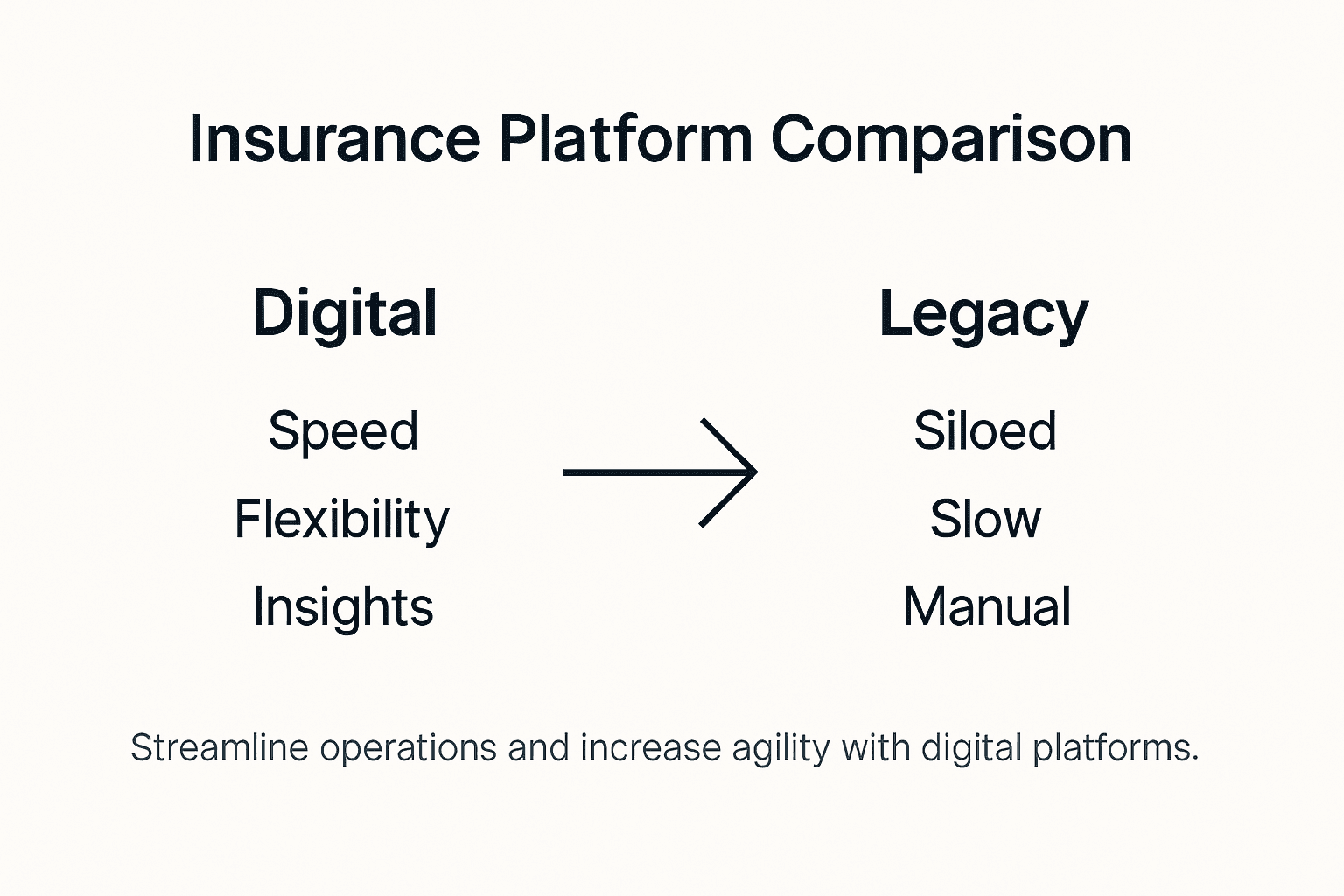
Infographic comparing digital and legacy platforms

The strategic implications of maintaining disconnected systems extend beyond immediate operational limitations. These technological constraints fundamentally restrict insurers’ innovation potential, preventing them from implementing advanced analytics, personalised product development, and seamless digital customer experiences. By perpetuating outdated technological architectures, insurers risk becoming increasingly uncompetitive, facing higher customer churn rates, reduced market responsiveness, and diminished ability to leverage emerging technologies like artificial intelligence and machine learning.

The following table contrasts the impact of end-to-end digital platforms with legacy systems for insurers:

Aspect Digital Platforms Legacy Systems
Efficiency High automation, minimal manual input Manual processes, slow workflow
Compliance Built-in regulatory adaptation Reactively updated, risk of lag
Innovation Rapid product development, flexible Hampered by outdated infrastructure
Customer Service Seamless, omnichannel experiences Fragmented, inconsistent interactions

Pro tip: Develop a comprehensive digital transformation roadmap that prioritises gradual system modernisation, focusing on incremental improvements and strategic technology integration.

Unlock Seamless Transformation with IBSuite

The challenges of navigating disconnected legacy systems and meeting ever-evolving regulatory requirements can stall your path to operational excellence and innovation. As discussed in “End-to-End Insurance Platforms: Unlocking P&C Success”, insurers must prioritise API-first architectures, cloud-native infrastructures, and built-in regulatory adaptation to reduce complexity and accelerate growth. Overcoming manual processes and siloed data is key to unlocking better risk assessment, faster product launches, and superior customer engagement.

Insurance Business Applications (IBA) understands these pressures and offers IBSuite — an end-to-end, cloud-native platform designed specifically for property and casualty insurers seeking digital transformation. IBSuite supports the full insurance value chain with seamless integrations and Evergreen compliance updates, empowering your organisation to:

  • Launch innovative products rapidly
  • Simplify your IT landscape
  • Adapt swiftly to market and regulatory changes

Explore how IBSuite can help you modernise your core systems and embrace new distribution models by booking a personalised demo today at book a demo. Don’t let legacy technology hold you back. Take the first step towards a more agile future with Insurance Business Applications now.

Frequently Asked Questions

What are end-to-end insurance platforms?

End-to-end insurance platforms are comprehensive digital solutions that integrate multiple insurance processes, such as product design, underwriting, policy administration, claims processing, billing, and customer relationship management, into a unified system.

How do these platforms enhance operational efficiency in the insurance industry?

These platforms leverage advanced technologies like artificial intelligence and automation to streamline critical processes, reduce manual intervention, and improve decision-making. This leads to faster, more accurate operations and enhanced customer experiences.

What types of digital insurance solutions exist?

Digital insurance solutions vary widely and include digital distribution channels, embedded insurance products, AI-driven underwriting, blockchain applications, and digital claims management systems, each targeting specific inefficiencies within traditional insurance processes.

How can insurers ensure compliance with evolving regulations using digital platforms?

Digital platforms can incorporate regulatory technology (RegTech) features that automatically monitor and adapt to new legislation, ensuring ongoing compliance through intelligent systems that adjust internal processes without disrupting operations.

API-First Insurance Platforms: Driving Efficiency and Compliance

API-First Insurance Platforms: Driving Efficiency and Compliance

Insurance professionals collaborate around office table

API-first platforms are rapidly reshaping the way property and casualty insurers operate, with more than 60 percent of firms citing faster compliance as their top benefit. For executives in Central Europe, keeping up with British regulatory standards and technological innovation is no longer optional. This article highlights the essentials of API-first insurance systems, offering clear insights into architecture choices, integration benefits, and the practical steps needed for digital transformation success.

Table of Contents

Key Takeaways

Point Details
API-first Approach API-first insurance platforms prioritise APIs for data exchange, enabling agility and responsiveness in technology infrastructures.
Diverse Architectures The three main API architectures—RESTful, SOAP, and event-driven—offer varied strengths suitable for distinct operational needs.
Seamless Integration API integration enhances operational efficiency by streamlining data exchanges and enabling real-time synchronisation across systems.
Compliance Necessity Insurers must embed regulatory compliance into their technological frameworks to meet evolving standards and maintain consumer trust.

Defining API-first insurance platforms

The insurance industry is experiencing a profound digital transformation, with API-first insurance platforms emerging as critical technological infrastructure. These advanced systems represent a fundamental shift from traditional monolithic software architectures towards more flexible, interconnected digital ecosystems. The evolution of insurance technology demonstrates how application programming interfaces (APIs) have become the primary mechanism for seamless data exchange and system integration.

At their core, API-first insurance platforms are comprehensive software environments designed to enable real-time, automated communication between multiple technological components. Unlike legacy systems that treated APIs as afterthoughts, these modern platforms prioritise APIs as the primary mechanism for data transmission, system connectivity, and service delivery. This approach allows insurance organisations to create more agile, scalable technological infrastructures that can rapidly adapt to changing market demands and regulatory requirements.

Key characteristics of API-first insurance platforms include standardised communication protocols, robust security frameworks, and modular design principles. These platforms support seamless integration with external services, enable microservices architectures, and provide insurance companies with unprecedented flexibility in developing and deploying digital products. By treating APIs as strategic assets, insurers can accelerate innovation, reduce technological complexity, and create more responsive customer experiences.

Pro tip: When evaluating API-first platforms, prioritise solutions that offer comprehensive documentation, robust security features, and proven scalability across multiple insurance domains.

Types of API-first platforms explored

Modern insurance technology has evolved to encompass multiple sophisticated API platform architectures, each designed to address specific operational requirements. Insurance API frameworks demonstrate remarkable diversity, with three primary types emerging as critical technological solutions: RESTful, SOAP, and event-driven platforms. These architectures represent nuanced approaches to data transmission and system integration within complex insurance ecosystems.

RESTful APIs represent the most lightweight and flexible framework, characterised by stateless communication protocols that enable efficient web-based interactions. These platforms excel at handling simple, standardised transactions like policy quotations, customer registration, and basic information retrieval. By contrast, SOAP APIs provide more structured messaging capabilities, supporting intricate, multi-step transactions that require robust security and formal communication standards. These platforms are particularly valuable for complex financial operations requiring precise, verifiable data exchanges.

Event-driven API platforms constitute the most dynamic category, designed to support real-time notifications and instantaneous data synchronisation across multiple insurance systems. These architectures enable immediate updates for claims processing, risk assessment, and customer communication workflows. By leveraging publish-subscribe models and message queuing technologies, event-driven platforms allow insurers to create highly responsive, interconnected technological ecosystems that can rapidly adapt to changing operational requirements and customer expectations.

Pro tip: When selecting an API-first platform, carefully evaluate your specific operational needs and choose an architecture that provides the optimal balance between flexibility, performance, and security.

Here is a comparison of the three main API-first insurance platform architectures:

API Type Strengths Limitations Ideal Use Cases
RESTful Lightweight, easily scalable Limited advanced security features Customer onboarding, quoting
SOAP High security, structured process More complex and slower Complex claims, financial ops
Event-driven Real-time updates, rapid response Requires advanced infrastructure Instant claims, risk notifications

Core functionalities and integration benefits

Modern insurance platforms leverage API integration technologies to transform traditional operational paradigms. Comprehensive API management strategies enable insurers to automate complex data exchanges, reducing human error and accelerating critical business processes like policy issuance and claims management. These technological innovations create interconnected ecosystems that streamline communication between insurers, brokers, and customers.

Engineer managing API integrations at desk

Third-party API integrations dramatically expand an organisation’s capabilities by providing access to external data sources crucial for sophisticated risk assessment. Underwriting processes become more precise through integrated credit checks, fraud detection mechanisms, and real-time risk profiling. These advanced functionalities allow insurers to develop more nuanced product offerings, personalise customer experiences, and make data-driven decisions with unprecedented speed and accuracy.

The core benefits of API-first platforms extend beyond operational efficiency. By enabling seamless data synchronisation and standardised communication protocols, these platforms support enhanced regulatory compliance, improved security frameworks, and scalable technological infrastructure. Insurers can rapidly adapt their systems to changing market requirements, implement new product features, and maintain robust, flexible technological architectures that respond dynamically to evolving business needs.

Pro tip: Prioritise API platforms with comprehensive documentation, robust security features, and demonstrated interoperability across multiple insurance domains.

Below is a summary of key business impacts enabled by API-first integration in insurance platforms:

Functionality Business Impact Strategic Benefit
Automated data exchange Reduces manual errors Faster policy issuance
Third-party integrations Enhances underwriting precision Improved risk analysis
Real-time synchronisation Enables rapid system adaptation Competitive product launches
Standardised protocols Supports regulatory compliance Smooth cross-partner communication

Regulatory obligations and compliance practices

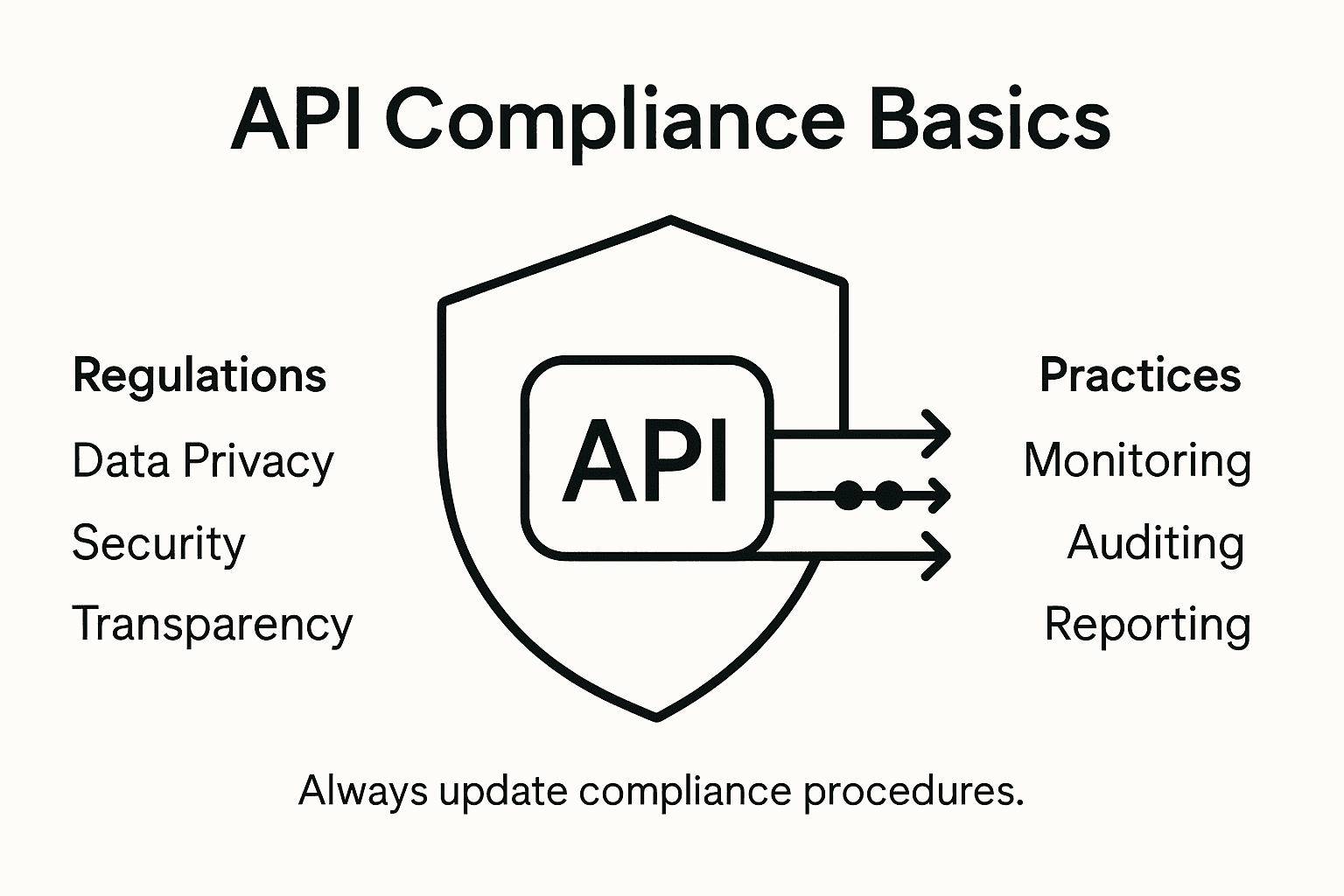
Digital insurance platforms operate within a complex landscape of regulatory requirements that prioritise consumer protection and technological integrity. Modern regulatory frameworks emphasise comprehensive data privacy standards, market transparency, and ethical technological practices. These evolving guidelines demand that insurers implement robust compliance mechanisms that go beyond traditional regulatory checklists, integrating legal considerations directly into technological infrastructure.

Compliance in the digital insurance ecosystem requires a multifaceted approach addressing data security, fair competition, and transparent operational practices. The General Data Protection Regulation (GDPR) represents a pivotal standard, mandating stringent protocols for personal data handling, consent management, and individual privacy rights. Insurance platforms must design their technological architectures with ‘compliance by design’ principles, embedding regulatory requirements into core system functionalities rather than treating them as peripheral considerations.

Infographic with core API compliance points

Technological innovation introduces additional regulatory complexities, particularly with emerging technologies like artificial intelligence and blockchain. Insurers must continuously adapt their compliance strategies to address potential risks associated with algorithmic decision-making, data bias, and automated risk assessment processes. This requires developing sophisticated governance frameworks that balance technological innovation with ethical considerations, ensuring that digital platforms maintain trust, transparency, and accountability throughout their operational ecosystems.

Pro tip: Develop a proactive compliance strategy that anticipates regulatory changes and integrates flexible technological frameworks capable of rapid adaptation.

Risks, cost considerations, and common pitfalls

API integration in insurance platforms presents a complex landscape of technological and operational challenges. Critical security vulnerabilities can emerge through insecure data handling, authorization weaknesses, and potential cyberattack vectors that threaten organisational integrity. These risks extend beyond immediate technological concerns, potentially resulting in substantial financial losses, regulatory penalties, and significant reputational damage.

Common pitfalls in API platform implementation often stem from inadequate governance and limited visibility into system behaviours. Insurance organisations frequently struggle with incomplete API inventories, poor authentication protocols, and misconfigured integration points that create systemic vulnerabilities. The cost implications are multifaceted, encompassing direct remediation expenses, potential regulatory fines, and indirect costs associated with compromised customer trust and operational disruptions.

Mitigating these risks requires a comprehensive, proactive approach to API security and governance. Organisations must develop robust authentication mechanisms, implement end-to-end encryption protocols, and establish continuous monitoring systems that provide real-time insights into API performance and potential security breaches. This demands a holistic strategy that integrates technological solutions with organisational policies, creating a dynamic framework capable of adapting to evolving digital security challenges.

Pro tip: Conduct regular, comprehensive API security audits and maintain a dynamic risk management strategy that anticipates potential vulnerabilities before they become critical challenges.

Accelerate Your Insurance Transformation with API-First Excellence

The article highlights the critical challenges insurers face today including the need for seamless API integration, robust security, and regulatory compliance in an increasingly digital world. You understand the importance of adopting an API-first platform that not only supports real-time data synchronisation and flexible, modular design but also mitigates operational risks and accelerates product innovation.

At Insurance Business Applications (IBA), we share your commitment to overcoming these hurdles. Our cloud-native core insurance platform, IBSuite, is engineered as a secure, API-first solution designed to streamline the full insurance value chain — from underwriting through claims and billing — while ensuring Evergreen updates and seamless third-party integrations. By choosing IBSuite, you empower your organisation to rapidly adapt to regulatory requirements, reduce IT complexity, and enhance customer engagement all with greater confidence.

Explore how IBSuite can become the foundation of your API-driven digital future. Discover the advantages of leveraging a platform that embodies the very principles of interoperability, real-time responsiveness, and compliance detailed in the article. Ready to transform your insurance operations today, reduce risks, and launch products faster? Book a demo now and see the difference an API-first approach can make. Learn more about accelerating your digital transformation with Insurance Business Applications and step confidently into a compliant, agile future.

Frequently Asked Questions

What are API-first insurance platforms?

API-first insurance platforms are modern software architectures prioritising application programming interfaces (APIs) to enable real-time communication and integration between multiple systems. They create flexible, scalable infrastructures that can quickly adapt to market changes and regulatory demands.

How do API-first platforms enhance operational efficiency in insurance?

API-first platforms streamline data exchange, automate processes, and integrate third-party services, reducing manual errors and accelerating operations such as policy issuance and claims management, leading to improved efficiency and customer experience.

What types of APIs are commonly used in insurance platforms?

The three primary types of APIs in insurance platforms are RESTful, SOAP, and event-driven APIs, each offering unique strengths for different operational needs, such as lightweight transactions, structured messaging, and real-time updates.

What are the compliance challenges associated with API-first insurance platforms?

Compliance challenges include ensuring adherence to regulations like GDPR, implementing robust data privacy measures, and addressing the complexities of emerging technologies. Insurers must integrate compliance considerations into their API architecture to maintain transparency and cybersecurity.

Why Choose an Insurance Platform for P&C Success

Why Choose an Insurance Platform for P&C Success

Insurance managers in discussion at office table

Nearly 80 percent of Central European insurers now rely on digital platforms to sharpen their competitive edge. The pressure to keep pace with British standards of customer service and operational efficiency means the choice of insurance platform holds major consequences. This article distills core definitions, platform types, and key capabilities, helping Chief Information Officers navigate the complex options that shape bottom-line performance and regulatory success.

Table of Contents

Key Takeaways

Point Details
Importance of Modern Insurance Platforms These platforms are essential for digital transformation in the insurance sector, integrating advanced technologies to enhance operations and customer engagement.
Diverse Delivery Models Insurance platforms feature various delivery models, such as cloud-based SaaS and API-first core platforms, each suited to different operational needs.
Operational Efficiency Drivers Key capabilities include automated workflows and predictive analytics, which streamline processes and improve insurers’ responsiveness to market changes.
Regulatory Compliance Necessity The integration of robust compliance mechanisms is vital for insurers to navigate complex regulatory landscapes while maintaining operational effectiveness.

Defining Insurance Platforms in Today’s Market

Insurance platforms represent sophisticated digital ecosystems that are fundamentally reshaping how property and casualty (P&C) insurers operate in the European market. According to the European Insurance and Occupational Pensions Authority (EIOPA), these platforms are integral to digital transformation, enabling insurers to leverage advanced technologies like artificial intelligence, Internet of Things (IoT), and blockchain for enhanced product development and customer service.

At their core, insurance platforms function as comprehensive technological infrastructure that seamlessly integrates multiple functions across the insurance value chain. The Geneva Association’s 2024 digital platform report highlights how these platforms facilitate business model innovation by connecting insurers with customers through sophisticated digital channels. They support multiple distribution models, ranging from traditional physical networks to fully digital interactions, allowing European insurers to adapt rapidly to changing market dynamics.

The strategic value of modern insurance platforms lies in their ability to address critical industry challenges. Key capabilities include:

  • Streamlined operational processes
  • Enhanced data analytics capabilities
  • Flexible product configuration
  • Improved customer engagement tools
  • Robust regulatory compliance mechanisms

These platforms are not merely technological solutions but strategic enablers that empower insurers to compete effectively in an increasingly digital marketplace.

Pro tip: When evaluating insurance platforms, prioritise solutions that offer seamless integration, scalability, and comprehensive API capabilities to future-proof your digital transformation strategy.

Types of Insurance Platforms and Delivery Models

Insurance platforms have evolved into diverse delivery models that cater to the complex needs of modern European insurers. The ISG Pulse Check 2024 report categorises these platforms across three primary delivery approaches: cloud-based Software as a Service (SaaS), API-first core platforms, and hybrid integration models, each designed to address unique technological and operational requirements.

Academic research from MDPI reveals a sophisticated landscape of platform types, highlighting three distinct models that are transforming the insurance ecosystem. These include traditional broker-intermediated platforms, pure digital platforms, and emerging multi-sided platforms that dynamically blend various roles and functionalities. Each model offers distinctive advantages:

  • Broker-Intermediated Platforms: Maintain traditional distribution channels
  • Pure Digital Platforms: Offer end-to-end digital experiences
  • Multi-Sided Platforms: Enable complex interactions between multiple stakeholders

Cloud-based and API-first platforms are particularly significant for European insurers, providing unprecedented flexibility in product configuration, customer engagement, and regulatory compliance. These models enable insurers to rapidly adapt to market changes, integrate emerging technologies, and create more personalised insurance experiences.

Pro tip: When selecting an insurance platform, assess its scalability, integration capabilities, and alignment with your specific operational architecture to ensure long-term digital transformation success.

Below is a comparison of insurance platform delivery models and their primary business impacts:

Platform Model Key Advantage Main Limitation
Cloud-Based SaaS Rapid deployment, low upfront costs May have less customisation
API-First Core High integration flexibility Requires advanced IT strategy
Hybrid Integration Balances legacy and new tech Can introduce complexity
Traditional Broker-Intermediated Supports established networks Slower digital adoption
Pure Digital Fully automated processes May exclude some demographics
Multi-Sided Broad ecosystem interaction Governance can be complex

Core Capabilities Driving Operational Efficiency

Modern insurance platforms are transforming operational efficiency through advanced technological capabilities that fundamentally reshape how insurers manage their core business processes. The EIOPA 2024 publication highlights critical capabilities including cloud computing, AI-driven analytics, and automated workflows that dramatically enhance insurers’ ability to streamline complex operational tasks.

Integrated data management stands at the forefront of these capabilities, enabling insurers to consolidate disparate information sources and generate actionable insights. Key operational efficiency drivers include:

  • Predictive underwriting models
  • Automated claims processing
  • Real-time customer service tools
  • Centralized regulatory reporting mechanisms
  • Dynamic product configuration systems

ISG’s comprehensive platform analysis-2024.pdf?sfvrsn=2debd431_2) emphasises that modern platforms provide unprecedented flexibility through cloud and API connectivity. These technologies enable insurers to rapidly adapt their operational infrastructure, reduce manual intervention, and create more responsive, intelligent business processes that can quickly adjust to regulatory and market changes.

Insurance operations staff reviewing platform dashboard

The convergence of advanced technologies like artificial intelligence, machine learning, and comprehensive data analytics is revolutionising how European insurers approach operational efficiency. By leveraging these sophisticated platform capabilities, organisations can significantly reduce operational costs, minimise processing times, and create more personalised customer experiences.

Infographic showing insurance platform features and benefits

Pro tip: Prioritise insurance platforms with robust API integration and modular design to ensure maximum operational flexibility and future scalability.

Regulatory Compliance and Integration Considerations

Regulatory compliance represents a critical challenge for European insurers seeking to modernise their technological infrastructure. Comprehensive research from academic preprints reveals the intricate landscape of EU regulatory frameworks affecting digital insurance platforms, emphasising the complex requirements surrounding data protection, consumer rights, and Solvency II standards.

Key regulatory integration considerations for Central European insurers include:

  • Ensuring GDPR data protection compliance
  • Maintaining transparent consumer protection mechanisms
  • Implementing robust audit trail capabilities
  • Supporting comprehensive regulatory reporting standards
  • Enabling operational resilience through integrated controls

The EIOPA report on digital insurance sector transformation underscores the importance of platforms that facilitate seamless regulatory adherence. Modern insurance platforms must provide automated compliance monitoring, dynamic reporting capabilities, and flexible architectural designs that can rapidly adapt to evolving regulatory landscapes.

Successful integration demands a holistic approach that balances technological innovation with stringent compliance requirements. Insurers must select platforms capable of embedding regulatory controls directly into core operational processes, ensuring continuous alignment with complex European regulatory standards.

Pro tip: Prioritise insurance platforms with built-in compliance automation and configurable regulatory reporting modules to minimise manual intervention and reduce compliance risks.

Business Impacts: Cost, Agility, and Risk Reduction

Business transformation in the insurance sector increasingly depends on platforms that deliver measurable operational advantages. The Geneva Association’s comprehensive digital platform research demonstrates how modern insurance platforms generate substantial value through strategic cost reduction, enhanced organisational agility, and sophisticated risk management capabilities.

Three primary business impacts distinguish contemporary insurance platforms:

  • Cost Efficiency: Dramatically reducing operational overhead
  • Organisational Agility: Enabling rapid market responsiveness
  • Risk Mitigation: Improving underwriting accuracy and compliance

ISG’s 2024 industry survey reveals that Central European insurers prioritise platforms delivering quantifiable business outcomes. Specifically, these platforms generate value by streamlining core processes, reducing IT maintenance expenditure, and providing flexible technological infrastructure that supports rapid product development and seamless partner integrations.

Modern insurance platforms represent more than technological solutions—they are strategic enablers that transform traditional operational models. By leveraging advanced data analytics, cloud computing, and intelligent automation, insurers can create more responsive, efficient, and resilient business ecosystems that adapt quickly to evolving market dynamics.

Pro tip: Conduct a comprehensive total cost of ownership analysis when evaluating insurance platforms, focusing on long-term efficiency gains and strategic flexibility rather than just initial implementation expenses.

Evaluating Alternatives to Insurance Platforms

Strategic technology selection in the insurance sector requires careful consideration of various implementation approaches. Comprehensive market analysis from DataIntelo explores the complex landscape of alternatives to integrated insurance platforms, highlighting critical trade-offs between point solutions, legacy system upgrades, and custom in-house software development.

Key alternative approaches to comprehensive insurance platforms include:

  • Point Solutions: Addressing specific functional needs
  • Legacy System Upgrades: Incrementally improving existing infrastructure
  • Custom In-House Development: Creating bespoke technological solutions
  • Cloud-Based Microservices: Implementing modular architectural strategies

Market research from OMR Global suggests that while these alternatives offer niche advantages, they often fall short in delivering the comprehensive benefits of integrated platforms. Central European insurers must carefully evaluate their digital maturity, regulatory requirements, and long-term strategic objectives when considering technological alternatives.

The primary challenges with alternative approaches include limited scalability, increased compliance complexity, and higher long-term maintenance costs. Insurers frequently discover that seemingly cost-effective solutions ultimately require significant additional investment to achieve the flexibility and comprehensive functionality provided by modern integrated platforms.

Pro tip: Conduct a thorough total cost of ownership analysis that extends beyond initial implementation, considering long-term scalability, integration challenges, and potential regulatory compliance constraints.

The table below summarises how integrated insurance platforms compare with alternative approaches:

Approach Long-Term Cost Profile Scalability Regulatory Alignment
Integrated Platform Lower total cost High, future-ready Automated compliance tools
Point Solution Rising maintenance cost Limited scope Manual checks needed
Legacy Upgrade Incremental costs Medium, constrained Potential for gaps
Custom In-House Unpredictable cost Custom scalability Varies with resources
Microservices Efficient for modular tasks High, but integration required Depends on orchestration

Unlock P&C Success with a Future-Ready Insurance Platform

The challenges outlined in the article highlight the urgent need for Property and Casualty insurers to adopt scalable, API-first, and cloud-native insurance platforms that streamline operations, enhance regulatory compliance, and enable rapid product innovation. Many insurers struggle with outdated legacy systems, costly manual compliance, and limited agility in responding to evolving market demands. If your goal is to achieve operational efficiency, seamless integration, and customer-centric digital transformation, it is crucial to select a platform designed to future-proof your business.

Insurance Business Applications (IBA) offers IBSuite, a secure, end-to-end solution trusted by global leaders and built specifically for the challenges you face. IBSuite supports the entire insurance value chain—from underwriting and claims to billing and CRM—while delivering Evergreen updates that maintain regulatory compliance without disruption. With IBSuite’s robust cloud infrastructure and comprehensive API capabilities, you can reduce IT complexity and launch innovative products faster. Learn how IBSuite can transform your operations by exploring our demo booking page, then discover the benefits of a platform tailored for your needs on Insurance Business Applications.

Make your next move towards agility and growth today. Book a demo to see how IBSuite can empower your P&C business to outperform competitors and thrive in a digital-first market.

Frequently Asked Questions

What are the main benefits of using an insurance platform for property and casualty insurance?

Utilising an insurance platform enhances operational efficiency, provides advanced data analytics, and improves customer engagement. It allows insurers to streamline processes, adapt to market changes, and ensure regulatory compliance effectively.

How do different types of insurance platforms compare in terms of flexibility and operational efficiency?

Insurance platforms can vary significantly, with cloud-based solutions offering rapid deployment and lower costs, while API-first platforms provide high integration flexibility. Traditional broker-intermediated platforms may support established structures but can lag in digital adoption compared to pure digital or multi-sided platforms that offer comprehensive benefits.

What role does regulatory compliance play in selecting an insurance platform?

Regulatory compliance is critical when selecting an insurance platform. It is essential to choose a platform that provides automated compliance monitoring and adaptable reporting capabilities to ensure alignment with evolving regulatory standards and to simplify adherence to data protection and consumer rights regulations.

How can integrating advanced technologies improve the performance of an insurance platform?

Integrating advanced technologies like artificial intelligence, machine learning, and IoT into an insurance platform can significantly enhance its operational efficiency. These technologies enable predictive modelling, automated claims processing, and real-time customer service, leading to cost reductions and improved customer experiences.

7 Essential Insurance Billing Optimisation Tips for Managers

7 Essential Insurance Billing Optimisation Tips for Managers

Insurance manager reviews billing on computer in office

Most british and Central European insurance managers know that even small billing errors can cost thousands each month. The path to better cash flow often starts with improving billing workflows that are too complex or outdated. With nearly one in three insurers struggling to maintain payment accuracy, finding actionable strategies is crucial. Here, you’ll uncover practical steps for mapping processes, embracing automation, and harnessing real-time data to reduce mistakes and transform your financial operations.

Table of Contents

Quick Summary

Key Insight Explanation
1. Map Existing Billing Workflows Create a comprehensive workflow map to identify inefficiencies and streamline billing processes.
2. Automate Recurring Tasks Implement automation for tasks like invoice generation, reducing errors and saving time.
3. Use Real-Time Payment Tracking Integrate real-time tracking tools for improved financial transparency and operational control.
4. Standardise Communication Templates Develop uniform templates to enhance consistency and regulatory compliance in policyholder communications.
5. Regularly Update Billing Policies Conduct regular reviews of billing policies to adapt to regulatory changes and market conditions.

1. Assess and Map Existing Billing Workflows

Making sense of your insurance billing processes starts with creating a comprehensive workflow map. By visually tracking each step from client onboarding to final payment reconciliation, you can uncover hidden inefficiencies and bottlenecks that slow down your billing operations.

A strategic workflow assessment involves meticulously documenting every stage of your billing cycle. This means capturing detailed information about how premiums are calculated, payments processed, and financial records maintained. Insurance billing processes reveal intricate pathways that, when properly mapped, can highlight potential areas for digital transformation and operational streamlining.

To begin mapping your workflow, gather your team and systematically document each billing stage. Start by creating a detailed flowchart that tracks the journey of a single billing transaction from start to finish. Include specific details such as:

Key Workflow Mapping Elements:

  • Client information collection
  • Premium calculation procedures
  • Payment collection methods
  • Reconciliation processes
  • Compliance verification steps
  • Data entry and record management

Pay special attention to points where manual intervention occurs, as these represent prime opportunities for potential errors or delays. Modern insurance organisations are increasingly using digital tools to automate and simplify these complex processes.

Professional Recommendation: Invest in digital workflow mapping software that can help you create interactive, updateable process diagrams which can be easily shared and modified across your team.

2. Automate Recurring Billing Tasks for Accuracy

Automating recurring billing tasks represents a transformative strategy for insurance organisations seeking precision and operational efficiency. By implementing intelligent systems that handle repetitive financial processes, you can dramatically reduce human error and streamline administrative workflows.

The key to effective billing automation lies in leveraging advanced technologies that can perform complex calculations and execute routine tasks with remarkable consistency. Insurance billing process automation enables your team to focus on strategic decision making while reducing the risk of manual data entry mistakes.

Key Automation Opportunities:

  • Premium calculation and adjustment
  • Invoice generation
  • Payment tracking and reminders
  • Renewal processing
  • Compliance verification
  • Financial reconciliation

Robotic process automation and artificial intelligence technologies can systematically handle these recurring tasks, ensuring each transaction is processed accurately and promptly. Automated systems provide consistent billing schedules, detect potential errors in real time, and integrate seamlessly with existing accounting platforms.

Implementing these technologies not only improves accuracy but also significantly reduces operational costs. By minimising manual interventions, insurers can process more transactions faster and allocate human resources to more complex, value added activities.

Professional Recommendation: Select automation tools that offer robust integration capabilities and can be customised to match your specific billing workflow requirements.

3. Implement Real-Time Payment Tracking Tools

Real-time payment tracking represents a game changing approach for insurance billing managers seeking enhanced financial transparency and operational control. By integrating sophisticated digital tools that monitor payment status instantaneously, organisations can transform their financial management strategies.

Insurance billing compliance standards are increasingly demanding precise financial reporting and risk management capabilities. Real-time tracking systems enable insurers to monitor every financial transaction with unprecedented accuracy, supporting regulatory requirements and improving overall organisational efficiency.

Key Benefits of Real-Time Payment Tracking:

  • Instant transaction visibility
  • Immediate anomaly detection
  • Enhanced financial reporting accuracy
  • Faster reconciliation processes
  • Improved cash flow management
  • Reduced administrative overhead

Implementing these tools goes beyond simple transaction monitoring. They provide comprehensive insights into payment patterns, help identify potential late payments before they become problematic, and streamline financial reporting processes. Modern tracking systems integrate advanced algorithms that can predict potential payment delays and trigger proactive communication strategies.

By adopting real-time payment tracking technologies, insurance managers can shift from reactive to predictive financial management. These systems offer granular insights into customer payment behaviours, enabling more personalised and effective billing approaches.

Professional Recommendation: Select payment tracking tools that offer robust integration capabilities with your existing financial systems and provide customisable reporting features.

4. Standardise Policyholder Communication Templates

Standardising communication templates represents a strategic approach to enhancing policyholder interactions and operational efficiency. By creating uniform communication frameworks, insurance managers can dramatically improve messaging consistency and regulatory compliance.

Policy administration best practices emphasise the critical role of structured communication in building customer trust. Standardised templates ensure that every policyholder receives clear, professional, and legally compliant information across all interaction channels.

Key Elements of Effective Communication Templates:

  • Consistent brand voice and tone
  • Clear and concise language
  • Legally reviewed content
  • Personalisation capabilities
  • Multilingual support
  • Adaptable format for different channels

Implementing standardised templates goes beyond mere administrative efficiency. These frameworks enable faster document preparation, reduce potential misunderstandings, and create a more predictable customer experience. Digital templates can be easily updated to reflect regulatory changes, ensuring ongoing compliance and reducing administrative risks.

By investing time in developing comprehensive communication templates, insurance managers can streamline their operational processes, enhance customer understanding, and maintain a professional image across all policyholder interactions.

Professional Recommendation: Create a central template repository that allows for quick updates and ensures all communication materials maintain consistent quality and compliance standards.

5. Review and Update Billing Policies Regularly

Effective insurance billing management demands a proactive approach to policy review and continuous improvement. Regular policy updates are not merely an administrative task but a strategic imperative for maintaining operational excellence.

Insurance billing processes require consistent evaluation to adapt to evolving market conditions, regulatory requirements, and technological advancements. By establishing structured review cycles, insurers can ensure their billing strategies remain agile and responsive.

Key Components of Policy Review:

  • Regulatory compliance assessment
  • Technology integration readiness
  • Financial performance analysis
  • Customer feedback evaluation
  • Risk management considerations
  • Market trend alignment

A comprehensive policy review process involves more than surface level adjustments. It requires a holistic examination of existing billing frameworks, identifying potential inefficiencies, and implementing strategic improvements. This approach helps organisations stay ahead of market shifts, minimise compliance risks, and maintain competitive positioning.

Successful policy updates demand cross functional collaboration, involving teams from finance, compliance, technology, and customer service. By creating a collaborative review mechanism, insurers can develop more robust and adaptable billing strategies that support overall business objectives.

Professional Recommendation: Schedule quarterly policy review sessions and maintain a dynamic documentation system that allows for rapid updates and seamless knowledge sharing across departments.

6. Integrate Billing Data with Finance Systems

Seamless integration between billing and finance systems represents a strategic approach to transforming operational efficiency for insurance managers. By creating a unified data ecosystem, organisations can dramatically enhance their financial management capabilities.

Data integration strategies are critical for modern insurers seeking to streamline their financial processes. The goal is to create a comprehensive, real-time information environment that supports accurate reporting, reduces manual interventions, and enables more sophisticated financial decision making.

Key Integration Benefits:

  • Automated transaction reconciliation
  • Real-time financial reporting
  • Enhanced compliance tracking
  • Reduced data entry errors
  • Improved cash flow visibility
  • Faster financial analysis

Successful system integration requires a methodical approach that considers technical compatibility, data standardisation, and robust security protocols. Insurance managers should prioritise solutions that offer flexible API connections, enabling smooth information exchange between billing platforms, accounting systems, and financial reporting tools.

Implementing integrated systems goes beyond technological upgrades. It represents a fundamental shift towards more agile, data driven financial management. By breaking down information silos, insurers can create a more transparent and responsive financial infrastructure.

Professional Recommendation: Conduct a comprehensive audit of existing systems and engage technical specialists who understand both insurance specific requirements and advanced integration methodologies.

7. Monitor Key Billing Metrics for Continuous Improvement

Measuring and tracking critical billing metrics provides insurance managers with a powerful mechanism for driving operational excellence and strategic decision making. By establishing a robust performance monitoring framework, organisations can transform raw data into meaningful insights that fuel continuous improvement.

Insurance performance metrics reveal the critical importance of proactive measurement and analysis in maintaining competitive billing practices. Understanding these metrics allows managers to identify inefficiencies, predict potential issues, and implement targeted improvements.

Essential Billing Performance Metrics:

  • Billing cycle time
  • Payment reconciliation accuracy
  • Invoice processing speed
  • Customer payment compliance rate
  • Cost per billing transaction
  • Revenue collection efficiency
  • Days sales outstanding

Successful metric monitoring requires more than simply collecting numbers. Insurance managers must develop a comprehensive approach that combines quantitative analysis with qualitative insights. This means creating dashboards that provide real time visibility into performance trends and establishing clear benchmarks for continuous enhancement.

Modern analytical tools enable predictive insights that go beyond traditional retrospective reporting. By leveraging advanced data visualisation techniques, managers can uncover subtle patterns and opportunities for operational refinement that might otherwise remain hidden.

Professional Recommendation: Implement a quarterly review process that not only examines metric performance but also connects these insights directly to strategic organisational objectives.

The table below summarises the key strategies and their recommendations for optimizing and streamlining insurance billing processes as presented in the article.

Strategy/Area Actions Benefits
Assess and Map Existing Billing Workflows Create detailed workflow diagrams visualising processes from start to finish, highlighting manual interventions. Identifies inefficiencies, provides improvement opportunities, and supports digital transformation initiatives.
Automate Recurring Billing Tasks Leverage advanced automation technologies for payment processing, premium calculations, and invoice generation. Reduces errors, minimises manual efforts, and ensures consistency.
Implement Real-Time Payment Tracking Tools Utilise digital tools for instant payment status monitoring and anomaly detection. Enhances operational control and financial transparency.
Standardise Policyholder Communication Templates Develop uniform templates incorporating brand-consistent and legally reviewed content. Improves communication efficiency, maintains compliance, and fosters customer trust.
Review and Update Billing Policies Regularly Conduct comprehensive evaluations considering regulations, customer feedback, and market shifts. Ensures agility, operational excellence, and adherence to current standards.
Integrate Billing Data with Finance Systems Implement systems integration for unified data sharing across billing and financial platforms. Enhances reporting accuracy, reduces data entry errors, and improves cash flow management.
Monitor Key Billing Metrics Track essential operational metrics such as billing accuracy and cycle times using analytic tools. Supports data-driven decisions, identifies inefficiencies, and drives continuous improvement.

Transform Your Insurance Billing with IBSuite for Lasting Success

The article highlights key challenges insurance managers face such as manual inefficiencies, error-prone billing workflows, and the need for real-time payment tracking and compliance. If you are seeking to automate recurring billing tasks, standardise communications, and integrate billing data seamlessly with finance systems, addressing these pain points will vastly improve accuracy and operational agility.

Insurance Business Applications understands these hurdles and offers a cloud-native core insurance platform designed to streamline your entire billing process. IBSuite supports end-to-end billing automation and real-time financial insights that help reduce manual errors while ensuring regulatory compliance. With features tailored for P&C insurers like real-time payment tracking and comprehensive policy administration, IBSuite empowers your team to transform billing into a strategic advantage.

Unlock the potential of your billing operations today by scheduling a personalised demonstration. Explore how IBSuite can help you automate recurring tasks, enhance customer communication, and integrate billing with your finance systems effortlessly. Take the next step now and book a demo to experience the future of insurance billing optimisation.

Frequently Asked Questions

How can I effectively map our existing billing workflows?

To map your existing billing workflows, gather your team and document each stage of the billing cycle from client onboarding to payment reconciliation. Start by creating a detailed flowchart, including key elements like premium calculation and data entry, to identify inefficiencies.

What tasks should I consider automating to improve billing accuracy?

Consider automating tasks such as premium calculations, invoice generation, and payment tracking. By doing so, you can reduce manual errors and streamline administrative workflows within 30 days.

How do real-time payment tracking tools benefit my insurance billing process?

Real-time payment tracking tools provide instant visibility into transactions, allowing for immediate anomaly detection and faster reconciliation. Implement these tools to improve cash flow management and reduce administrative overhead.

What should be included in standardised communication templates for policyholders?

Standardised communication templates should include consistent brand voice, clear legal language, and personalisation capabilities. Create a central repository for these templates to ensure swift updates and maintain compliance across all channels.

How often should I review and update our billing policies?

Set up a regular review cycle for your billing policies, ideally quarterly, to ensure they remain compliant and effective. This proactive approach will help you adapt to regulatory changes and market trends swiftly.

What key performance metrics should I monitor for continuous improvement in billing?

Monitor essential metrics such as billing cycle time, invoice processing speed, and revenue collection efficiency. By establishing a quarterly review process, you can connect these metrics to your strategic objectives for ongoing enhancement.

Insurance Rating Methodology Guide for Digital Insurers

Insurance Rating Methodology Guide for Digital Insurers

Insurance team meeting in corner office

British insurers are not alone in facing mounting pressure to modernize rating methodologies as more than 80 percent of Central European P&C insurers rank data quality and compliance as top barriers to digital transformation. For executives determined to stay ahead, refining your rating process is essential for sharper risk evaluation, regulatory alignment, and improved efficiency. This guide uncovers actionable steps and key insights drawn from both local and British insurance practices so your organization can thrive in an increasingly complex environment.

Table of Contents

Quick Summary

Key Message Explanation
1. Conduct a Comprehensive Data Assessment Regularly assess data accuracy, completeness, consistency, timeliness, and relevance to identify gaps in data management.
2. Define Clear Rating Parameters Establish a framework for selecting and quantifying key insurance rating parameters to ensure accurate pricing.
3. Automate Rating Workflows with IBSuite Configuring IBSuite automates calculations, reducing manual errors and enhancing efficiency across insurance operations.
4. Integrate External Data Sources Combining internal and external data enriches risk assessment, providing a more nuanced understanding for pricing strategies.
5. Monitor and Optimise Rating Models Continuously review rating outcomes and adjust parameters based on performance metrics to maintain accuracy and competitiveness.

Step 1: Assess data readiness and compliance needs

Assessing data readiness requires a systematic approach to understanding your insurance organisation’s current data landscape and regulatory compliance capabilities. This critical evaluation will help you identify potential gaps and develop strategies for robust data management.

Begin by conducting a comprehensive data quality assessment that examines your data across multiple dimensions. Focus on key evaluation areas such as data accuracy, completeness, consistency, timeliness, and relevance to your specific insurance operations. Central European insurers must pay particular attention to regulatory frameworks like Solvency II, which demand rigorous data governance and reporting standards.

Here is a summary table outlining the main data quality dimensions insurers should regularly assess:

Data Quality Dimension Description Typical Impact
Accuracy Data matches real-world facts Reduces claim disputes
Completeness Full set of required records Enables comprehensive reporting
Consistency Uniformity across databases Prevents conflicting assessments
Timeliness Up-to-date and relevant data Improves underwriting speed
Relevance Pertinent to insurance needs Enhances risk evaluation

To effectively assess your data readiness, you will need to review existing data collection processes, evaluate data storage systems, and map out current data flows within your organisation. This involves collaboration between IT, compliance, and operational teams to create a holistic view of your data infrastructure. Identify potential compliance risks, technological limitations, and areas where data management can be improved to support more efficient underwriting, risk assessment, and customer service processes.

Top Tip: Create a cross-functional data assessment team that includes representatives from compliance, technology, and business units to ensure a comprehensive and objective evaluation of your data readiness.

Step 2: Define rating parameters and calculation logic

Defining rating parameters and calculation logic represents a critical foundation for accurate insurance pricing and risk assessment. This step requires a systematic approach to identifying and quantifying the key variables that will determine insurance rating strategies.

Actuary reviewing insurance rating paperwork

Start by developing a comprehensive framework for rating parameter selection that integrates multiple dimensions of risk evaluation. Your parameter set should encompass key factors such as policyholder demographics, historical claims data, asset values, risk exposure profiles, and contextual market indicators. Pay special attention to creating a weighted scoring system that accurately reflects the relative importance of each parameter in your overall rating calculation.

Implement a robust calculation logic that transforms these parameters into precise risk and pricing models. This involves establishing clear mathematical relationships between input variables and developing algorithmic approaches that can consistently translate complex data points into actionable insurance ratings. Ensure your calculation methodology remains transparent, auditable, and adaptable to changing regulatory requirements and market conditions.

Top Tip: Regularly validate and calibrate your rating parameters against actual claims experience to maintain the accuracy and predictive power of your insurance pricing models.

Step 3: Configure IBSuite to automate rating workflows

Configuring IBSuite to automate rating workflows represents a transformative step in modernising your insurance technology infrastructure. This process will help you streamline complex rating calculations and reduce manual intervention across your insurance operations.

Begin by exploring the platform’s configuration options to implement comprehensive rating workflow automation that integrates quantitative risk assessments with qualitative evaluation parameters. Focus on mapping your specific rating logic into the system by leveraging IBSuite’s flexible configuration tools. This involves defining input parameters, establishing calculation rules, creating decision matrices, and setting up automated validation checks that ensure consistent and accurate rating outputs.

Pay close attention to configuring rule sets that can dynamically adjust rating calculations based on changing risk profiles and regulatory requirements. Implement validation mechanisms that cross reference multiple data sources, enabling the system to perform complex risk evaluations with minimal human intervention. Ensure your workflow configurations maintain transparency and auditability by incorporating clear documentation and tracking mechanisms for each rating decision.

Top Tip: Conduct comprehensive testing across multiple scenario types to validate your automated rating workflow configurations before full production deployment.

Step 4: Integrate external data sources and analytics

Integrating external data sources and advanced analytics represents a strategic opportunity to enhance your insurance rating methodology with richer, more comprehensive insights. This critical step will transform how you assess and price risk across your insurance portfolio.

Begin by identifying and implementing comprehensive data integration strategies that blend internal insurance data with high quality external sources. These might include vehicle registration databases, medical records, credit scoring platforms, geospatial risk information, and industry specific risk repositories. Focus on establishing robust data validation mechanisms that ensure the accuracy, relevance, and compliance of these external data sources before incorporating them into your rating models.

Develop a sophisticated analytics framework that can synthesise multiple data streams, enabling more nuanced risk assessment and pricing strategies. This involves creating advanced algorithmic models that can dynamically interpret complex data relationships, identify emerging risk patterns, and generate predictive insights. Implement machine learning techniques that can continuously refine your rating models by learning from historical performance data and real time risk indicators, ensuring your insurance pricing remains adaptive and precise.

Top Tip: Establish clear data governance protocols that define ownership, quality standards, and compliance requirements for all external data sources integrated into your rating methodology.

Step 5: Test rating outcomes and validate accuracy

Testing and validating rating outcomes is a critical process to ensure the reliability and precision of your insurance rating methodology. This step will help you confirm that your rating models produce consistent, accurate, and compliant results across various scenarios.

Implement a comprehensive validation framework using systematic rating outcome testing methodologies that rigorously assess your models performance. This involves conducting multiple validation approaches including back testing against historical data sets, comparative analysis with peer group benchmarks, and stress testing under different market conditions. Focus on creating statistically robust evaluation techniques that can identify potential biases, inconsistencies, or performance deviations in your rating calculations.

Develop a structured approach to continuous model validation that includes regular performance reviews, sensitivity analyses, and calibration mechanisms. Establish clear performance metrics that measure prediction accuracy, risk segmentation effectiveness, and alignment with regulatory requirements. Implement automated monitoring systems that can track model performance in real time, enabling rapid identification and correction of any emerging discrepancies or unexpected rating variations.

The following comparison highlights approaches to insurance rating model validation:

Validation Method Implementation Frequency Key Benefit
Back Testing Quarterly Detects model overfitting
Peer Benchmarking Annually Identifies competitive gaps
Stress Testing Upon major regulatory change Reveals risk model weaknesses
Real-Time Monitoring Continuous Flags emerging discrepancies

Top Tip: Create a dedicated model validation team with cross functional expertise to ensure comprehensive and objective assessment of your rating methodology’s performance.

Step 6: Monitor performance and optimise rating process

Continuous monitoring and optimisation of your insurance rating process is essential to maintaining competitive and accurate risk assessment strategies. This critical phase ensures your rating methodology remains responsive to evolving market dynamics and regulatory requirements.

Infographic of insurance rating process steps

Implement a robust performance surveillance mechanism that systematically tracks key rating model indicators and performance metrics. Develop a comprehensive monitoring framework that includes regular interval reviews, statistical analysis of rating predictions, and comparative assessments against actual claims outcomes. Your monitoring approach should integrate both quantitative performance indicators and qualitative assessments that capture nuanced shifts in risk landscape and insurance market trends.

Establish a dynamic optimisation protocol that enables rapid adaptation of your rating models based on ongoing performance insights. This involves creating flexible recalibration processes that can swiftly adjust rating parameters in response to emerging data trends, changes in risk profiles, and shifts in regulatory expectations. Utilise advanced analytics and machine learning techniques to continuously refine your rating algorithms, ensuring they maintain precision and relevance across different insurance product lines and market segments.

Top Tip: Create automated performance dashboards that provide real time visibility into key rating model metrics, enabling proactive decision making and swift model adjustments.

Transform Your Insurance Rating Methodology with IBSuite

Navigating the complexities of insurance rating methodology requires precision, adaptability, and compliance with stringent regulatory demands. This guide highlights critical challenges such as data readiness, defining robust rating parameters, automating workflows, and continuous performance optimisation that digital insurers face today. Common pain points include maintaining data accuracy, integrating diverse data sources, and ensuring seamless regulation adherence without sacrificing speed or innovation.

Insurance Business Applications (IBA) offers a purpose-built solution with IBSuite, a cloud-native, API-first platform designed specifically to automate and enhance rating workflows while enabling real-time analytics and regulatory compliance. With IBSuite, insurers can reduce IT complexity, accelerate product launches, and gain actionable insights through continuous model validation and dynamic recalibration.

Ready to modernise your rating methodology and transform your insurance operations? Discover how IBSuite can empower your business to meet these challenges effectively. Book a personalised demo today at IBApplications Demo and take the first step towards streamlined, compliant, and optimised insurance rating processes.

Frequently Asked Questions

What steps should I take to assess data readiness for insurance rating?

Assess your data readiness by conducting a comprehensive data quality assessment. Focus on key areas such as accuracy, completeness, consistency, timeliness, and relevance, involving IT, compliance, and operational teams to identify potential gaps and compliance risks.

How can I define effective rating parameters and calculation logic for my insurance model?

Develop a framework for rating parameter selection that incorporates demographic, claims, asset, and risk exposure data. Establish clear mathematical relationships for these parameters to ensure your calculations produce accurate and reliable insurance pricing.

What should I consider when configuring IBSuite for rating workflows?

While configuring IBSuite, focus on integrating your specific rating logic into the system, including input parameters and calculation rules. Test the configuration thoroughly to ensure it meets your expectations for automated rating workflows with minimal manual intervention.

How can I integrate external data sources into my insurance rating methodology?

Identify high-quality external data sources and implement integration strategies that combine them with your internal data. Develop validation mechanisms to ensure the accuracy and compliance of the external data before incorporating it into your rating models.

What methods should I use to test and validate the accuracy of rating outcomes?

Implement a validation framework that includes back testing against historical data, benchmarking against peers, and stress testing under various market conditions. Create a structured approach for continuous validation to quickly identify and address any discrepancies in your rating calculations.

How can I monitor and optimise my insurance rating process effectively?

Establish a performance surveillance mechanism that tracks key indicators and metrics of your rating model. Regularly review and adjust your rating parameters based on insights from performance data to ensure your methodology remains accurate and competitive.

7 Essential Types of Insurance Underwriting Explained Clearly

7 Essential Types of Insurance Underwriting Explained Clearly

Team reviewing insurance applications in an office

More than 80 percent of Central European insurers still rely on traditional risk-based underwriting despite growing digital pressures from British market leaders. For chief underwriters, the balance between accuracy and speed is crucial as clients demand efficient yet reliable coverage. This article reveals how adopting modern platforms and data-driven methods can help P&C insurers surpass outdated practices, unlock valuable new efficiencies, and remain competitive against British and other European innovators.

Table of Contents

Quick Summary

Takeaway Explanation
1. Implement Automated Underwriting Leverage digital systems to streamline application processing, enhancing efficiency and accuracy in risk assessment.
2. Use Data-Driven Approaches Integrate multiple data sources and predictive analytics for sophisticated risk evaluations and personalised pricing.
3. Incorporate Behavioural Insights Design questionnaires and risk assessments that consider psychological factors influencing insurance decisions.
4. Regularly Update Rule-Based Systems Continuously review underwriting criteria to adapt to evolving risk landscapes and regulatory requirements.
5. Foster Peer-to-Peer Models Encourage collaborative risk management through digital platforms, enhancing transparency and community engagement in insurance.

1. Traditional Risk-Based Underwriting Methods

Traditional risk based underwriting represents the foundational approach insurers have used for decades to assess and price insurance policies. This method involves systematically evaluating potential risks associated with an individual or organisation before offering coverage.

Underwriters using traditional methods carefully analyse multiple factors to determine an applicant’s risk profile. These typically include personal characteristics such as age, health status, occupation, lifestyle habits, and historical claims data. By comprehensively examining actuarial concepts, insurers can create precise risk assessments that guide pricing and coverage decisions.

The process begins with gathering extensive information through detailed questionnaires, medical examinations, and background checks. Underwriters then apply statistical models and historical data to quantify potential risks. Key evaluation criteria might include:

• Medical history and current health condition
• Professional occupation and associated workplace risks
• Previous insurance claims record
• Geographic location and environmental factors
• Financial stability and credit history

These traditional methods allow insurers to create tailored insurance products with accurate pricing that reflects individual risk levels. While digital technologies are emerging, this methodical approach remains crucial in maintaining financial stability and fair risk allocation.

Professional Recommendation: Always provide comprehensive and transparent information during the underwriting process to ensure the most accurate risk assessment and potentially more favourable insurance terms.

2. Automated Underwriting for Faster Decisions

Automated underwriting represents a transformative approach in insurance risk assessment, leveraging advanced technologies to streamline decision making processes. This method uses sophisticated algorithms and machine learning to evaluate insurance applications with unprecedented speed and precision.

Modern insurers are increasingly adopting digital underwriting workflows that dramatically reduce manual intervention. These systems analyse complex datasets instantaneously, processing applicant information through predefined rules and predictive models. By eliminating traditional paper based assessments, automated underwriting can reduce application processing time from weeks to mere minutes.

Key Advantages of Automated Underwriting:

• Dramatically faster application processing
• Consistent risk evaluation
• Reduced human error
• Lower operational costs
• Enhanced data driven decision making

The technological foundation involves machine learning algorithms that continuously improve risk assessment accuracy. These systems can integrate multiple data sources including medical records, financial histories, and real time risk indicators to create comprehensive applicant profiles.

Implementation Strategies:

Bold evaluative criteria might include:
• Algorithmic risk scoring
• Automated document verification
• Instant background checks
• Predictive risk modelling

While automation offers significant benefits, successful implementation requires careful design and ongoing monitoring to ensure regulatory compliance and maintain ethical standards.

Professional Recommendation: Gradually implement automated underwriting systems by piloting them alongside traditional methods to validate accuracy and build organisational confidence.

3. Data-Driven Underwriting Using Analytics

Data-driven underwriting represents a cutting-edge approach where advanced analytics transform traditional risk assessment methodologies. By leveraging comprehensive datasets and sophisticated predictive models, insurers can create more precise and dynamic risk evaluations.

This approach fundamentally shifts how insurance companies assess potential risks. Advanced analytical strategies enable insurers to move beyond static historical data and incorporate real-time information streams for more nuanced decision making.

Core Components of Data-Driven Underwriting:

• Predictive risk modelling
• Machine learning algorithms
• Expanded data source integration
• Dynamic risk profiling
• Continuous risk assessment

By integrating multiple data sources such as geospatial information, social media insights, and IoT device data, insurers can develop increasingly sophisticated risk assessment frameworks. These techniques allow for more granular and personalised pricing strategies that reflect individual risk profiles with unprecedented accuracy.

Practical Implementation Strategies:

Bold analytical approaches might include:
• Developing cross-functional data science teams
• Investing in advanced machine learning infrastructure
• Creating robust data governance protocols
• Implementing continuous model refinement processes

The most successful organisations recognise that data-driven underwriting is not a one time project but an ongoing strategic transformation requiring continuous investment and learning.

Professional Recommendation: Establish a dedicated analytics team focused on continuously improving predictive models and exploring emerging data sources for more precise risk assessment.

4. Behavioural Underwriting to Improve Accuracy

Behavioural underwriting represents a sophisticated approach that integrates psychological insights into traditional risk assessment methodologies. By understanding human decision-making patterns, insurers can develop more nuanced and accurate risk profiles.

Traditional underwriting often relies solely on statistical data, but behavioural science principles reveal that human psychology plays a critical role in risk evaluation. This approach examines how individuals make decisions, respond to incentives, and manage potential risks.

Key Elements of Behavioural Underwriting:

• Cognitive bias recognition
• Psychological risk assessment
• Decision pattern analysis
• Contextual risk evaluation
• Personalised risk profiling

By incorporating behavioural insights, insurers can design more intelligent questionnaires that prompt more accurate self-reporting. This method goes beyond demographic data to understand an individual’s risk management approach, lifestyle choices, and potential behavioural indicators that might influence future claims.

Practical Implementation Strategies:

Bold behavioural analysis techniques might include:
• Developing psychologically informed questionnaires
• Training underwriters in behavioural science principles
• Creating dynamic risk assessment models
• Implementing nudge theory in risk disclosure

Successful behavioural underwriting requires a delicate balance between data analysis and human psychological understanding.

Professional Recommendation: Design underwriting processes that encourage honest disclosure by creating psychologically comfortable and non threatening assessment environments.

5. Rule-Based Underwriting for Standard Policies

Rule-based underwriting provides a systematic framework for evaluating insurance applications through predefined, standardised decision criteria. This approach ensures consistent risk assessment across uniform policy types, particularly for straightforward insurance products.

Under the Solvency II regulatory framework, European insurers implement structured rule sets that enable rapid, objective policy evaluations. These rules create clear pathways for determining coverage eligibility, pricing, and risk categorisation based on specific, measurable parameters.

Core Components of Rule-Based Underwriting:

• Predefined acceptance criteria
• Standardised risk assessment protocols
• Objective decision making
• Consistent policy pricing
• Minimal subjective interpretation

By establishing precise rules for standard policies, insurers can streamline application processing, reduce human error, and maintain regulatory compliance. These rules typically incorporate factors such as age, occupation, health status, and historical risk indicators.

Implementation Strategies:

Bold rule design considerations might include:
• Creating clear decision trees
• Defining explicit acceptance thresholds
• Establishing transparent risk classification systems
• Documenting rule rationales
• Regularly updating rule parameters

Successful rule-based systems balance procedural efficiency with sufficient flexibility to accommodate nuanced risk scenarios.

Professional Recommendation: Regularly review and update rule sets to ensure they reflect current risk landscapes and incorporate emerging data insights.

6. Peer-to-Peer Underwriting: New Collaborative Models

Peer-to-peer underwriting represents an innovative approach to insurance that challenges traditional risk assessment and coverage models. This collaborative method enables groups of individuals to collectively share and manage insurance risks through digital platforms.

The emerging collaborative insurance ecosystem transforms how risk is perceived and managed. Instead of relying on large insurance corporations, participants form small groups with aligned risk profiles, collectively pooling resources and sharing potential financial burdens.

Key Characteristics of Peer-to-Peer Underwriting:

• Decentralised risk management
• Transparent premium calculations
• Collective financial responsibility
• Lower administrative costs
• Dynamic risk assessment

These models leverage digital platforms to create more personalised, flexible insurance experiences. Members typically pay into a shared pool, with unused funds potentially returned or redistributed, creating a more engaged and financially transparent approach to risk protection.

Implementation Strategies:

Bold collaborative approach elements might include:
• Creating digital trust networks
• Developing transparent governance models
• Implementing smart contract technologies
• Establishing clear group participation rules
• Building robust verification mechanisms

Successful peer-to-peer underwriting requires sophisticated digital infrastructure and strong community engagement principles.

Professional Recommendation: Start with small, well-defined risk groups and gradually expand your peer-to-peer insurance model as trust and technological capabilities improve.

7. Adaptive Underwriting Leveraging Cloud Platforms

Adaptive underwriting powered by cloud platforms represents a transformative approach that enables insurers to dynamically adjust risk assessment strategies in real time. This method combines advanced technological infrastructure with intelligent data processing capabilities.

By integrating cloud technologies with artificial intelligence, insurers can create flexible underwriting ecosystems that respond rapidly to changing market conditions. Cloud platforms provide unprecedented computational power and scalability, allowing for sophisticated risk analysis and personalised policy creation.

Key Advantages of Cloud Based Adaptive Underwriting:

• Instant data processing
• Scalable computational resources
• Real time risk assessment
• Enhanced predictive modelling
• Continuous system improvement

Modern cloud platforms enable insurers to aggregate diverse data streams including IoT sensor information, social media insights, and historical claims data. This comprehensive approach allows for more nuanced and accurate risk profiling beyond traditional demographic assessments.

Implementation Strategies:

Bold technological integration techniques might include:
• Developing microservices architecture
• Implementing machine learning algorithms
• Creating adaptive risk scoring models
• Establishing secure data governance protocols
• Utilising multi cloud infrastructure

Successful adaptive underwriting requires a strategic blend of technological innovation, data science expertise, and robust security frameworks.

Professional Recommendation: Gradually transition to cloud adaptive underwriting by piloting specific product lines and systematically expanding your technological capabilities.

Below is a comprehensive table summarising the main methodologies of underwriting as explored in the article, highlighting their key characteristics and practical implementation strategies.

Underwriting Methodology Key Characteristics Implementation Strategies
Traditional Risk-Based Employs systematic risk evaluation through personalised data. Gather detailed personal information, apply actuarial models to quantify risk.
Automated Utilises algorithms and machine learning for rapid assessments. Implement digital workflows, pilot automated systems alongside traditional ones.
Data-Driven Leverages advanced analytics for dynamic risk profiling. Develop predictive models, enhance data governance frameworks.
Behavioural Incorporates psychological insights for nuanced evaluations. Design psychologically informed questionnaires, train underwriters in behavioural principles.
Rule-Based Applies predefined criteria for standard policy assessments. Establish clear decision trees, routinely update rule parameters.
Peer-to-Peer Facilitates collaborative insurance via decentralised models. Develop trust networks, create robust verification mechanisms.
Adaptive Dynamically adjusts using cloud platforms and AI. Transition to cloud technologies incrementally, establish secure data protocols.

Unlock the Future of Insurance Underwriting with Cloud-Native Innovation

Understanding the complex landscape of insurance underwriting—from traditional risk evaluation to advanced data-driven and adaptive cloud-based methods—reveals critical challenges insurers face today. These include managing vast datasets, ensuring rapid yet accurate risk assessment, and swiftly adapting to evolving market conditions while maintaining regulatory compliance. If you are striving to modernise your underwriting processes, reduce IT complexity, and deliver personalised insurance experiences that meet these demands, the right platform is essential.

At Insurance Business Applications, we provide IBSuite, a secure, API-first cloud-native core insurance platform designed precisely to address these challenges. IBSuite supports seamless underwriting workflows, integrates advanced analytics, and enables real-time risk scoring to help you accelerate product innovation and improve operational efficiency. Discover how our platform can help your organisation streamline underwriting, embrace adaptive models, and stay ahead in a competitive market by booking a demonstration today. Take the first step toward transforming your insurance business by visiting Book a Demo and exploring how IBSuite modernises underwriting from end to end.

Explore more on how digital transformation can empower your underwriting at IBA Cloud Solutions and Accelerate Insurance Innovation. Act now to harness powerful technologies that redefine insurance underwriting for tomorrow.

Frequently Asked Questions

What are the key differences between traditional risk-based underwriting and automated underwriting?

Traditional risk-based underwriting relies on a thorough human analysis of individual risk factors, whereas automated underwriting uses algorithms and machine learning for quicker evaluations. To understand which method fits your needs better, assess your desired speed for risk evaluation and the complexity of your applications.

How can data-driven underwriting improve my insurance application process?

Data-driven underwriting enhances the accuracy of risk assessments by using advanced analytics and real-time data. Consider integrating predictive modelling to refine your underwriting methods, which can lead to more tailored pricing and coverage within your organisation.

What are some effective strategies for implementing behavioural underwriting?

To implement behavioural underwriting, develop psychologically informed questionnaires that encourage honest self-reporting. Train your underwriting team in behavioural science principles, which can lead to improved risk evaluation and increased consumer trust.

How does rule-based underwriting ensure consistency across insurance applications?

Rule-based underwriting operates on predefined criteria that standardise assessments for similar policy types. Create clear decision trees and set explicit acceptance thresholds to reinforce consistency in your underwriting decisions and reduce subjective interpretations.

What are the benefits of peer-to-peer underwriting compared to traditional insurance models?

Peer-to-peer underwriting allows participants to share risks collectively, promoting transparency and potentially lowering administrative costs. Explore this model by starting with small groups to build trust and understanding before expanding your approach.

Master Insurance Sales Process Steps for Better Results

Master Insurance Sales Process Steps for Better Results

Insurance sales manager leading process meeting

Most British and European insurance firms now report that over 60 percent of new policies involve digital touchpoints and robust compliance screening. For insurance sales executives at mid-sized property and casualty companies in Central Europe, this shift brings both fresh opportunities and new regulatory requirements. Embracing digital tools not only advances client engagement but also safeguards against compliance risks, positioning your firm for sustainable success in a rapidly changing market.

Table of Contents

Quick Summary

Essential Insight Explanation
1. Implement robust digital tools Adopt platforms that ensure compliance with regulations like GDPR and DORA while enhancing operational efficiency.
2. Prioritise client profiling and data Utilise advanced methodologies to segment clients based on risk profiles and behaviours, ensuring compliance with privacy laws.
3. Create customised insurance proposals Develop bespoke proposals that reflect client needs and demonstrate clear value through transparent, accessible language.
4. Engage clients through digital solutions Use multi-channel digital engagement strategies that simplify complex insurance concepts and enhance customer responsiveness.
5. Establish thorough data verification Verify client information systematically to ensure compliance, promoting clarity and transparency in policy documentation.

Step 1: Set Up Digital Tools and Compliance Checks

Preparing your insurance sales process for digital transformation requires strategic implementation of robust technological infrastructure and rigorous compliance frameworks. The goal is to seamlessly integrate digital tools that enhance operational efficiency while maintaining strict regulatory adherence.

To successfully set up your digital ecosystem, start by mapping out your current sales workflow and identifying digital platforms that support comprehensive insurance compliance automation. The European Insurance and Occupational Pensions Authority (EIOPA) emphasises the critical nature of selecting tools that align with sector specific digital regulations such as GDPR, DORA, and emerging AI Act requirements. This means evaluating software solutions that offer built-in compliance monitoring, automated documentation tracking, and real time regulatory updates.

When selecting digital tools, prioritise platforms with integrated security protocols that protect customer data and enable transparent audit trails. Look for solutions that provide granular access controls, encryption capabilities, and seamless reporting functionalities. Pay special attention to tools that support multichannel communication while maintaining strict data protection standards required by European regulatory frameworks.

Professional Recommendation: Conduct a comprehensive digital readiness assessment before full implementation to identify potential integration challenges and ensure your chosen platforms can scale with your organisation’s evolving compliance requirements.

Here is a summary of key digital compliance features and their business impacts in insurance sales:

Digital Feature What It Enables Business Impact
Automated Compliance Checks Real-time regulation monitoring Reduces risk of legal penalties
Data Encryption Secure customer data transmission Builds client trust and loyalty
Granular Access Controls Customise user permissions Minimises internal data breaches
Multichannel Communication Unified messaging across platforms Enhances client responsiveness
Integrated Audit Trails Track all user actions and changes Simplifies regulatory reporting

Step 2: Identify Target Client Profiles and Gather Data

Successfully navigating insurance sales requires strategic client profiling and intelligent data collection techniques. Your objective in this step is to develop precise client understanding that enables personalised and effective sales approaches.

Sales professional reviews insurance client data

Begin by leveraging advanced data classification methodologies that help segment potential clients based on nuanced risk profiles and behavioural characteristics. European insurance markets increasingly rely on sophisticated data gathering techniques that balance granular insights with stringent privacy protections. This means developing comprehensive client profiles that consider demographic factors, risk tolerance, prior insurance interactions, and specific market segment requirements.

When collecting client data, adhere rigorously to European regulatory frameworks. Focus on gathering information through transparent consent mechanisms, ensuring all data collection processes comply with GDPR standards. Utilise multiple data sources including direct client interactions, digital touchpoints, and authorised third party databases. Pay particular attention to creating flexible client segmentation models that can adapt to changing market dynamics and individual customer needs.

Professional Recommendation: Implement robust data anonymisation protocols and develop clear opt out mechanisms to maintain client trust while gathering comprehensive market intelligence.

Step 3: Develop Bespoke Insurance Proposals

Crafting personalised insurance proposals requires a strategic approach that combines deep client understanding with precise risk assessment and innovative product design. Your goal is to create proposals that not only meet client needs but also demonstrate exceptional value and tailored protection.

Begin by implementing structured proposal development techniques that align with European regulatory standards. This involves conducting comprehensive needs analysis, mapping client risk profiles, and developing customised coverage options that address specific client vulnerabilities. Pay close attention to the nuanced requirements of different market segments, ensuring each proposal reflects a thorough understanding of the client’s unique circumstances and risk landscape.

When constructing your proposal, prioritise transparency and flexibility. Break down complex insurance concepts into clear, accessible language that demonstrates the precise value of each coverage element. Integrate detailed risk assessment data, potential scenario analyses, and comparative pricing models that showcase how your proposal provides superior protection. Leverage digital tools that enable real time customisation, allowing you to quickly adjust coverage parameters based on client feedback and emerging risk factors.

Professional Recommendation: Create modular proposal templates that can be rapidly customised, enabling faster response times and more personalised client interactions.

Step 4: Present Solutions and Engage Prospects Digitally

Digital client engagement represents a transformative approach to insurance sales, requiring sophisticated communication strategies that leverage technology to create meaningful connections. Your primary objective is to seamlessly translate complex insurance solutions into compelling digital experiences that resonate with modern clients.

Begin by understanding advanced digital platform engagement models that enable multi channel interactions. This involves developing a strategic digital presentation approach that combines interactive multimedia content, personalised risk visualisation tools, and real time communication channels. Consider implementing video presentations, interactive risk calculators, and dynamic proposal generators that allow prospects to explore coverage options dynamically and transparently.

When presenting digital solutions, focus on creating intuitive user experiences that simplify complex insurance concepts. Utilise responsive design principles that work across multiple devices, ensuring your digital presentations are accessible and engaging. Integrate features like live chat support, instant quote generation, and personalised recommendation engines that demonstrate your commitment to client convenience and technological innovation. Ensure all digital interactions maintain rigorous security standards and provide clear pathways for prospects to ask questions and progress through the sales journey.

Professional Recommendation: Design digital engagement workflows that allow prospects to seamlessly transition between self service exploration and personalised expert support.

The following table compares traditional and digital client engagement approaches in insurance sales:

Approach Communication Speed Personalisation Level Client Convenience
Traditional Typically slower Manual and limited In-person or via phone
Digital Instant, real-time Automated and deep Anywhere, any device

Step 5: Verify Client Data and Finalise Policy Issuance

The final stage of your insurance sales process involves meticulous data verification and precise policy documentation. Your goal is to ensure complete regulatory compliance while creating a seamless onboarding experience for your new client.

Infographic showing insurance sales steps overview

Begin by implementing comprehensive data validation protocols that align with European regulatory frameworks. This requires a systematic approach to cross referencing client submitted information against multiple authoritative sources. Verify personal details, risk profile information, and supporting documentation with extreme precision. Utilise digital verification tools that can rapidly authenticate identity documents, employment records, and other critical information while maintaining strict data protection standards.

During policy finalization, create a transparent documentation process that clearly communicates all policy terms, coverage details, and client obligations. Generate comprehensive policy documents that are both legally rigorous and easily comprehensible. Ensure all digital signatures are legally compliant, and provide clients with secure digital access to their complete policy documentation. Pay particular attention to explicitly outlining coverage parameters, premium calculations, and potential exclusions to prevent future misunderstandings.

Professional Recommendation: Develop a standardised digital checklist that guides you through each verification step systematically, reducing the potential for human error during policy issuance.

Accelerate Your Insurance Sales with IBA’s Digital Solutions

The article highlights critical challenges in mastering the insurance sales process such as ensuring regulatory compliance, achieving precise client profiling, and delivering personalised proposals efficiently. Pain points like maintaining GDPR and EIOPA compliance, handling complex data securely, and engaging clients via seamless digital channels can slow down your sales cycle and diminish customer trust. These exact hurdles require a robust, scalable platform that supports automated compliance checks, real-time data validation, and flexible digital engagement.

Insurance Business Applications (IBA) offers IBSuite — a cutting-edge, cloud-native insurance platform designed to transform these challenges into strengths. From compliance automation and granular access control to interactive client engagement tools, IBSuite empowers Property and Casualty insurers to speed up product launches, streamline digital sales workflows, and ensure full regulatory adherence. Discover how you can modernise your sales process and deliver bespoke insurance solutions with confidence.

Explore the benefits of enhancing your sales journey with IBSuite. Ready to achieve better insurance sales outcomes with scalable technology insight Visit Book a Demo today to see how IBA can support your digital transformation and elevate client engagement.

Frequently Asked Questions

What are the key steps in the insurance sales process?

The key steps in the insurance sales process include setting up digital tools and compliance checks, identifying target client profiles, developing bespoke insurance proposals, presenting solutions, and verifying client data for policy issuance. Follow these steps to enhance operational efficiency and client engagement, ensuring each phase is tailored to meet both regulatory requirements and client needs.

How can I improve client engagement during the insurance sales process?

Improving client engagement can be achieved by leveraging digital tools that facilitate multi-channel communication. Utilise interactive presentations and real-time communication features to create a seamless experience, aiming to increase client touchpoints by at least 30% during the proposal stage.

What methods can I use to gather client data compliantly?

To gather client data compliantly, focus on transparent consent mechanisms and data collection processes aligned with relevant regulations. Implement methods such as client surveys and authorised third-party databases to collect data without compromising client trust, ensuring all data is processed within stringent privacy frameworks.

How do I create personalised insurance proposals?

To create personalised insurance proposals, conduct a thorough needs analysis by mapping client risk profiles. Prioritise clarity in your proposals by breaking down complex terms and integrating specific coverage options that address individual client vulnerabilities, ultimately enhancing perceived value.

What steps should I take to ensure compliance during policy issuance?

To ensure compliance during policy issuance, establish comprehensive data validation protocols that verify all submitted client information. Cross-reference this data with authoritative sources and maintain a strict documentation process, aiming to reduce compliance errors by 20% during policy finalisation.

7 Types of Core Insurance Systems for P&C Transformation

7 Types of Core Insurance Systems for P&C Transformation

Insurance team working with core systems dashboard

Surprisingly, nearly 70 percent of insurance leaders admit that high migration costs and technical debt remain top barriers when modernising legacy systems—a challenge echoed across European and British markets alike. For IT architects and transformation leaders in Central Europe, outdated infrastructures can drain resources and block digital innovation. This introduction highlights key pain points and reveals what truly sets successful core system transformations apart in the fast-changing property and casualty sector.

Table of Contents

Quick Summary

Takeaway Explanation
1. Assess legacy systems before transforming Conduct a comprehensive assessment to identify integration challenges and migration pathways for legacy infrastructure improvements.
2. Invest in modern policy administration platforms Choose advanced systems that streamline policy management and enhance operational efficiency through automated processes and analytics.
3. Implement effective claims management systems Leverage AI-driven technologies to automate claims processing, reducing settlement times and improving customer satisfaction.
4. Prioritise cloud-native billing solutions Select solutions that enhance cash flow management and support real-time payment tracking with integrated technologies.
5. Utilize advanced CRM systems for customer engagement Adopt AI-powered CRM platforms to create personalised engagement strategies and improve customer satisfaction and retention.

1. Legacy Systems and Their Modernisation Challenges

Legacy insurance systems represent significant technological barriers for property and casualty insurers seeking digital transformation. These outdated technological infrastructures create complex challenges that impede operational efficiency and strategic innovation.

At the core of legacy system problems lies their fundamental architectural limitations. Many European insurers continue operating on decades old platforms built with programming languages and frameworks that predate modern cloud computing standards. These systems struggle to integrate with contemporary digital tools, creating substantial operational friction.

The research highlights that insurers face seven distinct complexity levels when transforming legacy infrastructure, with system integration being a primary obstacle. Typically, these legacy platforms demonstrate three critical weaknesses: limited data interoperability, rigid business logic implementation, and constrained scalability.

A market survey across Central and Eastern Europe revealed that 68% of insurance leaders identified high migration costs and technical debt as primary modernisation barriers. These systems often require extensive custom coding and manual interventions, which dramatically increase operational expenses and reduce responsiveness.

Modernisation strategies typically involve incremental approaches rather than wholesale replacement. Successful transformation requires careful architectural planning, phased migration techniques, and selecting technology partners capable of seamless integration.

Pro tip: Conduct a comprehensive legacy system assessment before initiating any transformation programme to understand specific integration challenges and potential migration pathways.

2. Policy Administration Platforms for Operational Efficiency

Policy administration platforms represent the technological backbone of modern property and casualty insurance operations. These sophisticated digital systems enable insurers to manage complex policy lifecycles with unprecedented speed and precision.

At their core, these platforms transform traditional insurance workflows by integrating multiple operational functions into a unified digital ecosystem. Digital transformation research highlights how advanced policy administration systems can dramatically enhance operational efficiency across European non life insurance organisations.

Key Functions of Modern Policy Administration Platforms include:

  • Automated underwriting processes
  • Real time policy pricing and risk assessment
  • Seamless customer data management
  • Compliance tracking and regulatory reporting
  • Rapid product configuration capabilities

European insurers increasingly recognise that modernised policy administration platforms are not merely technological upgrades but strategic investments. These systems enable organisations to reduce administrative overhead, minimise human error, and accelerate time to market for new insurance products.

The most effective platforms integrate advanced analytics, machine learning capabilities, and flexible configuration tools. This allows insurers to adapt quickly to changing market dynamics, customer expectations, and regulatory requirements.

Pro tip: Prioritise policy administration platforms with open architecture and robust API integration capabilities to ensure future scalability and technological adaptability.

3. Claims Management Systems for Faster Settlements

Claims management systems represent the technological heartbeat of property and casualty insurance operations, transforming how insurers process and settle customer claims with unprecedented efficiency.

Recent European insurance market research demonstrates the critical role of advanced digital platforms in accelerating claims processing across multiple sectors. These sophisticated systems go beyond traditional manual workflows by integrating intelligent technologies that dramatically reduce settlement times.

Key Components of Modern Claims Management Systems include:

  • Automated damage assessment capabilities
  • AI powered claims triage and prioritisation
  • Seamless document verification processes
  • Real time communication tracking
  • Integrated fraud detection mechanisms

Advanced claims management platforms leverage artificial intelligence and machine learning to streamline complex workflows. By automating repetitive tasks and providing intelligent insights, these systems help insurers reduce processing times while maintaining high accuracy and compliance standards.

The most effective claims management technologies enable insurers to transform customer experiences. Rapid settlements reduce policyholder frustration and increase overall satisfaction. Moreover, intelligent systems provide granular analytics that help insurers identify potential improvement areas in their claims handling processes.

Pro tip: Implement claims management systems with robust integration capabilities that can seamlessly connect with existing technological infrastructure and provide comprehensive performance analytics.

4. Billing and Payments Solutions Enhancing Cash Flow

Billing and payments solutions represent a critical technological infrastructure for property and casualty insurers seeking to optimise financial operations and customer experience. These sophisticated platforms transform traditional payment processing into intelligent, streamlined financial ecosystems.

Recent industry research reveals how cloud based billing solutions are driving transformative changes across the European insurance marketplace, enabling insurers to enhance cash flow management and operational efficiency.

Key Features of Advanced Billing and Payments Solutions include:

  • Automated premium collection mechanisms
  • Real time payment tracking
  • Multi channel payment options
  • Intelligent fraud prevention systems
  • Customisable billing workflows
  • Mobile enabled payment interfaces

Modern billing platforms leverage sophisticated technologies to address complex financial challenges. They provide insurers with granular insights into payment patterns, enabling more accurate financial forecasting and risk management.

European insurers are increasingly adopting cloud native billing solutions that offer flexibility, scalability, and seamless integration with existing technological infrastructure. These systems support multiple payment methods, reduce administrative overhead, and improve overall customer satisfaction.

The integration of advanced analytics and machine learning algorithms allows insurers to develop more personalised billing experiences. By understanding individual customer payment behaviours, organisations can design targeted strategies that minimise payment defaults and optimise cash flow.

Pro tip: Select billing platforms with robust APIs and machine learning capabilities that can provide predictive insights into customer payment behaviours and potential financial risks.

5. Automated Underwriting Systems for Risk Assessment

Automated underwriting systems represent a technological revolution in property and casualty insurance risk management. These intelligent platforms transform complex risk evaluation processes through advanced data analysis and predictive modelling.

Recent research into European insurtech demonstrates how machine learning and predictive analytics are reshaping risk assessment methodologies across multiple insurance domains.

Key Capabilities of Advanced Underwriting Systems include:

  • Real time risk profiling
  • Intelligent data integration
  • Predictive risk scoring
  • Automated decision making
  • Comprehensive data validation
  • Dynamic pricing mechanisms

Modern underwriting technologies leverage artificial intelligence to process vast datasets exponentially faster than traditional manual approaches. These systems analyse multiple data sources including historical claims information, customer profiles, geospatial data, and external risk indicators to generate precise risk assessments.

The most sophisticated automated underwriting platforms can evaluate complex risk scenarios within milliseconds. By incorporating machine learning algorithms, these systems continuously improve their predictive accuracy based on new data inputs and emerging market trends.

European insurers are increasingly adopting these technologies to enhance operational efficiency, reduce human bias, and create more personalised insurance products that respond dynamically to individual risk profiles.

Pro tip: Invest in underwriting systems with robust machine learning capabilities that can seamlessly integrate multiple data sources and provide transparent risk assessment logic.

6. Integrated CRM Systems for Improved Customer Engagement

Customer relationship management systems represent the strategic nerve centre for modern property and casualty insurers seeking to transform customer interactions. These sophisticated technological platforms enable insurers to create personalised, data driven engagement strategies.

Recent academic research reveals how AI driven CRM systems are revolutionising customer relationship management in financial services, particularly within insurance organisations.

Key Features of Advanced Integrated CRM Systems include:

  • Comprehensive customer data consolidation
  • Predictive interaction analytics
  • Personalised communication workflows
  • Automated customer segmentation
  • Intelligent interaction tracking
  • Multichannel engagement capabilities

Modern CRM platforms leverage artificial intelligence to transform raw customer data into actionable insights. By integrating information from multiple touchpoints, these systems enable insurers to understand customer behaviours, preferences, and potential needs with unprecedented precision.

The most effective CRM technologies go beyond traditional contact management. They provide intelligent recommendation engines, proactive communication strategies, and real time personalisation capabilities that significantly enhance customer satisfaction and retention.

European insurers are increasingly adopting these technologies to create more meaningful, responsive customer relationships. By understanding individual customer journeys, organisations can design targeted products and services that truly meet client expectations.

Pro tip: Select CRM platforms with robust AI capabilities and comprehensive data integration features that can provide holistic customer insights across multiple interaction channels.

7. Cloud-Native Solutions and API-First Architectures

Cloud-native solutions represent a fundamental transformation in insurance technology infrastructure, enabling unprecedented flexibility, scalability, and operational efficiency for property and casualty insurers.

Recent technical research reveals the critical role of cloud-native architectures in modernising insurance technological ecosystems, highlighting their strategic importance for digital transformation.

Core Principles of Cloud-Native Solutions include:

  • Containerised microservices architecture
  • Event driven processing capabilities
  • Seamless API integration
  • Automated scalability
  • Distributed system design
  • Rapid deployment mechanisms

These innovative platforms enable insurers to transcend traditional technological limitations. By leveraging cloud-native technologies, organisations can rapidly develop, deploy, and modify insurance products with unprecedented agility.

API-first architectures serve as the foundational framework for these advanced systems. They provide standardised communication protocols that allow different technological components to interact seamlessly, creating a more interconnected and responsive technological ecosystem.

European insurers are increasingly recognising that cloud-native solutions are not merely technological upgrades but strategic investments in organisational adaptability. These platforms enable real time data processing, intelligent analytics, and dynamic product configuration.

Pro tip: Prioritise cloud-native platforms with robust API design principles and comprehensive integration capabilities to ensure long term technological flexibility and innovation potential.

Below is a comprehensive table summarising the key concepts, challenges, and strategies discussed in the article regarding insurance technology modernisation.

Topic Description Key Considerations
Legacy Systems Modernisation Legacy systems pose barriers due to architectural limitations and integration challenges. Assess these systems thoroughly to identify specific transformation paths.
Policy Administration Platforms These platforms streamline insurance workflows through automation and integration. Opt for platforms with flexible architectures and advanced analytics capabilities.
Claims Management Systems Technologies for faster claim settlements and improved accuracy. Incorporate AI for efficient fraud detection and real-time processing.
Billing and Payments Solutions Solutions for optimising cash flow and customer satisfaction. Prioritise platforms with machine learning for predictive financial insights.
Automated Underwriting Systems Systems for precise risk assessment using data analytics. Ensure robust data integration and dynamic pricing abilities.
Integrated CRM Systems Platforms designed to improve customer engagement and retention. Focus on personalisation features and multichannel capabilities.
Cloud-Native Solutions Modern architectures enabling scalability and efficiency. Adopt API-first designs for long-term adaptability and seamless integration.

Accelerate Your P&C Insurance Transformation with Cloud-Native Core Systems

Legacy systems and fragmented insurance platforms create significant barriers for European property and casualty insurers aiming for digital transformation. Challenges like high migration costs, poor integration, and limited scalability from outdated architectures can stall innovation and reduce operational efficiency. Modern policy administration, claims management, billing solutions, and automated underwriting require unified, cloud-native platforms built with API-first architectures to ensure agility and seamless connectivity.

Insurance Business Applications (IBA) offers IBSuite, a secure and scalable core insurance platform designed to address exactly these pain points. IBSuite supports the full insurance value chain—from underwriting to claims, billing, and CRM—while delivering continuous updates and effortless integration across systems. With IBSuite, insurers can reduce IT complexity, launch new products faster, and respond swiftly to changing market conditions.

Are you ready to overcome legacy system limitations and transform your operational efficiency? Discover how IBSuite can power your digital journey with flexible, cloud-native core insurance technology. Learn more and schedule a personalised demo today at Book a Demo. Empower your organisation with the tools to modernise policy administration, enhance claims processing, and innovate rapidly.

Frequently Asked Questions

What are the key functionalities of modern policy administration platforms?

Modern policy administration platforms automate underwriting processes, facilitate real-time policy pricing, and manage customer data efficiently. To optimise your insurance operations, evaluate systems that centralise these functions and reduce manual overhead by up to 30%.

How can claims management systems enhance customer satisfaction?

Claims management systems accelerate the settlements process and reduce the time policyholders spend waiting for claims resolution. Implement a system with automated damage assessment features to decrease settlement times significantly, improving customer interactions within a few weeks.

What should I look for in automated underwriting systems?

When selecting an automated underwriting system, prioritise those that offer predictive risk scoring and real-time risk profiling. To streamline your risk evaluation, aim to adopt a system that integrates various data sources for accurate assessments within seconds.

How do cloud-native solutions improve insurance technology infrastructure?

Cloud-native solutions provide flexibility and scalability by employing microservices architecture and automated deployment mechanisms. To modernise your infrastructure effectively, choose platforms that can adapt to changing requirements without extensive time delays, achieving deployment in as little as a few weeks.

What is the importance of integrated CRM systems in insurance?

Integrated CRM systems are crucial for managing customer relationships and personalising engagement strategies. To enhance your customer interactions, select a system that consolidates data from multiple touchpoints, enabling targeted communication strategies that can boost engagement within 30 days.

How can billing and payments solutions optimise cash flow for insurers?

Billing and payments solutions streamline financial operations with features like real-time payment tracking and automated premium collection. To enhance cash flow management, consider implementing a cloud-based billing platform that can reduce administrative tasks by around 25%.

How to Streamline Claims Processing for Greater Efficiency

How to Streamline Claims Processing for Greater Efficiency

Manager reviews claims processing workflow

More than 60 percent of british and European property and casualty insurers report delays in claims resolution due to outdated workflows. In the competitive Central Europe market, claims processing managers face growing pressure to increase efficiency and align with strict regulatory standards. This guide highlights proven digital strategies to eliminate bottlenecks, from mapping current processes to deploying intelligent automation, empowering your team to deliver faster, more accurate outcomes.

Table of Contents

Quick Summary

Key Insight Explanation
1. Assess claims workflows for inefficiencies Document each stage of claims processing to pinpoint bottlenecks that impede timely resolution and resource use.
2. Digitise data capture and automate intake Implement digital portals and intelligent automation to streamline claims submission, improving accuracy and processing speed.
3. Integrate core systems for data flow Create seamless communication between departmental systems using APIs to ensure real-time data exchange and reduce errors.
4. Deploy intelligent decision-making tools Use AI and machine learning to automate validation processes and enhance decision accuracy while flagging complex cases for manual review.
5. Monitor and optimise continuously Establish a feedback mechanism and performance dashboards to track metrics, enabling ongoing improvements in claims management workflows.

Step 1: Assess current claims workflows and identify bottlenecks

Streamlining claims processing starts with understanding your existing workflows and pinpointing inefficiencies that slow down resolution. Your goal is to create a comprehensive map of how claims currently move through your organisation, identifying precisely where time and resources get trapped.

Begin by documenting each stage of your claims management process. Systematic analysis of processing stages reveals critical bottlenecks that might not be immediately apparent. Track the journey from initial claim submission through assessment, validation, approval, and final settlement. Pay close attention to transition points between departments, where communication delays and manual handovers often create significant friction. Typical problem areas include paper document processing, multiple approval layers, redundant information requests, and disconnected communication systems.

Utilise data tracking tools to measure key performance metrics such as average processing time, number of touchpoints per claim, and rate of first time approvals. Map out where claims get stuck most frequently and quantify the time lost in each stage. Look for patterns like repeated back and forth communications, manual data entry points, or complex approval workflows that introduce unnecessary complexity.

Pro tip: Create a visual workflow diagram that highlights each stage and estimated time spent. This will help your team understand exactly where streamlining efforts should be concentrated and make efficiency improvements more tangible.

Here is a summary of common claims processing bottlenecks and their typical impacts:

Bottleneck Area Description Business Impact
Paper-based documentation Reliance on physical paperwork and forms Delayed processing, lost data
Manual approval layers Multiple human checks for each claim Slower approvals, resource drain
Redundant information Repeated requests for same documents or data Increased customer frustration
Disconnected communication Lack of system integrations across departments Miscommunication, process stalls

Step 2: Digitise data capture and automate intake procedures

Transforming your claims intake process requires a strategic shift towards digital data capture and intelligent automation. The goal is to eliminate manual processing bottlenecks and create a seamless digital workflow that accelerates claim resolution while reducing operational complexity.

Analyst entering claim on tablet device

Advanced claims processing automation leverages intelligent technologies to revolutionise data collection and management. Implement digital intake portals that enable policyholders to submit claims directly through web or mobile platforms. These systems should incorporate intelligent form design with automatic validation checks, ensuring data completeness and accuracy at the point of entry. Integrate optical character recognition (OCR) technologies to automatically extract and digitalise information from uploaded documents, reducing manual data entry and minimising human error.

Utilise artificial intelligence and machine learning algorithms to automatically categorise incoming claims, route them to appropriate departments, and flag potential complex cases requiring human intervention. Create rule-based workflows that standardise processing steps, automatically trigger notifications, and track claim progression in real-time. By digitising and automating intake procedures, you can significantly reduce processing times, improve data accuracy, and create a more responsive claims management ecosystem.

Pro tip: Select automation tools that offer seamless integration with your existing claims management systems to ensure smooth data transfer and minimal disruption to current workflows.

Step 3: Integrate core systems for seamless information flow

Streamlining claims processing requires breaking down technological barriers between different departmental systems. Your objective is to create a unified technological ecosystem where information flows smoothly and instantly across policy administration, claims management, customer relationship management, and financial platforms.

Integrating core insurance systems eliminates operational silos and facilitates real-time data exchange throughout your organisation. Start by conducting a comprehensive audit of your existing technology infrastructure to identify potential integration points and potential compatibility challenges. Implement application programming interfaces (APIs) that enable seamless communication between different software platforms. These APIs act as digital bridges, allowing instantaneous data transfer and synchronisation across multiple systems without manual intervention.

Focus on creating a centralised data repository that serves as a single source of truth for all claim related information. Standardise data formats and protocols to ensure consistency and reduce errors during information transfer. Develop robust middleware solutions that can translate and route data between different systems, enabling smooth communication even when using disparate software platforms. By establishing these interconnected technological pathways, you will significantly reduce processing times, minimise human error, and create a more responsive claims management infrastructure.

Pro tip: Select integration technologies that offer flexible configuration options and robust security protocols to protect sensitive claims information during system transitions.

The following table compares key technologies used in claims process automation:

Technology Core Functionality Benefit for Insurers

Digital Portals Online submission of claims Faster intake, fewer errors
OCR Automatic data extraction Reduced manual entry effort
Machine Learning Claims categorisation and routing Improved processing accuracy
APIs Connect disparate systems Enables real-time data flow

Step 4: Deploy intelligent decision-making and validation tools

Transforming your claims processing requires implementing sophisticated technological solutions that can analyse complex data rapidly and make informed decisions. Your objective is to integrate intelligent tools that automate decision-making processes while maintaining high standards of accuracy and compliance.

Advanced AI augmented decision-making systems can dramatically enhance claims workflow efficiency by introducing automated validation and intelligent assessment capabilities. Begin by implementing machine learning algorithms that can automatically classify claims complexity, detect potential fraud patterns, and route claims to appropriate processing channels. These intelligent systems should be configured to analyse historical claim data, identifying nuanced patterns and anomalies that human assessors might overlook. Develop rule-based engines that can rapidly validate claim documentation, cross reference information against multiple data sources, and generate preliminary risk assessments within seconds.

Infographic showing intelligent claims validation steps

Create a multi-layered validation approach that combines artificial intelligence with human expertise. Programme your intelligent systems to flag high risk or unusual claims for manual review while allowing straightforward claims to be processed automatically. Implement contextual learning mechanisms that continuously improve decision accuracy by incorporating feedback from human reviewers. This approach ensures that your validation tools become progressively more sophisticated and reliable over time, reducing processing times while maintaining rigorous quality standards.

Pro tip: Regularly audit and recalibrate your intelligent decision-making tools to ensure they remain aligned with evolving regulatory requirements and organisational risk management strategies.

Step 5: Monitor outcomes and optimise processes continuously

Claims processing optimization is an ongoing journey that requires consistent evaluation and strategic refinement. Your objective is to establish a dynamic feedback mechanism that allows continuous improvement of your claims management workflow.

Implementing systematic monitoring can improve operational efficiency by identifying performance gaps and opportunities for enhancement in real time. Develop a comprehensive performance dashboard that tracks critical metrics including claim processing times, resolution rates, customer satisfaction scores, and operational costs. Utilise advanced analytics tools to generate granular insights into each stage of your claims workflow. Compare your current performance against industry benchmarks and internal historical data to understand where potential improvements can be made.

Create a structured feedback loop that involves multiple stakeholders including claims processors, customer service representatives, and technology teams. Conduct regular retrospective meetings to discuss performance metrics, review unusual cases, and brainstorm process improvements. Implement a culture of continuous learning where team members are encouraged to provide suggestions for workflow optimization. Regularly test and validate process changes through controlled pilots, measuring their impact before full scale implementation. This iterative approach ensures that your claims processing system remains adaptable, efficient, and responsive to changing operational demands.

Pro tip: Schedule quarterly comprehensive reviews of your claims processing performance metrics and allocate dedicated resources for ongoing process improvement initiatives.

Unlock Greater Efficiency with Intelligent Claims Management Solutions

The article highlights the challenges of claims processing such as manual approval delays, disconnected communication, and bottlenecks caused by paper-based workflows. Insurance professionals aiming to streamline operations must focus on digitising data capture, integrating core systems, and deploying intelligent decision-making tools to accelerate claim resolution and reduce errors. These pain points are real obstacles that can erode customer satisfaction and increase operational costs.

Insurance Business Applications offers IBSuite, a cloud-native, API-first platform built to directly address these issues by enabling seamless integration across sales, underwriting, claims, and more. With IBSuite you can eliminate manual bottlenecks by leveraging automation and real-time data flows that align perfectly with the step-by-step optimisation strategies discussed in the article. Discover how IBSuite supports rapid product innovation, secure data handling, and continuous process improvements to keep your claims teams agile and customers delighted.

Are you ready to transform your claims management and embrace true operational efficiency? Explore our solution and see how we make digital claims transformation a reality. Book a personalised demo today at IBA Demo to experience firsthand how IBSuite can accelerate your claims processing success. For a deeper understanding of claims automation, check out our insights on claims processing automation and the impact of system integration for insurers. Take the first step towards a streamlined claims future now.

Frequently Asked Questions

How can I assess my current claims workflows to identify bottlenecks?

Start by documenting each step of your claims management process to create a comprehensive map. Focus on transition points between departments and use data tracking tools to measure average processing times and identify points where claims get stuck.

What are effective ways to digitise data capture in claims processing?

Implement digital intake portals that allow policyholders to submit claims online. Utilise optical character recognition (OCR) to extract information from documents automatically, reducing the need for manual data entry and minimising errors.

How can integrating core systems improve claims processing efficiency?

Integrating core systems promotes seamless information flow across different platforms by using application programming interfaces (APIs). Ensure that all departmental systems can communicate effectively to minimise delays caused by data silos and improve response times.

What intelligent decision-making tools can I deploy for claims validation?

Consider using machine learning algorithms to classify claims and detect potential fraud patterns. These systems can automate the validation process, significantly reducing the time taken to assess claims while maintaining accuracy and compliance standards.

How can I create a continuous improvement process for claims management?

Establish a performance dashboard to monitor key metrics consistently, such as processing times and customer satisfaction. Implement a feedback loop involving stakeholders to regularly discuss performance and suggest improvements, ensuring that processes evolve to meet operational demands more effectively.

Insurance Billing Processes – Impact on P&C Insurers

Insurance Billing Processes – Impact on P&C Insurers

Insurance team working on billing tasks

Nearly half of British insurers now rely on digital billing solutions for property and casualty services, transforming how policies are managed and premiums are collected. Efficient billing is the backbone of financial stability for insurers and policyholders alike, shaping customer trust and industry compliance. Discover how the latest strategies in insurance billing help British providers minimize errors, maintain transparent records, and stay ahead in a rapidly changing financial landscape.

Table of Contents

Key Takeaways

Point Details
Importance of Accurate Billing Effective insurance billing is crucial for maintaining financial integrity and compliance within the Property and Casualty insurance sector.
Role of Digital Automation Implementing automated billing systems reduces errors, enhances processing speed, and improves overall operational efficiency.
Regulatory Compliance Necessities Insurers must develop adaptable systems that comply with evolving regulatory requirements and local practices.
Error Reduction Strategies Advanced verification mechanisms and automated checks are essential for minimising billing errors and enhancing transparency with customers.

Defining Insurance Billing for P&C

Property and casualty (P&C) insurance billing represents the financial mechanism through which insurers manage premium collection, policy charges, and financial transactions. This complex process involves systematically tracking monetary exchanges between insurers and policyholders, ensuring accurate revenue management and financial compliance.

At its core, insurance billing encompasses multiple critical components including premium calculation, invoicing, payment processing, and reconciliation. Insurers must carefully track insurance accounting practices to maintain financial integrity and regulatory compliance. These processes involve detailed record-keeping, precise premium assessments, and transparent financial reporting that reflect the economic contributions of insurance services.

The billing process for P&C insurers typically involves several key stages. First, premium amounts are calculated based on risk assessment, policy type, and individual policyholder characteristics. Next, invoices are generated and distributed to customers, outlining specific charges and payment terms. Subsequent stages involve payment collection, transaction verification, and ongoing account management. Modern P&C insurers increasingly leverage digital platforms to streamline these processes, reducing administrative overhead and improving accuracy.

Beyond pure transactional mechanics, insurance billing plays a crucial role in the broader economic landscape. The economic measurement of insurance services demonstrates how these billing processes contribute significantly to national economic indicators and financial stability.

Here is a comparison of manual versus automated billing systems in P&C insurance:

Aspect Manual Billing Automated Billing
Processing Speed Slower, often delayed Real-time or near-instant
Error Rate Higher risk of human errors Reduced errors via automation
Transparency Limited, difficult to audit Detailed, real-time statements
Administrative Cost High due to manual workload Lower with automation
Regulatory Adaptation Challenging to keep updated Easily adjusted for compliance

Pro Tip: Implement automated billing systems that integrate real-time risk assessment and payment tracking to minimise administrative complexity and improve overall financial efficiency.

Key Stages in the Billing Lifecycle

The insurance billing lifecycle represents a comprehensive framework of financial processes that enable P&C insurers to manage monetary transactions effectively. This intricate sequence involves multiple interconnected stages designed to ensure accurate premium collection, risk management, and financial reporting.

The initial stage involves premium calculation, where insurers analyse financial operations to determine appropriate charges based on risk assessment. Factors such as policyholder characteristics, coverage type, historical claims data, and risk profile are meticulously evaluated to establish precise premium rates. Sophisticated actuarial models and data analytics play a crucial role in developing accurate pricing strategies that balance risk mitigation with competitive market positioning.

Analyst calculating insurance premiums at desk

Subsequent stages include invoice generation, payment processing, and ongoing account management. Insurers must implement robust systems that facilitate seamless transaction tracking, risk management through reinsurance strategies, and financial reconciliation. These processes require advanced technological infrastructure that can handle complex billing workflows, integrate multiple data sources, and provide real-time reporting capabilities.

Modern P&C insurers are increasingly adopting digital platforms that streamline the billing lifecycle, reducing administrative complexity and enhancing operational efficiency. These platforms leverage automation, machine learning, and sophisticated algorithms to transform traditional billing processes, enabling more accurate risk assessment, faster transaction processing, and improved customer experience.

Pro Tip: Implement a comprehensive digital billing platform that integrates real-time data analytics, automated risk assessment, and seamless payment processing to optimise the entire insurance billing lifecycle.

Digital Automation in Modern Billing Systems

Digital automation has revolutionised billing systems for property and casualty (P&C) insurers, transforming traditional manual processes into sophisticated, intelligent workflows. Digital transformation strategies are fundamentally reshaping how insurers manage financial transactions, customer interactions, and operational efficiency.

The core of modern billing automation involves implementing intelligent technologies that streamline complex processes. Machine learning algorithms and artificial intelligence enable real-time data processing, allowing insurers to dynamically adjust premium calculations, detect potential fraud, and personalise billing experiences. These technologies facilitate workflow optimization in insurance claim management systems, reducing manual intervention and minimising human error.

Key components of digital automation in billing systems include intelligent document processing, automated payment reconciliation, and predictive analytics. Advanced platforms can now automatically extract information from invoices, match payments, generate reports, and provide predictive insights about customer payment behaviours. These capabilities significantly reduce administrative overhead, accelerate billing cycles, and enhance overall financial accuracy.

Automation technologies are not merely about reducing costs but fundamentally transforming the customer experience. By implementing seamless, intelligent billing systems, P&C insurers can offer more transparent, responsive, and personalised financial interactions that meet evolving customer expectations in a digital-first marketplace.

Pro Tip: Invest in modular automation platforms that can integrate artificial intelligence and machine learning capabilities, enabling flexible and scalable billing system transformations.

Regulatory Compliance and Local Practices

Property and casualty (P&C) insurers navigate a complex landscape of regulatory requirements that significantly impact billing processes and financial operations. Comprehensive legal definitions provide critical frameworks for understanding the intricate compliance mechanisms governing insurance billing practices.

The regulatory environment demands meticulous attention to multiple dimensions of financial reporting and transactional transparency. Compliance frameworks require insurers to maintain rigorous documentation, implement robust risk management protocols, and ensure precise financial reporting. Specific treatment of insurance products necessitates detailed tracking of premium calculations, claims processing, and financial reserving, with each aspect subject to stringent regulatory oversight.

Modern regulatory compliance extends beyond traditional documentation requirements. Insurers must now integrate advanced technological solutions that can dynamically adapt to changing regulatory landscapes. This involves developing flexible billing systems capable of real-time reporting, automated compliance checks, and comprehensive audit trails. Key focus areas include data protection, financial transparency, risk assessment, and customer protection mechanisms that align with evolving regulatory standards.

Local practices introduce additional layers of complexity, with regional variations in regulatory expectations creating unique challenges for P&C insurers. These variations can impact premium calculation methodologies, reporting requirements, and customer interaction protocols, demanding sophisticated and adaptable billing systems that can seamlessly adjust to diverse regulatory environments.

Pro Tip: Develop a comprehensive compliance management system that combines technological flexibility with continuous regulatory monitoring, enabling proactive adaptation to emerging regulatory requirements.

The following table summarises major regulatory challenges and how digital billing platforms address them:

Regulatory Challenge Digital Platform Solution
Real-time financial reporting Automated data synchronisation
Complex audit trails Built-in comprehensive audit logs
Regional compliance variations Configurable system settings
Data protection requirements Encrypted and secure databases
Ongoing regulatory changes Flexible, update-ready frameworks

Reducing Errors and Enhancing Transparency

Reducing billing errors represents a critical challenge for property and casualty (P&C) insurers seeking to maintain financial integrity and customer trust. Improvements in claims management systems have become increasingly sophisticated, enabling insurers to implement robust error prevention strategies.

The core of error reduction involves implementing advanced verification mechanisms and automated cross-checking systems. Modern technological solutions leverage machine learning algorithms to identify potential discrepancies before they escalate. Accounting practices for insurance businesses now emphasise real-time data validation, which allows for immediate detection and correction of billing irregularities. These systems can automatically flag inconsistencies in premium calculations, payment records, and claims processing, dramatically reducing human error and improving overall financial accuracy.

Infographic comparing manual and automated billing

Transparency in billing processes goes beyond mere error prevention. It involves creating comprehensive, easily understandable documentation that provides policyholders with complete visibility into their financial transactions. Advanced billing platforms now offer detailed, itemised statements that break down every charge, premium adjustment, and payment, allowing customers to understand exactly how their insurance costs are calculated. This approach not only reduces disputes but also builds trust by demonstrating complete openness in financial interactions.

Technological integration plays a crucial role in error reduction and transparency. By connecting billing systems with advanced data analytics, artificial intelligence, and real-time reporting tools, P&C insurers can create a holistic approach to financial management. These integrated systems provide unprecedented insight into billing processes, enabling continuous improvement and proactive error prevention.

Pro Tip: Implement a multi-layered verification system that combines automated checks, machine learning algorithms, and periodic human review to create a comprehensive error prevention strategy.

Transform Your P&C Insurance Billing with Smarter Technology

The challenges in P&C insurance billing highlighted here reveal the urgent need to reduce errors, enhance transparency, and maintain regulatory compliance while managing complex premium calculations and payment processes. If manual billing or outdated systems are causing delays, higher error rates, or difficulty adapting to evolving regulations, you are not alone. These pain points can erode customer trust and slow down your financial operations.

Insurance Business Applications understands these critical pressures. Our cloud-native platform IBSuite is built to tackle the exact challenges discussed, offering seamless automation, real-time payment processing, and full regulatory compliance support. With IBSuite you can streamline your billing lifecycle and enjoy detailed audit trails and integrated risk management. Take the first step towards reducing billing complexity and improving financial accuracy.

Discover how to modernise your billing systems with IBA’s transformative technology. Book a demo today at Insurance Business Applications and see how you can accelerate digital transformation. Learn more about how IBSuite supports core insurance operations and compliance by visiting IBSuite Overview. Your next level of billing efficiency and transparency awaits.

Frequently Asked Questions

What are the key stages in the insurance billing process for P&C insurers?

The key stages in the insurance billing process include premium calculation, invoice generation, payment processing, and ongoing account management. Each stage is essential for ensuring accurate premium collection and financial reporting.

How does digital automation improve billing systems for property and casualty insurers?

Digital automation enhances billing systems by streamlining processes, reducing human errors, and providing real-time data insights. Technologies like machine learning and AI allow for more efficient premium calculations and automated payment reconciliation.

What are the regulatory challenges that P&C insurers face in their billing processes?

P&C insurers must navigate various regulatory challenges, including real-time financial reporting, maintaining comprehensive audit trails, and adhering to data protection requirements. Digital billing platforms can help address these challenges through automated compliance features.

How can P&C insurers reduce billing errors and enhance transparency in their processes?

Insurers can reduce billing errors by implementing advanced verification mechanisms and automated cross-checking systems. Enhancing transparency involves providing detailed, itemised statements to policyholders, ensuring they understand the calculations behind their insurance costs.