20.12.25
Insurance Data Privacy: Impact on Digital Insurers

More than 80 percent of British consumers now expect insurers to guard their personal data with the highest standards. As digital insurance platforms become more complex, even a single privacy lapse can quickly erode trust. Understanding insurance data privacy is vital for anyone navigating sensitive information in the British market. This guide reveals the core principles shaping how insurers protect data and explains what customers and organisations need to know to stay secure.
Table of Contents
- What Is Insurance Data Privacy? Core Principles
- Data Types Handled In Insurance Platforms
- European Legal Standards And GDPR Compliance
- Customer Rights, Consent, And Transparency
- Risk Management, Breaches, And Security Strategies
Key Takeaways
| Point | Details |
|---|---|
| Insurance Data Privacy Principles | Core principles such as lawfulness, fairness, and transparency guide responsible data management, ensuring both compliance and customer trust. |
| Comprehensive Data Management | Insurance platforms must handle diverse data types effectively while implementing robust privacy protocols to maintain data integrity and customer rights. |
| GDPR Compliance | Adhering to GDPR is essential for insurers, requiring a proactive approach to data governance and management that aligns with legal standards. |
| Robust Security Strategies | Developing dynamic security frameworks and embracing advanced technologies are crucial for mitigating risks and safeguarding sensitive information. |
What Is Insurance Data Privacy? Core Principles
Insurance data privacy represents a critical framework of principles and practices designed to protect sensitive personal and organisational information within the insurance ecosystem. Data privacy standards fundamentally ensure that personal data remains secure, confidential, and used only for legitimate, specified purposes.
At its core, insurance data privacy encompasses several key principles that guide responsible data management. These principles include lawfulness, fairness, transparency, purpose limitation, and data minimization. Each principle serves a specific function in maintaining the integrity and protection of personal information. For instance, purpose limitation means insurers can only collect and process data for explicitly defined and legitimate reasons, preventing unnecessary or unwarranted data usage.
The systematic approach to data privacy involves implementing robust security safeguards and establishing clear accountability mechanisms. Insurers must develop comprehensive strategies that integrate privacy considerations into every stage of data handling. Systematic privacy reviews help organisations continuously assess and improve their data protection frameworks, ensuring they remain adaptive to evolving technological and regulatory landscapes.
Pro Tip for Data Protection: Conduct regular privacy impact assessments to proactively identify and mitigate potential data handling risks before they become significant compliance challenges.
The following table contrasts core insurance data privacy principles and their benefits for both insurers and customers:
| Principle | Insurer Benefit | Customer Benefit |
|---|---|---|
| Lawfulness | Reduces legal risk and liabilities | Assures compliance with regulations |
| Fairness | Builds ethical business reputation | Promotes equitable data use |
| Transparency | Enhances trust with clients | Enables informed decision-making |
| Purpose Limitation | Prevents unnecessary data exposure | Limits data use to agreed reasons |
| Data Minimisation | Reduces storage and handling risks | Decreases risk of data misuse |
| Accountability | Strengthens internal data governance | Provides recourse for misuse |
Data Types Handled in Insurance Platforms
Insurance platforms manage an extensive and intricate array of data types crucial for operational effectiveness and strategic decision-making. Diverse datasets in insurance encompass multiple categories that enable comprehensive risk assessment, claims processing, and customer management.
The primary data types typically handled by insurance platforms include policyholder information, claims data, risk assessment records, and financial transaction logs. These datasets provide insurers with critical insights into individual risk profiles, historical claim patterns, and potential future liabilities. Precision health data collection demonstrates how sophisticated insurance platforms can integrate complex information sources, ranging from medical records to lifestyle indicators, enabling more nuanced risk evaluation.

Beyond traditional data categories, modern insurance platforms increasingly incorporate advanced data types such as geospatial information, social media insights, environmental risk indicators, and technological usage patterns. Types of insurance platforms reflect the evolving landscape of data management, where sophisticated algorithmic analysis transforms raw information into strategic intelligence. These comprehensive data ecosystems allow insurers to develop more personalised, accurate, and responsive insurance products.
Pro Tip for Data Management: Implement robust data governance frameworks that ensure continuous data quality, maintain strict privacy protocols, and enable seamless integration of emerging data sources into your insurance platform.
Below is a summary of major data types handled in insurance platforms, with their respective uses and privacy considerations:
| Data Type | Main Use | Key Privacy Consideration |
|---|---|---|
| Policyholder Information | Identifying and contacting clients | Secure storage, prevent unauthorised sharing |
| Claims Data | Processing claims efficiently | Anonymise historic claims |
| Risk Assessment Records | Pricing and underwriting | Limit data collection to necessity |
| Financial Transaction Logs | Premium collection and payouts | Encrypt sensitive payment details |
| Geospatial Data | Location-based risk analysis | Restrict access to authorised staff |
European Legal Standards and GDPR Compliance
The European legal landscape for data protection represents a sophisticated framework designed to safeguard individual privacy rights in an increasingly digital ecosystem. Historic data protection conventions have laid the groundwork for comprehensive privacy regulations, recognising the critical importance of protecting personal information across international boundaries.
The General Data Protection Regulation (GDPR) stands as the cornerstone of modern European data privacy legislation, establishing rigorous standards for data handling, consent, and individual rights. Data protection principles fundamental to these regulations include fair and lawful processing, purpose limitation, data minimization, and ensuring the accuracy and security of personal information. These principles mandate that insurers implement robust mechanisms to protect sensitive data, with strict requirements for obtaining explicit consent, maintaining data accuracy, and limiting data usage to specified, legitimate purposes.
Compliance with GDPR extends beyond mere technical implementation, requiring a holistic approach to data governance. Insurance platforms must develop comprehensive strategies that encompass data mapping, risk assessment, privacy impact evaluations, and transparent communication with data subjects. Insurance data security solutions highlight the importance of integrating privacy considerations into every aspect of organizational data management, ensuring that technological infrastructure aligns seamlessly with legal requirements.
Pro Tip for Legal Compliance: Develop a proactive privacy management framework that not only meets current regulatory requirements but anticipates future legislative changes, creating a flexible and adaptive approach to data protection.
Customer Rights, Consent, and Transparency
Customer privacy rights form the cornerstone of modern digital insurance interactions, demanding a comprehensive approach to consent and information sharing. Privacy challenges in insurance markets reveal the complex landscape insurers navigate when attempting to balance operational needs with customer trust and transparency.
The fundamental customer rights in data privacy include the right to access, modify, delete, and restrict the processing of personal information. Explicit consent becomes a critical mechanism, requiring insurers to obtain clear, unambiguous agreement from customers before collecting or processing their data. Transparent data communication practices mandate that insurers provide comprehensive, understandable explanations about how personal data will be collected, used, stored, and potentially shared. This transparency extends beyond legal compliance, serving as a crucial trust-building mechanism between insurers and their customers.
Modern digital insurance platforms must implement robust consent management systems that enable granular control for customers. These systems should allow individuals to view their data, understand its usage, withdraw consent for specific processing activities, and receive clear notifications about data handling practices. Insurance data security solutions highlight the importance of creating user-friendly interfaces that demystify complex data processing activities, empowering customers to make informed decisions about their personal information.
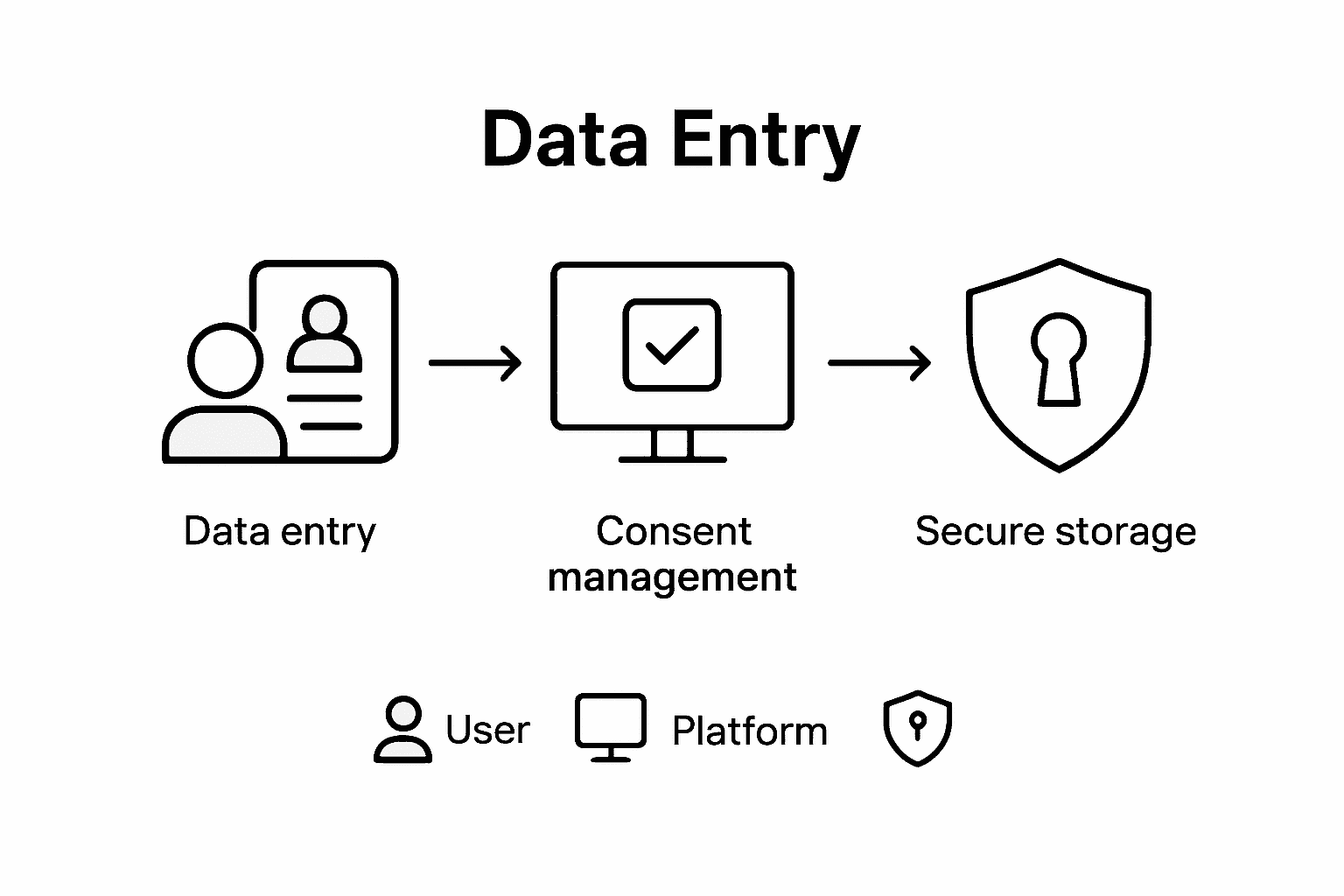
Pro Tip for Customer Empowerment: Design consent interfaces that are not just legally compliant, but intuitively understandable, using plain language and visual aids to help customers comprehend their data privacy choices.
Risk Management, Breaches, and Security Strategies
Risk management in digital insurance platforms represents a complex, multi-layered approach to protecting sensitive information and maintaining organisational resilience. Insurance core principles emphasise the critical need for comprehensive policies and procedures that safeguard customer information across all operational domains.
The evolving landscape of digital threats demands sophisticated security strategies that go beyond traditional defensive mechanisms. Advanced privacy protection technologies such as federated learning are emerging as powerful tools for insurers to collaborate and train models without compromising raw data integrity. These innovative approaches enable insurers to conduct sophisticated risk analyses while maintaining stringent data protection standards, effectively mitigating potential breach scenarios.
Comprehensive security strategies must encompass multiple dimensions, including technological infrastructure, human resource training, and continuous risk assessment. Cybersecurity best practices for insurers highlight the importance of developing a holistic approach that integrates advanced technological solutions with robust organisational protocols. This includes implementing multi-factor authentication, encryption technologies, regular security audits, and creating a culture of privacy awareness among staff and stakeholders.
Pro Tip for Security Resilience: Develop a dynamic, adaptive security framework that continuously evolves through regular threat assessments, proactive training programmes, and cutting-edge technological interventions.
Enhance Insurance Data Privacy with Modern Digital Solutions
Insurance data privacy challenges require a robust, adaptive approach to protect sensitive policyholder information while ensuring seamless operations across the insurance value chain. Key concerns like lawfulness, transparency, data minimisation, and accountability demand platforms that not only uphold regulatory compliance but also empower insurers to innovate rapidly and respond confidently to emerging privacy risks.
Insurance Business Applications (IBA) understands these critical needs. Our cloud-native core insurance platform, IBSuite, is purpose-built to address such challenges by providing a secure, API-first environment that simplifies data governance and integrates stringent privacy safeguards. With IBSuite, insurers can confidently manage policyholder data, streamline claims processing, and maintain full GDPR compliance, all while accelerating digital transformation.
Ready to tackle data privacy head-on and future-proof your insurance platform with state-of-the-art technology? Discover how IBSuite can protect your customers and enhance operational agility by booking a personalised demo today. Take the next step with Insurance Business Applications and explore our insurance data security solutions designed for the digital-first world.
Frequently Asked Questions
What are the core principles of insurance data privacy?
The core principles of insurance data privacy include lawfulness, fairness, transparency, purpose limitation, data minimisation, and accountability. These principles guide insurers in protecting sensitive information and ensuring responsible data management.
How do insurance platforms manage different types of data?
Insurance platforms handle various data types, such as policyholder information, claims data, risk assessment records, and financial transaction logs. They implement robust governance frameworks to ensure continuous data quality and maintain strict privacy protocols throughout the data handling process.
What is GDPR, and why is it important for digital insurers?
The General Data Protection Regulation (GDPR) is a key piece of legislation that establishes rigorous standards for data handling, consent, and individual rights in the European data protection landscape. For digital insurers, compliance with GDPR is crucial to protect personal data and avoid significant legal liabilities.
How can customers exercise their privacy rights in the insurance sector?
Customers can exercise their privacy rights by accessing, modifying, deleting, or restricting the processing of their personal information. Insurers must obtain explicit consent and provide clear communication about data usage, enabling customers to understand and control their data privacy choices.
Recommended
- Insurance Data Security: Risks and Solutions for Insurers
- Complete Guide to Digital Insurance Trends 2025 – Digital Insurance Platform | IBSuite Insurance Software | Modern Insurance System
- Insurance Data Security Best Practices for Modern Insurers
- Cloud Security and Compliance for Insurers: Navigating 2025 Risks – Digital Insurance Platform | IBSuite Insurance Software | Modern Insurance System