07.12.25
Cloud Security and Compliance for Insurers: Navigating 2025 Risks

Insurers recognize that the shift to cloud technology introduces new risks alongside efficiency gains. As cyber threats grow more complex, protecting sensitive financial data becomes more challenging than ever. This article explores key principles shaping cloud security in the insurance sector, highlighting strategies that balance regulatory demands with robust digital defense to keep both companies and customers protected.
Table of Contents
Key Takeaways
| Point | Details |
| Comprehensive Security Models | Insurers must implement multi-layered security frameworks that integrate advanced trust models and continuous monitoring for robust data protection. |
| Regulatory Compliance | Alignment with stringent regulations like DORA, GDPR, and Solvency II is essential for effective data protection and digital operational resilience. |
| Shared Responsibility in Cloud Security | Understanding the distribution of security obligations between insurers and cloud service providers is critical for enhancing data governance and compliance. |
| Proactive Risk Management | Developing adaptive security strategies, conducting regular threat assessments, and providing continuous training are vital for minimizing cybersecurity risks. |
Core Principles of Cloud Security in Insurance
Cloud security for insurers demands a sophisticated, multi-layered approach that goes beyond traditional IT protection strategies. Security frameworks must address unique challenges specific to sensitive financial and personal data environments. By implementing robust architectural principles, insurers can create resilient digital infrastructures that protect against evolving cyber threats.
Insurers require comprehensive security models that integrate multiple defensive strategies. The two-level security framework introduces innovative approaches to data protection, incorporating advanced trust models and mobile agent technologies that dynamically detect potential policy breaches. These sophisticated mechanisms allow insurers to establish granular control mechanisms that monitor and authenticate data access in real time.
Key principles of cloud security for insurance organizations include:
-
Data Encryption: Implementing end-to-end encryption for data at rest and in transit
-
Access Control: Developing granular user authentication and role-based permissions
-
Continuous Monitoring: Establishing real-time threat detection and incident response protocols
-
Regulatory Compliance: Ensuring alignment with European data protection standards like GDPR and Solvency II
Beyond technical safeguards, successful cloud security requires a holistic approach that integrates cybersecurity best practices with organizational culture. Insurance technology leaders must foster a proactive security mindset, recognizing that protection is not a one-time implementation but an ongoing, adaptive process that evolves with emerging digital risks.
Understanding DORA, GDPR, and Solvency II Compliance
The European insurance landscape is experiencing a significant regulatory transformation, with digital operational resilience becoming a critical focus for financial institutions. Three key regulatory frameworks—DORA, GDPR, and Solvency II—are reshaping how insurers approach data protection, cybersecurity, and operational risk management across the continent.
European Supervisory Authorities are calling on financial entities to prepare comprehensively for DORA compliance, requiring insurers to identify and address internal regulatory gaps before the January 17, 2025 implementation date. This proactive approach demands a holistic strategy that integrates technological capabilities with robust governance frameworks.
Key compliance considerations for insurers include:
-
Digital Operational Resilience: Establishing comprehensive ICT risk management protocols
-
Data Protection: Implementing stringent data privacy and protection mechanisms
-
Incident Reporting: Developing transparent reporting systems for digital security events
-
Third-Party Risk Management: Creating robust frameworks for managing technology service provider risks
Compliance automation strategies have become essential for navigating these complex regulatory requirements. Insurance organizations must view compliance not as a static checklist but as a dynamic, ongoing process that requires continuous adaptation to evolving technological and regulatory landscapes. By embracing a proactive and integrated approach, insurers can transform regulatory challenges into opportunities for enhanced operational excellence and digital resilience.
Shared Responsibility Models and Data Residency
Cloud computing has fundamentally transformed how insurers manage and protect sensitive data, introducing complex shared responsibility models that distribute security obligations between cloud service providers and insurance organizations. These intricate frameworks require a nuanced approach to data protection, accountability, and regulatory compliance.

Confidential computing technologies have emerged as a critical strategy for protecting data confidentiality and integrity, enabling insurers to secure sensitive information from potential infrastructure provider breaches. This approach ensures that even underlying cloud infrastructure cannot access or compromise critical financial and personal data, providing an additional layer of protection beyond traditional security mechanisms.
Key considerations in shared responsibility models include:
-
Infrastructure Security: Defining clear boundaries of security responsibilities
-
Data Encryption: Implementing end-to-end encryption across all data states
-
Access Control: Establishing granular authentication and authorization protocols
-
Compliance Monitoring: Maintaining continuous regulatory alignment
Compliance automation strategies play a crucial role in navigating the complexities of data residency and shared responsibility. The EU Cloud Code of Conduct provides comprehensive guidelines for cloud service providers, offering a structured framework that helps insurers demonstrate compliance through accredited monitoring bodies. This approach transforms regulatory challenges into strategic opportunities for enhanced data governance and operational resilience.
Encryption Standards and Operational Resilience Strategies
Encryption technologies have become the cornerstone of modern cybersecurity strategies for insurers, creating robust defense mechanisms against increasingly sophisticated digital threats. As financial institutions navigate complex technological landscapes, implementing advanced encryption standards is no longer optional but a critical operational imperative.
Artificial cyber lab research has revealed innovative approaches to testing cyber resilience, identifying strategic interventions that help control systemic cyber risks. These sophisticated methodologies enable insurers to proactively assess and mitigate potential security vulnerabilities before they can be exploited by malicious actors.
Key encryption and resilience strategies include:
-
Multi-Layer Encryption: Implementing end-to-end protection across data transmission and storage
-
Zero Trust Architecture: Developing granular access control mechanisms
-
Continuous Monitoring: Establishing real-time threat detection systems
-
Incident Response Planning: Creating comprehensive cybersecurity recovery protocols
Insurance platform security fundamentals play a critical role in operational resilience. The regulatory landscape surrounding ICT governance demands that insurers balance operational efficiency with robust transparency and governance frameworks. This approach transforms cybersecurity from a defensive mechanism into a strategic business enabler, allowing organizations to adapt quickly to emerging digital challenges while maintaining regulatory compliance.
Risk Mitigation, Common Errors, and Best Practices
Cybersecurity risk management in the insurance sector demands a proactive and comprehensive approach that anticipates potential vulnerabilities and implements strategic defensive mechanisms. The dynamic nature of digital threats requires insurers to develop adaptive strategies that can quickly respond to emerging technological challenges.
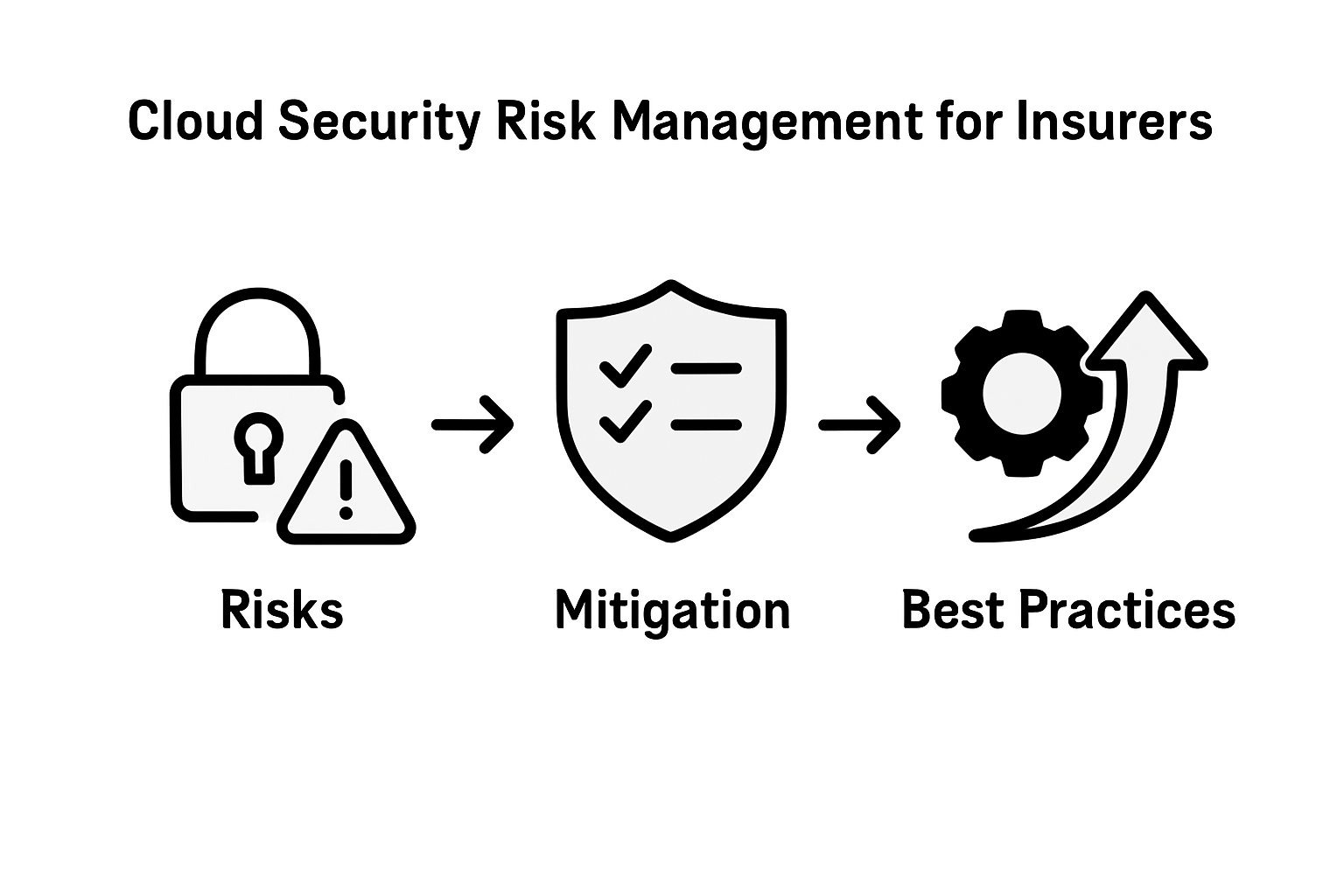
Advanced risk management frameworks have emerged, utilizing sophisticated stochastic programming techniques to select appropriate security solutions under financial constraints. These dynamic approaches enable insurers to minimize potential losses from cyberattacks while maintaining operational efficiency and financial stability.
Key risk mitigation strategies include:
-
Comprehensive Threat Assessment: Conducting regular and thorough security audits
-
Predictive Risk Modeling: Implementing advanced analytics to forecast potential vulnerabilities
-
Adaptive Security Protocols: Developing flexible response mechanisms
-
Continuous Training: Ensuring ongoing staff cybersecurity education
Insurance risk management practices have evolved to incorporate innovative technologies for security requirement certification. By utilizing advanced sentence transformation techniques, insurers can now automatically associate security requirements with measurable metrics, streamlining the process of cloud security certification and enhancing overall risk management strategies. This approach transforms cybersecurity from a reactive defensive measure into a strategic, data-driven organizational capability.
Strengthen Your Cloud Security and Compliance Strategy for 2025
The complex challenges of cloud security and regulatory compliance for insurers cannot be overlooked. With increasing demands from frameworks like DORA, GDPR, and Solvency II, and the need for continuous monitoring, encryption, and risk mitigation, insurers face pressure to adapt quickly or risk costly breaches and compliance failures. The evolving shared responsibility models and advanced encryption standards highlight that securing your insurance platform requires more than traditional solutions.
Insurance Business Applications (IBA) understands these demands. Our cloud-native IBSuite platform is built to help property and casualty insurers meet these exact challenges with a secure, end-to-end solution ensuring robust compliance and operational resilience. Leveraging best-in-class security features and regulatory-ready frameworks, IBSuite enables you to accelerate product innovation while reducing IT complexity.
Ready to transform regulatory challenges into business advantages? Learn how IBSuite supports holistic cybersecurity and compliance strategies by booking a personalized demo today. Discover how to streamline adherence to European regulations and safeguard your insurance operations with IBA’s expert solutions. Unlock operational excellence and digital resilience now by exploring our platform at Insurance Business Applications and take the first step toward securing your insurance future.
Frequently Asked Questions
What are the core principles of cloud security for insurers?
Cloud security for insurers involves multi-layered strategies, including data encryption, access control, continuous monitoring, and ensuring regulatory compliance, particularly with frameworks like GDPR and Solvency II.
How can insurers ensure compliance with DORA, GDPR, and Solvency II?
Insurers can ensure compliance by developing robust ICT risk management protocols, stringent data protection measures, transparent incident reporting systems, and effective third-party risk management frameworks.
What is a shared responsibility model in cloud security for insurers?
A shared responsibility model in cloud security delineates security obligations between cloud service providers and insurance organizations, emphasizing the need for clear data protection protocols and compliance monitoring.
Why is continuous monitoring crucial for cloud security?
Continuous monitoring is essential for real-time threat detection and incident response. It helps insurers identify potential security breaches and respond swiftly to mitigate risks and protect sensitive data.