15.07.26
Low-code in insurance: a practical guide for 2026

Low-code in insurance is a development approach that uses visual interfaces and configurable components to build and modify applications rapidly, with minimal hand-written code. The industry term for this category is “low-code application development,” and it sits at the intersection of business process management and software engineering. For P&C insurers, it means underwriting teams can adjust rating rules, compliance officers can update workflows, and product managers can launch new covers without waiting months for an IT release cycle. Leading European insurers now treat low-code platforms as a core pillar of their digital transformation strategies, and the evidence from deployments across Central and Eastern Europe shows the gains are real and measurable.
How does low-code improve operational efficiency in insurance?

Low-code platforms cut the time between a business decision and its technical execution from weeks to days. Traditional insurance IT projects require specification documents, developer queues, testing cycles, and release windows. A low-code approach replaces much of that with drag-and-drop workflow builders and pre-built connectors, so a business analyst can make the change directly.
The efficiency gains show up most clearly in three areas:
- Underwriting rules: Rating logic and eligibility criteria can be updated by underwriting teams without developer involvement, reducing change cycles from weeks to hours.
- Claims workflows: Automated routing, reserve setting triggers, and payment approvals can be configured visually, cutting manual handling at each stage.
- Product launches: New insurance products that previously required months of IT build time can reach market in weeks using reusable component libraries.
One of the most striking examples comes from Central Europe. Policy changes in minutes across the Czech Republic and Slovakia were achieved by unifying around 25 separate systems into a single low-code platform. That kind of integration compresses processing times to minutes and cuts time-to-market for new products from months to weeks.
| Workflow area | Before low-code | After low-code |
|---|---|---|
| Policy endorsement processing | Days | Minutes |
| New product configuration | Months | Weeks |
| Compliance rule update | Weeks | Hours |
| Claims routing adjustment | Days | Same day |
Pro Tip: Start by mapping your highest-volume, rule-driven processes first. These are the workflows where low-code delivers the fastest return and the clearest before-and-after comparison for stakeholders.
The digital transformation drivers behind this shift go beyond speed. Reducing IT dependency for routine changes frees development teams to focus on genuinely complex architecture work, which raises the overall quality of your technology estate.
In what ways do low-code platforms support regulatory compliance in insurance?
Regulatory compliance is one of the strongest business cases for low-code in insurance. European insurers face a continuous stream of regulatory updates from bodies such as EIOPA and national supervisory authorities. Each update traditionally triggers an IT change request, a testing cycle, and a deployment, all of which cost time and money.
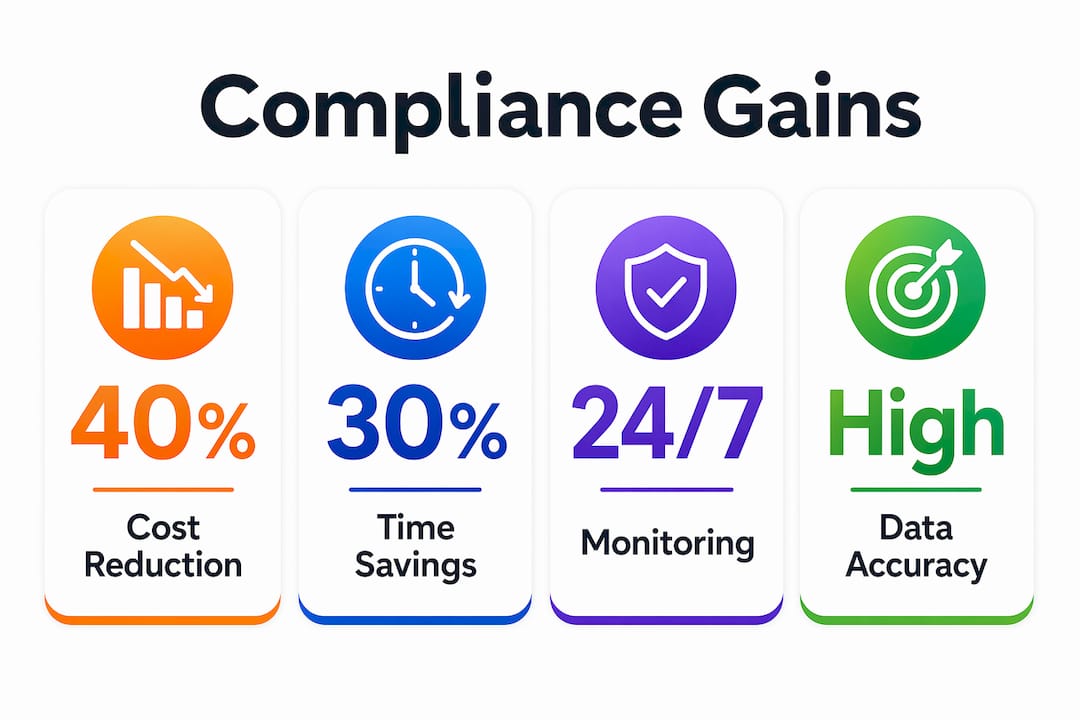
Low-code platforms change this by making compliance workflows configurable rather than hard-coded. When a regulation changes, a compliance officer or business analyst updates the relevant workflow directly, without raising a development ticket. Insurers implementing low-code for compliance cut change-management costs by 40% and reduce time-to-audit by 30%. That is a material reduction in both operational risk and regulatory exposure.
The governance features built into compliance-grade low-code platforms include:
- Role-based permissions: Only authorised users can modify specific workflow components, preventing unauthorised changes.
- Version control: Every change is logged with a timestamp and user identity, creating a full audit trail.
- Audit trail reporting: Regulators can be given read access to change histories without requiring IT involvement.
- Workflow approval gates: Changes above a defined risk threshold require sign-off before going live.
These features mean that compliance-enabled platforms reduce operational risk while improving regulatory transparency. The audit trail alone removes a significant burden from compliance teams who previously had to reconstruct change histories manually from emails and spreadsheets.
The 2026 regulatory compliance guide for insurers highlights that the speed of regulatory change is accelerating, particularly around data protection, climate-related disclosure, and conduct of business rules. Low-code platforms give compliance teams the agility to respond without creating a backlog of IT change requests.
What practical considerations arise when implementing low-code in insurance?
Low-code is not a replacement for strategic thinking. The most common mistake insurers make is treating it as a technology fix rather than an organisational change programme. Success depends on strategic vision, organisational culture, and alignment with regulatory demands, not on the platform alone.
The practical implementation path that works consistently follows this sequence:
- Select a lighthouse project. Choose a single, well-defined workflow with measurable outcomes. Underwriting referral management or compliance reporting are good candidates. A focused lighthouse project proves ROI before you commit to enterprise-wide scaling.
- Map your data architecture first. Only 5–10% of insurers fully realise technology investment value due to fragmented data architectures. A Single Source of Truth data foundation is not optional; it is the prerequisite for any low-code deployment to deliver consistent results.
- Position low-code as an orchestration layer. Low-code platforms connect legacy systems rather than replace them. They sit above your core policy administration and claims systems, orchestrating data flows and business rules without destabilising critical backend infrastructure.
- Invest in change management. Business analysts and underwriters need training to use low-code tools confidently. Without this, the platform reverts to being an IT tool, and the business efficiency gains disappear.
- Define governance boundaries early. Agree which workflow types can be changed by business users and which require IT sign-off. This prevents the platform from becoming a source of ungoverned process sprawl.
Pro Tip: Avoid the temptation to automate every process at once. Fragmented, simultaneous deployments across multiple business units create integration debt faster than a single, well-governed rollout.
The integration challenge is real but manageable. Modern insurance architectures move gradually from legacy cores to API-enabled modular systems orchestrated by low-code platforms. This hybrid approach protects existing investments while creating the flexibility to adapt quickly.
How do low-code and AI converge to drive innovation in insurance?
The combination of low-code platforms and artificial intelligence is where the most significant product innovation is happening in European insurance right now. Low-code provides the workflow infrastructure; AI provides the decision intelligence. Together, they enable insurers to deploy sophisticated automation that would previously have required large data science and engineering teams.
The use cases are already in production across European markets:
- Fraud detection: AI models flag suspicious claims patterns, and low-code workflows route flagged claims to specialist handlers automatically, without manual triage.
- Dynamic underwriting: AI-powered risk scoring feeds directly into low-code rating engines, allowing underwriting logic to adapt in near real time based on portfolio data.
- Customer-facing automation: Chatbot interactions trigger low-code workflows that update policies, generate documents, and initiate payments without human intervention.
- Regulatory reporting: AI extracts and classifies data from unstructured documents, and low-code workflows package it into regulator-ready formats automatically.
PZU Group, one of Europe’s largest insurers, processed claims worth PLN 10 billion using AI-supported tools in 2025, with low-code as a core pillar for accelerating application development. The group targets 20% faster delivery of business solutions through combined low-code and AI adoption. That is a benchmark worth noting for any insurer building its 2026 technology roadmap.
The strategic advantage of this convergence is modularity. A low-code platform built on an API-first architecture allows AI models to be swapped, upgraded, or retrained without rebuilding the surrounding workflow. For insurers, that means AI in P&C insurance becomes an iterative capability rather than a one-time project.
Key takeaways
Low-code in insurance delivers measurable gains in speed, compliance, and product agility only when it is built on a sound data architecture and governed by clear organisational boundaries.
| Point | Details |
|---|---|
| Start with a lighthouse project | Prove ROI on one focused workflow before scaling across the business. |
| Data architecture is the foundation | Fragmented data prevents value realisation; establish a Single Source of Truth first. |
| Low-code orchestrates, not replaces | Position platforms above legacy cores to gain agility without destabilising infrastructure. |
| Compliance gains are quantifiable | Insurers report 40% lower change-management costs and 30% faster time-to-audit. |
| AI and low-code multiply each other | Combining AI decision logic with configurable workflows accelerates product innovation significantly. |
The part most insurers get wrong
The conversations I find most revealing are the ones where an insurer has already bought a low-code platform and is disappointed with the results. Almost without exception, the problem is not the technology. The platform works. What failed was the assumption that the platform would sort out the underlying data mess on its own.
European insurers I have observed closely tend to underestimate how much of their operational inefficiency is rooted in data fragmentation rather than process complexity. You can build a beautiful low-code workflow for claims triage, but if the claims system, the policy system, and the finance system each hold a different version of the customer record, the workflow will surface contradictions rather than resolve them. The technology exposes the problem rather than hiding it, which is actually useful, but only if you are prepared to act on what you find.
The second thing I would push back on is the idea that low-code is primarily a cost-saving tool. The compliance cost reductions are real and worth pursuing. But the more durable advantage is speed. The ability to respond to a regulatory change, a competitor move, or a new distribution opportunity in days rather than months is a structural competitive advantage. Insurers who treat low-code as a cost programme will capture a fraction of its value. Those who treat it as a speed programme will reshape their competitive position.
My practical advice: give your compliance team ownership of the first deployment. They have the clearest regulatory deadlines, the most measurable outcomes, and the strongest motivation to make it work. A successful compliance workflow is the fastest path to organisational buy-in for broader adoption.
— Tuna
IBSuite: low-code capability built into your core platform
Ibapplications built IBSuite as an API-first, cloud-native platform that puts configurable workflow tools directly in the hands of business teams. The policy administration module allows underwriters and product managers to configure rating rules, product structures, and endorsement workflows without IT involvement, cutting product launch cycles significantly. The claims management module automates routine claims routing, reserve triggers, and payment approvals using the same configurable approach. Both modules sit on a single data architecture, which resolves the fragmentation problem that undermines most low-code deployments. For insurers ready to move from evaluation to execution, IBSuite provides the governance, audit trail, and integration layer that enterprise-grade deployment requires.
FAQ
What is low-code in insurance?
Low-code in insurance is a development method that uses visual tools and configurable components to build and modify insurance applications with minimal hand-written code. It allows business teams to update workflows, products, and compliance rules without full IT development cycles.
How much can low-code reduce compliance costs for insurers?
Insurers implementing low-code for compliance report a 40% reduction in change-management costs and a 30% reduction in time-to-audit. These gains come from enabling non-technical staff to adapt workflows directly, without raising IT change requests.
Does low-code replace core insurance systems?
Low-code platforms do not replace core systems. They function as orchestration layers that connect legacy policy administration, claims, and billing systems, enabling faster workflow changes without destabilising critical backend infrastructure.
What is a lighthouse project in low-code implementation?
A lighthouse project is a focused, well-defined workflow chosen as the first low-code deployment to prove ROI before enterprise-wide scaling. Underwriting referral management and compliance reporting are common starting points for European insurers.
How do low-code platforms and AI work together in insurance?
Low-code platforms provide the workflow infrastructure, and AI provides decision intelligence such as fraud detection scoring or dynamic underwriting logic. Together, they allow insurers to deploy sophisticated automation without large engineering teams, as demonstrated by PZU Group’s AI-supported claims processing in 2025.
Recommended
- Insurance marketplace models 2026: 50% faster launches
- Tips for accelerating insurance go-to-market in 2026
- Low-code no-code: The Key to the Digital Transformation? – Digital Insurance Platform | IBSuite Insurance Software | Modern Insurance System
- Embracing Compliance through Next-Generation Insurance Platforms – Digital Insurance Platform | IBSuite Insurance Software | Modern Insurance System