01.12.25

Embedded Insurance in Europe: Complete Strategic Guide

Consumers now expect insurance to appear automatically during checkout, not as a separate task. This shift is part of a larger trend in Europe, where embedded insurance is reshaping how protection is delivered and experienced. Companies are weaving coverage into everyday transactions, making it accessible right when people need it. Discover how these changes are redefining the insurance model and what they reveal about the future of digital services.
Table of Contents
Key Takeaways
| Point | Details |
| Embedded Insurance Integration | Embedded insurance seamlessly combines insurance solutions with non-insurance products, enhancing the purchasing experience for consumers. |
| Technological Infrastructure | A robust technological framework, utilizing APIs and microservices, is essential for effective deployment of embedded insurance models. |
| Regulatory Compliance Challenges | Insurers must navigate complex regulatory landscapes while ensuring data protection and consumer trust in embedded insurance offerings. |
| Core System Modernization | Upgrading legacy systems is crucial for insurers to remain competitive and agile in delivering innovative embedded insurance products. |
Defining Embedded Insurance and Core Principles
Embedded insurance represents a strategic approach to integrating insurance solutions directly into non-insurance products and services, transforming traditional distribution models. Integrated insurance solutions now enable seamless coverage provision at the precise moment consumers need protection.
At its core, embedded insurance involves strategically inserting insurance products within existing transaction ecosystems. Consumers can now acquire insurance coverage simultaneously with purchasing primary products or services, creating a frictionless experience. This model fundamentally shifts how insurance is perceived and purchased, moving from a standalone transaction to an integrated, contextual offering.
The key principles of embedded insurance include:
-
Contextual Relevance: Insurance offerings precisely matched to the specific moment and context of consumer need
-
Seamless Integration: Minimal friction in insurance acquisition process
-
Real-time Provisioning: Immediate coverage activation during product purchase
-
Personalization: Tailored insurance solutions aligned with individual consumer risk profiles
Regulatory frameworks are critical in this emerging model. Within the European Union, embedded insurance products must navigate complex digital microinsurance strategies while maintaining stringent consumer protection standards. Successful implementation requires sophisticated technological infrastructure that supports rapid, automated insurance distribution across diverse digital platforms.
Industry Variations: Retail, Mobility, Fintech, Telco
Embedded insurance is rapidly transforming multiple industry sectors across Europe, with each vertical presenting unique implementation strategies and opportunities. Microinsurance technologies are enabling innovative approaches that go far beyond traditional insurance distribution models.
In the retail sector, embedded insurance is creating seamless protection experiences during consumer purchases. Companies are integrating coverage directly into e-commerce platforms, allowing customers to add insurance protection with minimal friction. The telecommunications industry is particularly innovative, with providers using digital-native insurance solutions to offer device protection, travel coverage, and personalized risk management directly through mobile platforms.
Mobility and fintech sectors represent significant growth areas for embedded insurance. European startups are developing sophisticated models that integrate insurance into transportation and financial services. Some key innovations include:
-
Mobility Sector:
-
Instant insurance for ride-sharing trips
-
Per-kilometer vehicle coverage
-
Integrated protection for electric scooter rentals
-
-
Fintech Applications:
-
Micro-duration insurance during financial transactions
-
Automated risk assessment for digital lending platforms
-
Real-time coverage activation during investment activities
-
The European embedded insurance landscape demonstrates remarkable complexity and potential. Strategic partnerships between insurers and technology platforms are driving insurtech innovation, creating more personalized, contextual, and accessible insurance experiences across multiple industry verticals.
Technical Requirements: APIs, Microservices, Automation
Embedded insurance demands a sophisticated technological infrastructure that enables rapid, flexible, and scalable insurance product deployment. APIs in the insurance industry have become the critical backbone for creating interconnected, responsive insurance ecosystems that can adapt quickly to market demands.

Microservices architecture represents a fundamental shift in how insurers build and manage their technological platforms. Unlike monolithic systems, microservices enable insurers to develop, deploy, and scale individual components independently. This approach supports the complex requirements of embedded insurance by allowing real-time data integration, dynamic pricing, and rapid product configuration across multiple partner platforms.
Automation is the cornerstone of effective embedded insurance deployment. Digital underwriting workflows enable insurers to process applications, assess risks, and generate policies with unprecedented speed and accuracy. Key automation capabilities include:
-
Instant Risk Assessment:
-
Real-time data analysis
-
Automated underwriting decisions
-
Dynamic risk scoring
-
-
Operational Efficiency:
-
Reduced manual intervention
-
Accelerated claims processing
-
Consistent decision-making
-
Successful implementation requires a strategic approach to insurance automation technologies, focusing on creating flexible, compliant, and scalable technological infrastructures that can support the complex ecosystem of modern embedded insurance solutions.
Core System Upgrades for Embedded Insurance Success
Modernizing core insurance systems is no longer optional but a critical strategic imperative for insurers seeking to compete in the embedded insurance marketplace. Core system replacements represent the foundational transformation necessary to enable dynamic, flexible insurance product delivery across multiple digital platforms.
Successful digital transformation requires insurers to rethink their technological architecture fundamentally. Modernizing insurance infrastructure demands building scalable, adaptable platforms that can support real-time data integration, flexible product configurations, and seamless partner ecosystem interactions. The goal is creating a technological foundation that can rapidly respond to changing market dynamics and consumer expectations.
Key considerations for core system upgrades include:
-
Architectural Flexibility:
-
Cloud-native infrastructure
-
Modular system design
-
API-first approach
-
-
Operational Capabilities:
-
Rapid product configuration
-
Real-time pricing engines
-
Automated underwriting processes
-
The financial implications of legacy system maintenance are significant. Insurance core replacement strategies reveal that continuing to patch outdated systems often costs more than implementing a comprehensive digital transformation. Insurers must view technological modernization as a strategic investment in future competitiveness, enabling them to quickly launch innovative embedded insurance products and respond dynamically to emerging market opportunities.
Strategic Risks, Compliance, and Ecosystem Impacts
Embedded insurance introduces complex regulatory challenges that demand sophisticated strategic planning and risk management approaches. Insurance risk management has become increasingly nuanced as digital platforms blur traditional boundaries between insurance providers, technology companies, and distribution partners.
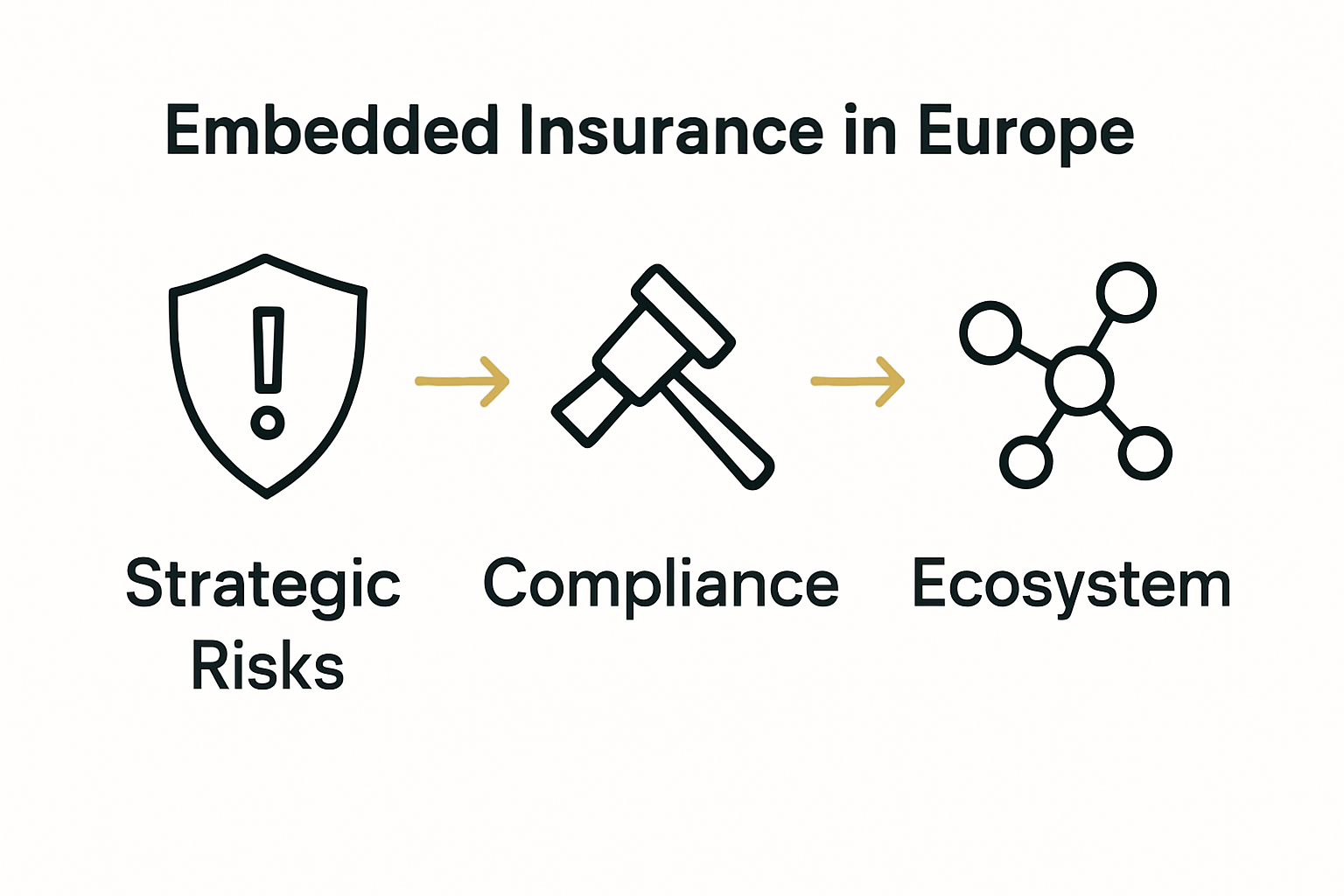
The European regulatory landscape presents significant compliance hurdles for embedded insurance ecosystems. Compliance automation strategies are essential for navigating the intricate web of consumer protection regulations, data privacy requirements, and cross-border distribution rules. Insurers must develop robust technological frameworks that can dynamically adapt to evolving regulatory standards while maintaining transparency and consumer trust.
Key strategic risk considerations include:
-
Regulatory Compliance:
-
Data protection standards
-
Consumer disclosure requirements
-
Cross-border distribution regulations
-
-
Technological Risks:
-
Cybersecurity vulnerabilities
-
Integration ecosystem complexity
-
Third-party vendor risk management
-
Successful embedded insurance strategies require a holistic approach that balances technological innovation with comprehensive compliance frameworks. Insurers must proactively design systems that not only meet current regulatory requirements but can also anticipate and rapidly adapt to emerging legal and technological challenges in the dynamic digital insurance landscape.
Unlock the Power of Embedded Insurance with Modern Core Systems
The article highlights the challenges insurers face in adopting embedded insurance models such as seamless integration, real-time provisioning, and navigating complex regulatory environments. These pain points demand a cloud-native, API-first platform designed for rapid product innovation and operational flexibility. If you want to overcome legacy system constraints, reduce IT complexity, and deliver personalized, contextually relevant insurance products across industries like retail, mobility, and fintech, a modern core system upgrade is essential.
Experience how IBSuite empowers P&C insurers to accelerate digital transformation with features like automated underwriting, scalable microservices, and continuous compliance support. Discover how you can streamline every stage from sales to claims while enabling instant risk assessment and real-time pricing. Ready to lead the embedded insurance revolution and respond quickly to evolving market demands Take the next step and book a demo today. Learn more about core system replacements and how to embrace insurance automation technologies that keep you ahead.
Frequently Asked Questions
What is embedded insurance?
Embedded insurance is a method of integrating insurance solutions directly into non-insurance products and services, allowing consumers to purchase insurance coverage at the same time they acquire primary products or services.
What are the key principles of embedded insurance?
The key principles include contextual relevance, seamless integration, real-time provisioning, and personalization, ensuring that insurance products meet consumer needs in a frictionless manner.
How does technology impact embedded insurance?
Technology plays a crucial role by enabling rapid and flexible deployment of insurance products through APIs, microservices, and automation, facilitating real-time data integration and dynamic risk assessment.
What are the regulatory challenges associated with embedded insurance?
Regulatory challenges include compliance with consumer protection standards, data privacy regulations, and ensuring transparency in insurance offerings within digital platforms.