06.01.26
API-First Approach Insurance: Driving Digital Efficiency

Most british and European insurers are discovering that over 60 percent of digital transformation projects stall due to legacy system complexity. For Chief Digital Officers and IT Architects at mid-sized property and casualty insurers in Central Europe, this reality highlights the urgent need for modular solutions. An API-first strategy offers a clearer path toward seamless integration, fewer silos, and the ability to innovate at speed in a demanding regulatory environment.
Table of Contents
- API-first Approach In Insurance Explained
- Key Principles Of API-first Platforms
- Architectural Components And Integrations
- Common Challenges And Mitigation Strategies
- Operational And Compliance Impacts For P&C Insurers
Key Takeaways
| Point | Details |
|---|---|
| API-first Approach | Prioritising APIs fosters modularity and adaptability in insurance technology, yielding a more innovative and integrated system. |
| Enhanced Operational Efficiency | API-first technologies streamline compliance and operational processes, allowing insurers to react swiftly to market changes. |
| Consumer-Centric Design | Developing APIs with a focus on usability and documentation enhances adoption and integration for both internal and external users. |
| Collaborative Development Culture | Encouraging cross-functional collaboration mitigates integration challenges and fosters a more resilient technological ecosystem. |
API-first approach in insurance explained
The API-first approach represents a strategic methodology transforming digital infrastructure for European insurers, prioritising application programming interfaces as fundamental architectural components before developing user interfaces or applications. Designing APIs as foundational building blocks enables insurance organisations to create more modular, adaptable technological ecosystems that support rapid innovation and seamless integrations.
In practical terms, an API-first strategy means developing robust, standardised interfaces that allow different software systems to communicate efficiently. For European property and casualty insurers, this translates into creating interconnected platforms where core systems such as underwriting, claims processing, and customer management can exchange data seamlessly. The approach eliminates traditional technological silos, allowing insurers to integrate third-party services, legacy systems, and emerging technologies with unprecedented ease.
Key benefits of implementing an API-first approach include enhanced operational flexibility, accelerated product development, and improved customer experiences. Insurance organisations can quickly adapt their technological infrastructure, launch new digital products faster, and create more personalised service offerings. By treating APIs as primary design considerations rather than afterthoughts, insurers can build more responsive, scalable digital platforms that meet evolving market demands.
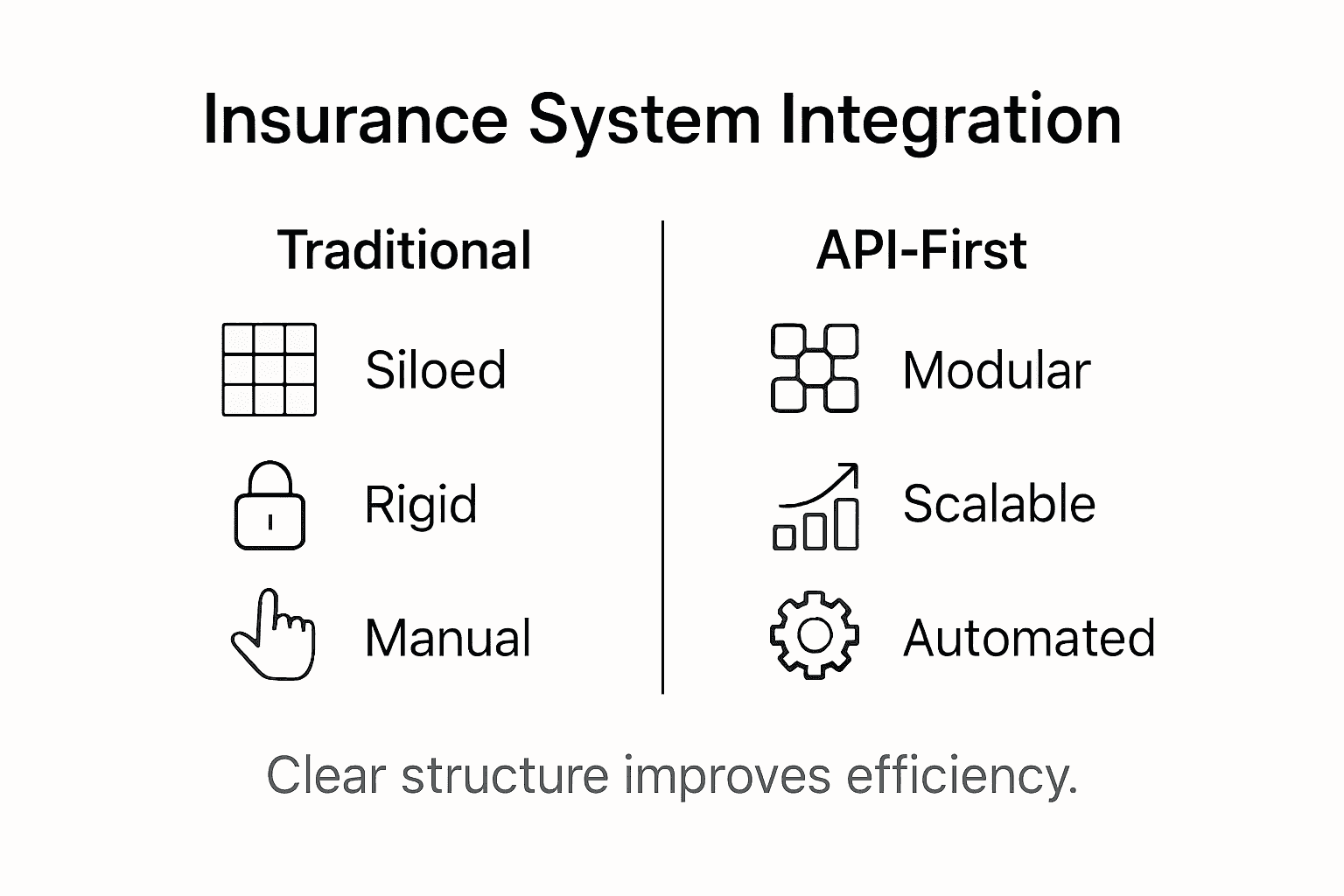
To better understand the strategic implications, here is a comparison of traditional insurance system integration and the API-first approach:
| Aspect | Traditional Integration | API-First Integration |
|---|---|---|
| System Connectivity | Point-to-point links | Standardised API interfaces |
| Adaptability to Change | Slow, requires major updates | Rapid, modular adjustments |
| Support for Third-Parties | Challenging, often manual | Seamless, automated connectivity |
| Innovation Speed | Hindered by silos | Accelerated development cycles |
| Scalability | Resource-intensive | Easily scalable through APIs |
Pro tip: When transitioning to an API-first model, start by mapping your existing system interactions and identifying potential integration points before designing your API architecture.
Key principles of API-first platforms
API-first platforms fundamentally transform digital infrastructure by treating APIs as primary architectural products, not mere technical components. This strategic approach prioritises designing robust, consistent interfaces that serve both internal and external developers with remarkable precision. By establishing APIs as foundational elements, insurance organisations can create more flexible, interconnected technological ecosystems that support rapid innovation and seamless data exchange.
The core principles of API-first platforms centre on a consumer-centric design philosophy. This means developing APIs with meticulous attention to usability, clarity, and comprehensive documentation. European insurers implementing this approach focus on creating interfaces that are intuitive, well-structured, and capable of supporting complex business logic while maintaining simplicity. Key considerations include establishing strict versioning protocols, implementing robust governance standards, and conducting regular compliance reviews to ensure ongoing system integrity.
Technical architecture in API-first platforms emphasises modularity and loose coupling between different system components. This design strategy enables parallel development processes, allows easier integration of new technologies, and supports scalable infrastructure. Insurance organisations can quickly adapt their digital platforms, introduce new services, and respond to market changes with unprecedented agility. By breaking down traditional technological silos, insurers can create more responsive, interconnected systems that facilitate innovation and enhance operational efficiency.

Pro tip: When designing API-first platforms, prioritise creating comprehensive developer documentation and establishing clear, consistent interface standards to ensure smooth adoption and integration.
Architectural components and integrations
The architectural landscape of modern insurance platforms is fundamentally transformed by comprehensive API integration strategies, which encompass multiple API types including public, private, partner, and composite interfaces. These sophisticated architectural components enable insurers to create dynamic, interconnected digital ecosystems that streamline data exchange and automate complex business processes. By leveraging diverse API classifications, insurance organisations can build flexible technological infrastructures that adapt rapidly to changing market demands.
Critical architectural components include secure API gateways, middleware layers, and standardised communication protocols such as RESTful and SOAP interfaces. These technical elements work in concert to harmonise data flows across disparate systems, allowing seamless integration between legacy infrastructure, emerging technologies, and external partner platforms. European insurers are increasingly focusing on creating modular architectures that support real-time data synchronisation, enabling sophisticated functionalities like AI-powered chatbots, Internet of Things (IoT) device interactions, and advanced underwriting processes.
Below is a summary of key architectural API types and their application in insurance platforms:
| API Type | Common Usage | Key Benefit |
|---|---|---|
| Public API | Partner integrations | Expands service ecosystem |
| Private API | Internal developer use | Secures sensitive processes |
| Partner API | Specific business partners | Enables tailored collaborations |
| Composite API | Workflow automation | Simplifies complex operations |
Integration strategies extend beyond traditional technological boundaries, enabling insurers to unify previously siloed systems and create more responsive, intelligent digital platforms. By implementing robust API architectures, organisations can accelerate critical processes such as claims processing, risk assessment, and customer onboarding. The ability to rapidly integrate new technologies and external data sources provides a significant competitive advantage, allowing insurers to develop more personalised products, improve operational efficiency, and enhance overall customer experiences.
Pro tip: Prioritise creating a comprehensive API governance framework that establishes clear standards for security, versioning, and documentation to ensure smooth, scalable integrations across your technological ecosystem.
Common challenges and mitigation strategies
Navigating the complex landscape of API-first development requires a strategic approach to addressing inherent technical and organisational challenges. European insurers frequently encounter significant obstacles in maintaining API consistency, managing version control, and ensuring performant integrations across distributed technological ecosystems. These challenges demand sophisticated mitigation strategies that go beyond traditional software development approaches, requiring comprehensive governance frameworks and proactive design methodologies.
The primary technical challenges centre on maintaining robust, scalable API architectures that can adapt to rapidly evolving business requirements. Insurers must implement strict design standards that include comprehensive documentation, continuous peer review processes, and rigorous compliance checks. Establishing clear versioning protocols, creating consumer-first API design guidelines, and developing systematic approach to technical debt reduction become critical success factors. These strategies help organisations create more resilient, flexible technological platforms that can quickly respond to market dynamics and emerging technological trends.
Mitigating integration challenges requires a holistic approach that emphasises cross-functional collaboration and organisational alignment. By fostering a culture of shared responsibility and technical excellence, insurance organisations can effectively break down traditional silos between development, operations, and business teams. This collaborative approach enables more seamless API development, reduces implementation friction, and creates a more adaptive technological ecosystem that supports rapid innovation and continuous improvement.
Pro tip: Develop a comprehensive API governance framework with clear design standards, mandatory documentation requirements, and regular technical review cycles to systematically address potential integration challenges.
Operational and compliance impacts for P&C insurers
Property and casualty insurers are experiencing profound transformational shifts driven by API-first technologies, with significant implications for operational efficiency and regulatory compliance. Policy administration processes are being fundamentally reimagined through advanced technological infrastructures that enable more dynamic, responsive, and transparent insurance ecosystems. These technological advancements allow insurers to streamline complex regulatory requirements while simultaneously enhancing operational agility and customer engagement.
The compliance landscape for European property and casualty insurers has become increasingly sophisticated, demanding robust technological frameworks that can adapt to rapidly changing regulatory environments. Modern API-first platforms provide insurers with unprecedented capabilities to implement real-time compliance monitoring, automate reporting processes, and ensure consistent adherence to complex regulatory standards. By creating flexible, interconnected technological architectures, insurers can develop more proactive approaches to risk management, reducing potential compliance vulnerabilities and creating more transparent operational models.
Digital transformation through API-first approaches enables property and casualty insurers to revolutionise core operational functions, including underwriting, claims processing, and customer service. These technological strategies support more granular data management, enhanced risk assessment capabilities, and more personalised customer interactions. The ability to rapidly integrate new data sources, implement advanced analytics, and create seamless cross-platform experiences represents a fundamental shift in how insurance organisations conceptualise and deliver their core services.
Pro tip: Develop a comprehensive digital transformation roadmap that prioritises API integration, regulatory compliance, and operational flexibility to create a more adaptive insurance technology ecosystem.
Unlock Digital Efficiency with an API-First Insurance Platform
The challenge of transforming legacy systems into adaptable, scalable architectures is at the heart of the API-first approach discussed in this article. European property and casualty insurers face the urgent need to break down technological silos, accelerate product development, and improve operational flexibility — all while ensuring regulatory compliance and seamless integrations. These are complex goals that demand a robust, end-to-end solution designed specifically for the evolving insurance landscape.
Insurance Business Applications (IBA) addresses these pain points with IBSuite, a cloud-native, API-first core insurance platform trusted by global industry leaders. IBSuite enables insurers to streamline underwriting, claims, policy administration, and customer engagement through modular, secure APIs that support rapid innovation. By embracing IBSuite, organisations can reduce IT complexity, launch new products faster, and confidently navigate compliance requirements.
Ready to modernise your insurance technology and drive digital efficiency? Discover how IBSuite’s comprehensive API-first architecture can transform your operations today. Book a personalised demo now at IBA Demo to explore a platform that supports the full insurance value chain with seamless integrations and Evergreen updates. Take the next step towards an agile, future-proof insurance business.
Frequently Asked Questions
What is an API-first approach in insurance?
The API-first approach in insurance is a strategic methodology that prioritises the development of application programming interfaces (APIs) as fundamental components of digital infrastructure, enabling modular and adaptable systems for efficient data exchange and innovation.
What are the benefits of implementing an API-first approach for insurers?
The key benefits include enhanced operational flexibility, accelerated product development, improved customer experiences, and the ability to integrate seamlessly with third-party services, leading to more personalised offerings and quicker market adaptation.
How does an API-first approach differ from traditional insurance system integration?
Unlike traditional integration methods that rely on point-to-point links and often face adaptation challenges, the API-first approach employs standardised interfaces that allow for rapid adjustments, seamless third-party connectivity, and faster innovation cycles without the constraints of technological silos.
What challenges do insurers face when adopting an API-first model?
Insurers often encounter challenges such as maintaining API consistency, managing version control, ensuring performant integrations, and aligning cross-functional collaboration. These challenges can be addressed through comprehensive governance frameworks, clear design standards, and a culture of shared responsibility.
Recommended
- API Strategy for Insurers: Driving Digital Impact
- Understanding Digital-First Insurance Strategies – Digital Insurance Platform | IBSuite Insurance Software | Modern Insurance System
- API-First Insurance Platforms: Driving Efficiency and Compliance
- API-First Core Insurance Platforms Explained: 2025 Guide – Digital Insurance Platform | IBSuite Insurance Software | Modern Insurance System