04.12.25
How Insurers Can Launch Digital Products Fast

More than 80 percent of insurance companies in European and American markets are racing to reinvent product launches for the digital age. With rising customer demands and fierce industry competition, digital innovation is no longer optional for any American insurer. This guide breaks down exactly how digital strategies like configuration-driven development, reusable components, and API orchestration can dramatically speed up insurance product rollouts while minimizing risk and maximizing impact.
Table of Contents
- Digital Product Launch In Insurance Explained
- Configuration-Driven Development And Its Impact
- Leveraging Reusable Components And Automation
- Api Orchestration For Seamless Integration
- Actionable Steps And Anonymized Case Scenarios
- Avoiding Common Pitfalls In Fast Launches
Key Takeaways
| Point | Details |
|---|---|
| Embrace Digital Transformation | Insurers must adopt digital infrastructure to enhance product development speed and precision. |
| Leverage Configuration-Driven Development | This approach allows for modular product architectures that enable quick adaptations without extensive redevelopment. |
| Implement API Orchestration | Strong API management is essential for seamless integration, enhancing operational agility and technological interoperability. |
| Prioritize Risk Mitigation | Insurers should prepare for potential compliance, technical, and customer experience challenges when accelerating product launches. |
Digital Product Launch in Insurance Explained
The digital transformation of insurance product development is rapidly accelerating across European markets. Insurers are now recognizing that traditional product development approaches are no longer sufficient in a digital-first ecosystem. Digital infrastructure enhancements have become critical for launching innovative insurance products with unprecedented speed and precision.
Successful digital product launches in insurance require a strategic approach that combines technological agility, customer-centric design, and robust risk management frameworks. The key components involve configuration-driven development, which allows insurers to create modular product architectures that can be quickly adapted and deployed. This means building insurance products with reusable components that can be mixed, matched, and modified without extensive redevelopment cycles.
Modern insurers are adopting advanced digitalization strategies that enable rapid product innovation. These strategies typically involve:
- Implementing API-first platforms for seamless integration
- Utilizing microservices architecture for flexible product design
- Developing automated workflows that reduce time-to-market
- Creating cross-functional teams with technology and insurance expertise
The ultimate goal is transforming traditional insurance product development from a months-long process into a weeks-or-even-days rapid deployment model. By embracing digital technologies and adaptive design principles, insurers can respond quickly to emerging market demands, customer preferences, and competitive challenges.
Configuration-Driven Development and Its Impact
Configuration-driven development represents a transformative approach for insurers seeking to accelerate digital product innovation. By enabling rapid customization and deployment of insurance products, this methodology fundamentally reshapes how digital solutions are created and launched. Model-driven development techniques provide insurers with unprecedented flexibility in designing and adapting digital insurance offerings.

At its core, configuration-driven development allows insurance technology teams to build modular, adaptable product architectures that can be quickly reconfigured without extensive programming. This approach breaks down traditional monolithic development processes into more agile, responsive components. Digital technology integration enables insurers to create product templates that can be rapidly customized to meet specific market demands, dramatically reducing time-to-market.
The key advantages of configuration-driven development include:
- Reduced dependency on complex coding processes
- Faster product iteration and market adaptation
- Enhanced ability to create personalized insurance solutions
- Lower technical complexity and maintenance overhead
- Improved collaboration between business and technology teams
Successful implementation requires a strategic approach that combines technological infrastructure, cross-functional collaboration, and a mindset of continuous innovation. Insurers must invest in platforms that support flexible configuration, robust API integrations, and seamless workflow automation to fully leverage the potential of this transformative development methodology.
Leveraging Reusable Components and Automation
Reusable components and automation have emerged as transformative strategies for insurers seeking to accelerate digital product development. Digital transformation approaches are fundamentally reshaping how insurance organizations design, develop, and deploy innovative digital solutions with unprecedented speed and efficiency.
The core principle of leveraging reusable components involves creating modular, standardized building blocks that can be quickly assembled and reconfigured across different insurance product lines. Digitalization economics demonstrate that this approach dramatically reduces time-to-market, minimizes redundant development efforts, and enables insurers to respond rapidly to changing market conditions. By implementing a component-based architecture, teams can focus on innovation rather than repeatedly solving the same technical challenges.
Key strategies for effective component-based development include:
- Creating a centralized component library
- Establishing clear design and integration standards
- Implementing robust version control mechanisms
- Developing comprehensive documentation for each component
- Enabling cross-team collaboration and knowledge sharing
Successful implementation requires a holistic approach that combines technological infrastructure, agile methodologies, and a culture of continuous improvement. Insurers must invest in platforms that support modular development, seamless integration, and intelligent automation to unlock the full potential of reusable components and accelerate their digital transformation journey.
API Orchestration for Seamless Integration
API orchestration has become a critical enabler for insurers seeking to accelerate digital product launches and enhance technological interoperability. Digitalization trends demonstrate that sophisticated API management is no longer optional but a strategic imperative for modern insurance organizations aiming to remain competitive in a rapidly evolving digital landscape.
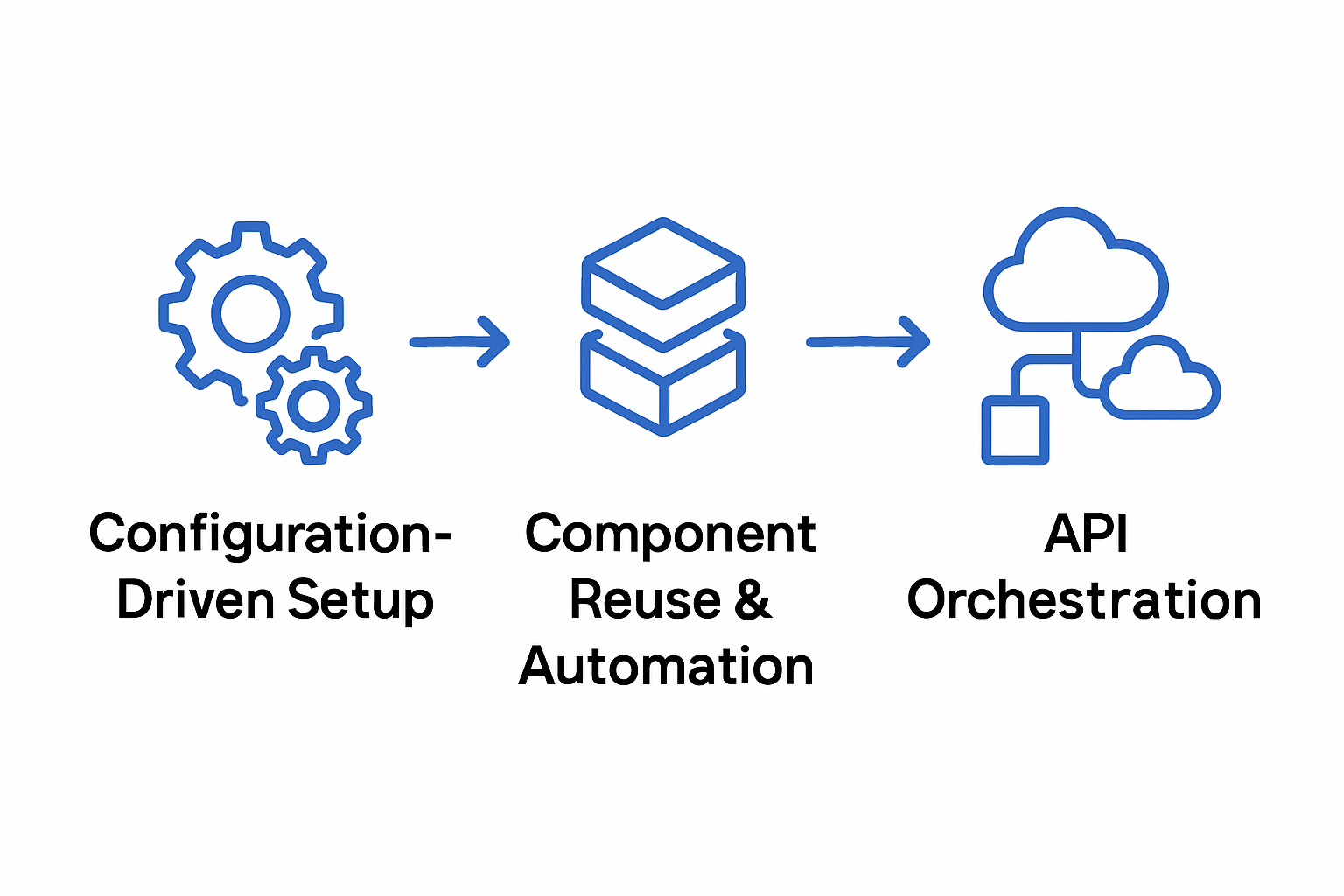
At its core, API orchestration involves creating a sophisticated integration framework that allows different software systems, applications, and services to communicate seamlessly and efficiently. Digital transformation strategies reveal that effective API orchestration enables insurers to rapidly connect diverse technological components, streamline data exchange, and create more agile, responsive digital ecosystems.
Key components of successful API orchestration include:
- Implementing robust API management platforms
- Developing standardized integration protocols
- Establishing comprehensive security and compliance frameworks
- Creating flexible, scalable API architectures
- Enabling real-time data synchronization across systems
Successful API orchestration requires a holistic approach that goes beyond technical implementation. Insurers must cultivate a culture of technological innovation, invest in skilled integration specialists, and develop comprehensive strategies that align API capabilities with broader business objectives and customer experience goals.
Actionable Steps and Anonymized Case Scenarios
Digital product acceleration requires a structured, strategic approach that transforms traditional insurance product development processes. Successful insurers are adopting methodical frameworks that enable rapid digital innovation, moving beyond incremental improvements to fundamental operational transformation.
A typical breakthrough scenario involves a mid-sized property insurance provider who reimagined their product development lifecycle. Digital innovation strategies revealed that by implementing cross-functional teams and adopting an API-first development approach, they reduced time-to-market for new digital products from 18 months to just 6 weeks.
Actionable steps for accelerating digital product launches include:
- Establish a dedicated digital innovation team
- Recruit professionals with both insurance and technology expertise
- Create clear roles and cross-functional collaboration protocols
- Develop a modular technology architecture
- Implement microservices-based infrastructure
- Create reusable component libraries
- Standardize integration protocols
- Implement agile development methodologies
- Adopt sprint-based product development cycles
- Use continuous integration and deployment practices
- Establish rapid prototyping and feedback mechanisms
Successful digital transformation demands more than technological solutions. It requires a cultural shift that embraces experimentation, values rapid learning, and prioritizes customer-centric innovation across all organizational levels.
Avoiding Common Pitfalls in Fast Launches
Digital transformation strategies reveal that rapid product launches in insurance demand more than just technological capability. Insurers must navigate a complex landscape of potential challenges that can derail even the most promising digital initiatives.
Risk mitigation becomes paramount when accelerating product development cycles. Digitalization insights demonstrate that successful insurers implement robust safeguards to prevent common pitfalls that can compromise product quality, regulatory compliance, and customer trust.
Common pitfalls to anticipate and mitigate include:
- Regulatory Compliance Risks
- Inadequate compliance screening
- Overlooking regional regulatory nuances
- Failing to implement comprehensive legal checks
- Technical Infrastructure Challenges
- Insufficient integration testing
- Neglecting scalability requirements
- Poor security protocol implementations
- Customer Experience Disruptions
- Rushing products without user validation
- Ignoring customer feedback mechanisms
- Developing solutions disconnected from actual user needs
Successful digital product launches require a holistic approach that balances speed with thoroughness. Insurers must cultivate a culture of continuous learning, rapid iteration, and proactive risk management to transform potential pitfalls into opportunities for innovation and market differentiation.
Accelerate Your Digital Product Launch with IBA’s IBSuite
The article highlights a critical challenge that insurers face today: launching digital insurance products rapidly while managing complexity, regulatory compliance, and customer expectations. Key pain points include reducing lengthy development cycles, implementing configuration-driven development, and orchestrating seamless API integrations to adapt swiftly to market changes. These goals require a technology platform that supports modularity, automation, and robust integration—all while ensuring agility and security.
At Insurance Business Applications, we understand the urgency and complexity of transforming traditional insurance product development into a fast, flexible, and customer-centric process. Our cloud-native IBSuite platform is designed specifically for property and casualty insurers to streamline every stage of the insurance value chain. It supports API-first architecture, modular reusable components, and continuous integration so your teams can innovate faster with confidence. Discover how IBA can help you overcome common pitfalls and achieve rapid digital product innovation by booking a personalized demo today.
Ready to transform your product development lifecycle and launch new digital insurance solutions with unprecedented speed and precision Visit Book a Demo and experience how IBSuite can empower your digital transformation journey. Learn more about accelerating your innovation with Insurance Business Applications and see why global insurers trust us to reduce IT complexity while remaining fully compliant and customer focused.
Frequently Asked Questions
What is configuration-driven development in the insurance industry?
Configuration-driven development is a transformative approach that allows insurers to create modular product architectures that can be quickly adapted and deployed, reducing the need for extensive programming and enabling faster product iterations.
How can insurers leverage reusable components to enhance product launches?
By creating modular, standardized building blocks that can be quickly assembled across different insurance product lines, insurers significantly reduce development time, minimize redundancy, and respond swiftly to market changes.
Why is API orchestration important for digital product launches in insurance?
API orchestration enables seamless communication between different software systems, which is essential for integrating various technological components swiftly, streamlining data exchange, and creating more agile digital ecosystems in insurance.
What common pitfalls should insurers avoid when launching digital products rapidly?
Insurers should be cautious of regulatory compliance risks, technical infrastructure challenges, and customer experience disruptions. Addressing these issues proactively can help ensure successful product quality and market acceptance.
Recommended
- Insurance Product Launch Steps for Fast Market Success – Digital Insurance Platform | IBSuite Insurance Software | Modern Insurance System
- Rapid Insurance Product Innovation Guide for P&C Insurers – Digital Insurance Platform | IBSuite Insurance Software | Modern Insurance System
- How Digital-Native Insurers Accelerate Innovation in Europe – Digital Insurance Platform | IBSuite Insurance Software | Modern Insurance System
- Solving Product Development Challenges – Digital Insurance Platform | IBSuite Insurance Software | Modern Insurance System
- Automagic – Increase Your Conversion Rate, Automagically
- How to Launch a Product: Step-by-Step for Maximum Impact | Prodcast