10.02.26
Insurance Customer Experience 2025: Shaping Engagement and Growth

Every insurer faces the evolving challenge of meeting rising customer expectations while balancing operational efficiency and regulatory demands. For Central European P&C companies, the pressure to create seamless, digitally enabled journeys has never been greater. Drawing from insights highlighted by Insurance Europe and Deloitte, this guide explores how innovative technology strategies and omnichannel integration can redefine insurance customer experience by 2025, offering practical approaches for sustainable progress.
Table of Contents
- Defining Insurance Customer Experience 2025
- Transforming Digital Journeys and Touchpoints
- Omni-Channel Integration Across The Value Chain
- Regulatory Impacts On Customer Engagement
- Common Pitfalls And Ways To Avoid Them
Key Takeaways
| Point | Details |
|---|---|
| Transformational Focus | Insurers must prioritise personalised, proactive engagement strategies by 2025 to meet evolving customer expectations. |
| Technological Integration | Leveraging AI, machine learning, and data analytics is vital for creating responsive and intelligent customer interactions. |
| Omni-Channel Strategy | Developing seamless omni-channel integration is essential for enhancing customer experiences across all touchpoints. |
| Regulatory Compliance | Navigating complex regulations requires insurers to embed compliance into their customer engagement strategies while ensuring transparency and protection. |
Defining Insurance Customer Experience 2025
Customer experience in the insurance sector has undergone profound transformation, evolving from transactional interactions to comprehensive, personalised engagement strategies. By 2025, insurers across Europe will need to reimagine their approach, focusing on creating seamless, digitally-enabled journeys that anticipate and address customer needs proactively.
The landscape of insurance customer experience is characterised by several critical dimensions:
- Digital accessibility across multiple channels
- Personalised product recommendations
- Transparent and rapid claims processing
- Predictive risk management solutions
- Integrated, omnichannel communication platforms
Insurance Europe highlights that the customer experience encompasses far more than traditional service interactions. It represents a holistic approach to supporting consumers through life’s financial complexities, adapting to emerging societal needs and demographic shifts.
Technological innovations will play a pivotal role in reshaping customer interactions. Insurers must leverage advanced data analytics, artificial intelligence, and machine learning to create more intelligent, responsive engagement models. This means moving beyond reactive service to predictive, personalised support that demonstrates genuine understanding of individual customer contexts.
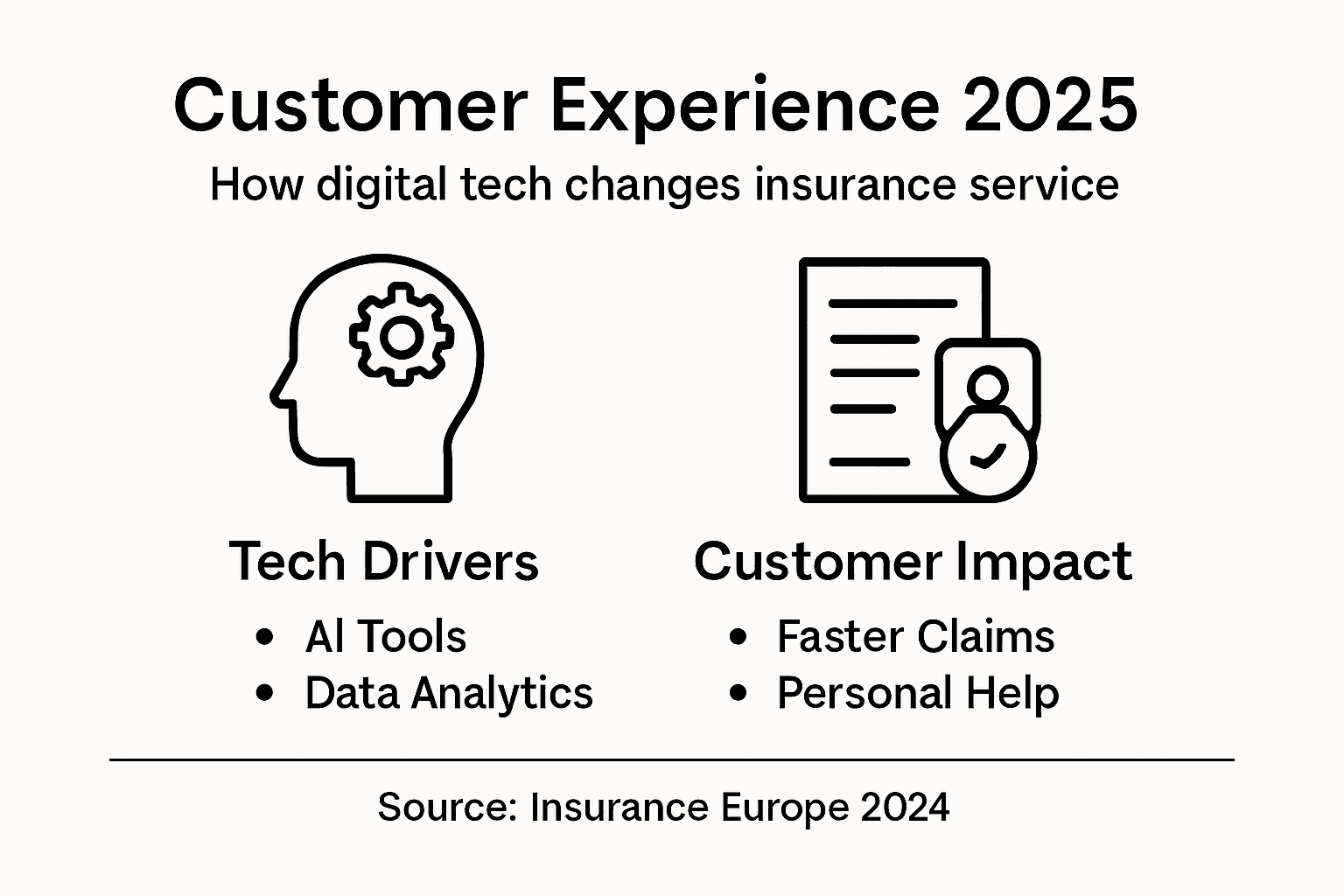
Here is a summary of how key technologies enhance insurance customer experience:
| Technology | Primary Function | Business Impact |
|---|---|---|
| Artificial Intelligence | Personalises recommendations, automates processes | Boosts satisfaction, cuts costs |
| Machine Learning | Predicts risks and customer behaviour | Improves retention, reduces claims |
| Data Analytics | Uncovers insights from customer data | Enables targeted engagement |
Pro tip: Invest in comprehensive customer journey mapping technologies that can track and analyse interaction points across digital and physical touchpoints to understand evolving customer expectations.
Transforming Digital Journeys and Touchpoints
Digital transformation in insurance represents a fundamental reimagining of customer interactions, moving beyond traditional service models to create intelligent, responsive engagement platforms. The future of insurance customer experience hinges on seamlessly integrating technological capabilities with genuine human understanding.

Digital transformation frameworks across European markets emphasise the critical balance between innovative technologies and consumer protection. This approach requires insurers to develop sophisticated digital ecosystems that can adapt rapidly to changing customer expectations.
Key elements of modern digital insurance touchpoints include:
- Automated yet personalised communication channels
- Real-time claims processing capabilities
- Predictive risk assessment technologies
- Integrated mobile and web experience platforms
- Seamless omnichannel interactions
Deloitte’s research reveals significant digital maturity gaps in current insurance customer journeys, particularly in claims and assistance processes. Insurers must prioritise creating intuitive digital experiences that combine technological efficiency with empathetic customer support.
Technological innovations like artificial intelligence, machine learning, and advanced data analytics will be instrumental in transforming these digital touchpoints. The goal is not just technological sophistication, but creating genuine, contextually aware customer interactions that feel personalised and supportive.
Pro tip: Implement comprehensive customer journey mapping technologies that provide granular insights into digital interaction points, enabling continuous refinement of the customer experience.
Omni-Channel Integration Across the Value Chain
The insurance landscape is undergoing a profound transformation, with omni-channel integration emerging as a critical strategic imperative for delivering exceptional customer experiences. Modern insurers must create seamless, flexible interactions that transcend traditional channel boundaries, enabling customers to engage effortlessly across digital and physical touchpoints.
Digital technologies are reshaping the entire insurance value chain, demanding comprehensive integration of communication and service platforms. This holistic approach requires reimagining how insurers design, deliver, and support their products through interconnected ecosystems.
Key elements of effective omni-channel strategies include:
- Unified customer data platforms
- Consistent messaging across channels
- Adaptive communication technologies
- Personalised interaction tracking
- Seamless cross-channel transitions
- Real-time data synchronisation
The evolution of omni-channel approaches demands that insurers develop sophisticated technological capabilities that enable truly flexible customer interactions. This means creating intelligent systems that can recognise customer preferences, anticipate needs, and provide contextually relevant support regardless of the chosen communication channel.
Wavestone’s research underscores the importance of customer-centric models that blend digital convenience with human insight. Insurers must design experiences that feel intuitive, transparent, and responsive, supporting customers through complex decision-making processes with unprecedented levels of personalisation and support.
The table below contrasts traditional and future-focused omni-channel approaches in insurance:
| Approach | Traditional Model | Future-Focused Model |
|---|---|---|
| Channel Integration | Siloed, limited synchronisation | Fully unified digital-physical |
| Data Consistency | Inconsistent, fragmented records | Real-time, seamless updates |
| Customer Support Style | Reactive, generic assistance | Proactive, highly personalised |
Pro tip: Invest in comprehensive integration platforms that enable real-time data sharing and contextual awareness across all customer interaction channels.
Regulatory Impacts on Customer Engagement
The European insurance landscape is experiencing unprecedented regulatory transformation, with compliance becoming a critical driver of customer engagement strategies. Insurers must navigate an increasingly complex regulatory environment that demands transparency, technological adaptability, and robust consumer protection mechanisms.
Central and Eastern European insurers are confronting intensified regulatory reforms that fundamentally reshape how they interact with customers. These regulations compel insurers to reimagine their technological infrastructure and customer engagement approaches.
Key regulatory developments impacting customer engagement include:
- Artificial Intelligence Act compliance
- Digital Operational Resilience Act (DORA) requirements
- Enhanced data protection protocols
- Solvency II regulatory revisions
- Mandatory ESG reporting frameworks
- Transparent pricing and value assessments
The regulatory landscape demands that insurers develop sophisticated technological capabilities that simultaneously meet compliance requirements and deliver exceptional customer experiences. This means creating intelligent systems capable of adapting to evolving regulatory expectations while maintaining customer-centric service delivery.
European regulatory frameworks are increasingly focused on ensuring meaningful customer outcomes, compelling insurers to develop more transparent, responsive, and personalised engagement models. The convergence of regulatory compliance and customer experience represents a strategic imperative for forward-thinking insurance organisations.
Pro tip: Develop a dedicated regulatory compliance team with cross-functional expertise in technology, customer experience, and legal frameworks to proactively manage emerging regulatory challenges.
Common Pitfalls and Ways to Avoid Them
Transforming insurance customer experience requires strategic navigation of complex technological and organisational challenges. Insurers must anticipate and proactively address potential obstacles that can derail digital transformation initiatives and compromise customer engagement strategies.
Common pitfalls in insurance customer experience transformation include:
- Fragmented technological ecosystems
- Inadequate data integration capabilities
- Insufficient staff digital upskilling
- Lack of comprehensive customer journey mapping
- Poor change management practices
- Reactive instead of predictive technology adoption
Technological legacy system constraints often represent the most significant barrier to meaningful customer experience enhancement. Many insurers struggle with rigid, siloed infrastructure that prevents seamless data flow and inhibits the creation of truly personalised customer interactions.
Successful transformation demands a holistic approach that balances technological innovation with strategic organisational change. This requires developing adaptive technological architectures capable of supporting continuous innovation while maintaining robust operational stability.
Key strategies for mitigating transformation risks involve creating cross-functional teams, investing in modular technological platforms, and developing comprehensive change management frameworks that prioritise both technological capabilities and human adaptability.
Pro tip: Conduct regular diagnostic assessments of your technological ecosystem to identify potential integration challenges and strategic transformation opportunities before they become critical impediments.
Elevate Your Insurance Customer Experience for 2025 and Beyond
The future of insurance customer experience demands seamless omni-channel integration, predictive engagement, and robust regulatory compliance as highlighted in “Insurance Customer Experience 2025: Shaping Engagement and Growth.” If your organisation faces challenges like fragmented technology ecosystems, slow product innovation, or difficulty delivering personalised customer journeys, you are not alone. These pain points underscore the urgent need for a cloud-native, agile platform designed to empower insurers to modernise core systems while delivering digital-first, empathetic customer interactions.
Insurance Business Applications offers IBSuite, an end-to-end, API-first insurance platform built to streamline your entire value chain—from underwriting and policy administration to claims and CRM. With IBSuite you can accelerate product launches, ensure regulatory compliance, and create responsive digital journeys that resonate with today’s customer expectations. Discover how to transform fragmented processes into unified, real-time ecosystems that enable proactive, personalised service.
Ready to drive exceptional customer engagement and operational agility now Explore how IBSuite can support your digital transformation goals with a tailored demonstration. Book a demo today at Insurance Business Applications and take the vital step to future-proof your business. For a deeper understanding, explore our digital transformation frameworks and regulatory insights to align your strategy with evolving market demands.
Frequently Asked Questions
What is the future of customer experience in the insurance sector by 2025?
By 2025, the insurance sector will shift towards comprehensive, personalised engagement strategies, focusing on seamless, digitally-enabled journeys that proactively address customer needs.
How will technology impact customer interactions in insurance?
Technological innovations, such as artificial intelligence and machine learning, will reshape customer interactions by enabling predictive and personalised support that enhances the overall customer experience.
What are key elements of modern digital insurance touchpoints?
Modern digital insurance touchpoints include automated yet personalised communication channels, real-time claims processing, predictive risk assessment technologies, and integrated mobile and web experience platforms.
What should insurers focus on to avoid common pitfalls in customer experience transformation?
Insurers should focus on developing comprehensive customer journey mapping, enhancing data integration capabilities, and implementing effective change management practices to avoid pitfalls in their transformation efforts.
Recommended
- Insurance Customer Experience: Complete Guide for 2025 – Digital Insurance Platform | IBSuite Insurance Software | Modern Insurance System
- Customer experience in the driver’s seat of insurance transformation – Digital Insurance Platform | IBSuite Insurance Software | Modern Insurance System
- Customer Experience Improvement Guide for P&C Insurers – Digital Insurance Platform | IBSuite Insurance Software | Modern Insurance System
- Complete Guide to Digital Insurance Trends 2025 – Digital Insurance Platform | IBSuite Insurance Software | Modern Insurance System
- What Is CRM in Business? A 2025 Guide for Leaders | Gammatica