08.12.25
Insurance Change Management: Transforming Digital Operations

With regulatory expectations, workforce adaptation, and market disruption on the rise, understanding insurance change management is more crucial than ever. This guide explores the processes, risks, and strategies you need for success in the evolving American insurance industry.
Table of Contents
Key Takeaways
| Point | Details |
| Comprehensive Change Management Strategies | Insurers must develop integrated strategies that address technology, workforce, and culture to navigate market challenges effectively. |
| Focus on Technological Integration | Advanced technologies, such as AI and Cloud Computing, should be integrated to enhance operational capabilities and responsiveness. |
| Proactive Regulatory Compliance | Insurers need to establish adaptive compliance frameworks that align with evolving legal standards to maintain operational integrity. |
| Anticipate Risks and Costs | Organizations should identify potential pitfalls in digital transformation and create robust strategies to mitigate these risks effectively. |
Defining Insurance Change Management Strategies
Insurance change management represents a strategic approach for transforming complex operational landscapes through systematic planning and adaptive methodologies. Organizations pursuing digital transformation must develop comprehensive strategies that address technological integration, workforce readiness, and organizational cultural shifts. By implementing strategic cost management approaches, insurers can effectively navigate market disruptions and technological challenges.
Successful change management strategies typically encompass several critical dimensions. These include:
-
Technology Adaptation: Integrating modern digital platforms and cloud-native solutions
-
Workforce Transformation: Upskilling employees and fostering digital literacy
-
Process Reengineering: Redesigning workflows to enhance operational efficiency
-
Cultural Evolution: Creating an organizational environment receptive to continuous innovation
Companies must recognize that effective change management extends beyond technological implementation. Cost management strategies demand a holistic approach that considers financial implications, operational constraints, and human capital development. Strategic insurers understand that digital transformation requires synchronized efforts across technological, human, and procedural domains, ensuring seamless transition and sustainable growth.
The core objective of insurance change management is developing adaptive frameworks that enable organizations to respond dynamically to emerging market conditions. By establishing robust methodologies, insurers can systematically address technological disruptions, regulatory shifts, and evolving customer expectations. Successful strategies prioritize flexibility, continuous learning, and proactive risk mitigation, transforming potential challenges into strategic opportunities for organizational advancement.
Types of Change in Insurance Environments
Insurance environments experience multiple interconnected change types that fundamentally reshape organizational capabilities and operational paradigms. Regulatory transformations represent one of the most critical drivers of systemic change, compelling insurers to adapt their risk management and financial reporting frameworks continuously.
The primary categories of change in insurance environments include:
-
Regulatory Change: Implementing new compliance frameworks and risk-based management protocols
-
Technological Change: Integrating advanced digital platforms and automation technologies
-
Market Structural Change: Responding to competitive dynamics and emerging distribution channels
-
Operational Transformation: Redesigning internal processes and workforce capabilities
-
Customer Experience Change: Adapting service models to meet evolving digital expectations
Market liberalization dynamics demonstrate how profound structural shifts can emerge from geopolitical and economic transitions. Insurance organizations must develop adaptive strategies that enable rapid responsiveness to external pressures while maintaining operational stability. Strategic change management requires a holistic approach that simultaneously addresses technological, human, and procedural dimensions of organizational evolution.
Effective change management in insurance environments demands sophisticated frameworks that balance innovation with risk mitigation. Insurers must cultivate organizational cultures capable of absorbing technological disruptions, regulatory modifications, and shifting market expectations. By developing flexible architectural approaches and maintaining a proactive stance toward emerging trends, insurance organizations can transform potential challenges into strategic opportunities for sustainable growth and competitive differentiation.
Core Processes and Technologies Involved
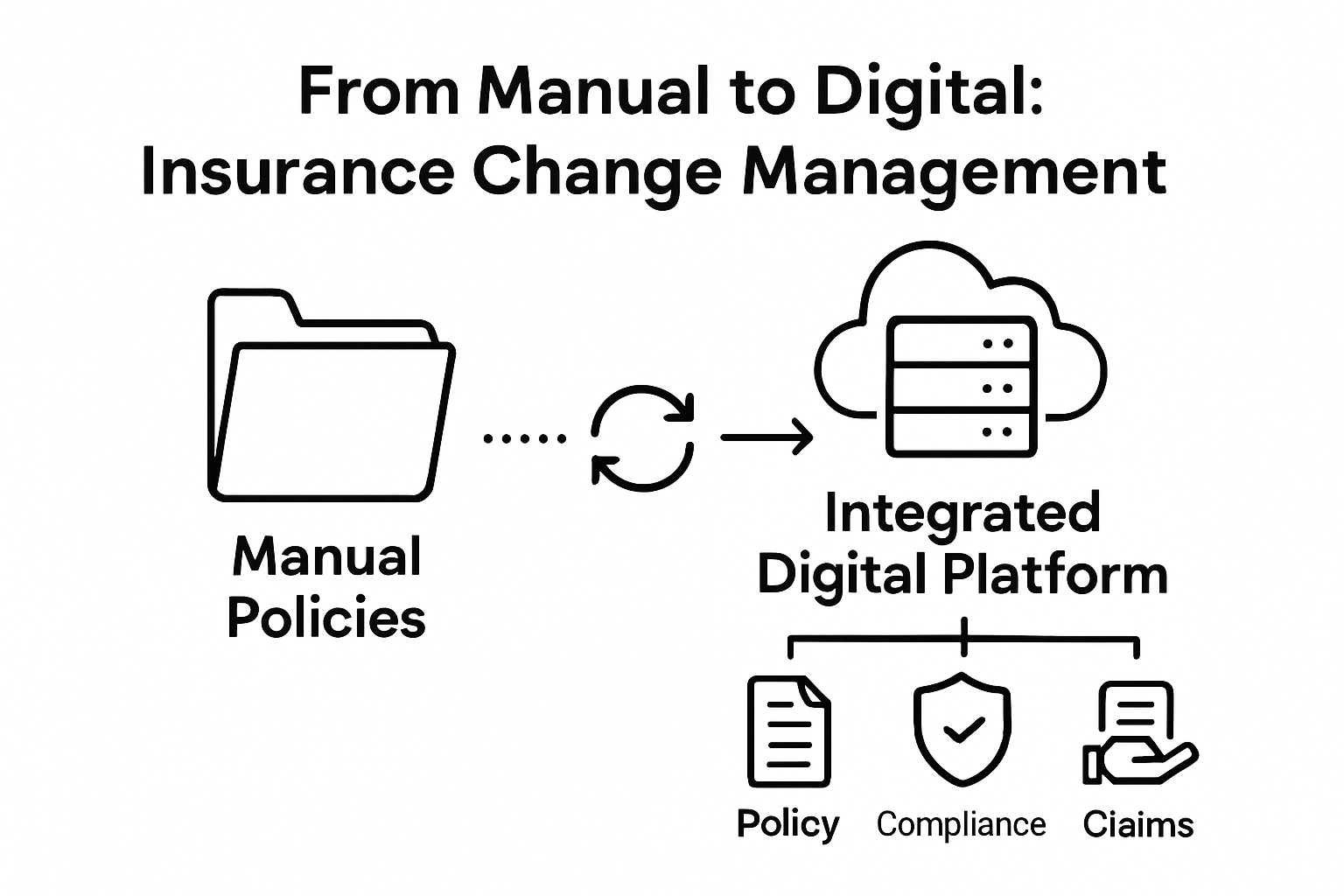
Digitalization technologies are fundamentally reshaping insurance operational frameworks, driving unprecedented transformation across core business processes. Modern insurers must strategically integrate advanced technological solutions that enable more intelligent, responsive, and efficient organizational capabilities. These technologies go far beyond traditional computational approaches, representing a comprehensive reimagining of how insurance services are conceptualized, delivered, and managed.
The key technological domains critical to insurance change management include:
-
Artificial Intelligence: Enabling predictive analytics and intelligent decision support
-
Cloud Computing: Providing scalable, flexible infrastructure for digital operations
-
Data Analytics: Generating actionable insights from complex organizational datasets
-
Robotic Process Automation: Streamlining repetitive administrative tasks
-
Machine Learning: Developing adaptive systems that continuously improve performance
-
Blockchain: Creating secure, transparent transaction and contract management platforms
Digital innovation readiness requires more than technological implementation. Successful integration demands a holistic approach that simultaneously addresses technological infrastructure, organizational culture, and workforce capabilities. Insurance organizations must develop comprehensive strategies that align technological investments with strategic objectives, ensuring that digital transformation becomes a sustainable, continuous process of organizational evolution.

Effective technological integration involves more than deploying individual solutions. It requires creating interconnected ecosystems where different technologies communicate seamlessly, enabling real-time data exchange, intelligent decision-making, and adaptive operational models. By developing flexible technological architectures that can rapidly respond to emerging market demands, insurers can transform potential technological challenges into strategic opportunities for innovation and competitive differentiation.
Regulatory and Compliance Considerations
Navigating the complex landscape of insurance regulatory frameworks requires insurers to develop sophisticated compliance strategies that balance operational flexibility with rigorous standards. The Insurance Distribution Directive represents a critical benchmark for transparency and ethical business practices, compelling organizations to implement comprehensive mechanisms that ensure consistent adherence to evolving regulatory requirements.
Key regulatory compliance considerations include:
-
Transparency Standards: Establishing clear communication protocols with customers
-
Data Protection: Implementing robust security frameworks
-
Risk Management: Developing comprehensive risk assessment and mitigation strategies
-
Reporting Mechanisms: Creating accurate and timely reporting systems
-
Ethical Guidelines: Ensuring consistent ethical practices across organizational processes
-
Continuous Monitoring: Establishing real-time compliance tracking capabilities
Regulatory frameworks significantly influence insurance market dynamics, shaping organizational behavior and operational strategies. Successful insurers recognize that compliance is not merely about avoiding penalties but about creating sustainable business models that prioritize customer trust and organizational integrity.
Effective regulatory compliance demands a proactive, holistic approach that integrates legal requirements into core organizational processes. Insurance companies must develop adaptive compliance frameworks that can quickly respond to regulatory changes, leverage technological solutions for continuous monitoring, and cultivate a corporate culture that views compliance as a strategic advantage rather than a bureaucratic requirement.
Risks, Costs, and Mistakes to Avoid
Competitive market dynamics reveal that insurance organizations face intricate challenges when implementing digital transformation strategies. Understanding potential risks and associated costs becomes paramount for successful change management. Insurers must develop sophisticated approaches that anticipate potential pitfalls and create robust mitigation strategies before initiating comprehensive organizational shifts.
Critical risks and potential mistakes during digital transformation include:
-
Model Uncertainty: Failing to accurately assess technological implementation risks
-
Inadequate Change Management: Neglecting comprehensive workforce preparation
-
Technology Misalignment: Selecting solutions incompatible with existing infrastructure
-
Underestimating Complexity: Oversimplifying digital transition requirements
-
Regulatory Compliance Gaps: Overlooking emerging legal and operational standards
-
Financial Miscalculation: Inaccurate budgeting for technological investments
Emerging risk detection methodologies demonstrate the importance of proactive risk management in insurance transformation processes. Strategic organizations must develop adaptive frameworks that continuously monitor potential challenges, enabling rapid response and strategic recalibration. This approach transforms potential risks from threatening obstacles into opportunities for organizational growth and innovation.
Successful risk mitigation requires a holistic perspective that balances technological innovation with operational stability. Insurance companies must cultivate a comprehensive understanding of potential disruptions, develop flexible strategic frameworks, and maintain a culture of continuous learning and adaptation. By anticipating challenges and creating robust contingency plans, organizations can minimize potential financial and operational risks associated with digital transformation efforts.
Accelerate Your Insurance Change Management with IBA’s IBSuite
The article highlights the complex challenges insurance companies face while managing digital transformation and operational change. Key pain points include integrating advanced technologies like AI and cloud computing, ensuring regulatory compliance, overcoming workforce readiness issues, and mitigating risks tied to technology misalignment and market disruptions. Terms like “technology adaptation,” “holistic cost management,” and “regulatory frameworks” emphasize the need for a comprehensive yet flexible approach that balances innovation with operational stability.
IBA’s IBSuite is designed precisely to resolve these issues. As a cloud-native core insurance platform trusted worldwide, IBSuite streamlines every part of the insurance value chain—from underwriting and claims to compliance and customer experience. With secure, API-first architecture and Evergreen updates, it empowers P&C insurers to modernize core systems, reduce IT complexity, and adapt rapidly to new market demands.
Are you ready to transform your insurance operations with a platform that aligns with your strategic change management goals and regulatory needs? Discover how IBSuite can help you launch products faster and stay ahead of regulatory shifts by booking a personalized demo today. Visit Book a Demo and take the first step toward accelerating your digital transformation.
Explore how IBA supports seamless policy administration and claims management to enhance operational efficiency and customer engagement. Start your transformation journey now with IBSuite capabilities tailored for insurers ready to evolve confidently in a digital-first world.
Frequently Asked Questions
What is insurance change management?
Insurance change management refers to a strategic approach for transforming operational landscapes within insurance organizations through systematic planning, technology integration, and workforce readiness.
Why is technology adaptation important in insurance change management?
Technology adaptation is crucial as it allows insurers to integrate modern digital platforms and automation technologies, which enhance efficiency, responsiveness, and overall operational effectiveness.
What are the core processes involved in transforming insurance operations?
The core processes include technology adaptation, workforce transformation, process reengineering, and cultural evolution, all aimed at fostering an innovative and adaptive organizational environment.
How do regulatory changes affect insurance change management strategies?
Regulatory changes compel insurers to continuously adapt their risk management and compliance frameworks, necessitating the development of sophisticated compliance strategies that prioritize transparency and operational integrity.