08.12.25
Insurance Change Management: How It Drives P&C Transformation

Over 60 percent of American insurance companies report ongoing transformation projects that impact every department. Rapid digital change, regulatory pressure, and shifting customer expectations are reshaping how insurers operate. Understanding insurance change management helps American leaders guide teams through these shifts, meet compliance needs, and minimize disruption while building a more adaptable, future-ready business.
Table of Contents
- What Insurance Change Management Means
- Types Of Change In Insurance
- How Change Management Works
- Strategic Change Drivers And Goals
- Avoiding Pitfalls And Risks
Key Takeaways
| Point | Details |
|---|---|
| Strategic Change Management | A robust change management strategy is essential for successfully navigating complex transformations in the insurance sector. |
| Types of Transformation | Insurers face technological, regulatory, and environmental changes that necessitate adaptive strategies for operational effectiveness. |
| Cultural Acceptance | Fostering a culture that embraces change is vital for minimizing resistance and ensuring smooth transitions. |
| Risk Mitigation Strategies | Developing frameworks to address common pitfalls, such as communication gaps and resistance, is key to successful change implementation. |
What Insurance Change Management Means
Insurance change management represents a strategic approach to navigating transformational processes within property and casualty insurance organizations. At its core, change management involves supporting organizational processes to implement shifts effectively, ensuring comprehensive acceptance across all operational teams while minimizing potential resistance.
The fundamental objective of change management in the insurance sector is proactively guiding teams through complex transitions. By establishing structured processes to transition employees and entire organizational units, insurers can systematically move from current operational states toward desired future configurations. This approach goes beyond simple procedural modifications and focuses on holistic organizational adaptation.
Key components of effective insurance change management include:
- Comprehensive stakeholder engagement
- Clear communication strategies
- Robust training and development programs
- Continuous feedback mechanisms
- Strategic resistance management
Successful change management ultimately enables insurers to implement technological upgrades, process reengineering, and cultural transformations with minimal disruption. By treating organizational change as a nuanced, human-centered process, insurance leaders can drive meaningful digital transformation while maintaining employee morale and operational continuity.
Types Of Change In Insurance
Property and casualty insurers are experiencing multifaceted transformations driven by technological, regulatory, and environmental shifts. The insurance industry is undergoing a fundamental paradigm shift that demands comprehensive strategic adaptations across multiple dimensions of organizational operations.
These transformative changes can be categorized into several critical types. Regulatory changes represent one significant area, with insurers transitioning from cash-flow-based to risk-based management models. This shift impacts capital management, economic valuation techniques, and internal risk modeling approaches. Climate-related changes are also dramatically reshaping insurance sectors, compelling insurers to reassess risk assessment strategies across property, liability, health, and life insurance lines.
Key types of change in insurance include:
- Technological Transformation
- Digital platform modernization
- Artificial intelligence integration
- Advanced data analytics adoption
- Regulatory Adaptation
- Risk-based capital management
- Compliance framework updates
- Enhanced reporting requirements
- Environmental Risk Management
- Climate change impact assessments
- Sustainable insurance product development
- Resilience strategy implementation
Successful navigation of these changes requires insurers to develop agile, forward-looking strategies that balance technological innovation, regulatory compliance, and customer-centric approaches. Embracing insurtech opportunities becomes crucial in maintaining competitive advantage and operational resilience in an increasingly dynamic insurance landscape.
How Change Management Works
Change management in insurance is a sophisticated, multifaceted process that requires strategic planning and systematic implementation. Effective change management involves creating a comprehensive organizational approach to transitioning employees and entire systems toward new operational models and strategic objectives.

The process demands a cultural shift towards change acceptance, which goes beyond simple procedural modifications. Insurers must systematically address organizational design, employee mindsets, and potential resistance points. This involves developing robust communication strategies, providing comprehensive training programs, and creating mechanisms that support smooth transitions while maintaining employee engagement and productivity.
Key stages of change management in insurance include:
- Initial Assessment
- Current organizational capability evaluation
- Gap analysis between existing and desired states
- Identifying potential change barriers
- Strategic Planning
- Developing detailed transformation roadmaps
- Creating clear communication protocols
- Establishing measurable change objectives
- Implementation
- Phased rollout of change initiatives
- Continuous monitoring and feedback loops
- Adaptive management approaches
- Sustainability
- Long-term cultural integration
- Ongoing skills development
- Reinforcement of new organizational behaviors
Successful change management requires insurers to treat transformation as a holistic, human-centered process. By embracing digital transformation strategies, organizations can create resilient, adaptive frameworks that enable continuous innovation and competitive advantage in an increasingly dynamic insurance landscape.
Strategic Change Drivers And Goals
Insurance organizations are experiencing profound transformation driven by complex, multifaceted strategic imperatives. Private sector insurance companies are developing sophisticated strategies to incorporate change, responding to increasingly dynamic market conditions that demand rapid organizational adaptation and resilience.
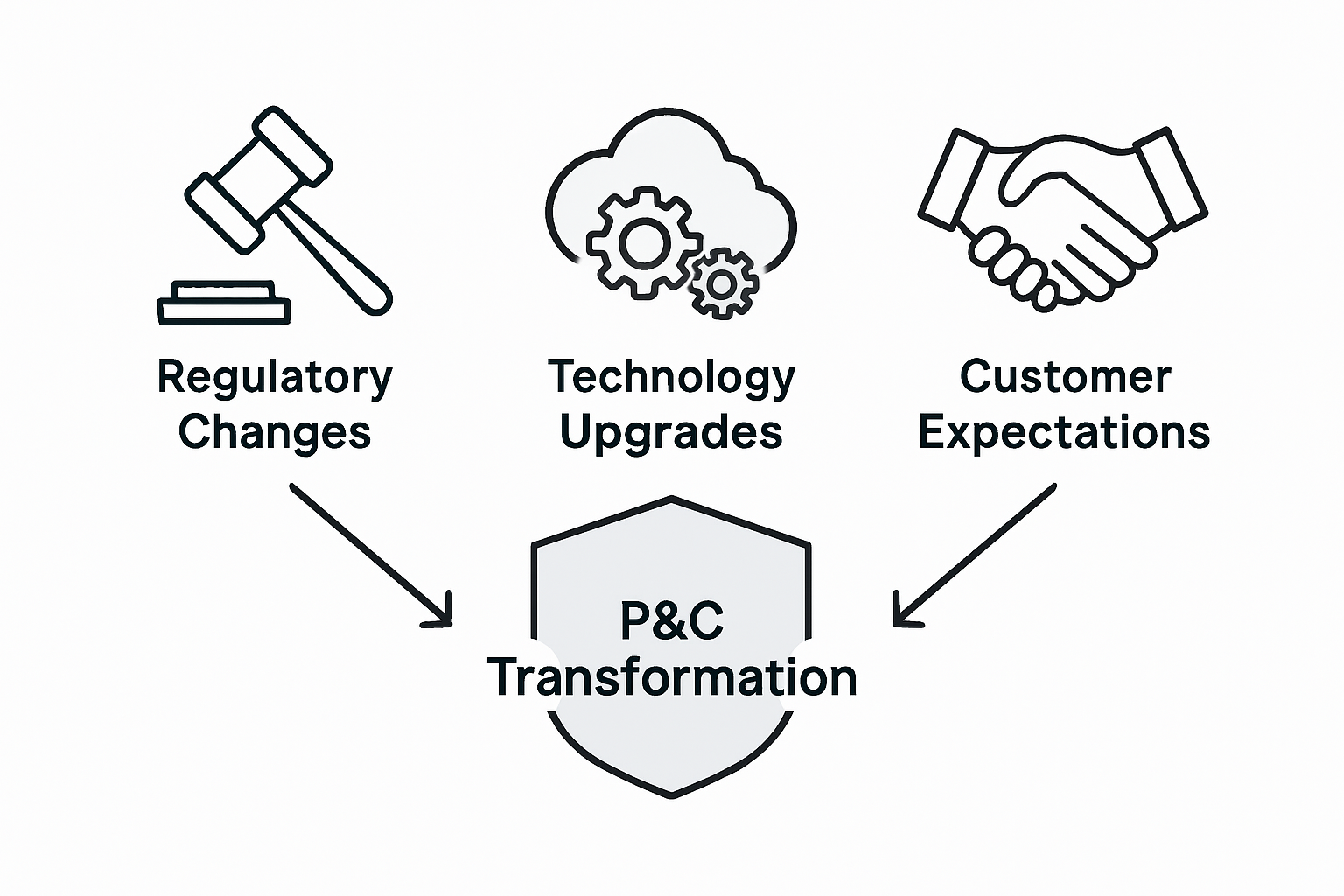
Comprehensive change management strategies demonstrate a significant correlation with enhanced organizational performance, compelling insurers to reimagine their operational frameworks. The primary strategic change drivers emerge from technological disruption, regulatory shifts, evolving customer expectations, and competitive pressures that necessitate fundamental reimagining of traditional insurance business models.
Key strategic change goals include:
- Technological Transformation
- Digital infrastructure modernization
- Advanced analytics integration
- Artificial intelligence implementation
- Operational Excellence
- Process optimization
- Cost efficiency improvements
- Agile organizational design
- Customer Experience Enhancement
- Personalized service delivery
- Omnichannel engagement strategies
- Predictive customer needs analysis
- Risk Management
- Dynamic risk assessment capabilities
- Proactive compliance frameworks
- Adaptive regulatory response mechanisms
Embracing insurtech opportunities becomes crucial in translating strategic change goals into tangible organizational capabilities. Successful insurers will distinguish themselves by developing flexible, responsive frameworks that can rapidly evolve in response to emerging market dynamics and technological innovations.
Avoiding Pitfalls And Risks
Navigating the complex landscape of insurance change management requires a proactive approach to identifying and mitigating potential risks. Insurance organizations must develop sophisticated strategies that anticipate and address potential challenges before they can significantly impact operational effectiveness.
Successful change management relies on understanding and systematically addressing common organizational transformation pitfalls. The most critical risks emerge from resistance to change, inadequate communication, insufficient training, and misalignment between strategic objectives and implementation approaches. Insurers must create comprehensive frameworks that not only recognize these potential barriers but also develop targeted interventions to minimize their impact.
Key risks and mitigation strategies include:
- Cultural Resistance
- Develop transparent communication protocols
- Create inclusive change engagement programs
- Implement continuous feedback mechanisms
- Operational Disruption
- Phased implementation strategies
- Parallel system running during transitions
- Comprehensive staff training programs
- Technology Integration Challenges
- Rigorous system compatibility assessments
- Incremental technology adoption
- Robust testing and validation processes
- Skill Gap Management
- Targeted upskilling initiatives
- External and internal training resources
- Mentorship and knowledge transfer programs
Insurance risk management strategies play a crucial role in successfully navigating organizational transformation. Successful insurers will develop adaptive, resilient approaches that treat change not as a singular event, but as an ongoing, dynamic process of continuous organizational evolution.
Unlock Seamless Insurance Change Management with IBSuite
The article highlights how managing complex organizational change in property and casualty insurance demands thoughtful strategies that address technology integration, employee engagement, and regulatory adaptation. If your company faces challenges like cultural resistance, operational disruption, or keeping up with rapid digital transformation, embracing a cloud-native platform that supports every step of your insurance value chain is critical. IBA’s IBSuite can help you streamline transitions by providing a secure, API-first system that enables rapid product innovation, minimizes operational disruption, and ensures compliance with evolving regulatory requirements.
Take control of your P&C transformation journey today by exploring how our platform supports technology modernization, agile process optimization, and customer experience enhancement—all key change drivers discussed in the article. Discover the advantages of partnering with a proven leader in digital insurance solutions by booking a demo now. Don’t let organizational complexity hold you back. See how IBSuite can empower your teams to adapt swiftly and confidently at Book a Demo. For a deeper dive into how to integrate strategic change management into your core systems, visit Opportunities and Challenges for P&C Insurers Embracing Insurtech and learn about the Drivers of Digital Transformation in the Insurance Industry.
Frequently Asked Questions
What is insurance change management?
Insurance change management is a strategic approach to navigating transformational processes within insurance organizations, aimed at implementing shifts effectively and ensuring acceptance across all operational teams while minimizing resistance.
What are the key components of effective change management in insurance?
The key components include comprehensive stakeholder engagement, clear communication strategies, robust training and development programs, continuous feedback mechanisms, and strategic resistance management.
How does change management impact the insurance industry?
Change management enables insurers to implement technological upgrades, process reengineering, and cultural transformations with minimal disruption, fostering a more resilient and adaptive organization in the face of evolving market demands.
What are the main types of changes occurring in the insurance sector?
The main types of changes include technological transformation, regulatory adaptation, and environmental risk management, each requiring strategic approaches to ensure successful adaptation and continued competitiveness.
Recommended
- Opportunities and Challenges for P&C Insurers: Embracing Insurtech – Digital Insurance Platform | IBSuite Insurance Software | Modern Insurance System
- Insurance Risk Management Explained: Best Practices – Digital Insurance Platform | IBSuite Insurance Software | Modern Insurance System
- Automation and Artificial Intelligence in P&C Insurance – Digital Insurance Platform | IBSuite Insurance Software | Modern Insurance System
- 7 Key Insurtech Trends 2025 for P&C Insurance Leaders – Digital Insurance Platform | IBSuite Insurance Software | Modern Insurance System
- 7 Essential Risk Management Tips for Tech Leaders