10.01.26
End-to-End Insurance Solutions: Accelerating Digital Transformation

More than 60 percent of European insurers now consider cloud-native transformation a strategic necessity for staying ahead of British competitors and meeting rising customer expectations. For CIOs and innovation leaders in Central Europe, the pressure is clear. This article unpacks what defines end-to-end insurance solutions, reveals the power of seamless integrations, and highlights proven strategies for driving operational efficiency and regulatory confidence without missing a beat.
Table of Contents
- Defining End-to-End Insurance Solutions
- Key Components Across The Insurance Value Chain
- Cloud-Native Platforms And Seamless Integrations
- Ensuring Regulatory Compliance And Evergreen Updates
- Impact On Operational Efficiency And Innovation
Key Takeaways
| Point | Details |
|---|---|
| End-to-End Solutions Enhance Integration | Comprehensive digital platforms streamline insurance operations by integrating multiple functions for improved efficiency. |
| Adoption of Advanced Technologies is Crucial | Technologies like artificial intelligence and cloud-native architectures drive operational enhancements and adaptability in changing markets. |
| Regulatory Compliance is Essential | Robust compliance mechanisms must be embedded to enable proactive management of evolving legal frameworks in the insurance sector. |
| Focus on Modular Architecture | Insurers should implement systems with modular designs that allow for flexibility and incremental improvements in technology. |
Defining End-to-End Insurance Solutions
End-to-end insurance solutions represent comprehensive digital platforms that transform traditional insurance operations by integrating multiple business functions into a seamless technological ecosystem. These sophisticated systems go beyond simple software implementations, creating holistic technological frameworks that enable insurers to streamline complex processes from initial customer interaction through to final claims settlement.
At their core, end-to-end insurance solutions leverage advanced technologies to connect previously siloed operational domains. By implementing modular architectural frameworks, insurers can create interconnected systems that facilitate zero-touch processing across critical business functions. These platforms typically encompass multiple integrated modules including sales, underwriting, policy administration, claims processing, billing, and customer relationship management.
The fundamental objective of such solutions is radical operational transformation. They eliminate manual interventions, reduce administrative overhead, and enable real-time data exchange across different organisational departments. Modern end-to-end platforms utilise artificial intelligence, machine learning, and sophisticated integration capabilities to create adaptive systems that can rapidly respond to changing regulatory requirements and market dynamics.
Pro tip: When evaluating end-to-end insurance platforms, focus on solutions offering modular architectures that allow incremental implementation and seamless future scalability.
Below is a summary of key technological components and their impact in modern end-to-end insurance platforms:
| Component | Primary Role | Business Impact |
|---|---|---|
| Modular Architecture | Enables plug-and-play system upgrades | Future scalability and quick adoption |
| Artificial Intelligence | Automates decision processes | Reduced manual effort, improved speed |
| API Integration | Connects internal and third-party systems | Seamless data flow and partnerships |
| Compliance Mechanisms | Ensures regulatory adaptation | Lowers legal risk, maintains certainty |
| Analytics & Reporting | Provides actionable insights | Informs strategy, enhances profitability |
Key Components Across The Insurance Value Chain
The insurance value chain represents a complex network of interconnected activities that collectively transform raw risk into comprehensive protection for customers. Primary components of the insurance ecosystem encompass critical operational domains that ensure seamless delivery of insurance products and services from initial conception through final claims resolution.
These components typically include foundational activities such as product development, marketing, sales, underwriting, policy administration, and claims processing. Each stage requires sophisticated technological integration and strategic alignment to create a cohesive operational framework. Underwriting, for instance, involves intricate risk assessment processes that leverage advanced data analytics to determine appropriate coverage parameters and pricing strategies.
Support activities play an equally crucial role in maintaining organisational effectiveness. These include technological infrastructure, financial management, legal and regulatory compliance, human resources, procurement, and data management systems. Modern insurers increasingly recognise that the true competitive advantage lies not just in individual component performance, but in the seamless interaction and data flow between these interdependent functions.
Digital transformation has fundamentally reshaped how insurers conceptualise and execute their value chain. Emerging digital tools and artificial intelligence now enable more sophisticated risk assessment, predictive analytics, and customer engagement strategies. This technological evolution allows insurers to create more personalised, responsive, and efficient insurance experiences that adapt rapidly to changing market dynamics and customer expectations.
Pro tip: Prioritise technology platforms that offer robust integration capabilities across multiple value chain components to maximise operational efficiency and data coherence.
Cloud-Native Platforms and Seamless Integrations
Cloud-native platforms represent a revolutionary approach to insurance technology infrastructure, enabling insurers to transform traditional monolithic systems into agile, scalable digital ecosystems. Microservices and cloud-native architectures are fundamentally reshaping how insurance organisations design, deploy, and manage their technological capabilities, moving beyond legacy infrastructure towards more flexible and responsive solutions.
These platforms leverage modular architectural designs that allow insurers to rapidly develop, integrate, and modify software components without disrupting entire system infrastructures. By breaking down complex technological landscapes into smaller, independently deployable services, cloud-native platforms enable unprecedented levels of operational flexibility. This approach supports continuous integration and delivery, allowing insurance companies to adapt quickly to changing market conditions, regulatory requirements, and emerging customer expectations.

Cloud computing technologies are increasingly critical for European insurers seeking to process large data volumes and deploy sophisticated artificial intelligence capabilities. Modern cloud-native platforms provide secure, scalable infrastructure that aligns with strict European regulatory frameworks, enabling insurers to leverage advanced technological capabilities while maintaining robust compliance standards. These platforms facilitate seamless integration with third-party services through sophisticated API architectures, creating interconnected technological ecosystems that support comprehensive digital transformation strategies.
The primary advantage of cloud-native platforms lies in their ability to support complex insurance value chains through modular, adaptable technological components. By embracing microservices and cloud-native designs, insurers can create more resilient, efficient, and innovative technological infrastructures that respond dynamically to evolving business requirements and customer needs.
Pro tip: Prioritise cloud-native platforms that offer robust API integration capabilities and support modular architectural designs to maximise technological flexibility and operational efficiency.
Ensuring Regulatory Compliance and Evergreen Updates
Regulatory compliance has become increasingly complex for European insurers, requiring sophisticated technological approaches that enable continuous adaptation to evolving legal frameworks. European Parliament reforms are fundamentally transforming how insurance organisations manage systemic risk, integrate sustainability reporting, and maintain operational flexibility within stringent regulatory environments.
Modern end-to-end insurance platforms must incorporate dynamic compliance mechanisms that automatically update in response to regulatory changes. These systems need embedded intelligence that can rapidly interpret new legislative requirements, modify operational protocols, and ensure immediate alignment with updated standards. Successful implementations leverage advanced software architectures that support granular, real-time compliance monitoring across multiple regulatory domains, including financial reporting, data protection, and risk management.
The most advanced platforms integrate automated compliance workflows that enable insurers to proactively address regulatory challenges. These technological solutions go beyond traditional compliance management by creating adaptive frameworks that anticipate potential regulatory shifts, implement preemptive modifications, and maintain comprehensive audit trails. By embedding regulatory intelligence directly into core system architectures, insurers can transform compliance from a reactive administrative burden into a strategic operational advantage.
Technological agility is paramount in maintaining regulatory adherence. Insurance platforms must support seamless, continuous updates that can be implemented without disrupting core business operations. This requires modular system designs that allow incremental changes, sophisticated version control mechanisms, and robust testing protocols to ensure each regulatory update maintains system integrity and operational continuity.
Pro tip: Select insurance platforms with built-in compliance adaptation capabilities that support automated, zero-downtime regulatory updates across your entire technological ecosystem.
Impact on Operational Efficiency and Innovation
Digital transformation represents a critical strategic imperative for European insurers seeking to enhance operational capabilities and drive sustainable competitive advantage. Digital innovation frameworks are fundamentally reshaping how insurance organisations approach technological adaptation, balancing operational resilience with innovative potential.
The technological landscape demands comprehensive approaches that seamlessly integrate efficiency improvements with strategic innovation. Modern insurance platforms enable data-driven decision making by creating sophisticated analytical ecosystems that transform raw information into actionable insights. This technological evolution allows insurers to move beyond traditional operational models, creating adaptive systems that can rapidly respond to changing market dynamics and customer expectations.
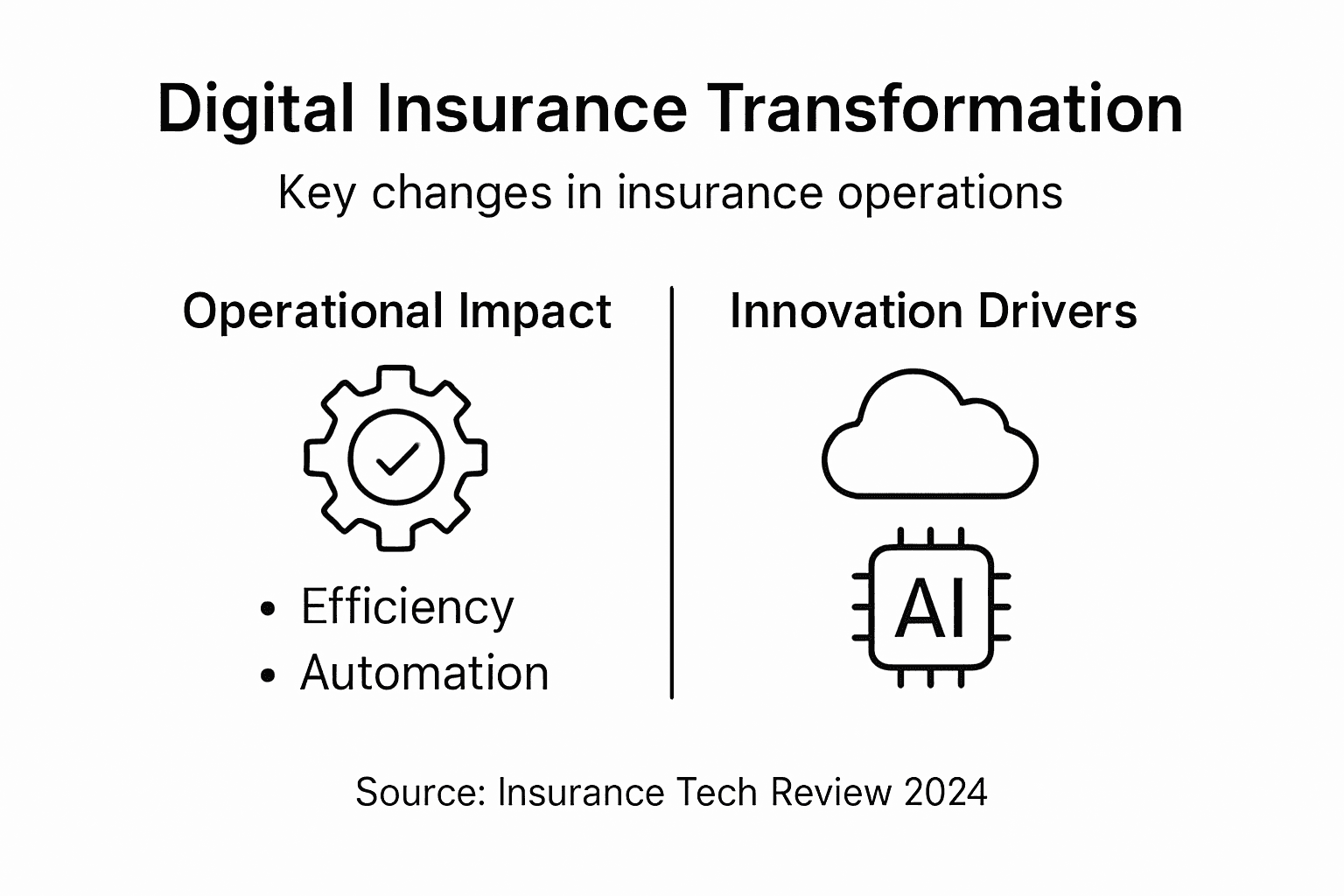
Digitalization strategies are driving profound operational transformations across European insurance sectors. By leveraging advanced technologies, insurers can streamline complex processes, reduce administrative overhead, and create more personalised customer experiences. These technological interventions enable organisations to develop innovative product offerings, implement sophisticated risk assessment mechanisms, and create more agile operational frameworks that support continuous improvement.
The most successful insurance organisations recognise that operational efficiency and innovation are deeply interconnected. Technological platforms that support modular, adaptable architectures enable insurers to experiment with new approaches, quickly prototype innovative solutions, and implement changes without disrupting core business operations. This approach transforms technological infrastructure from a static support function into a dynamic strategic asset that drives continuous organisational evolution.
Pro tip: Implement a staged digital transformation strategy that prioritises incremental innovations while maintaining robust operational stability across your technological ecosystem.
The table below compares traditional insurance systems with digital, end-to-end solutions:
| Criteria | Traditional Approach | End-to-End Digital Solution |
|---|---|---|
| Process Automation | Manual, paper-based workflows | Zero-touch, automated flows |
| Data Silos | Fragmented, isolated systems | Unified, real-time data sharing |
| Regulatory Updates | Reactive and slow compliance | Automated, continuous adjustments |
| Customer Experience | Generic, inflexible interactions | Personalised, responsive engagement |
Accelerate Your Digital Transformation with End-to-End Insurance Solutions
The article highlights the critical challenges faced by insurers in achieving seamless integration across the insurance value chain while ensuring regulatory compliance and operational agility. Key pain points include overcoming fragmented data silos, automating complex workflows, and adapting quickly to evolving regulatory demands. Concepts like modular architecture, cloud-native platforms, and automated compliance resonate deeply with insurers seeking to modernise without disruption.
Insurance Business Applications (IBA) addresses these challenges head on with IBSuite, a secure, API-first, end-to-end insurance platform trusted by leading P&C insurers across Europe. IBSuite supports every stage of the insurance lifecycle from sales and underwriting through to claims and financial reporting. Its cloud-native design empowers insurers to reduce IT complexity, launch new products faster, and maintain evergreen compliance updates effortlessly.
Discover how IBA can transform your operations by breaking down silos, automating processes, and scaling your business in a rapidly changing market. Experience the power of a modular, cloud-native platform designed for true digital transformation. Take the next step now Book a Demo with IBA and learn how IBSuite can help you accelerate innovation and stay ahead in the competitive insurance landscape. For deeper insight into how end-to-end solutions can revolutionise your core systems, visit IBA’s digital transformation overview and secure your future with technology built for agility and growth.
Frequently Asked Questions
What are end-to-end insurance solutions?
End-to-end insurance solutions are comprehensive digital platforms that integrate multiple business functions within insurance operations, streamlining processes from initial customer interaction to final claims settlement.
How do end-to-end insurance solutions improve operational efficiency?
These solutions eliminate manual interventions, reduce administrative overhead, and enable real-time data exchange across various organisational departments, significantly enhancing efficiency.
What technologies are commonly used in end-to-end insurance platforms?
Common technologies include artificial intelligence, machine learning, modular architectures, and API integrations that facilitate seamless data flow and adaptive systems to meet regulatory changes.
Why is regulatory compliance important in insurance technology?
Regulatory compliance ensures that insurance organisations adhere to evolving legal frameworks, reducing legal risks and enabling smoother operations by integrating dynamic compliance mechanisms into their technological systems.
Recommended
- Complete Guide to Digital Insurance Trends 2025 – Digital Insurance Platform | IBSuite Insurance Software | Modern Insurance System
- Insurance Digital Transformation Guide for Effective Change – Digital Insurance Platform | IBSuite Insurance Software | Modern Insurance System
- Enhancing Customer Experience with Digital Transformation – Digital Insurance Platform | IBSuite Insurance Software | Modern Insurance System
- End-to-End Insurance Platforms: Unlocking P&C Success
- Understanding Personal Finance Trends 2025 for Better Decisions – Finblog