03.02.26
Insurance Digital-First Strategy: Transforming P&C Operations

Adopting a digital-first strategy in the European Property and Casualty insurance sector is no longer just a technological upgrade. For CIOs and digital transformation leaders in Central Europe, the challenge is transforming fragmented legacy systems into integrated digital ecosystems, leveraging Artificial Intelligence, Blockchain, and Internet of Things to boost efficiency and customer experience. This article offers actionable insights for redefining operational models, driving innovation, and building the resilient, agile insurance organisations needed to stay competitive.
Table of Contents
- Defining Insurance Digital-First Strategy
- Core Technologies Shaping Digital Platforms
- Key Features of a Digital-First P&C Model
- Legal, Regulatory, and Compliance Considerations
- Operational Impact and Common Pitfalls
- Comparing Digital-First Versus Legacy Approaches
Key Takeaways
| Point | Details |
|---|---|
| Digital-First Strategy is Essential | A digital-first strategy fundamentally transforms insurance operations, prioritising technology integration and customer experience over traditional methods. |
| Key Technologies Drive Change | Artificial Intelligence, IoT, and Advanced Analytics are pivotal in creating personalised insurance solutions and enhancing operational efficiency. |
| Cultural Shift Required | Successful digital transformation necessitates a cultural shift towards continuous learning and adaptive organisational structures. |
| Navigating Regulatory Complexities | Insurers must proactively manage compliance with evolving legal frameworks while embracing technological innovation for consumer protection. |
Defining Insurance Digital-First Strategy
A digital-first strategy represents a comprehensive approach to transforming insurance operations through strategic technological integration. Unlike traditional digitisation efforts, this methodology fundamentally reimagines how insurance organisations interact with customers, manage processes, and deliver value. Digital transformation in insurance involves more than technological upgrades—it requires a holistic cultural and operational shift.
Key characteristics of a digital-first strategy include:
- Prioritising digital channels and platforms
- Leveraging advanced technologies like AI and IoT
- Creating seamless, integrated customer experiences
- Developing agile, data-driven decision-making processes
- Embracing continuous technological innovation
The European insurance landscape increasingly recognises digital-first strategies as critical for maintaining competitive advantage. Digitalisation reports highlight how these strategies enable insurers to enhance product design, improve customer engagement, and navigate complex regulatory environments.
Successful implementation requires a multifaceted approach that transcends traditional technological investments. Insurers must cultivate a digital-first mindset, encouraging innovation, continuous learning, and adaptive organisational structures that support rapid technological integration.
Pro tip: Begin your digital transformation by conducting a comprehensive audit of existing technological infrastructure and identifying specific areas where digital integration can deliver immediate operational improvements.
Core Technologies Shaping Digital Platforms
Digital platforms in European Property & Casualty (P&C) insurance are experiencing a profound technological transformation driven by advanced digital technologies. Core technological innovations are fundamentally reshaping how insurers develop, deliver, and manage insurance products and services.
Key technologies driving this digital evolution include:
- Artificial Intelligence (AI) for sophisticated underwriting and claims processing
- Internet of Things (IoT) enabling real-time risk monitoring
- Blockchain supporting secure, transparent transactions
- Advanced Analytics facilitating personalised product development
- Machine Learning algorithms improving predictive risk assessment
Digital transformation reports highlight how these technologies are creating integrated digital ecosystems that enhance operational efficiency and customer experience. The convergence of these technologies enables insurers to move beyond traditional reactive models towards proactive, data-driven strategic approaches.
These technological innovations are not merely incremental improvements but represent a fundamental reimagining of insurance business models. By leveraging interconnected technologies, European insurers can develop more responsive, personalised, and efficient insurance solutions that address evolving customer expectations and market dynamics.
The following table summarises the core technologies reshaping digital insurance platforms alongside their strategic business impact:
| Technology | Primary Application | Strategic Impact |
|---|---|---|
| Artificial Intelligence | Automated decision-making | Reduces claims costs, speeds up processes |
| Internet of Things | Real-time data collection | Enables proactive risk management |
| Blockchain | Secure transaction recording | Increases trust and transparency |
| Advanced Analytics | Personalised product recommendations | Improves policyholder retention |
| Machine Learning | Predictive risk assessment | Enhances underwriting accuracy |
Pro tip: Prioritise interoperability and scalability when selecting digital technologies to ensure seamless integration and future-proof your insurance platform.
Key Features of a Digital-First P&C Model
A digital-first Property & Casualty (P&C) insurance model fundamentally transforms traditional operational approaches through technological innovation and customer-centric design. Digital insurance strategies represent a comprehensive reimagining of insurance service delivery across multiple dimensions.
Key architectural features of this model include:
- Seamless Digital Interfaces enabling intuitive customer interactions
- Hybrid Distribution Channels combining digital platforms and personalised agent support
- Automated Claims Processing leveraging artificial intelligence
- Real-Time Risk Assessment using advanced data analytics
- Personalised Product Configuration driven by machine learning algorithms
- Integrated InsurTech Partnerships supporting continuous innovation
Digital Insurance Maturity reports highlight the critical importance of developing a data-driven culture that prioritises operational agility and customer experience. This approach enables insurers to move beyond traditional transactional models towards more responsive, intelligent service ecosystems.
The transformation goes beyond technological implementation, representing a fundamental cultural shift in how insurance organisations conceptualise and deliver value. By embracing digital-first principles, P&C insurers can create more flexible, responsive, and customer-aligned business models that adapt rapidly to evolving market dynamics.
Pro tip: Develop a comprehensive digital transformation roadmap that balances technological investment with cultural change management to ensure successful implementation.
Legal, Regulatory, and Compliance Considerations
Digital transformation in Property & Casualty (P&C) insurance demands a sophisticated understanding of complex legal and regulatory landscapes. Digital transformation challenges require insurers to navigate intricate compliance frameworks while maintaining technological innovation and consumer protection.
Key regulatory considerations for digital-first insurers include:
- Data Privacy Compliance with GDPR and emerging EU regulations
- Algorithmic Transparency in AI-driven underwriting processes
- Consumer Protection mechanisms for digital product delivery
- Technology-Neutral Regulatory Frameworks
- Ethical AI Governance addressing potential discriminatory practices
- Cross-Border Regulatory Harmonisation
Financial Market Regulatory Perspectives emphasise the critical importance of maintaining fairness, transparency, and consumer protection within increasingly personalised insurance ecosystems. This requires developing robust governance structures that balance technological innovation with regulatory compliance.
Successful navigation of these complex requirements demands a proactive, anticipatory approach. Insurers must invest in comprehensive compliance management systems, continuous staff training, and adaptive technological architectures that can rapidly respond to evolving regulatory landscapes.
Pro tip: Develop a dedicated compliance technology team that bridges legal, technological, and operational domains to ensure holistic regulatory alignment.
Operational Impact and Common Pitfalls
Digital transformation in Property & Casualty (P&C) insurance presents both significant opportunities and complex challenges for organisations. Digital transformation dynamics reveal that successful implementation requires a nuanced understanding of potential operational impacts and strategic pitfalls.
Common operational challenges include:
- Legacy System Integration difficulties
- Data Silo fragmentation
- Cybersecurity Vulnerability risks
- Skill Gap in digital competencies
- Cultural Resistance to technological change
- Misaligned IT and Business Strategies
Strategic Digital Transformation Analysis emphasises that transformational success depends on comprehensive front-to-back-office reimagination. Insurers must develop holistic approaches that address technological, cultural, and strategic dimensions simultaneously.
Navigating these challenges requires deliberate, structured transformation strategies that prioritise continuous learning, adaptive technological architectures, and organisation-wide cultural alignment. Successful digital implementations demand more than technological investment—they require fundamental reimagining of operational paradigms and strategic objectives.
Pro tip: Establish a cross-functional digital transformation team with representatives from technology, operations, and business units to ensure comprehensive and balanced implementation strategies.
Comparing Digital-First versus Legacy Approaches
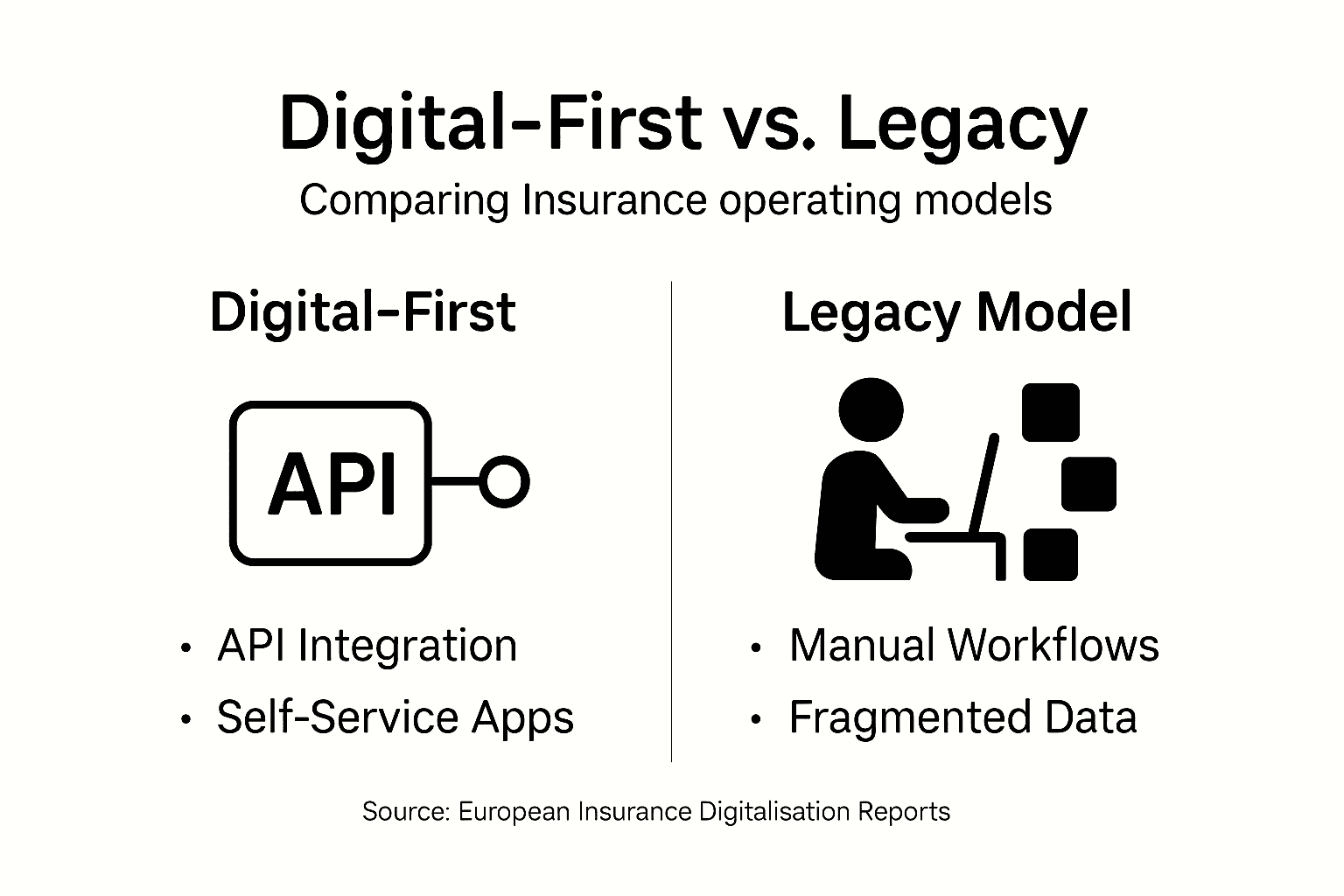
Digital insurance transformation represents a fundamental shift in how Property & Casualty (P&C) insurers conceptualise and deliver value. The contrast between digital-first and legacy approaches reveals profound differences in technological capabilities, organisational culture, and strategic responsiveness.
Key comparative dimensions include:
- Customer Engagement strategies
- Digital-First: Personalised, real-time interactions
- Legacy: Standardised, transaction-focused approaches
- Operational Agility
- Digital-First: Rapid product development
- Legacy: Slow, bureaucratic decision-making
- Technological Infrastructure
- Digital-First: Cloud-native, integrated ecosystems
- Legacy: Siloed, complex legacy systems
- Data Utilisation
- Digital-First: Advanced predictive analytics
- Legacy: Limited, retrospective reporting
European Insurance Digitalisation reports highlight that digital-first models fundamentally reimagine insurance delivery. These approaches enable insurers to move beyond traditional transactional relationships, creating more dynamic, responsive customer experiences that leverage real-time data and intelligent technologies.
The following comparison table highlights key operational differences between digital-first and legacy insurance models:
| Dimension | Digital-First Model | Legacy Model |
|---|---|---|
| Customer Engagement | Omnichannel, highly personalised | Primarily face-to-face, standardised |
| Product Delivery | Rapid, flexible configuration | Static, inflexible offerings |
| Data Management | Real-time, integrated ecosystems | Fragmented, siloed databases |
| Adaptability | Fast reaction to market changes | Slow, change-resistant |
The transformation demands more than technological investment—it requires a comprehensive reimagining of organisational capabilities, cultural norms, and strategic objectives. Successful digital-first insurers recognise that technological adoption is merely the beginning of a profound strategic metamorphosis.
Pro tip: Conduct a comprehensive digital maturity assessment to identify specific organisational gaps between current legacy approaches and desired digital-first capabilities.
Accelerate Your Digital-First Transformation in P&C Insurance
Navigating the challenges of legacy systems and implementing a digital-first strategy requires a seamless integration of advanced technologies with agile operational processes. The article highlights pressing issues such as overcoming data silos, enabling real-time risk assessment, and fostering a culture that embraces continuous innovation. If your organisation struggles with outdated infrastructure or misaligned IT and business strategies, it’s time to consider a solution designed to transform your Property & Casualty operations end to end.
Insurance Business Applications (IBA) offers IBSuite, a cloud-native, API-first core platform built to support rapid product innovation, automated claims processing, and real-time customer engagement. Designed to streamline everything from underwriting to billing while ensuring regulatory compliance, IBSuite empowers insurers to move beyond traditional legacy constraints and fully adopt a digital-first business model. Discover how you can modernise your systems and enhance agility by booking a personalised demo today.
Ready to address your digital transformation challenges and unlock new operational capabilities? Explore how IBSuite aligns with the key concepts discussed in the article by visiting Our Demo Booking Page. Take the first step towards accelerating your digital journey with a platform trusted by global industry leaders. Learn more about transforming your insurance operations at IBA Applications.
Frequently Asked Questions
What is a digital-first strategy in insurance?
A digital-first strategy in insurance refers to a holistic approach that transforms operations through strategic technological integration, fundamentally reshaping how insurance organisations interact with customers and deliver value.
How do advanced technologies like AI and IoT impact the insurance industry?
Advanced technologies such as AI enable sophisticated underwriting and claims processing, while IoT facilitates real-time risk monitoring, improving service efficiency and customer engagement within the insurance sector.
What are the key features of a digital-first Property & Casualty insurance model?
Key features include seamless digital interfaces, hybrid distribution channels, automated claims processing, real-time risk assessment, personalised product configuration, and integrated InsurTech partnerships that promote continuous innovation.
What operational challenges do insurers face when implementing a digital-first strategy?
Common challenges include integrating legacy systems, managing data silos, addressing cybersecurity vulnerabilities, overcoming skill gaps, and combating cultural resistance to change.
Recommended
- Understanding Digital-First Insurance Strategies – Digital Insurance Platform | IBSuite Insurance Software | Modern Insurance System
- Digital Transformation Roadmap for P&C Insurance Success – Digital Insurance Platform | IBSuite Insurance Software | Modern Insurance System
- How to Digitize Insurance Processes for P&C Insurers – Digital Insurance Platform | IBSuite Insurance Software | Modern Insurance System
- Insurance Operations Transformation: Complete Expert Guide – Digital Insurance Platform | IBSuite Insurance Software | Modern Insurance System
- The Future of FinTech: How AI is Reshaping Financial Services – BankStatementFlow Blog