27.12.25
Master Insurance Sales Process Steps for Better Results

Most British and European insurance firms now report that over 60 percent of new policies involve digital touchpoints and robust compliance screening. For insurance sales executives at mid-sized property and casualty companies in Central Europe, this shift brings both fresh opportunities and new regulatory requirements. Embracing digital tools not only advances client engagement but also safeguards against compliance risks, positioning your firm for sustainable success in a rapidly changing market.
Table of Contents
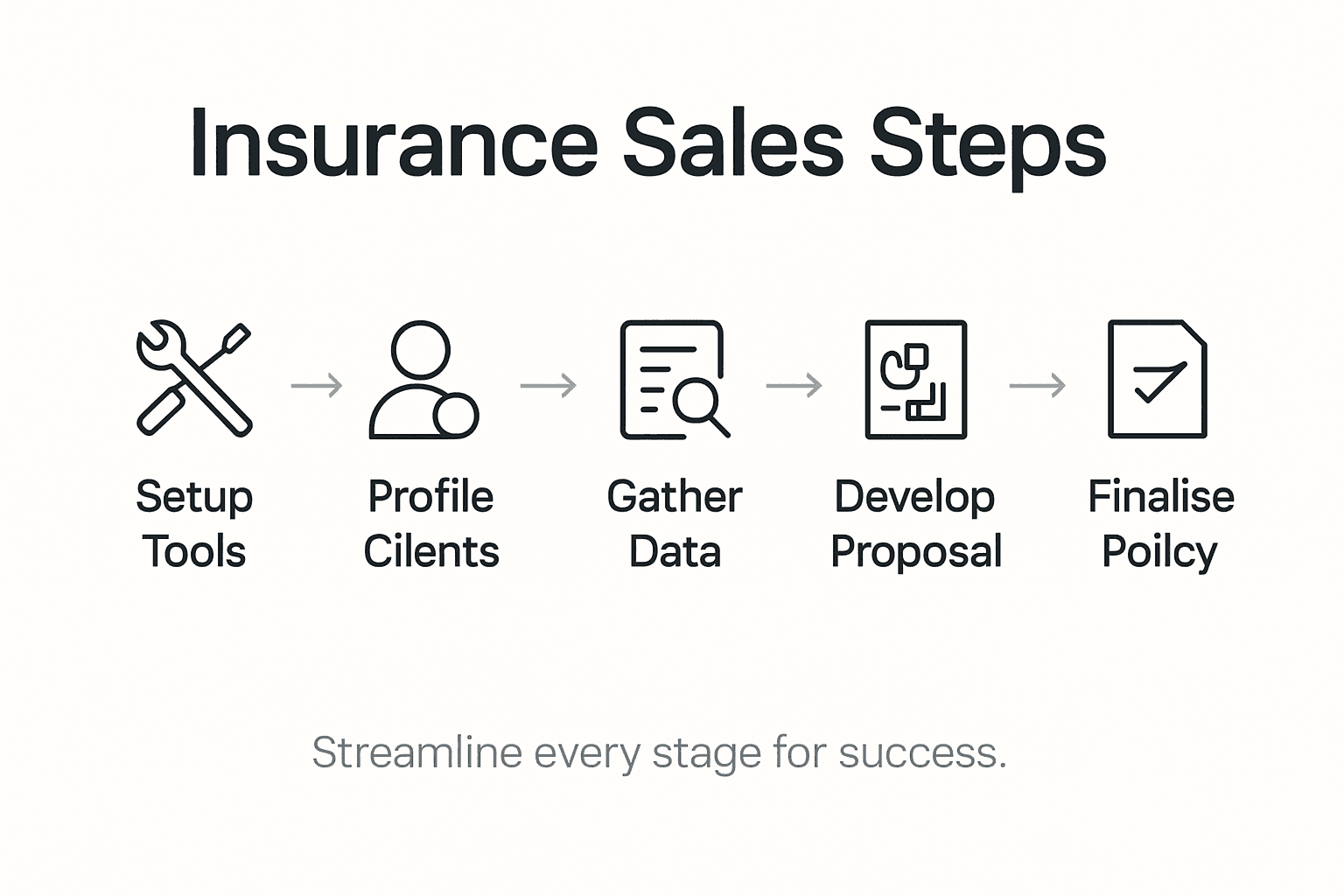
- Step 1: Set Up Digital Tools And Compliance Checks
- Step 2: Identify Target Client Profiles And Gather Data
- Step 3: Develop Bespoke Insurance Proposals
- Step 4: Present Solutions And Engage Prospects Digitally
- Step 5: Verify Client Data And Finalise Policy Issuance
Quick Summary
| Essential Insight | Explanation |
|---|---|
| 1. Implement robust digital tools | Adopt platforms that ensure compliance with regulations like GDPR and DORA while enhancing operational efficiency. |
| 2. Prioritise client profiling and data | Utilise advanced methodologies to segment clients based on risk profiles and behaviours, ensuring compliance with privacy laws. |
| 3. Create customised insurance proposals | Develop bespoke proposals that reflect client needs and demonstrate clear value through transparent, accessible language. |
| 4. Engage clients through digital solutions | Use multi-channel digital engagement strategies that simplify complex insurance concepts and enhance customer responsiveness. |
| 5. Establish thorough data verification | Verify client information systematically to ensure compliance, promoting clarity and transparency in policy documentation. |
Step 1: Set Up Digital Tools and Compliance Checks
Preparing your insurance sales process for digital transformation requires strategic implementation of robust technological infrastructure and rigorous compliance frameworks. The goal is to seamlessly integrate digital tools that enhance operational efficiency while maintaining strict regulatory adherence.
To successfully set up your digital ecosystem, start by mapping out your current sales workflow and identifying digital platforms that support comprehensive insurance compliance automation. The European Insurance and Occupational Pensions Authority (EIOPA) emphasises the critical nature of selecting tools that align with sector specific digital regulations such as GDPR, DORA, and emerging AI Act requirements. This means evaluating software solutions that offer built-in compliance monitoring, automated documentation tracking, and real time regulatory updates.
When selecting digital tools, prioritise platforms with integrated security protocols that protect customer data and enable transparent audit trails. Look for solutions that provide granular access controls, encryption capabilities, and seamless reporting functionalities. Pay special attention to tools that support multichannel communication while maintaining strict data protection standards required by European regulatory frameworks.
Professional Recommendation: Conduct a comprehensive digital readiness assessment before full implementation to identify potential integration challenges and ensure your chosen platforms can scale with your organisation’s evolving compliance requirements.
Here is a summary of key digital compliance features and their business impacts in insurance sales:
| Digital Feature | What It Enables | Business Impact |
|---|---|---|
| Automated Compliance Checks | Real-time regulation monitoring | Reduces risk of legal penalties |
| Data Encryption | Secure customer data transmission | Builds client trust and loyalty |
| Granular Access Controls | Customise user permissions | Minimises internal data breaches |
| Multichannel Communication | Unified messaging across platforms | Enhances client responsiveness |
| Integrated Audit Trails | Track all user actions and changes | Simplifies regulatory reporting |
Step 2: Identify Target Client Profiles and Gather Data
Successfully navigating insurance sales requires strategic client profiling and intelligent data collection techniques. Your objective in this step is to develop precise client understanding that enables personalised and effective sales approaches.

Begin by leveraging advanced data classification methodologies that help segment potential clients based on nuanced risk profiles and behavioural characteristics. European insurance markets increasingly rely on sophisticated data gathering techniques that balance granular insights with stringent privacy protections. This means developing comprehensive client profiles that consider demographic factors, risk tolerance, prior insurance interactions, and specific market segment requirements.
When collecting client data, adhere rigorously to European regulatory frameworks. Focus on gathering information through transparent consent mechanisms, ensuring all data collection processes comply with GDPR standards. Utilise multiple data sources including direct client interactions, digital touchpoints, and authorised third party databases. Pay particular attention to creating flexible client segmentation models that can adapt to changing market dynamics and individual customer needs.
Professional Recommendation: Implement robust data anonymisation protocols and develop clear opt out mechanisms to maintain client trust while gathering comprehensive market intelligence.
Step 3: Develop Bespoke Insurance Proposals
Crafting personalised insurance proposals requires a strategic approach that combines deep client understanding with precise risk assessment and innovative product design. Your goal is to create proposals that not only meet client needs but also demonstrate exceptional value and tailored protection.
Begin by implementing structured proposal development techniques that align with European regulatory standards. This involves conducting comprehensive needs analysis, mapping client risk profiles, and developing customised coverage options that address specific client vulnerabilities. Pay close attention to the nuanced requirements of different market segments, ensuring each proposal reflects a thorough understanding of the client’s unique circumstances and risk landscape.
When constructing your proposal, prioritise transparency and flexibility. Break down complex insurance concepts into clear, accessible language that demonstrates the precise value of each coverage element. Integrate detailed risk assessment data, potential scenario analyses, and comparative pricing models that showcase how your proposal provides superior protection. Leverage digital tools that enable real time customisation, allowing you to quickly adjust coverage parameters based on client feedback and emerging risk factors.
Professional Recommendation: Create modular proposal templates that can be rapidly customised, enabling faster response times and more personalised client interactions.
Step 4: Present Solutions and Engage Prospects Digitally
Digital client engagement represents a transformative approach to insurance sales, requiring sophisticated communication strategies that leverage technology to create meaningful connections. Your primary objective is to seamlessly translate complex insurance solutions into compelling digital experiences that resonate with modern clients.
Begin by understanding advanced digital platform engagement models that enable multi channel interactions. This involves developing a strategic digital presentation approach that combines interactive multimedia content, personalised risk visualisation tools, and real time communication channels. Consider implementing video presentations, interactive risk calculators, and dynamic proposal generators that allow prospects to explore coverage options dynamically and transparently.
When presenting digital solutions, focus on creating intuitive user experiences that simplify complex insurance concepts. Utilise responsive design principles that work across multiple devices, ensuring your digital presentations are accessible and engaging. Integrate features like live chat support, instant quote generation, and personalised recommendation engines that demonstrate your commitment to client convenience and technological innovation. Ensure all digital interactions maintain rigorous security standards and provide clear pathways for prospects to ask questions and progress through the sales journey.
Professional Recommendation: Design digital engagement workflows that allow prospects to seamlessly transition between self service exploration and personalised expert support.
The following table compares traditional and digital client engagement approaches in insurance sales:
| Approach | Communication Speed | Personalisation Level | Client Convenience |
|---|---|---|---|
| Traditional | Typically slower | Manual and limited | In-person or via phone |
| Digital | Instant, real-time | Automated and deep | Anywhere, any device |
Step 5: Verify Client Data and Finalise Policy Issuance
The final stage of your insurance sales process involves meticulous data verification and precise policy documentation. Your goal is to ensure complete regulatory compliance while creating a seamless onboarding experience for your new client.
Begin by implementing comprehensive data validation protocols that align with European regulatory frameworks. This requires a systematic approach to cross referencing client submitted information against multiple authoritative sources. Verify personal details, risk profile information, and supporting documentation with extreme precision. Utilise digital verification tools that can rapidly authenticate identity documents, employment records, and other critical information while maintaining strict data protection standards.
During policy finalization, create a transparent documentation process that clearly communicates all policy terms, coverage details, and client obligations. Generate comprehensive policy documents that are both legally rigorous and easily comprehensible. Ensure all digital signatures are legally compliant, and provide clients with secure digital access to their complete policy documentation. Pay particular attention to explicitly outlining coverage parameters, premium calculations, and potential exclusions to prevent future misunderstandings.
Professional Recommendation: Develop a standardised digital checklist that guides you through each verification step systematically, reducing the potential for human error during policy issuance.
Accelerate Your Insurance Sales with IBA’s Digital Solutions
The article highlights critical challenges in mastering the insurance sales process such as ensuring regulatory compliance, achieving precise client profiling, and delivering personalised proposals efficiently. Pain points like maintaining GDPR and EIOPA compliance, handling complex data securely, and engaging clients via seamless digital channels can slow down your sales cycle and diminish customer trust. These exact hurdles require a robust, scalable platform that supports automated compliance checks, real-time data validation, and flexible digital engagement.
Insurance Business Applications (IBA) offers IBSuite — a cutting-edge, cloud-native insurance platform designed to transform these challenges into strengths. From compliance automation and granular access control to interactive client engagement tools, IBSuite empowers Property and Casualty insurers to speed up product launches, streamline digital sales workflows, and ensure full regulatory adherence. Discover how you can modernise your sales process and deliver bespoke insurance solutions with confidence.
Explore the benefits of enhancing your sales journey with IBSuite. Ready to achieve better insurance sales outcomes with scalable technology insight Visit Book a Demo today to see how IBA can support your digital transformation and elevate client engagement.
Frequently Asked Questions
What are the key steps in the insurance sales process?
The key steps in the insurance sales process include setting up digital tools and compliance checks, identifying target client profiles, developing bespoke insurance proposals, presenting solutions, and verifying client data for policy issuance. Follow these steps to enhance operational efficiency and client engagement, ensuring each phase is tailored to meet both regulatory requirements and client needs.
How can I improve client engagement during the insurance sales process?
Improving client engagement can be achieved by leveraging digital tools that facilitate multi-channel communication. Utilise interactive presentations and real-time communication features to create a seamless experience, aiming to increase client touchpoints by at least 30% during the proposal stage.
What methods can I use to gather client data compliantly?
To gather client data compliantly, focus on transparent consent mechanisms and data collection processes aligned with relevant regulations. Implement methods such as client surveys and authorised third-party databases to collect data without compromising client trust, ensuring all data is processed within stringent privacy frameworks.
How do I create personalised insurance proposals?
To create personalised insurance proposals, conduct a thorough needs analysis by mapping client risk profiles. Prioritise clarity in your proposals by breaking down complex terms and integrating specific coverage options that address individual client vulnerabilities, ultimately enhancing perceived value.
What steps should I take to ensure compliance during policy issuance?
To ensure compliance during policy issuance, establish comprehensive data validation protocols that verify all submitted client information. Cross-reference this data with authoritative sources and maintain a strict documentation process, aiming to reduce compliance errors by 20% during policy finalisation.
Recommended
- 7 Steps to a Successful Insurance Process Checklist – Digital Insurance Platform | IBSuite Insurance Software | Modern Insurance System
- Insurance Product Launch Steps for Fast Market Success – Digital Insurance Platform | IBSuite Insurance Software | Modern Insurance System
- How to Digitize Insurance Processes for P&C Insurers – Digital Insurance Platform | IBSuite Insurance Software | Modern Insurance System
- 7 Essential Steps for a Claims Management Process Checklist – Digital Insurance Platform | IBSuite Insurance Software | Modern Insurance System
- How to Start Private Label: Build Your Own Brand Today – Spaceman