23.12.25
Insurance Billing Processes – Impact on P&C Insurers

Nearly half of British insurers now rely on digital billing solutions for property and casualty services, transforming how policies are managed and premiums are collected. Efficient billing is the backbone of financial stability for insurers and policyholders alike, shaping customer trust and industry compliance. Discover how the latest strategies in insurance billing help British providers minimize errors, maintain transparent records, and stay ahead in a rapidly changing financial landscape.
Table of Contents
- Defining Insurance Billing for P&C
- Key Stages in the Billing Lifecycle
- Digital Automation in Modern Billing Systems
- Regulatory Compliance and Local Practices
- Reducing Errors and Enhancing Transparency
Key Takeaways
| Point | Details |
|---|---|
| Importance of Accurate Billing | Effective insurance billing is crucial for maintaining financial integrity and compliance within the Property and Casualty insurance sector. |
| Role of Digital Automation | Implementing automated billing systems reduces errors, enhances processing speed, and improves overall operational efficiency. |
| Regulatory Compliance Necessities | Insurers must develop adaptable systems that comply with evolving regulatory requirements and local practices. |
| Error Reduction Strategies | Advanced verification mechanisms and automated checks are essential for minimising billing errors and enhancing transparency with customers. |
Defining Insurance Billing for P&C
Property and casualty (P&C) insurance billing represents the financial mechanism through which insurers manage premium collection, policy charges, and financial transactions. This complex process involves systematically tracking monetary exchanges between insurers and policyholders, ensuring accurate revenue management and financial compliance.
At its core, insurance billing encompasses multiple critical components including premium calculation, invoicing, payment processing, and reconciliation. Insurers must carefully track insurance accounting practices to maintain financial integrity and regulatory compliance. These processes involve detailed record-keeping, precise premium assessments, and transparent financial reporting that reflect the economic contributions of insurance services.
The billing process for P&C insurers typically involves several key stages. First, premium amounts are calculated based on risk assessment, policy type, and individual policyholder characteristics. Next, invoices are generated and distributed to customers, outlining specific charges and payment terms. Subsequent stages involve payment collection, transaction verification, and ongoing account management. Modern P&C insurers increasingly leverage digital platforms to streamline these processes, reducing administrative overhead and improving accuracy.
Beyond pure transactional mechanics, insurance billing plays a crucial role in the broader economic landscape. The economic measurement of insurance services demonstrates how these billing processes contribute significantly to national economic indicators and financial stability.
Here is a comparison of manual versus automated billing systems in P&C insurance:
| Aspect | Manual Billing | Automated Billing |
|---|---|---|
| Processing Speed | Slower, often delayed | Real-time or near-instant |
| Error Rate | Higher risk of human errors | Reduced errors via automation |
| Transparency | Limited, difficult to audit | Detailed, real-time statements |
| Administrative Cost | High due to manual workload | Lower with automation |
| Regulatory Adaptation | Challenging to keep updated | Easily adjusted for compliance |
Pro Tip: Implement automated billing systems that integrate real-time risk assessment and payment tracking to minimise administrative complexity and improve overall financial efficiency.
Key Stages in the Billing Lifecycle
The insurance billing lifecycle represents a comprehensive framework of financial processes that enable P&C insurers to manage monetary transactions effectively. This intricate sequence involves multiple interconnected stages designed to ensure accurate premium collection, risk management, and financial reporting.
The initial stage involves premium calculation, where insurers analyse financial operations to determine appropriate charges based on risk assessment. Factors such as policyholder characteristics, coverage type, historical claims data, and risk profile are meticulously evaluated to establish precise premium rates. Sophisticated actuarial models and data analytics play a crucial role in developing accurate pricing strategies that balance risk mitigation with competitive market positioning.

Subsequent stages include invoice generation, payment processing, and ongoing account management. Insurers must implement robust systems that facilitate seamless transaction tracking, risk management through reinsurance strategies, and financial reconciliation. These processes require advanced technological infrastructure that can handle complex billing workflows, integrate multiple data sources, and provide real-time reporting capabilities.
Modern P&C insurers are increasingly adopting digital platforms that streamline the billing lifecycle, reducing administrative complexity and enhancing operational efficiency. These platforms leverage automation, machine learning, and sophisticated algorithms to transform traditional billing processes, enabling more accurate risk assessment, faster transaction processing, and improved customer experience.
Pro Tip: Implement a comprehensive digital billing platform that integrates real-time data analytics, automated risk assessment, and seamless payment processing to optimise the entire insurance billing lifecycle.
Digital Automation in Modern Billing Systems
Digital automation has revolutionised billing systems for property and casualty (P&C) insurers, transforming traditional manual processes into sophisticated, intelligent workflows. Digital transformation strategies are fundamentally reshaping how insurers manage financial transactions, customer interactions, and operational efficiency.
The core of modern billing automation involves implementing intelligent technologies that streamline complex processes. Machine learning algorithms and artificial intelligence enable real-time data processing, allowing insurers to dynamically adjust premium calculations, detect potential fraud, and personalise billing experiences. These technologies facilitate workflow optimization in insurance claim management systems, reducing manual intervention and minimising human error.
Key components of digital automation in billing systems include intelligent document processing, automated payment reconciliation, and predictive analytics. Advanced platforms can now automatically extract information from invoices, match payments, generate reports, and provide predictive insights about customer payment behaviours. These capabilities significantly reduce administrative overhead, accelerate billing cycles, and enhance overall financial accuracy.
Automation technologies are not merely about reducing costs but fundamentally transforming the customer experience. By implementing seamless, intelligent billing systems, P&C insurers can offer more transparent, responsive, and personalised financial interactions that meet evolving customer expectations in a digital-first marketplace.
Pro Tip: Invest in modular automation platforms that can integrate artificial intelligence and machine learning capabilities, enabling flexible and scalable billing system transformations.
Regulatory Compliance and Local Practices
Property and casualty (P&C) insurers navigate a complex landscape of regulatory requirements that significantly impact billing processes and financial operations. Comprehensive legal definitions provide critical frameworks for understanding the intricate compliance mechanisms governing insurance billing practices.
The regulatory environment demands meticulous attention to multiple dimensions of financial reporting and transactional transparency. Compliance frameworks require insurers to maintain rigorous documentation, implement robust risk management protocols, and ensure precise financial reporting. Specific treatment of insurance products necessitates detailed tracking of premium calculations, claims processing, and financial reserving, with each aspect subject to stringent regulatory oversight.
Modern regulatory compliance extends beyond traditional documentation requirements. Insurers must now integrate advanced technological solutions that can dynamically adapt to changing regulatory landscapes. This involves developing flexible billing systems capable of real-time reporting, automated compliance checks, and comprehensive audit trails. Key focus areas include data protection, financial transparency, risk assessment, and customer protection mechanisms that align with evolving regulatory standards.
Local practices introduce additional layers of complexity, with regional variations in regulatory expectations creating unique challenges for P&C insurers. These variations can impact premium calculation methodologies, reporting requirements, and customer interaction protocols, demanding sophisticated and adaptable billing systems that can seamlessly adjust to diverse regulatory environments.
Pro Tip: Develop a comprehensive compliance management system that combines technological flexibility with continuous regulatory monitoring, enabling proactive adaptation to emerging regulatory requirements.
The following table summarises major regulatory challenges and how digital billing platforms address them:
| Regulatory Challenge | Digital Platform Solution |
|---|---|
| Real-time financial reporting | Automated data synchronisation |
| Complex audit trails | Built-in comprehensive audit logs |
| Regional compliance variations | Configurable system settings |
| Data protection requirements | Encrypted and secure databases |
| Ongoing regulatory changes | Flexible, update-ready frameworks |
Reducing Errors and Enhancing Transparency
Reducing billing errors represents a critical challenge for property and casualty (P&C) insurers seeking to maintain financial integrity and customer trust. Improvements in claims management systems have become increasingly sophisticated, enabling insurers to implement robust error prevention strategies.
The core of error reduction involves implementing advanced verification mechanisms and automated cross-checking systems. Modern technological solutions leverage machine learning algorithms to identify potential discrepancies before they escalate. Accounting practices for insurance businesses now emphasise real-time data validation, which allows for immediate detection and correction of billing irregularities. These systems can automatically flag inconsistencies in premium calculations, payment records, and claims processing, dramatically reducing human error and improving overall financial accuracy.
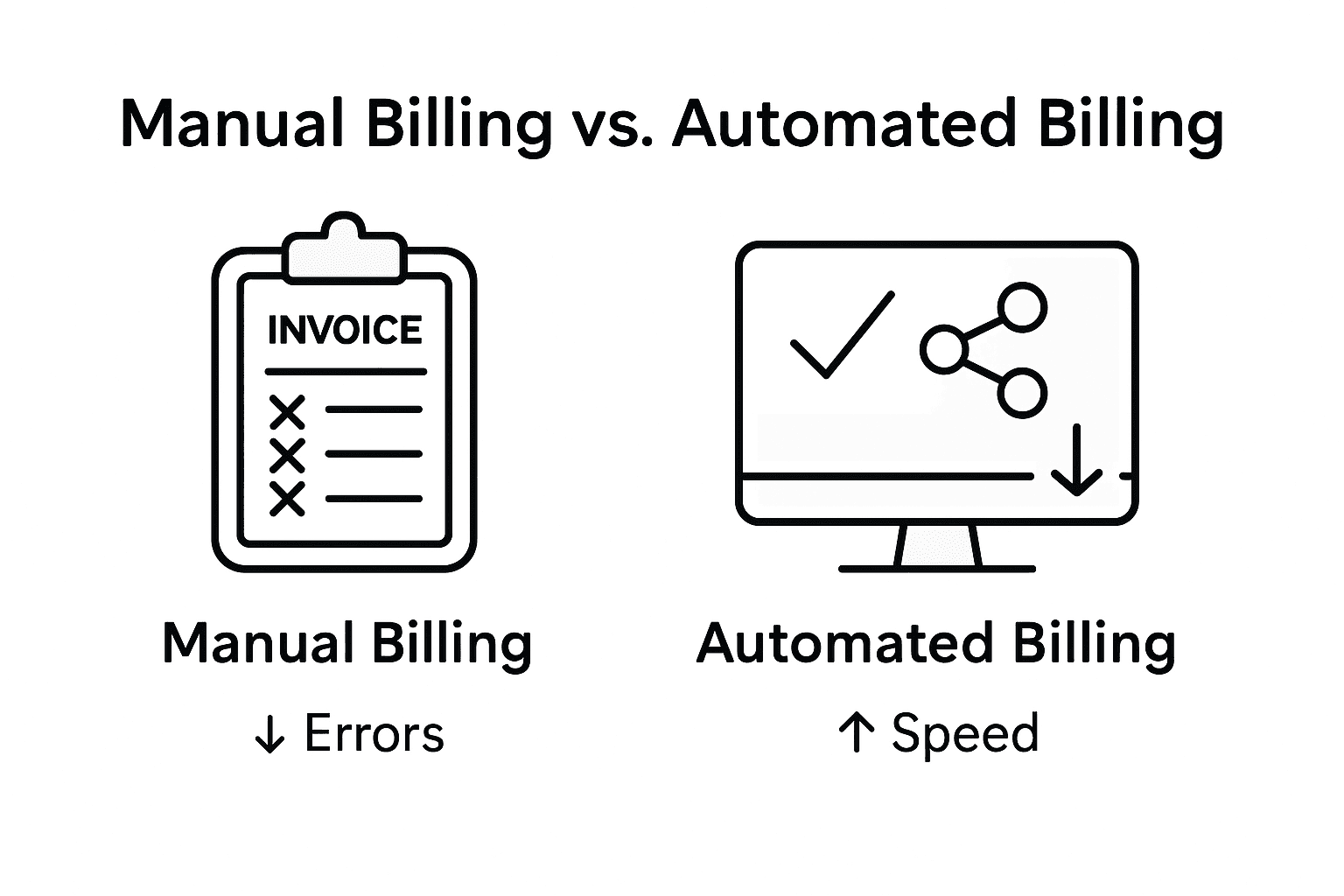
Transparency in billing processes goes beyond mere error prevention. It involves creating comprehensive, easily understandable documentation that provides policyholders with complete visibility into their financial transactions. Advanced billing platforms now offer detailed, itemised statements that break down every charge, premium adjustment, and payment, allowing customers to understand exactly how their insurance costs are calculated. This approach not only reduces disputes but also builds trust by demonstrating complete openness in financial interactions.
Technological integration plays a crucial role in error reduction and transparency. By connecting billing systems with advanced data analytics, artificial intelligence, and real-time reporting tools, P&C insurers can create a holistic approach to financial management. These integrated systems provide unprecedented insight into billing processes, enabling continuous improvement and proactive error prevention.
Pro Tip: Implement a multi-layered verification system that combines automated checks, machine learning algorithms, and periodic human review to create a comprehensive error prevention strategy.
Transform Your P&C Insurance Billing with Smarter Technology
The challenges in P&C insurance billing highlighted here reveal the urgent need to reduce errors, enhance transparency, and maintain regulatory compliance while managing complex premium calculations and payment processes. If manual billing or outdated systems are causing delays, higher error rates, or difficulty adapting to evolving regulations, you are not alone. These pain points can erode customer trust and slow down your financial operations.
Insurance Business Applications understands these critical pressures. Our cloud-native platform IBSuite is built to tackle the exact challenges discussed, offering seamless automation, real-time payment processing, and full regulatory compliance support. With IBSuite you can streamline your billing lifecycle and enjoy detailed audit trails and integrated risk management. Take the first step towards reducing billing complexity and improving financial accuracy.
Discover how to modernise your billing systems with IBA’s transformative technology. Book a demo today at Insurance Business Applications and see how you can accelerate digital transformation. Learn more about how IBSuite supports core insurance operations and compliance by visiting IBSuite Overview. Your next level of billing efficiency and transparency awaits.
Frequently Asked Questions
What are the key stages in the insurance billing process for P&C insurers?
The key stages in the insurance billing process include premium calculation, invoice generation, payment processing, and ongoing account management. Each stage is essential for ensuring accurate premium collection and financial reporting.
How does digital automation improve billing systems for property and casualty insurers?
Digital automation enhances billing systems by streamlining processes, reducing human errors, and providing real-time data insights. Technologies like machine learning and AI allow for more efficient premium calculations and automated payment reconciliation.
What are the regulatory challenges that P&C insurers face in their billing processes?
P&C insurers must navigate various regulatory challenges, including real-time financial reporting, maintaining comprehensive audit trails, and adhering to data protection requirements. Digital billing platforms can help address these challenges through automated compliance features.
How can P&C insurers reduce billing errors and enhance transparency in their processes?
Insurers can reduce billing errors by implementing advanced verification mechanisms and automated cross-checking systems. Enhancing transparency involves providing detailed, itemised statements to policyholders, ensuring they understand the calculations behind their insurance costs.
Recommended
- Insurance Billing Processes Explained: Complete Guide – Digital Insurance Platform | IBSuite Insurance Software | Modern Insurance System
- Automation and Artificial Intelligence in P&C Insurance – Digital Insurance Platform | IBSuite Insurance Software | Modern Insurance System
- 7 Examples of P&C Automation Every Insurer Should Know – Digital Insurance Platform | IBSuite Insurance Software | Modern Insurance System
- How to Digitize Insurance Processes for P&C Insurers – Digital Insurance Platform | IBSuite Insurance Software | Modern Insurance System
- How Fire Protection Systems Lower Insurance Premiums?