21.12.25
Digital Distribution in Insurance: Driving P&C Innovation

Over 60 percent of insurance customers in the British market now expect instant digital access to their policies and services. This shift toward online convenience is reshaping how British insurers connect with clients and keep pace with global trends. As digital distribution rapidly becomes the standard, understanding its foundations and core technologies is crucial for anyone looking to succeed in today’s competitive insurance landscape.
Table of Contents
- Defining Digital Distribution in Insurance
- Core Models and Technology Platforms
- Key Features and Customer Benefits
- Implementation Challenges and IT Requirements
- Regulatory Compliance and Data Security Standards
Key Takeaways
| Point | Details |
|---|---|
| Digital Distribution Transformation | Digital distribution transforms how insurers sell and manage products, enhancing customer engagement through technology. |
| Technological Integration | Successful digital platforms require robust API integrations, cloud infrastructure, and advanced analytics for operational efficiency. |
| Regulatory Compliance | Insurers must navigate complex regulatory landscapes, ensuring compliance with data protection and security standards. |
| Customer-Centric Experience | Emphasising seamless customer experiences in digital platforms is essential for meeting evolving consumer expectations. |
Defining Digital Distribution in Insurance
Digital distribution in insurance represents a transformative approach to selling and managing insurance products through digital channels, fundamentally reshaping how insurers interact with customers. At its core, digital distribution leverages technological platforms to streamline insurance sales, service, and engagement processes across multiple online touchpoints.
The European insurance landscape is experiencing a profound shift driven by digital technologies. Emerging digitalization trends are transforming insurance market dynamics, with technologies like blockchain, artificial intelligence, and the Internet of Things enabling more sophisticated distribution strategies. These technological innovations allow insurers to create more personalised, efficient, and responsive insurance experiences that meet evolving customer expectations.
Digital distribution channels encompass a wide range of technological interfaces, including:
- Web-based insurance platforms
- Mobile application interfaces
- Comparison websites
- Automated underwriting systems
- Self-service digital portals
- Chatbot and AI-powered customer service tools
Traditional insurance distribution models are being systematically reimagined through digital transformation. BCG’s analysis of digital sales journeys across European markets demonstrates that insurers can excel in digital sales by adopting innovative technological approaches, regardless of local market complexities.
Pro Digital Distribution Tip: Prioritise seamless customer experience integration when developing digital distribution channels, ensuring that technological solutions solve genuine customer pain points rather than merely adding technological complexity.
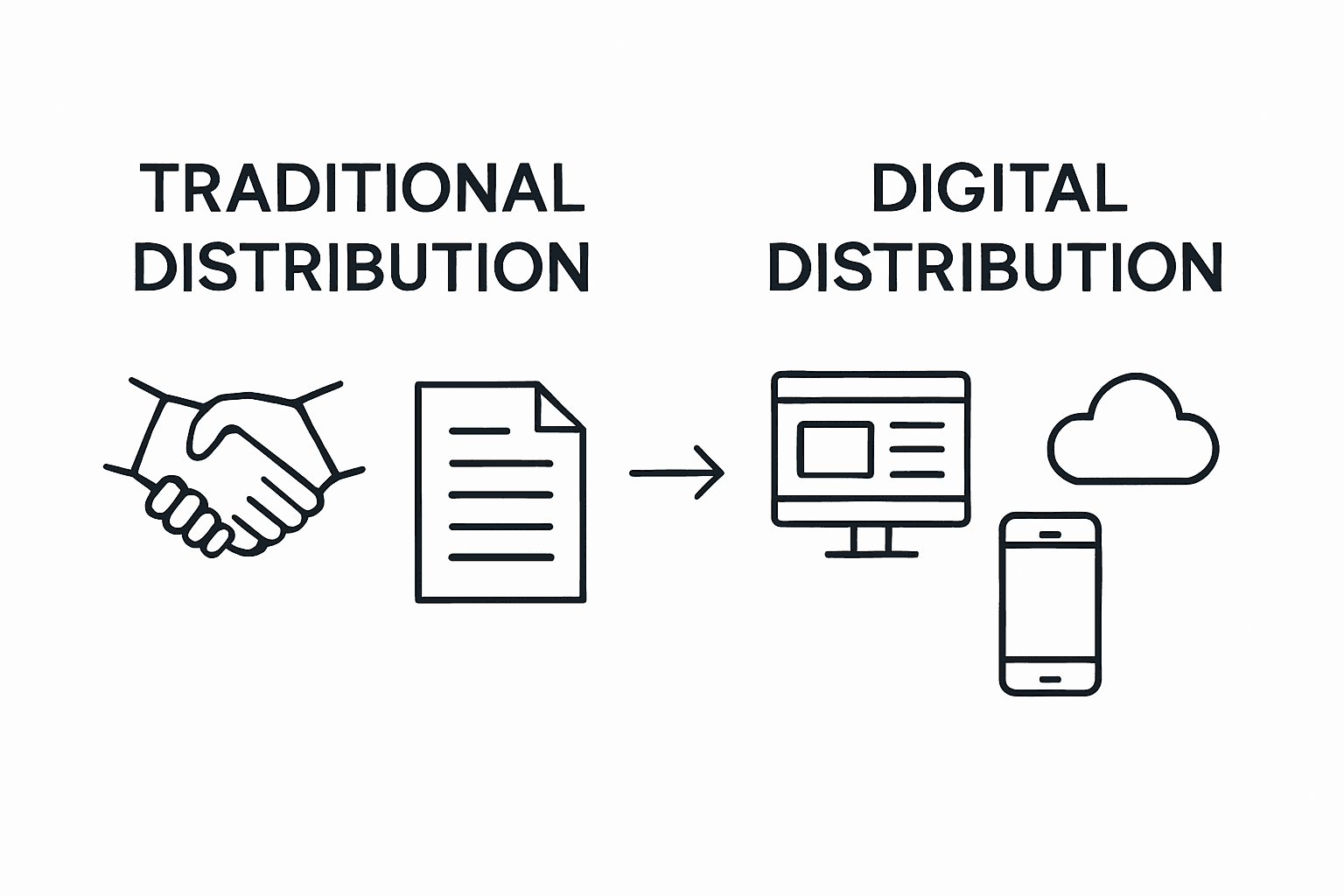
The following table compares traditional and digital insurance distribution approaches:
| Aspect | Traditional Distribution | Digital Distribution |
|---|---|---|
| Customer Interaction | Face-to-face meetings | Online portals and mobile apps |
| Accessibility | Limited to business hours | 24/7 multi-device access |
| Personalisation | Generic offerings | Data-driven tailored solutions |
| Speed of Service | Paper-based, slower process | Instant digital processing |
| Geographical Reach | Local or regional focus | Global, borderless engagement |
Core Models and Technology Platforms
Digital insurance platforms are sophisticated technological ecosystems that fundamentally transform how insurers design, deliver, and manage insurance products. These platforms represent more than mere technological infrastructure; they are strategic enablers that allow insurers to adapt rapidly to changing market dynamics and customer expectations.
Digital platform engagement comes with intricate regulatory challenges and potential cyber risks, requiring insurers to carefully navigate the complex landscape of technological integration. Modern platforms must balance innovation with robust risk management, ensuring that digital transformation does not compromise operational security or regulatory compliance.
Key technological components of contemporary insurance platforms include:
- Microservices architecture
- API-enabled integrations
- Cloud-native infrastructure
- Advanced data analytics engines
- Machine learning underwriting algorithms
- Real-time risk assessment tools
Recent collaborations between financial institutions demonstrate how strategic platform enhancements can dramatically improve customer experiences, with some organisations achieving significant increases in digital product penetration through carefully designed user interfaces and seamless technological integration.
These platforms are not merely technological solutions but strategic instruments that enable insurers to reimagine their operational models, create more personalised customer journeys, and respond dynamically to market shifts.
Pro Platform Strategy Tip: Prioritise modular, flexible platform architectures that allow incremental technological upgrades without requiring complete system overhauls, ensuring long-term adaptability and reduced implementation risks.
Below is a table outlining key technology components in modern insurance platforms and their business impact:
| Technology Component | Description | Business Impact |
|---|---|---|
| Microservices Architecture | Modular system design | Accelerates update deployment |
| API Integrations | Seamless connectivity | Expands partner and channel reach |
| Cloud Infrastructure | Scalable online resources | Reduces cost and boosts reliability |
| Data Analytics Engines | Advanced information analysis | Enables predictive, targeted offers |
Key Features and Customer Benefits
Digital distribution channels represent a fundamental shift in how insurance products are researched, compared, and purchased, creating unprecedented levels of transparency and accessibility for customers. These technological platforms are not merely transactional interfaces but sophisticated ecosystems designed to enhance the entire insurance experience.

Consumer preferences are rapidly shifting towards digital purchasing channels, with many valuing the speed, convenience, and transparency of online platforms, particularly for straightforward insurance products. This digital transformation enables customers to access comprehensive information, compare multiple options, and make informed decisions without traditional geographical or temporal constraints.
Key customer benefits of digital distribution platforms include:
- 24/7 product accessibility
- Instant price comparisons
- Personalised insurance recommendations
- Streamlined application processes
- Real-time policy management
- Simplified claims submission
Customer research indicates a nuanced digital purchasing journey, with consumers preferring digital channels for initial information gathering and quote generation, while still valuing human interaction for complex product discussions and final purchase decisions. This hybrid approach demonstrates the ongoing importance of balancing technological efficiency with personalised customer support.
Moreover, digital platforms enable insurers to offer more granular, data-driven products that can be tailored to individual risk profiles and customer needs, moving beyond the traditional one-size-fits-all insurance model.
Pro Digital Strategy Tip: Design digital platforms with seamless omnichannel capabilities, ensuring customers can smoothly transition between digital and human interaction points throughout their insurance journey.
Implementation Challenges and IT Requirements
Digital transformation in insurance demands comprehensive technological infrastructure and strategic planning to navigate the complex landscape of modern digital distribution. Insurers must develop robust technological frameworks that can seamlessly integrate multiple systems while maintaining security, compliance, and operational efficiency.
Data breaches through third-party vendors pose significant risks, potentially exposing customer information and disrupting critical insurance operations, making cybersecurity a paramount consideration in digital implementation strategies. These vulnerabilities extend beyond direct organisational systems, requiring holistic risk management approaches that encompass entire technological ecosystems.
Critical IT requirements for successful digital distribution implementation include:
- Scalable cloud infrastructure
- Advanced cybersecurity protocols
- Seamless API integration capabilities
- Flexible microservices architecture
- Real-time data processing systems
- Comprehensive identity management solutions
Evolving data privacy regulations introduce complex compliance challenges, necessitating comprehensive data governance strategies that extend beyond traditional technological implementations. Insurance organisations must develop sophisticated frameworks capable of adapting to changing legal landscapes while maintaining rigorous data protection standards.
Successful digital distribution platforms require a delicate balance between technological innovation, regulatory compliance, and operational resilience. This demands not just technological investments, but a fundamental reimagining of organisational approaches to digital transformation.
Pro Implementation Strategy Tip: Develop a phased digital transformation roadmap that prioritises incremental technological upgrades, allowing continuous adaptation while minimising operational disruption.
Regulatory Compliance and Data Security Standards
Digital insurance distribution requires a sophisticated approach to regulatory compliance and data security that goes far beyond traditional risk management strategies. Insurance organisations must develop comprehensive frameworks that address the complex intersections of technological innovation, legal requirements, and customer protection.
The Insurance Distribution Directive (IDD) establishes a comprehensive regulatory framework that categorises insurance distribution as a regulated activity, explicitly including digital platforms within its scope, ensuring that online insurance interactions are subject to the same rigorous standards as traditional distribution methods. This approach recognises the evolving nature of insurance interactions in the digital landscape.
Key regulatory and security considerations include:
- Comprehensive data protection protocols
- Transparent customer consent mechanisms
- Robust authentication processes
- Encryption of sensitive customer information
- Regular security vulnerability assessments
- Compliance tracking and reporting systems
Insurance companies face significant challenges in managing third-party cybersecurity risks, particularly with the increasing adoption of cloud services and remote work environments, which introduce complex layers of potential security vulnerabilities. These challenges demand proactive risk management strategies that extend beyond traditional organisational boundaries.
Successful regulatory compliance requires a holistic approach that integrates technological solutions, legal expertise, and ongoing risk assessment. Insurers must develop adaptive frameworks that can respond quickly to emerging regulatory requirements while maintaining robust security standards.
Pro Compliance Strategy Tip: Implement a dynamic compliance management system that provides real-time monitoring and automated reporting, enabling rapid adaptation to evolving regulatory landscapes.
Accelerate Your Digital Distribution Transformation with IBSuite
The shift to digital distribution in insurance comes with complex challenges such as integrating scalable cloud infrastructure, ensuring regulatory compliance, and providing seamless omnichannel customer experiences. Key pain points include managing cybersecurity risks, enabling real-time data analytics, and delivering personalised interactions through flexible platform architectures. If you are seeking to thrive amid these demands, adopting a cloud-native, API-first insurance platform is essential to reduce IT complexity and achieve rapid product innovation.
Insurance Business Applications (IBA) offers IBSuite, an end-to-end core insurance platform designed precisely to address these challenges. Built on AWS with modular microservices and seamless API integrations, IBSuite empowers Property and Casualty insurers to streamline sales, underwriting, policy administration, and claims processing—all while ensuring ongoing regulatory compliance and robust data security. Discover how IBSuite supports digital distribution innovation by enabling faster product launches, personalised customer journeys, and agile operational models.
Are you ready to transform your distribution channels and lead in the evolving insurance landscape Trust IBSuite to deliver the technology and compliance assurance your business needs Start your journey today by booking a personalised demo with IBA and experience how a seamless, cloud-native platform can power your digital future. Learn more about our comprehensive core insurance platform and take the next step towards operational excellence.
Frequently Asked Questions
What is digital distribution in insurance?
Digital distribution in insurance refers to the use of technological platforms to sell and manage insurance products through online channels, transforming how insurers engage with customers.
How does digital distribution improve customer experiences in insurance?
Digital distribution enhances customer experiences by providing 24/7 access to products, instant price comparisons, personalised recommendations, streamlined application processes, and real-time policy management.
What technology components are essential for modern insurance digital distribution?
Key technology components include microservices architecture, API-enabled integrations, cloud infrastructure, advanced data analytics engines, and real-time risk assessment tools, which together create flexible and effective insurance solutions.
What are the challenges associated with implementing digital distribution in insurance?
Implementation challenges include ensuring robust cybersecurity, navigating regulatory compliance, managing data privacy risks, and integrating various technological systems while maintaining operational efficiency.
Recommended
- 7 Types of P&C Insurance Distribution for Insurers
- Opportunities and Challenges for P&C Insurers: Embracing Insurtech – Digital Insurance Platform | IBSuite Insurance Software | Modern Insurance System
- Rapid Insurance Product Innovation Guide for P&C Insurers – Digital Insurance Platform | IBSuite Insurance Software | Modern Insurance System
- Rapid Product Innovation Insurance: Driving Agility for P&C Insurers – Digital Insurance Platform | IBSuite Insurance Software | Modern Insurance System