05.12.25
Choosing the Right Core Platform Vendor: A European Insurer’s Path to Digital Leadership

Outdated core systems limit insurers ability to innovate and compete in today’s digital world. As new technologies and changing customer demands reshape the property and casualty sector, insurers face mounting pressure to modernize. Understanding what makes a core insurance platform truly effective can help organizations streamline operations, foster growth, and meet rising expectations both now and in the future.
Table of Contents
Key Takeaways
| Point | Details |
| Core Insurance Platforms Are Essential | They serve as the technological backbone for P&C insurers, enabling efficient policy administration, claims processing, and customer management. |
| Architectural Design Matters | Modern platforms should utilize microservices and cloud-native principles for flexibility and scalability in a competitive digital landscape. |
| Security and Compliance Are Critical | Insurers must adopt advanced cybersecurity measures and flexible architectures to ensure data protection and regulatory adherence. |
| Ecosystem Integration Enhances Value | Platforms with robust API frameworks facilitate seamless connections across technologies, driving growth and responsiveness to market changes. |
Defining Core Insurance Platforms for P&C Insurers
Core insurance platforms represent the technological backbone that enables property and casualty (P&C) insurers to digitally transform their operations. These comprehensive software solutions provide an integrated environment for managing critical insurance functions like policy administration, claims processing, billing, underwriting, and customer relationship management. A core insurance platform serves as the central nervous system that connects various technological components and business processes within an insurance organization.
At their fundamental level, core platforms streamline complex insurance workflows by consolidating multiple operational systems into a unified technological infrastructure. Unlike legacy systems that operate in siloed environments, modern platforms leverage cloud technologies, microservices architectures, and advanced APIs to create flexible, scalable solutions. These platforms empower insurers to rapidly develop new products, enhance customer experiences, and respond quickly to market dynamics. For P&C insurers specifically, a robust integrated insurance platform becomes critical in managing intricate risk assessment, policy lifecycle management, and claims processing with unprecedented efficiency.

The evolution of core insurance platforms reflects the broader digital transformation trends in the insurance industry. Contemporary platforms go beyond mere transactional processing, incorporating advanced capabilities like real-time data analytics, artificial intelligence, and machine learning integrations. These technological advancements enable insurers to move from reactive to predictive business models, leveraging data-driven insights for more accurate risk assessment, personalized pricing strategies, and proactive customer engagement. By selecting the right core platform, P&C insurers can fundamentally reimagine their technological capabilities and establish a competitive advantage in an increasingly digital marketplace.
Evaluating Platform Architecture and Scalability
Choosing the right core insurance platform requires a comprehensive understanding of architectural design and scalability potential. Platform architecture represents the fundamental blueprint that determines an insurer’s technological flexibility, performance, and future growth capabilities. Recent research demonstrates that microservice architectural patterns play a critical role in determining system scalability, offering insurers a strategic approach to building adaptable technological infrastructures.
Modern P&C insurers must prioritize architectural evaluations that go beyond traditional monolithic system assessments. The emerging trend involves analyzing platform architectures through multiple critical lenses: technological resilience, integration capabilities, and dynamic scaling potential. Insurance platform scalability now encompasses more than just handling increased transaction volumes. It requires a holistic approach that considers cloud-native design principles, API flexibility, and the ability to seamlessly incorporate emerging technologies like artificial intelligence and machine learning.
Quantitative assessment frameworks have emerged to help insurers make more informed architectural decisions. Systematic research suggests that successful platform architectures demonstrate key characteristics: modular design, horizontal scalability, robust data management capabilities, and seamless interoperability. By implementing comprehensive evaluation criteria, P&C insurers can select platforms that not only meet current operational requirements but also provide the technological agility needed to rapidly adapt to future market transformations. The strategic selection of a core platform with superior architectural design becomes a fundamental differentiator in an increasingly competitive digital insurance landscape.
Assessing Security, Compliance, and Configurability
European P&C insurers face increasingly complex technological challenges when evaluating core platform security and compliance requirements. Cybersecurity has become a critical strategic consideration that extends far beyond traditional perimeter defense mechanisms. Emerging research demonstrates that AI-driven data governance tools are transforming how insurers approach comprehensive security frameworks, enabling more sophisticated threat detection and risk mitigation strategies.
Modern insurance platforms must deliver robust configurability while maintaining stringent regulatory compliance standards. The landscape of insurance platform security now demands a multifaceted approach that integrates advanced cybersecurity protocols, adaptive risk management, and flexible technological architectures. Insurers need solutions that can dynamically adjust to evolving regulatory requirements, protecting sensitive customer data while enabling seamless operational agility. This requires platforms with granular configuration capabilities, sophisticated access control mechanisms, and comprehensive audit trail functionalities.
Quantitative assessment frameworks have emerged to help insurers systematically evaluate platform security and compliance potential. These frameworks emphasize holistic evaluation criteria that go beyond traditional checklist approaches. Key considerations include data encryption standards, multi-factor authentication protocols, real-time threat monitoring capabilities, and the platform’s ability to support industry-specific regulatory mandates. By implementing rigorous selection criteria, European insurers can identify core platforms that not only meet current security requirements but also provide the technological resilience needed to navigate an increasingly complex digital risk landscape.
Ecosystem Readiness and Seamless Integration
European insurers increasingly recognize that true digital transformation depends on a platform’s ability to seamlessly integrate with diverse technological ecosystems. Ecosystem integration has evolved from a technical requirement to a strategic imperative that determines an insurer’s agility and competitive positioning. Recent research exploring IoT cloud platform interoperability highlights the critical importance of architectural flexibility that enables smooth connections between disparate systems, technologies, and data sources.
Modern insurance platforms must provide robust API frameworks that facilitate rapid, secure, and efficient integrations across multiple business domains. Insurers can unlock growth through ecosystem APIs by implementing platforms that support comprehensive integration strategies. These strategies encompass not just technical connectivity, but also the ability to rapidly onboard new partners, streamline data exchanges, and create adaptive technological environments that can quickly respond to emerging market opportunities.
Successful ecosystem readiness requires a holistic approach that transcends traditional integration methodologies. Advanced platforms must demonstrate sophisticated capabilities like real-time data synchronization, microservices architecture, event-driven communication protocols, and adaptive integration mechanisms. By prioritizing platforms with comprehensive ecosystem integration potential, European insurers can build technological infrastructures that are not just connected, but truly intelligent and responsive to complex business dynamics. The strategic selection of a core platform with superior integration capabilities becomes a fundamental differentiator in an increasingly interconnected digital insurance landscape.
Vendor Referenceability, Migration, and Cost Structure
Evaluating a core insurance platform vendor requires a multifaceted approach that extends beyond technological capabilities to include critical considerations of vendor credibility, migration complexity, and total cost of ownership. Recent technological research exploring blockchain-based insurance network architectures reveals the profound impact that vendor selection can have on an insurer’s long-term digital transformation strategy, emphasizing the need for comprehensive due diligence.
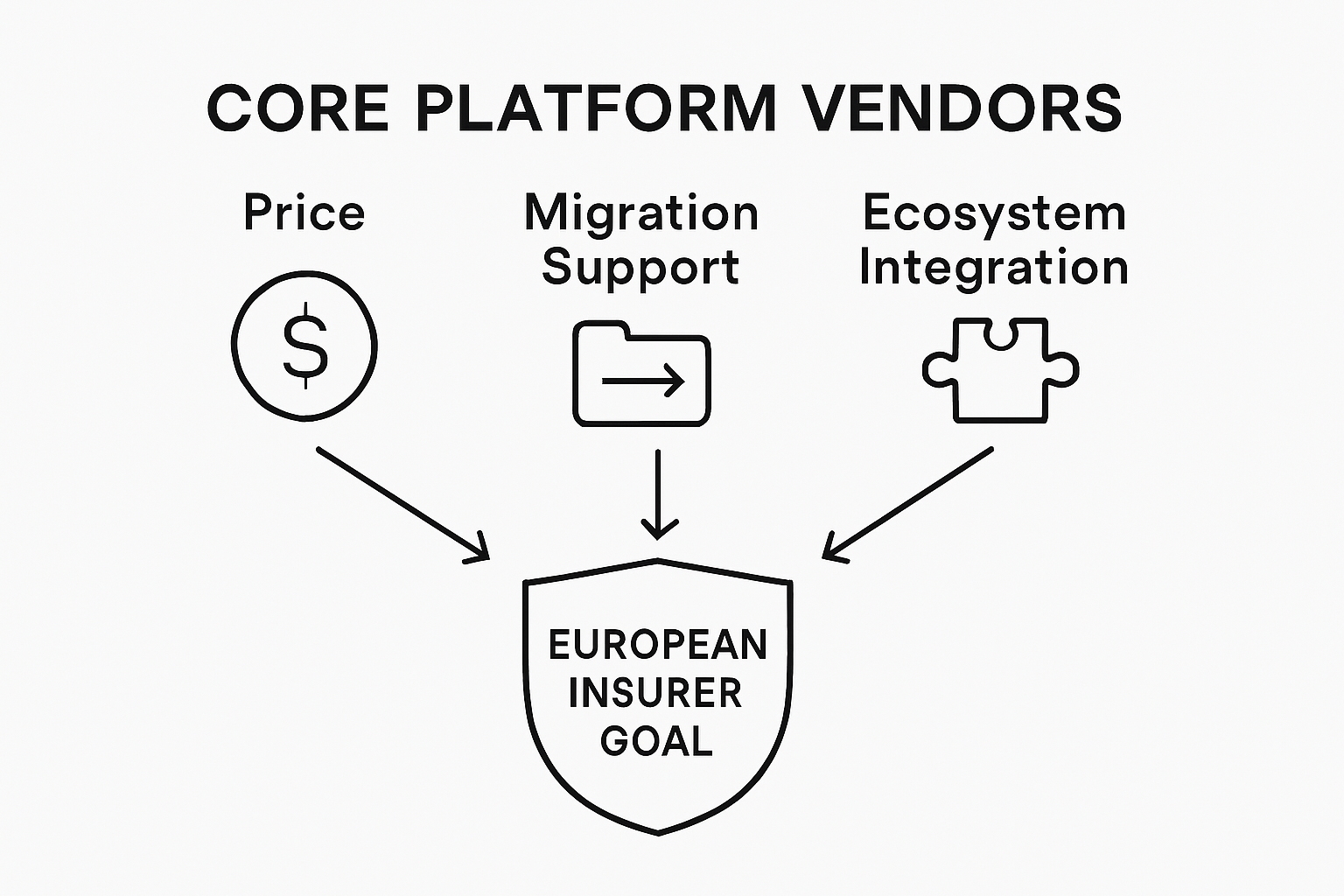
Migration strategies represent a pivotal aspect of vendor selection that European insurers must carefully navigate. Overcoming integration challenges demands a nuanced understanding of potential technological disruptions, data transfer complexities, and operational continuity risks. Modern insurers must assess vendors not just on their current technological offerings, but on their proven track record of successful migrations, ability to minimize operational downtime, and commitment to providing comprehensive transition support.
Cost structure evaluation goes beyond simple price comparison, requiring a holistic analysis of long-term technological investment and potential returns. Advanced research on cloud architectures for enterprise applications highlights the importance of understanding total cost of ownership, which encompasses implementation expenses, ongoing maintenance costs, scalability potential, and the platform’s ability to drive operational efficiency. European insurers must develop sophisticated evaluation frameworks that consider not just immediate financial implications, but the platform’s potential to generate strategic value, reduce operational complexity, and enable future innovation.
Accelerate Your Digital Leadership with the Right Core Platform
Choosing the right core insurance platform vendor is a critical decision for European insurers striving to lead in a digital-first marketplace. The article highlights challenges such as migration complexity, cybersecurity, regulatory compliance, and achieving scalability through modern, API-first architectures. These pain points can create uncertainty and risk operational downtime if not addressed with a platform built for agility and seamless ecosystem integration.
Insurance Business Applications (IBA) understands these challenges and offers IBSuite, a cloud-native core platform designed to simplify complexity while future-proofing your technology landscape. With robust support for the full insurance value chain and Evergreen updates, IBSuite empowers insurers to reduce IT burdens, speed product launches, and maintain compliance. See how IBSuite’s secure, flexible architecture and proven migration support help you overcome integration hurdles and position your company for sustainable growth.
Discover how you can transform your core operations and gain a competitive edge today by booking a demo with IBA. Take the first step toward a future-ready insurance platform by visiting Book a Demo now.
Frequently Asked Questions
What should I consider when evaluating a core insurance platform vendor?
When evaluating a core insurance platform vendor, consider technological capabilities, migration complexity, vendor credibility, and total cost of ownership. It’s essential to perform due diligence to understand their track record and ability to support your digital transformation.
How can I ensure a smooth migration to a new core insurance platform?
To ensure a smooth migration, assess the vendor’s experience with migration processes, look for comprehensive transition support, and understand potential challenges related to data transfer and operational continuity. Effective planning and communication with the vendor are crucial.
What are the key factors that contribute to the total cost of ownership for a core platform?
The total cost of ownership includes implementation expenses, ongoing maintenance costs, scalability potential, and the platform’s effectiveness in driving operational efficiency. It’s important to take a holistic view rather than just looking at initial costs.
Why is vendor credibility important in selecting a core platform?
Vendor credibility is essential because it impacts your long-term digital transformation strategy. A credible vendor is likely to have a proven track record of successful implementations, providing you with confidence in their ability to deliver value and support your business needs.