02.12.25
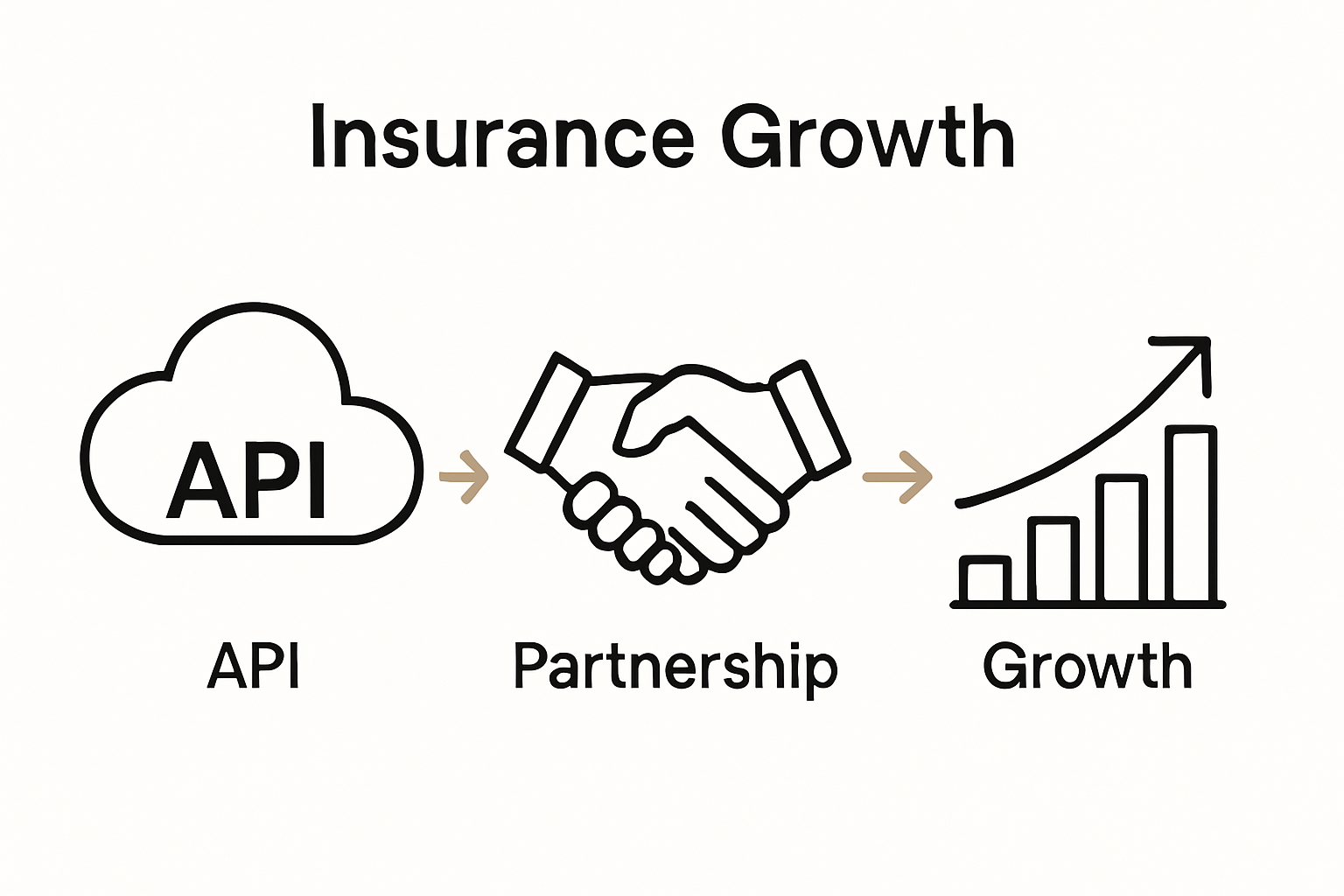
How Insurers Can Unlock Growth with Ecosystem APIs

As rapid digital change reshapes the industry, insurers face growing pressure to connect, share data, and innovate across platforms. Understanding how APIs and collaborative partnerships work allows companies to stay relevant, reach new markets, and build customer experiences that competitors struggle to match.
Table of Contents
Key Takeaways
| Point | Details |
| Open Insurance Ecosystems | Open insurance fosters collaboration and data sharing among insurers through standardized APIs, leading to innovative, customer-centric services. |
| Ecosystem Partnerships | Diverse partnership archetypes in P&C insurance redefine operational models, facilitating enhanced risk assessment and personalized customer experiences. |
| APIs and Distribution | Open APIs revolutionize distribution channels, allowing insurers to connect with multiple partners, streamlining data exchange, and enhancing responsiveness to market demands. |
| Risk Mitigation | Successful integration of insurance ecosystems requires robust data governance, cybersecurity protocols, and a proactive approach to potential integration challenges. |
Defining Open Insurance Ecosystems and APIs
Open insurance represents a transformative approach to data sharing and collaboration within the insurance industry. At its core, open insurance frameworks enable insurance companies to exchange personal and non-personal data through standardized application programming interfaces (APIs), creating unprecedented opportunities for innovation and customer-centric services.
The ecosystem API model fundamentally reimagines how insurance organizations interact, share information, and develop products. Standardized data sharing protocols allow insurers to access critical information like customer profiles, premium structures, claims history, and emerging risk data from multiple sources. This interconnected approach enables rapid product development, more personalized risk assessment, and seamless integration across different insurance platforms.
Key characteristics of open insurance ecosystems include:
-
Interoperability between different insurance systems and platforms
-
Secure, standardized API connections
-
Real-time data exchange capabilities
-
Enhanced collaboration across traditional industry boundaries
-
Flexible infrastructure supporting rapid innovation
By embracing open insurance architecture, insurers can move beyond traditional siloed operations. These API-driven ecosystems create dynamic networks where data flows efficiently, enabling more responsive, intelligent, and customer-focused insurance solutions that adapt quickly to changing market demands.
Types of Ecosystem Partnerships in P&C Insurance
Property and casualty insurance ecosystems are evolving through strategic partnerships that reimagine traditional business models. Insurance ecosystem roles have diversified beyond conventional boundaries, creating complex networks of collaboration and innovation that drive competitive advantage.
Modern P&C insurance partnerships typically manifest in five distinct archetypes. Collaborative strategies enable insurers to leverage unique strengths across different organizational types:
-
Creator and Manager: Develops and manages core ecosystem platforms
-
Market Maker: Facilitates connections between different ecosystem participants
-
Market Builder: Constructs comprehensive infrastructure for multi-party interactions
-
Opportunistic Participant: Strategically engages in specific ecosystem opportunities
-
Distributor: Focuses on delivering products and services through ecosystem channels
These partnership models enable insurers to transcend traditional operational limitations. By embracing interconnected ecosystems, property and casualty insurers can access new distribution channels, enhance risk assessment capabilities, and create more personalized customer experiences that respond dynamically to emerging market needs.
How Open APIs Enable Distribution Channels
Open APIs are revolutionizing distribution channels in the insurance industry, creating unprecedented opportunities for connectivity and innovation. Insurance API ecosystems enable carriers to expand their reach by seamlessly connecting with diverse partners, breaking down traditional barriers that once limited market engagement.
The technical infrastructure supporting these distribution innovations involves sophisticated API integration architectures that centralize data management and facilitate smooth interactions between multiple stakeholders. These ecosystems allow insurers to:
-
Connect with multiple distribution partners simultaneously
-
Streamline data exchange across different platforms
-
Reduce integration complexity
-
Enable real-time product and pricing updates
-
Support dynamic risk assessment capabilities
By leveraging open APIs, insurers can transform traditional distribution models into dynamic, interconnected networks. This approach enables rapid product development, more personalized customer experiences, and the ability to quickly adapt to emerging market opportunities. The result is a more flexible, responsive insurance ecosystem that can efficiently meet evolving customer demands and technological challenges.

Real-World Trends Shaping Insurance Ecosystems
Insurance ecosystems are rapidly evolving, driven by strategic cross-industry partnerships that transcend traditional boundaries. Emerging collaboration models are demonstrating how carriers can create innovative solutions by integrating expertise across different sectors, particularly in specialized risk management domains.
One prominent trend involves sophisticated partnerships that combine deep industry knowledge with technological capabilities. For instance, insurance collaborations with non-traditional partners are generating transformative products and services:
-
Commercial cyber insurance partnerships with cybersecurity firms
-
Auto insurance integrations with vehicle manufacturers
-
Technology platforms offering embedded insurance solutions
-
Health insurance collaborations with wellness technology providers
-
Smart home technology partnerships for property insurance
These ecosystem trends represent more than technological innovation. They signal a fundamental reimagining of insurance as a dynamic, interconnected service that adapts rapidly to changing customer needs, leverages specialized expertise, and creates value through strategic collaboration across multiple industries.
Mitigating Risks and Navigating Integration Challenges
Building successful insurance ecosystems demands strategic risk management and proactive approach to integration complexities. Open insurance implementations require insurers to carefully navigate potential challenges related to data protection, intellectual property, and governance frameworks.
Ecosystem partnership strategies emphasize several critical risk mitigation approaches:
-
Comprehensive data governance protocols
-
Robust cybersecurity infrastructure
-
Transparent intellectual property agreements
-
Standardized API integration frameworks
-
Clear performance and compliance metrics
-
Continuous monitoring and risk assessment processes
Successful ecosystem integration goes beyond technical implementation. It requires a holistic approach that balances technological innovation with rigorous risk management. Insurers must develop flexible, secure architectures that protect sensitive information, maintain regulatory compliance, and create trusted environments where diverse partners can collaborate effectively and securely.
Unlock Growth and Agility with Ecosystem APIs and IBSuite
Insurance ecosystems thrive on seamless data exchange and flexible API integration to drive innovation and personalized customer experiences. Yet many insurers face challenges like complex legacy systems, slow product launches, and limited distribution channels. The article highlights how embracing open insurance ecosystem models and standardized APIs can transform your operations and help you conquer these hurdles.
IBA’s cloud-native IBSuite platform is designed exactly for this transformation. With a secure, API-first architecture, IBSuite empowers P&C insurers to streamline their entire insurance value chain—from underwriting and claims to billing and CRM—while enabling rapid product innovation and real-time market responsiveness. Supported by flexible, scalable technology trusted by global leaders and built on AWS, IBSuite helps you unlock the full potential of ecosystem partnerships and open APIs.
Are you ready to accelerate your digital transformation and expand your distribution channels with cutting-edge insurance ecosystems? Discover how IBSuite can help you embrace the future of insurance. Explore our cloud-native core insurance platform and book a demo to experience how seamless integration, faster product launches, and enhanced customer engagement can become your new competitive edge.
Frequently Asked Questions
What are ecosystem APIs in the insurance industry?
Ecosystem APIs are standardized application programming interfaces that enable insurance companies to share data securely and seamlessly with diverse partners, fostering collaboration and innovation.
How do open APIs enhance customer experiences in insurance?
Open APIs allow insurers to provide personalized services, enabling rapid product development and real-time updates that cater to individual customer needs, ultimately improving the overall customer experience.
What are the main benefits of adopting open insurance ecosystems?
Adopting open insurance ecosystems enables insurers to enhance data sharing, improve operational efficiency, access new distribution channels, and develop innovative products tailored to market demands.
What challenges do insurers face when implementing ecosystem APIs?
Insurers may encounter challenges such as data protection concerns, integration complexities, and maintaining robust cybersecurity measures while navigating the collaborative nature of open insurance ecosystems.